


 | ||
| 14th September 2026 | view in browser | ||
| Central Banks enter the geopolitical crossfire | ||
| Markets open the week cautiously as escalating Middle East tensions and rising oil prices reinforce inflation concerns, support the dollar and bond yields, and pressure equities ahead of pivotal Fed, BoE and BoJ decisions. | ||
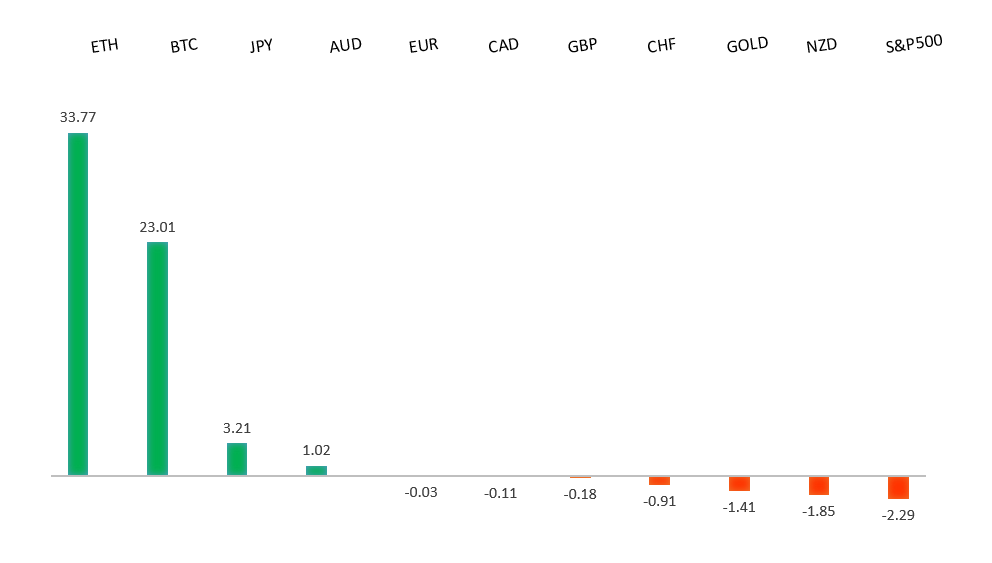
| Performance chart 30day v. USD (%) | ||
 | ||
| Technical & fundamental highlights | ||
| EURUSD: technical overview | ||
| The Euro outlook remains constructive with higher lows sought out on dips in favor of the next major upside extension targeting the 2021 high at 1.2350. Setbacks should be exceptionally well supported ahead of 1.1400. | ||
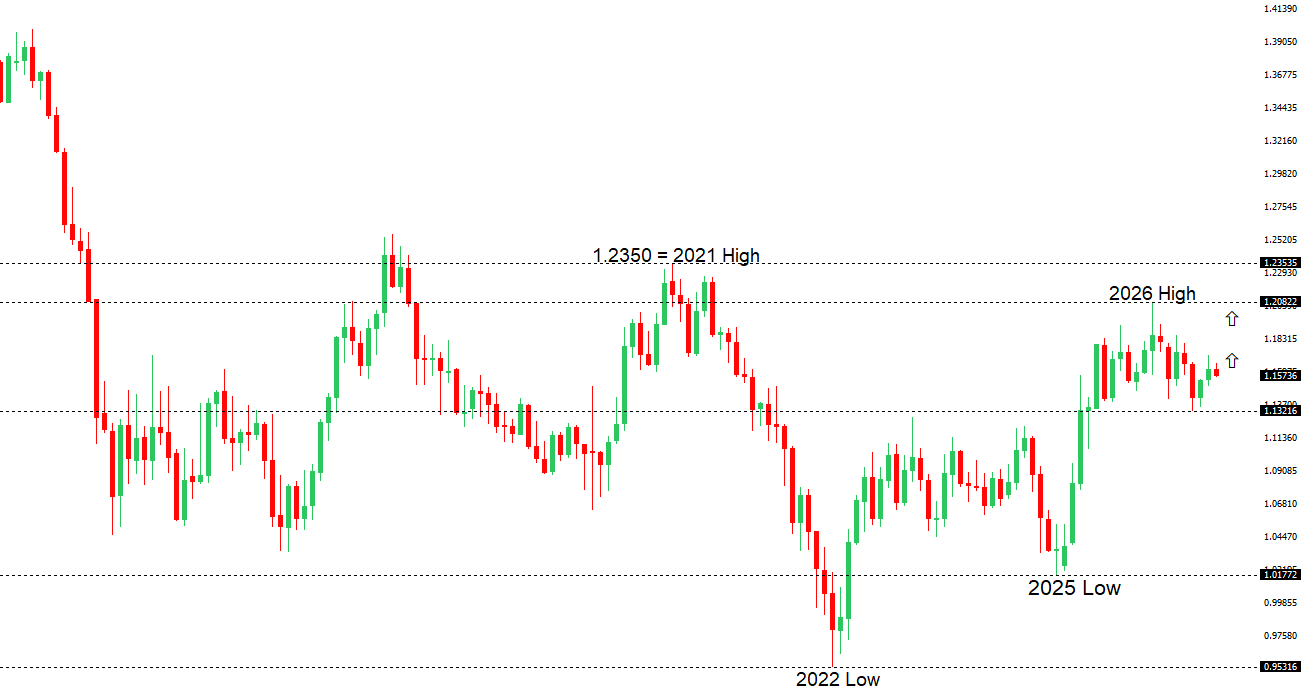 | ||
| R2 1.1712 - 21 August high - Strong R1 1.1660 - 27 August high - Medium S1 1.1566 - 2 September low - Medium S2 1.1512 - 313 August low - Strong | ||
| EURUSD: fundamental overview | ||
| The euro has come under pressure below 1.1600, with the dollar benefiting as hotter underlying US inflation and firm producer prices pushed markets toward expecting another Federal Reserve rate hike this week. The ECB’s recent quarter-point increase and broadly hawkish messaging have kept expectations for further European tightening elevated, particularly after updated forecasts showed inflation remaining above target for longer. However, that support has been overshadowed by the more immediate repricing of Fed policy, leaving relative rate expectations tilted in favor of the dollar ahead of Wednesday’s decision. | ||
| GBPUSD: technical overview | ||
| The Pound remains exceptionally well supported on dips into the 1.3000 area, with the price largely consolidating above the psychological barrier and previous resistance turned support in the form of the 2023 high. Look for the market to continue be well supported on dips ahead of the next major upside extension through the yearly high at 1.3870 and towards a retest of the 2018 high at 1.4377 further up. Only a monthly close below 1.3000 negates. | ||
 | ||
| R2 1.3676 - 21 August high - Strong R1 1.3568 - 9 September high - Medium S1 1.3458 - 11 September low - Medium S2 1.3400 - 31 July low - Medium | ||
| GBPUSD: fundamental overview | ||
| The pound has been consolidating above 1.3500 against the dollar, supported by stronger-than-expected UK growth in July and lingering expectations that elevated energy costs could eventually require tighter Bank of England policy. However, Governor Bailey has pushed back against the idea that rate hikes are inevitable, while the BoE is widely expected to leave rates unchanged this week. This has limited sterling demand ahead of Tuesday’s UK employment report and Wednesday’s inflation data, which will shape the outlook for domestic policy. On the other side of the pair, rising expectations for a Federal Reserve rate hike and escalating Middle East tensions have supported the safe-haven dollar, leaving GBPUSD caught between resilient UK fundamentals and a firmer US currency. | ||
| USDJPY: technical overview | ||
| The recent breakdown below 155.00 suggests the market could be on the verge of a bigger structural shift, with the possibility for an end to a longer-term uptrend and the start to a period of persistent weakness. Critical support now comes in the form of the 2026 low from January at 151.97, with a drop below to strengthen the bearish outlook and open the door for a major downside extension targeting the 2024 low at 139.58. The market would need to get back above 160.00 to take the immediate pressure off the downside. | ||
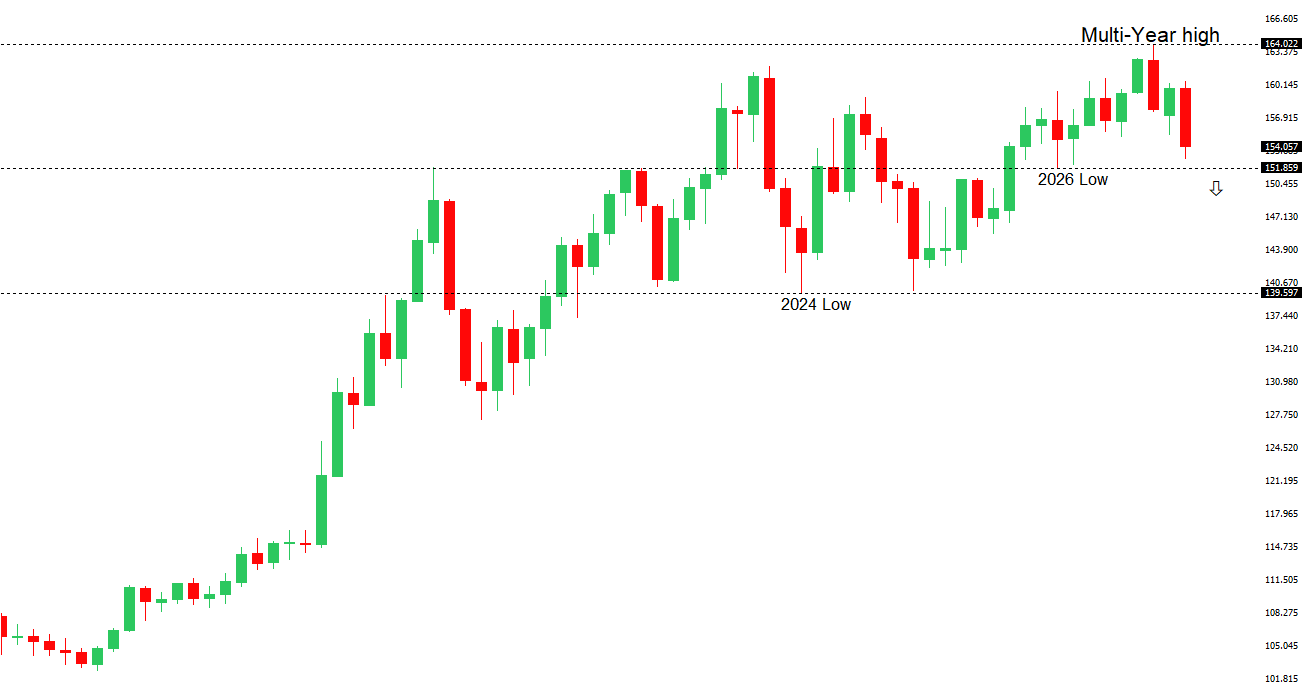 | ||
| R2 156.75 - 4 September high - Strong R1 154.68 - 10 September high - Medium S1 152.88 - 8 September low - Medium S2 151.97 - 28 January/2026 low - Strong | ||
| USDJPY: fundamental overview | ||
| The yen has edged lower against the dollar at the start of the week as firmer expectations for a Federal Reserve rate hike and escalating Middle East tensions support the greenback through higher US yields and safe-haven demand. Still, the Japanese currency remains close to a seven-month high, underpinned by a sharp hawkish repricing of the Bank of Japan outlook. Markets broadly expect the BoJ to raise rates later this week and will be focused on whether officials signal a faster pace of tightening, potentially including another move in December, as underlying inflation approaches target and policy remains below neutral. With both central-bank decisions approaching, USDJPY remains caught between near-term dollar strength and the prospect of a further narrowing in US-Japan rate differentials. | ||
| AUDUSD: technical overview | ||
| There are signs of the formation of a longer-term base with the market recovering out from a meaningful longer-term support zone. The latest monthly close back above 0.7000 takes the big picture pressure off the downside and strengthens the case for a bottom, with the focus now on a push towards 0.8000. Setbacks should now be well supported ahead of 0.6700. | ||
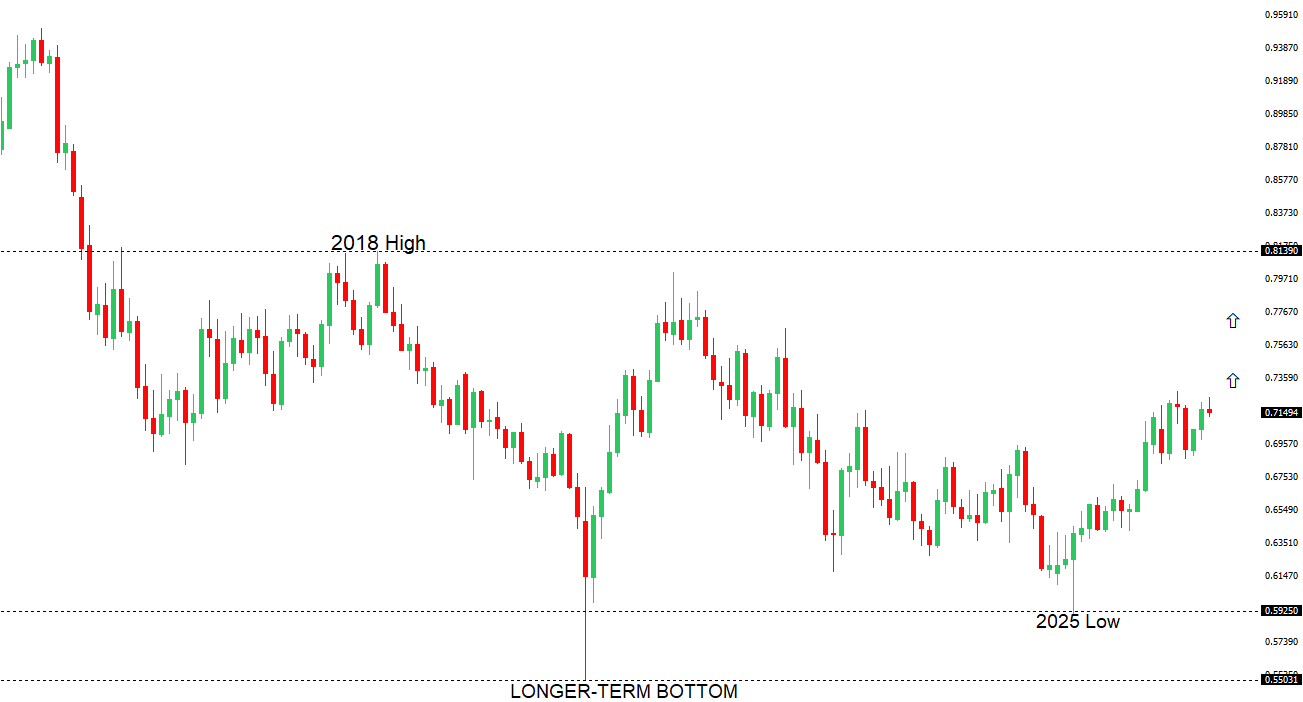 | ||
| R2 0.7278 - 6 May/2026 high - Strong R1 0.7238 - 9 September high - Medium S1 0.7121 - 2 September low - Medium S2 0.7067 - 19 August low - Medium | ||
| AUDUSD: fundamental overview | ||
| The Australian dollar has started the week on the defensive as rising expectations for a Federal Reserve rate hike, elevated US yields and renewed Middle East tensions support the US dollar and weigh on risk-sensitive currencies. Higher oil prices are also unsettling global markets, although the Aussie’s losses have been limited by increasingly hawkish RBA expectations after recent Australian inflation data showed persistent underlying price pressures. The prospect that higher fuel costs could keep domestic inflation elevated has reinforced the case for further RBA tightening, providing an important counterweight to softer consumer sentiment and broader risk aversion. Near-term direction will largely hinge on the Fed decision and upcoming Australian employment data, with the policy outlook on both sides of the pair remaining the dominant driver. | ||
| Suggested reading | ||
| How To Protect Your Nest Egg With Inflation Ballooning, J. Zweig, WSJ (September 11, 2026) Why Higher Bond Yields Can Be ‘a Great Thing’, S. Hansen, Morningstar (September 10, 2026) | ||