


 | ||
| 3rd November 2026 | view in browser | ||
| Between ballot box and balance sheet | ||
| Markets head into Tuesday balancing hopes for Middle East diplomacy against technology-sector weakness, persistent inflation pressures and uncertainty surrounding the US midterm elections. | ||
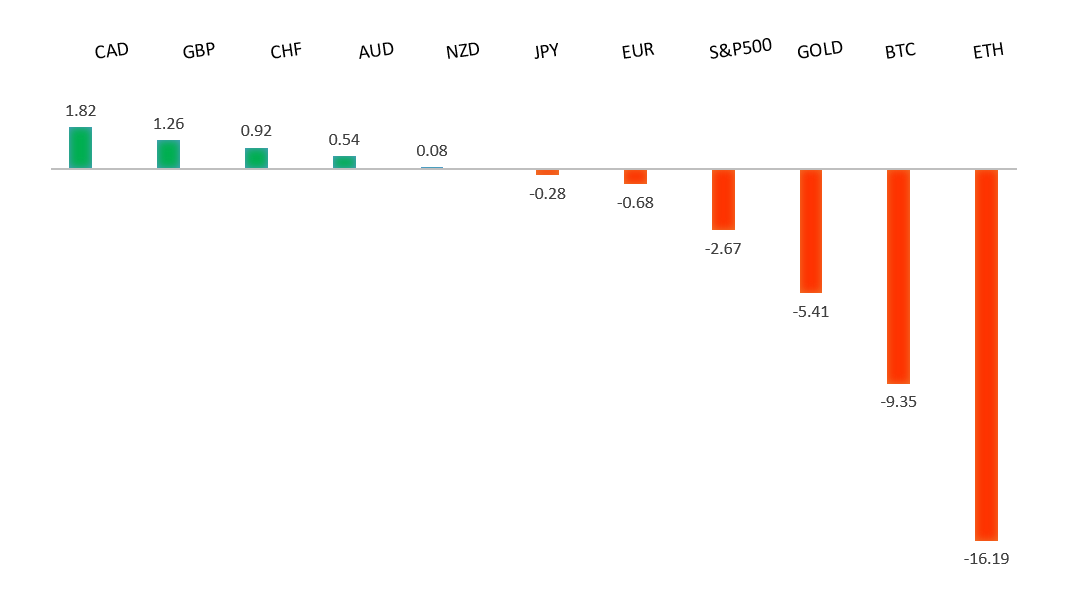
| Performance chart 30day v. USD (%) | ||
 | ||
| Technical & fundamental highlights | ||
| EURUSD: technical overview | ||
| The Euro continues to show signs of wanting to carve out a major bottom after trading down to a 20-year low in 2022. Setbacks should be exceptionally well supported above 1.1000 on a weekly close basis ahead of the next major upside extension back above 1.2000. | ||
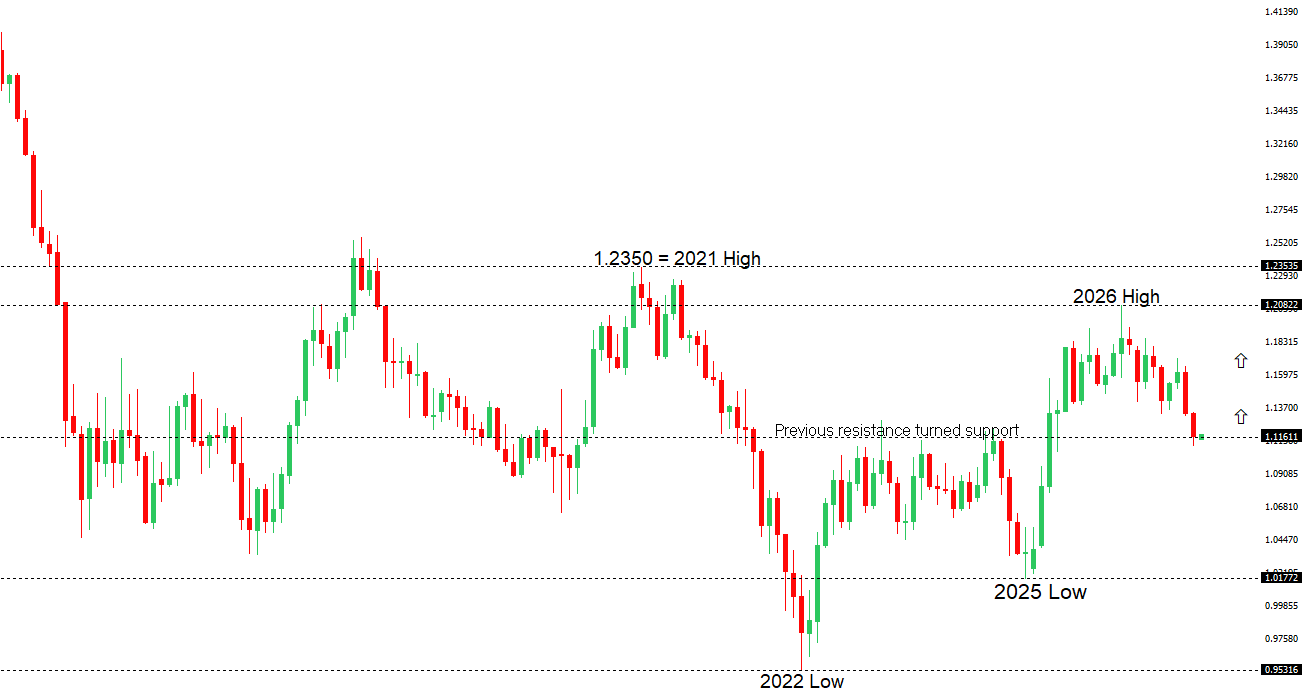 | ||
| R2 1.1270 - 16 October high - Strong R1 1.1238 - 2 November high - Medium S1 1.1136 - 30 October low - Medium S2 1.1104 - 29 October/2026 low - Strong | ||
| EURUSD: fundamental overview | ||
| The euro has softened as stronger US manufacturing data and expectations for a December Fed rate hike help the dollar stabilize, while concerns over France’s debt burden and political gridlock weigh on sentiment toward the single currency. Hopes for an agreement with Iran offer some support by easing energy concerns and demand for the safe-haven dollar, although the lack of a breakthrough leaves markets sensitive to geopolitical headlines. Attention now turns to the US midterm elections, where a surprise outcome could drive volatility in Treasury yields and the dollar, alongside US job openings. Beyond that, eurozone inflation, US services activity and Friday’s employment report will help shape relative interest-rate expectations and the euro’s next move. | ||
| GBPUSD: technical overview | ||
| The Pound remains exceptionally well supported on dips into the 1.3000 area, with the price largely consolidating above the psychological barrier and previous resistance turned support in the form of the 2023 high. Look for the market to continue be well supported on dips ahead of the next major upside extension through the yearly high at 1.3870 and towards a retest of the 2018 high at 1.4377 further up. Only a monthly close below 1.3000 negates. | ||
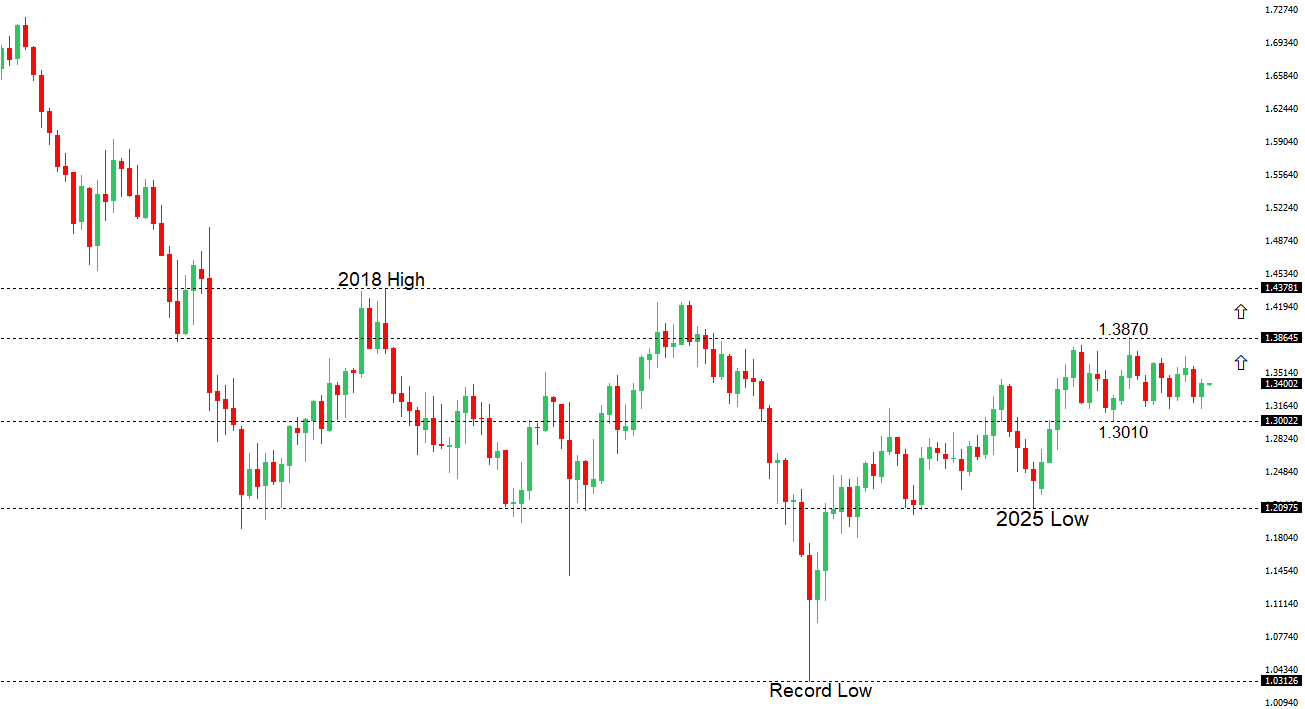 | ||
| R2 1.3498 - 16 September high - Medium R1 1.3449 - 2 November high - Medium S1 1.3339 - 28 October high - Medium S2 1.3272 - 28 October low - Strong | ||
| GBPUSD: fundamental overview | ||
| Sterling has eased as renewed dollar support and caution ahead of the US midterm elections interrupt its recent advance, with hawkish Fed commentary keeping further US tightening in focus. The pound nevertheless remains supported by expectations that the Bank of England will raise rates by 25 basis points to 4% on Thursday, as persistent inflation and firmer domestic activity strengthen the case for action. With that increase largely anticipated, the vote split, updated forecasts and Governor Bailey’s guidance will matter more for the currency than the decision itself. Any indication that spare capacity will contain inflation, or that subsequent hikes could be more limited than markets expect, could temper sterling’s gains. US election results and upcoming jobs data provide additional risks through their implications for fiscal policy, inflation and the Fed outlook. | ||
| USDJPY: technical overview | ||
| The recent breakdown below 155.00 suggests the market could be on the verge of a bigger structural shift, with the possibility for an end to a longer-term uptrend and the start to a period of persistent weakness. Critical support now comes in the form of the 2026 low from January at 151.97, with a drop below to strengthen the bearish outlook and open the door for a major downside extension targeting the 2024 low at 139.58. The market would need to get back above 160.00 to take the immediate pressure off the downside. | ||
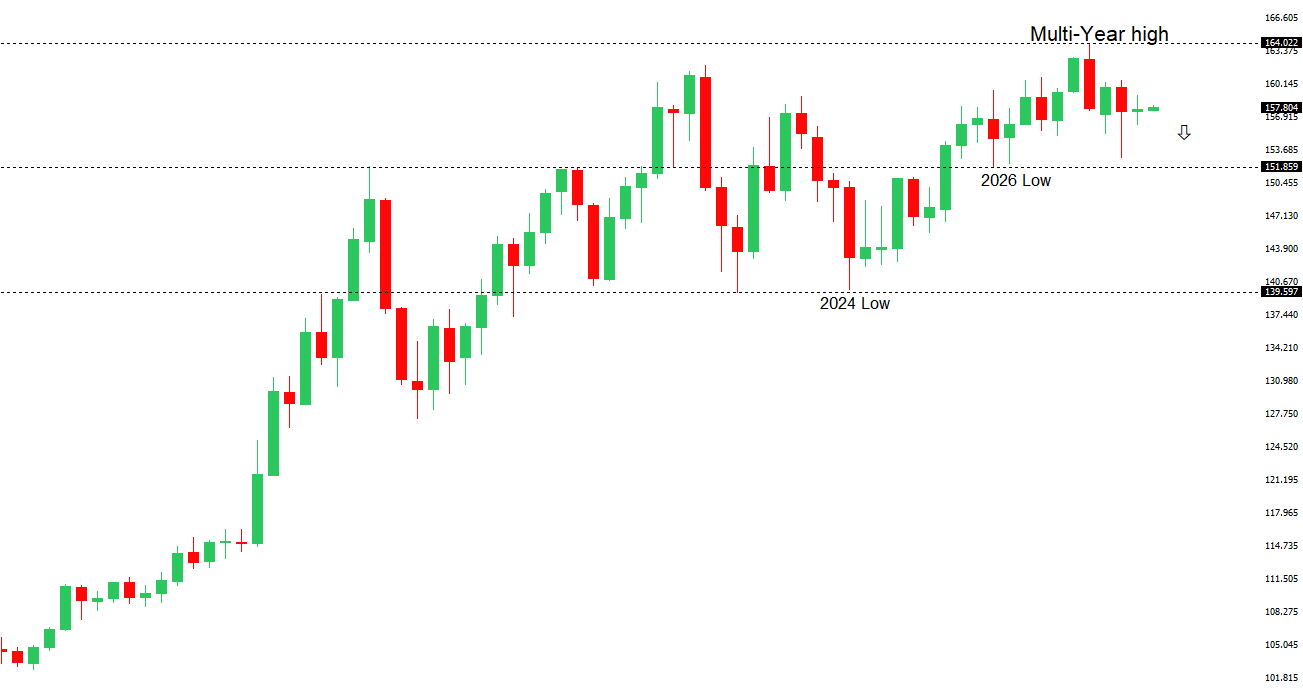 | ||
| R2 159.04 - 24 September high - Strong R1 158.35 - 28 October high - Medium S1 156.07 - 23 October low - Medium S2 155.29 - 4 September low - Strong | ||
| USDJPY: fundamental overview | ||
| The yen is caught between renewed intervention warnings and uncertainty over the timing of further Bank of Japan tightening, leaving monetary policy divergence as a key headwind. Finance Minister Katayama’s warning that authorities stand ready to counter excessive or disorderly currency weakness has helped limit selling, but stronger US manufacturing data and expectations for another Federal Reserve rate increase in December are supporting the dollar. Hopes for progress in US-Iran diplomacy have tempered demand for the US currency, although the lack of a breakthrough leaves geopolitical uncertainty elevated. Attention now turns to the US midterm elections and upcoming US employment and services data, which could reshape Fed expectations and drive the next move in dollar-yen. | ||
| AUDUSD: technical overview | ||
| There are signs of the formation of a longer-term base with the market recovering out from a meaningful longer-term support zone. The latest monthly close back above 0.7000 takes the big picture pressure off the downside and strengthens the case for a bottom, with the focus now on a push towards 0.8000. Setbacks should now be well supported ahead of 0.6700. | ||
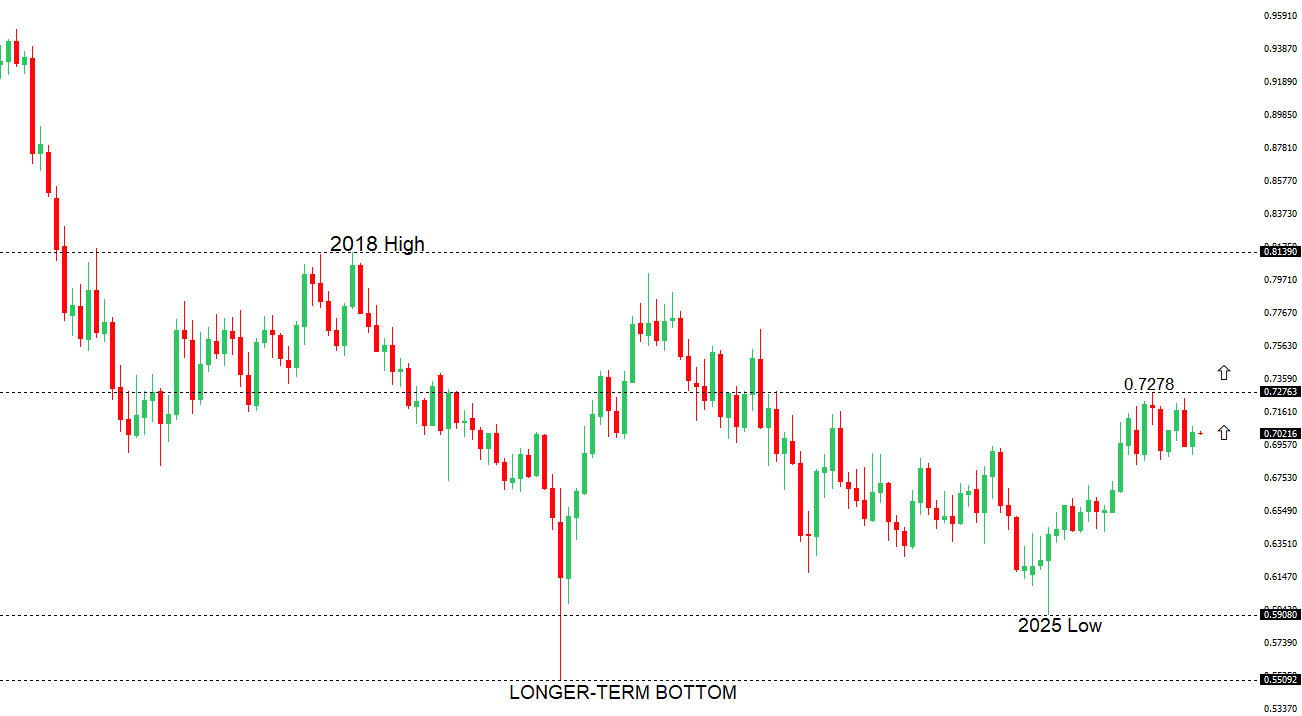 | ||
| R2 0.7100 - Figure - Medium R1 0.7068 - 29 October high - Medium S1 0.6970 - 20 October low - Medium S2 0.6894 - 15 October low - Strong | ||
| AUDUSD: fundamental overview | ||
| The Australian dollar has drawn limited support from the RBA’s widely anticipated quarter-point rate hike to 4.85%, with the split vote and cautious guidance tempering the impact of a sharply higher inflation outlook. The central bank now expects inflation to remain above 3% until late 2027, reflecting higher energy prices and persistent domestic capacity pressures, keeping the prospect of further tightening alive. However, three members voted to hold rates, and the board stopped short of signalling additional increases as weaker housing activity and household spending highlight the growing economic cost of restrictive policy. This leaves the Aussie balancing support from elevated interest rates against uncertainty over how much further the RBA will go, with Governor Bullock’s comments and the US midterm elections providing the next potential catalysts. | ||
| Suggested reading | ||
| Here’s where the smart money is moving now, C. Idzelis, MarketWatch (October 31, 2026) The Rise in Inflation Expectations Harder to Ignore, J. Picerno, The Capital Spectator (October 30, 2026) | ||