


 | ||
| 26th February 2026 | view in browser | ||
| Fragile risk mood dominates early trade | ||
| Global markets are starting the day cautiously, with the yen stabilizing on more hawkish BOJ signals, the dollar softening amid geopolitical developments, capital rotating into Australian bonds, and investors awaiting US jobless claims and central bank commentary against a backdrop of renewed trade tensions. | ||
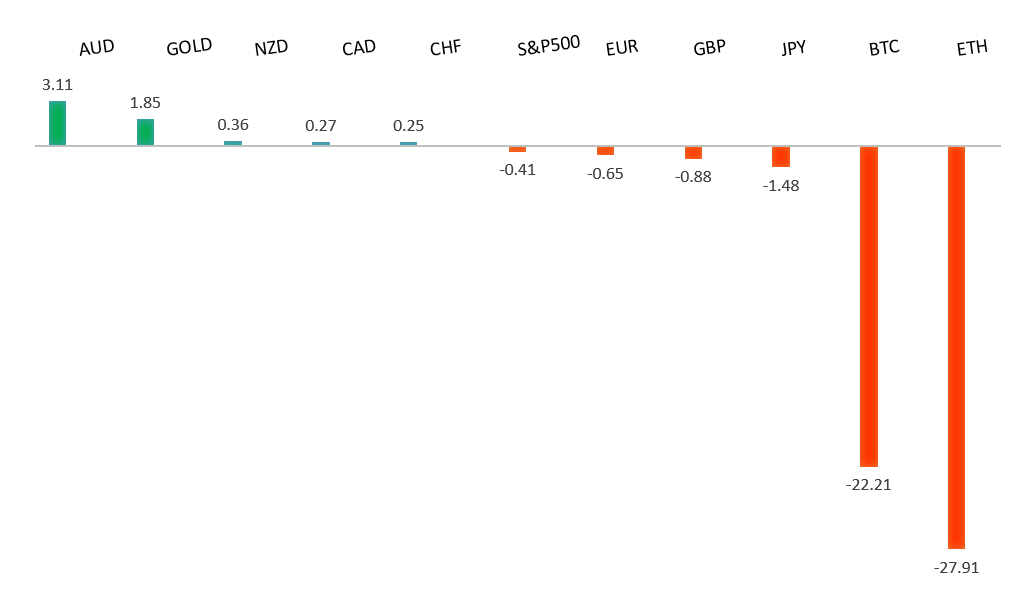
| Performance chart 30day v. USD (%) | ||
 | ||
| Technical & fundamental highlights | ||
| EURUSD: technical overview | ||
| The Euro outlook remains constructive with higher lows sought out on dips in favor of the next major upside extension targeting the 2021 high at 1.2350. Setbacks should be exceptionally well supported ahead of 1.1500. | ||
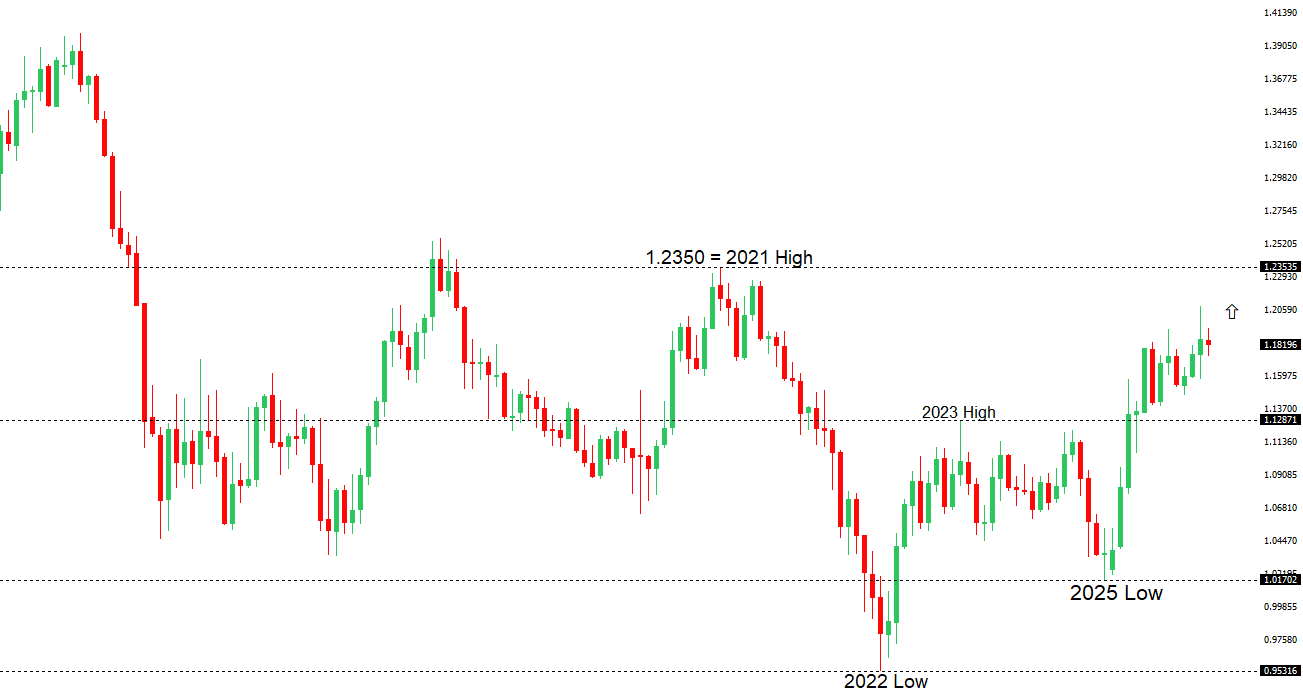 | ||
| R2 1.2081 - 27 Janaury/2026 high - Strong R1 1.1929 - 10 February high - Medium S1 1.1742 - 19 February low - Medium S2 1.1728 - 23 January low - Medium | ||
| EURUSD: fundamental overview | ||
| The euro is hovering around its 50-day moving average as markets weigh US tariff threats, trade uncertainty and ongoing US-Iran tensions. In the near term, risks remain tilted against the euro: cooling inflation across the euro area is increasing expectations for ECB rate cuts, and softer data compared to the ECB’s projections could limit euro rallies, especially with the dollar supported by safe-haven flows and relatively high US real yields. While Germany’s economy is showing early signs of cyclical improvement, weak consumer confidence and cautious household spending suggest any recovery will be slow and reliant on investment and exports, leaving it exposed to global trade headwinds. | ||
| USDJPY: technical overview | ||
| There are signs of a meaningful top in place after the market put in a multi-year high in 2024. At this point, rallies should be well capped ahead of 160.00 in favor of a fresh down-leg back towards the 2024 low at 139.58. The recent break below 154.39 strengthens the outlook. | ||
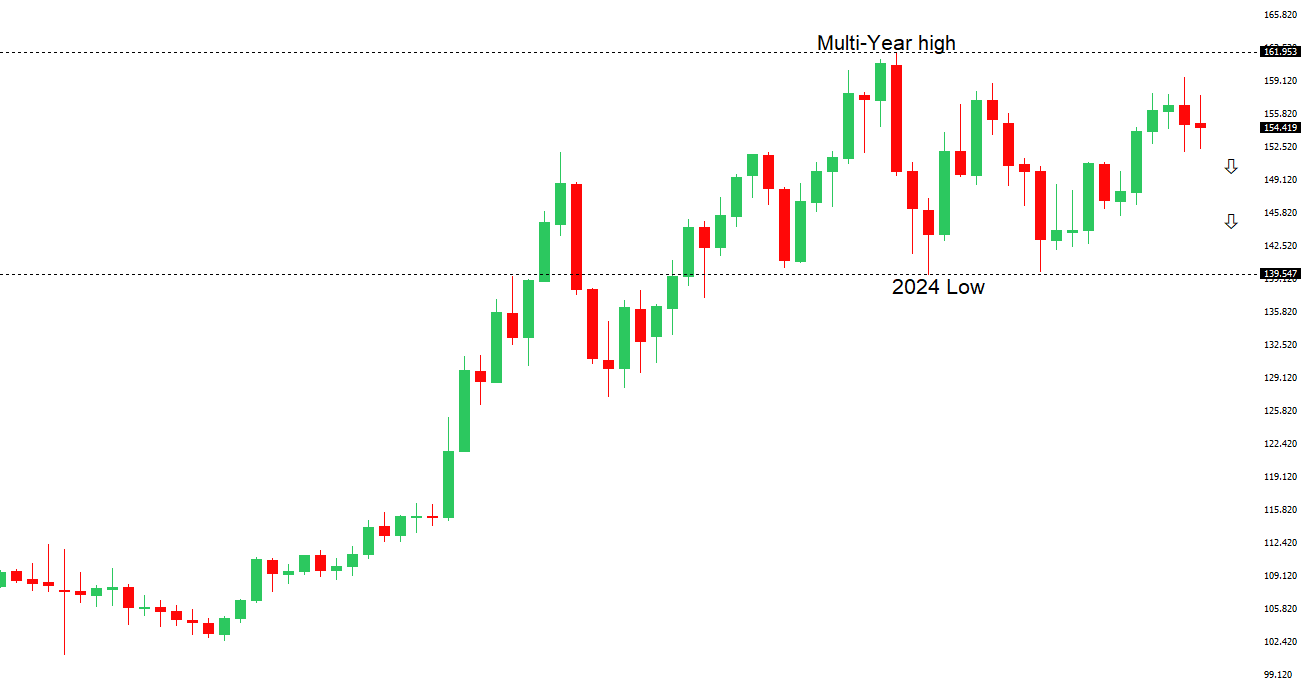 | ||
| R2 157.66 - 9 February high - Strong R1 156.83 - 25 February high - Medium S1 154.00 - 23 February low - Medium S2 151.97 - 28 January/2026 low - Strong | ||
| USDJPY: fundamental overview | ||
| The yen firmed after hawkish comments from Bank of Japan officials, with board member Hajime Takata saying further rate hikes may be needed as inflation nears target, while Governor Kazuo Ueda stressed a data-dependent but ongoing normalization path. Earlier, the nomination of two more dovish academics to the BOJ board had weighed on the yen and pushed long-dated JGB yields higher, reinforcing expectations that any additional tightening may be delayed rather than derailed. In the near term, negative headlines and lingering skepticism toward Japan’s rebound keep USDJPY biased higher, but underlying macro conditions remain relatively stable and US sensitivity to excessive yen weakness should help cap gains near the 158–159 area. Tactically, this favors selling rallies into multi-month highs rather than chasing an upside breakout, especially ahead of the March 19 meeting between PM Takaichi and President Trump. | ||
| AUDUSD: technical overview | ||
| There are signs of the formation of a longer-term base with the market recovering out from a meaningful longer-term support zone. A monthly close back above 0.7000 will take the big picture pressure off the downside and strengthen case for a bottom. Setbacks should now be well supported ahead of 0.6700. | ||
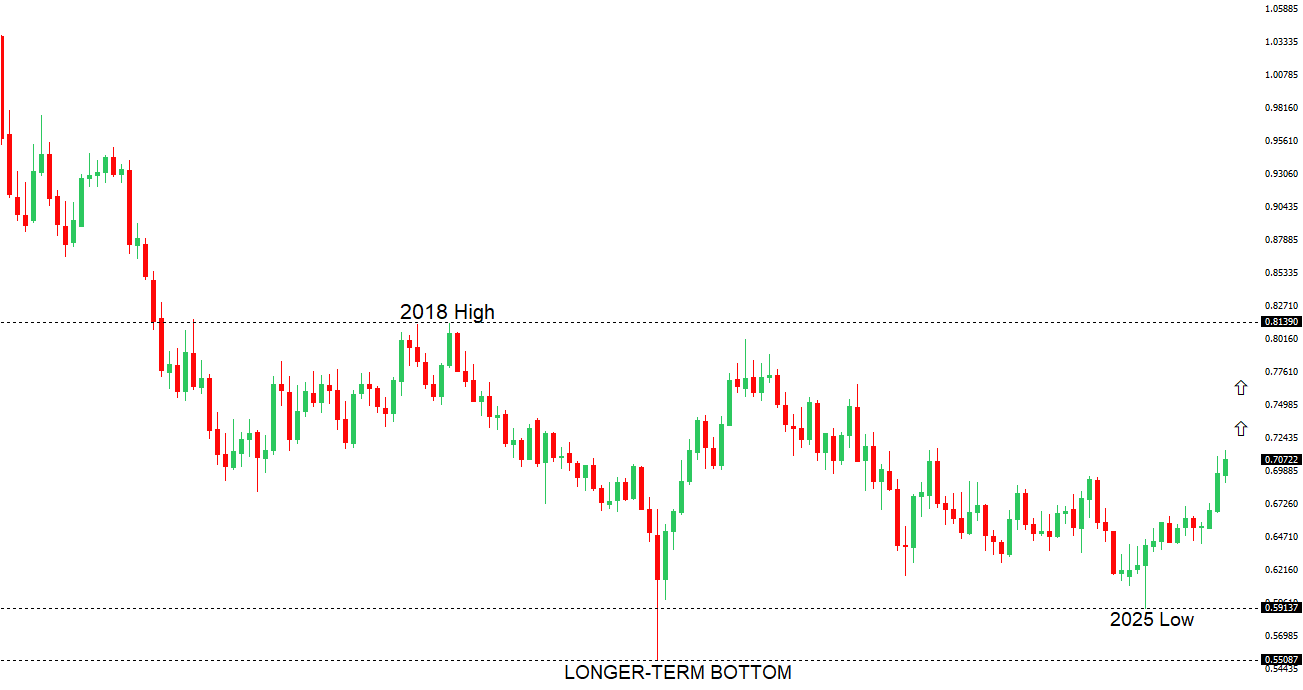 | ||
| R2 0.7158 - 2023 high - Strong R1 0.7147 - 12 February/2026 high - Strong S1 0.7007 - 9 February low - Medium S2 0.6897 - 6 February low - Strong | ||
| AUDUSD: fundamental overview | ||
| The Australian dollar is stabilizing above key support at 0.7007, with potential to rebound toward the 0.7147–0.7158 area as long as this level holds. Recent Australian capex data showed modest growth, beating expectations but slowing sharply from the previous quarter, highlighting softer business investment overall despite ongoing support from large infrastructure projects. The broader backdrop remains supportive for AUD, as the RBA’s more hawkish stance and still-elevated inflation contrast with expectations for eventual Fed easing, helping limit downside near 0.70. In the near term, price action will depend on whether markets focus on persistent inflation and tight labor conditions—which support further RBA tightening later this year—or signs inflation is cooling. For now, the bias remains constructive above 0.7007, with scope for further gains toward 0.72–0.73 if upside momentum builds, while a break below support would shift risks back toward 0.6897. | ||
| Suggested reading | ||
| The scramble for Morocco’s energy future, R. Millard, Financial Times (February 26, 2026) The Mirage and Disconnect Between Markets and Reality, E. Ghirarduzzi, Substack (February 24, 2026) | ||