


 | ||
| 22nd September 2026 | view in browser | ||
| Inflation warnings meet resilient risk appetite | ||
| Global markets head into Tuesday balancing hawkish central-bank signals and persistent geopolitical risks against resilient US technology shares, leaving the dollar supported, the yen under pressure and oil and gold elevated. | ||
| Performance chart 30day v. USD (%) | ||
 | ||
| Technical & fundamental highlights | ||
| EURUSD: technical overview | ||
| The Euro outlook remains constructive with higher lows sought out on dips in favor of the next major upside extension targeting the 2021 high at 1.2350. Setbacks should be exceptionally well supported ahead of 1.1400. | ||
 | ||
| R2 1.1655 - 9 September high - Medium R1 1.1557 - 16 September high - Medium S1 1.1455 - 17 September low - Medium S2 1.1434 - 30 July low - Medium | ||
| EURUSD: fundamental overview | ||
| The euro has edged higher against the US dollar, supported by improved risk sentiment as markets remain hopeful that possible US-Iran talks could ease geopolitical tensions and reduce pressure from elevated energy prices. However, the currency continues to face headwinds from rising political uncertainty in Germany following the CDU’s historic regional election setback, which has raised concerns about Chancellor Merz’s leadership and the government’s ability to advance its fiscal agenda. The relative interest-rate backdrop also remains challenging, with increasingly hawkish Fed commentary reinforcing expectations that US rates may need to rise further to contain persistent inflation. Meanwhile, concerns among ECB officials that higher energy and commodity prices could keep euro-area inflation elevated provide some support for the euro, but for now, the combination of German political risk and a more hawkish Fed is limiting the currency’s upside. | ||
| GBPUSD: technical overview | ||
| The Pound remains exceptionally well supported on dips into the 1.3000 area, with the price largely consolidating above the psychological barrier and previous resistance turned support in the form of the 2023 high. Look for the market to continue be well supported on dips ahead of the next major upside extension through the yearly high at 1.3870 and towards a retest of the 2018 high at 1.4377 further up. Only a monthly close below 1.3000 negates. | ||
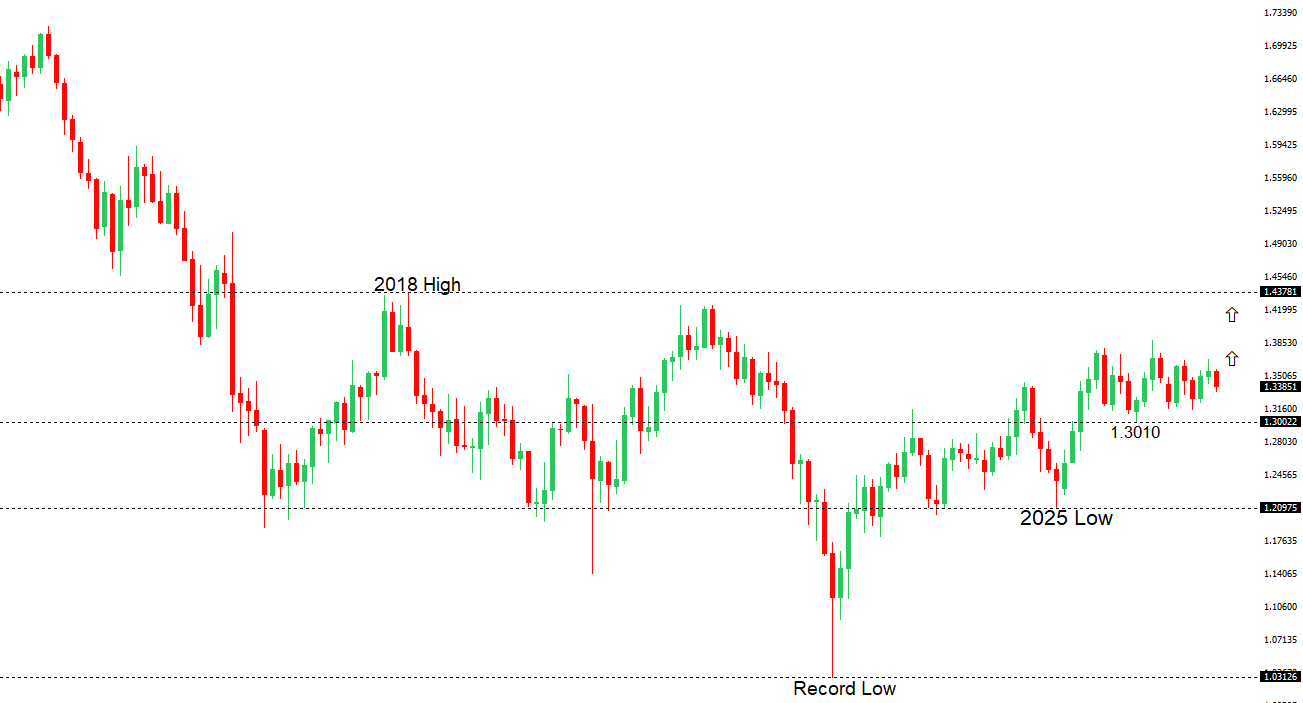 | ||
| R2 1.3568 - 9 September high - Strong R1 1.3498 - 16 September high - Medium S1 1.3336 - 17 September low - Medium S2 1.3300 - Figure - Medium | ||
| GBPUSD: fundamental overview | ||
| The pound remains under pressure against the US dollar, with the fundamental bias still negative amid widening policy divergence between the Federal Reserve and Bank of England. The Fed’s hawkish stance and signal that another rate increase could follow this year contrast with the BoE’s cautious hold and gradual easing bias, leaving sterling at a relative yield disadvantage. Escalating Middle East tensions have also supported safe-haven demand for the dollar, although falling oil prices and lower US Treasury yields have limited its strength and helped contain the pound’s losses. Attention now turns to the upcoming UK and US flash PMIs for fresh evidence on the relative economic outlook, while Fed commentary and geopolitical developments should remain important drivers of GBPUSD. | ||
| USDJPY: technical overview | ||
| The recent breakdown below 155.00 suggests the market could be on the verge of a bigger structural shift, with the possibility for an end to a longer-term uptrend and the start to a period of persistent weakness. Critical support now comes in the form of the 2026 low from January at 151.97, with a drop below to strengthen the bearish outlook and open the door for a major downside extension targeting the 2024 low at 139.58. The market would need to get back above 160.00 to take the immediate pressure off the downside. | ||
 | ||
| R2 158.06 - 18 September high - Strong R1 157.57 - 22 September high - Medium S1 155.33 - 17 September low - Medium S2 154.21 - 15 September low - Medium | ||
| USDJPY: fundamental overview | ||
| The yen has come back under pressure after the Bank of Japan’s rate hike to 1.25%, as the absence of clear guidance pointing to another near-term increase disappointed investors and left Japan’s policy outlook comparatively less hawkish. At the same time, expectations for further Federal Reserve tightening have risen amid persistent US inflation concerns and hawkish Fed commentary, widening the perceived US-Japan rate differential and lifting USDJPY toward 158. However, yen selling has been tempered by growing intervention risk after Japanese authorities reportedly conducted rate checks, signalling that they may be prepared to step into the market if the currency weakens further, particularly as USDJPY approaches the psychologically important 160 level. | ||
| AUDUSD: technical overview | ||
| There are signs of the formation of a longer-term base with the market recovering out from a meaningful longer-term support zone. The latest monthly close back above 0.7000 takes the big picture pressure off the downside and strengthens the case for a bottom, with the focus now on a push towards 0.8000. Setbacks should now be well supported ahead of 0.6700. | ||
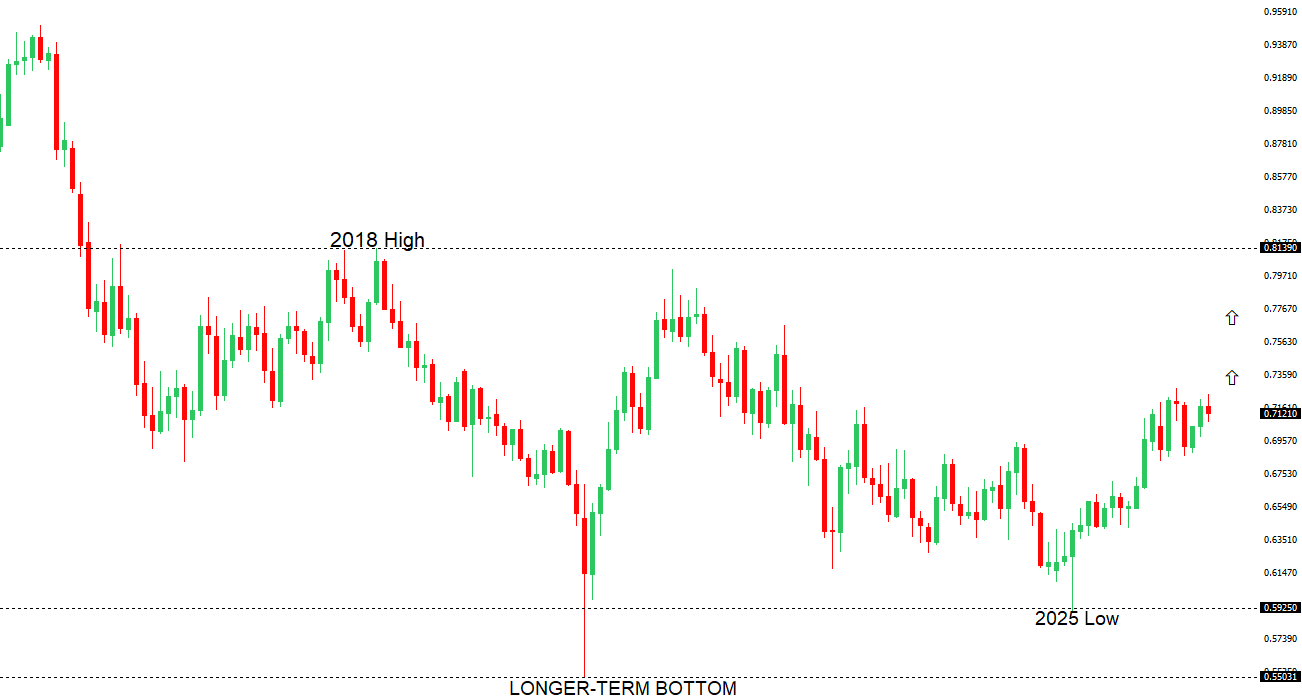 | ||
| R2 0.7238 - 9 September high - Strong R1 0.7142 - 15 September high - Medium S1 0.7075 - 16 September low - Medium S2 0.7067 - 19 August low - Medium | ||
| AUDUSD: fundamental overview | ||
| The Australian dollar has remained supported by increasingly hawkish RBA expectations, with Governor Michele Bullock stressing that monetary policy must prevent supply shocks from generating persistent second-round inflation effects. Surging energy prices have intensified the upside risks to inflation, leaving markets pricing a very high probability of a 25-basis-point RBA rate hike next week and the possibility of further tightening thereafter. This has helped AUDUSD hold above 0.7100, although gains have been limited by a still-firm US dollar as the Federal Reserve signals that additional rate increases may be needed and markets price a meaningful chance of another Fed hike in October. Overall, the Australian dollar continues to benefit from the RBA’s relatively hawkish outlook, but its near-term direction will depend on whether the central bank delivers the tightening now largely reflected in market pricing. | ||
| Suggested reading | ||
| The Biggest Risk to the Economy, B. Carlson, A Wealth of Common Sense (September 20, 2026) 90% of Retirees Making This Miscalculation with Savings, B. Pinsker, Marketwatch (September 19, 2026) | ||