


 | ||
| 18th September 2026 | view in browser | ||
| Central banks move, markets exhale | ||
| Markets head into Friday with a cautiously constructive tone as easing oil prices and bond yields support equities, while central-bank divergence and persistent Middle East tensions drive mixed moves across major currencies and commodities. | ||
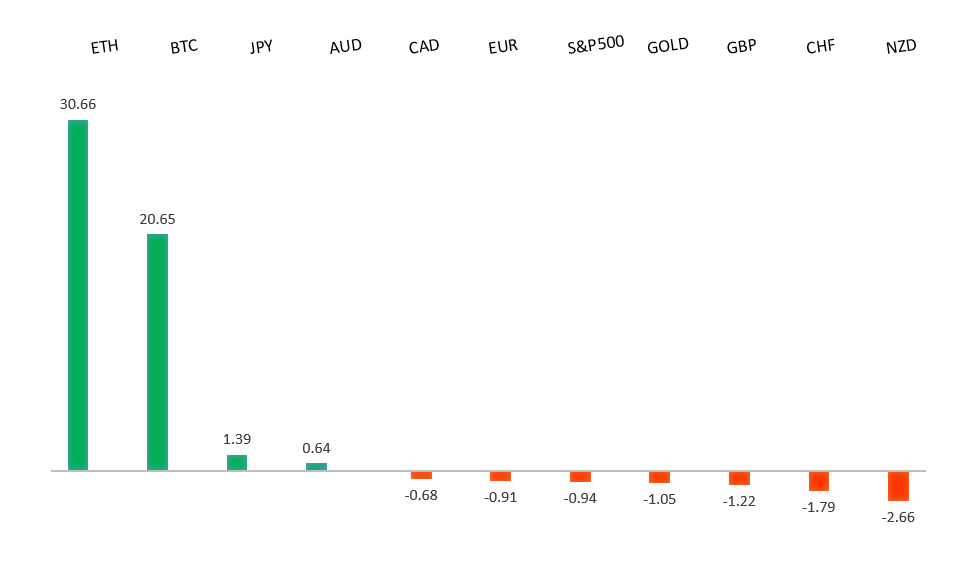
| Performance chart 30day v. USD (%) | ||
 | ||
| Technical & fundamental highlights | ||
| EURUSD: technical overview | ||
| The Euro outlook remains constructive with higher lows sought out on dips in favor of the next major upside extension targeting the 2021 high at 1.2350. Setbacks should be exceptionally well supported ahead of 1.1400. | ||
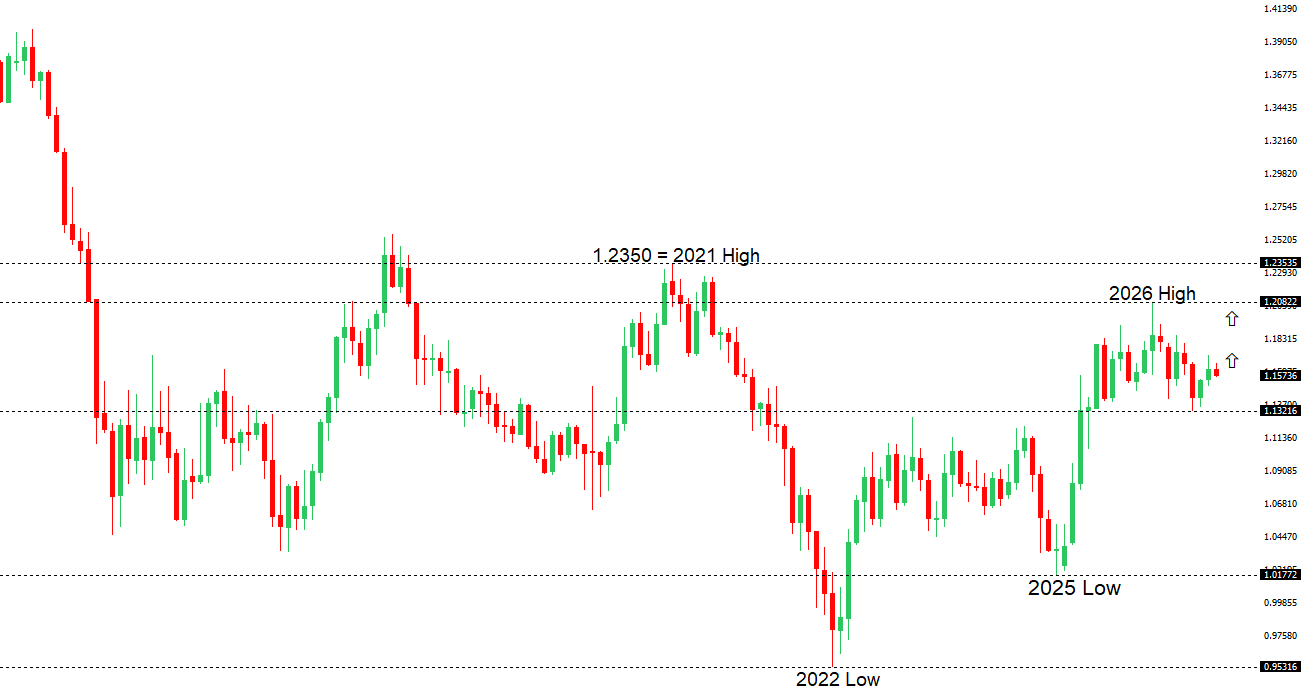 | ||
| R2 1.1655 - 9 September high - Medium R1 1.1557 - 16 September high - Medium S1 1.1455 - 17 September low - Medium S2 1.1434 - 30 July low - Medium | ||
| EURUSD: fundamental overview | ||
| The euro has edged higher against the US dollar, benefiting from a retreat in US Treasury yields and oil prices that has taken some momentum out of the recent dollar rally. While the Fed delivered a hawkish message, markets are pricing a more aggressive tightening path than policymakers themselves have projected, leaving the dollar vulnerable if upcoming guidance or data fails to reinforce those expectations. The euro is also finding support from the ECB’s continued inflation concerns after its latest rate hike, with policymakers warning that geopolitical tensions and elevated energy costs could keep price pressures above target for an extended period. With euro-area inflation still elevated and ECB communication remaining hawkish, expectations for additional tightening later this year continue to provide an underlying source of support for the single currency. | ||
| GBPUSD: technical overview | ||
| The Pound remains exceptionally well supported on dips into the 1.3000 area, with the price largely consolidating above the psychological barrier and previous resistance turned support in the form of the 2023 high. Look for the market to continue be well supported on dips ahead of the next major upside extension through the yearly high at 1.3870 and towards a retest of the 2018 high at 1.4377 further up. Only a monthly close below 1.3000 negates. | ||
 | ||
| R2 1.3568 - 9 September high - Strong R1 1.3498 - 16 September high - Medium S1 1.3336 - 17 September low - Medium S2 1.3300 - Figure - Medium | ||
| GBPUSD: fundamental overview | ||
| The pound has steadied above 1.3350 after extending a modest recovery on the back of the Bank of England’s hawkish hold. The BoE left rates unchanged at 3.75% in a 6-3 vote, but three policymakers favored an immediate 25-basis-point hike and the broader message suggested another increase is becoming increasingly likely if inflation remains elevated. This has restored some support from UK yield spreads, while improving confidence in the fiscal outlook has also helped sentiment. Sterling’s upside remains constrained by the Federal Reserve’s own rate hike and the possibility of further US tightening, leaving markets focused on the latest UK retail sales data for additional direction. | ||
| USDJPY: technical overview | ||
| The recent breakdown below 155.00 suggests the market could be on the verge of a bigger structural shift, with the possibility for an end to a longer-term uptrend and the start to a period of persistent weakness. Critical support now comes in the form of the 2026 low from January at 151.97, with a drop below to strengthen the bearish outlook and open the door for a major downside extension targeting the 2024 low at 139.58. The market would need to get back above 160.00 to take the immediate pressure off the downside. | ||
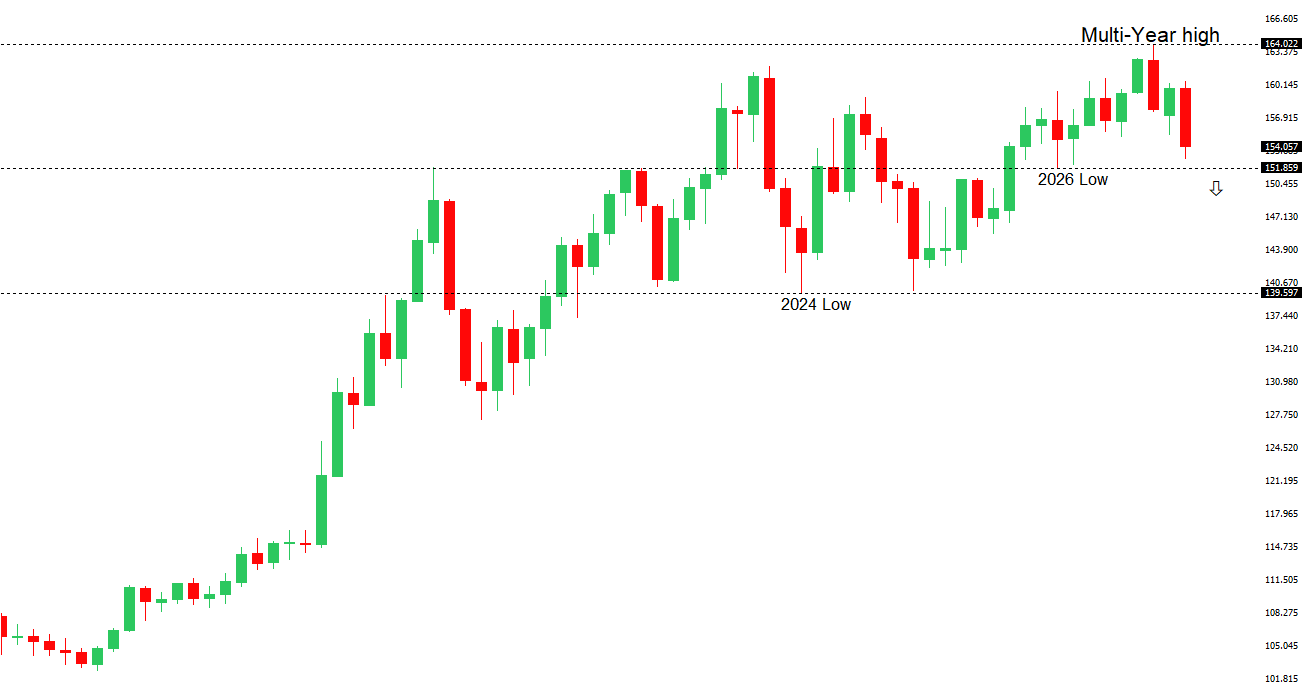 | ||
| R2 158.02 - 20 August low - Strong R1 157.00 - Figure - Medium S1 155.33 - 17 September low - Medium S2 154.21 - 15 September low - Medium | ||
| USDJPY: fundamental overview | ||
| The yen has come under renewed pressure despite the Bank of Japan raising interest rates by 25 basis points to 1.25%, the highest level in 31 years. The hike was already widely priced in, leaving investors focused on whether the BoJ would signal a faster pace of tightening, and the initial guidance appears to have fallen short of those expectations. While the Bank warned that inflation could exceed its 2% target and acknowledged that yen weakness is adding to price pressures, the still-wide interest-rate gap with the United States remains a significant headwind, particularly after the Federal Reserve raised rates and maintained a hawkish inflation stance. Attention now turns to Governor Ueda’s press conference for clearer guidance on the timing of further hikes, with the yen likely to remain vulnerable unless he pushes back against expectations for another extended pause. | ||
| AUDUSD: technical overview | ||
| There are signs of the formation of a longer-term base with the market recovering out from a meaningful longer-term support zone. The latest monthly close back above 0.7000 takes the big picture pressure off the downside and strengthens the case for a bottom, with the focus now on a push towards 0.8000. Setbacks should now be well supported ahead of 0.6700. | ||
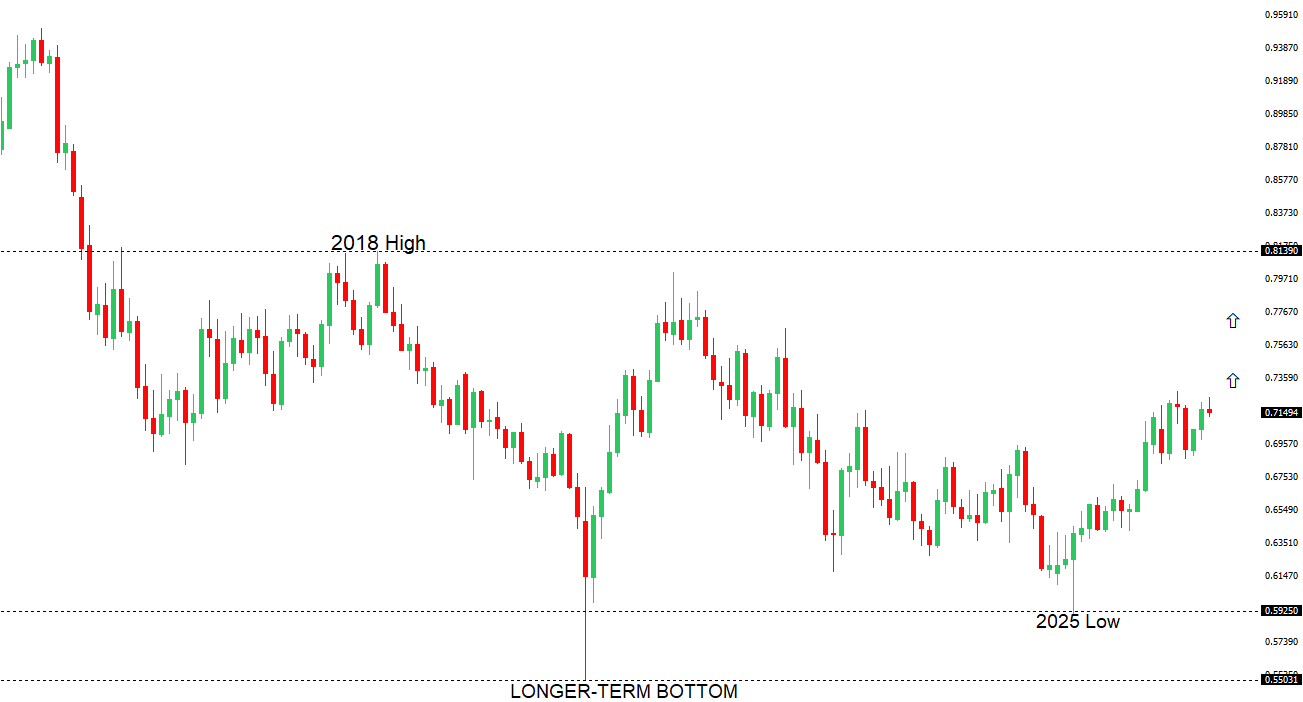 | ||
| R2 0.7238 - 9 September high - Strong R1 0.7142 - 15 September high - Medium S1 0.7075 - 16 September low - Medium S2 0.7067 - 19 August low - Medium | ||
| AUDUSD: fundamental overview | ||
| The Australian dollar has strengthened as markets lean further into the prospect of additional RBA tightening. Governor Bullock warned that inflation risks are materializing, with elevated oil prices, persistent domestic price pressures and a still-tight labor market potentially forcing another rate hike as soon as September. Deputy Governor Hauser reinforced the RBA’s commitment to returning inflation to target, while one major bank now expects two further hikes and a terminal rate of 4.85%. The Aussie has also benefited from a modest improvement in global risk sentiment, although its gains remain tempered by the Fed’s own hawkish stance and the rising probability of another US rate increase in October. | ||
| Suggested reading | ||
| Hedging the AI Doomsday Risk, D. Moyo, Project Syndicate (September 16, 2026) Regulating Technological Innovation Has Never Worked, J. Stossel, Reason (September 16, 2026) | ||