FX & Crypto Insights – Institutional thought leadership
16 February 2026 Considering the quantum threat
LMAX Digital performance
Total notional volume from last Monday to Friday came in at $1.8 billion, down 47% from the prior week.
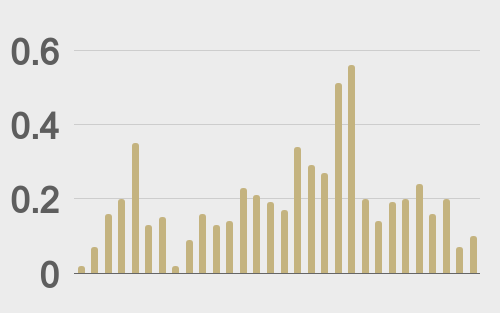
Breaking it down per coin, bitcoin volume came in at $988 million, 50% lower than the previous week. Ether volume came in at $410 million, 30% lower than the week earlier.
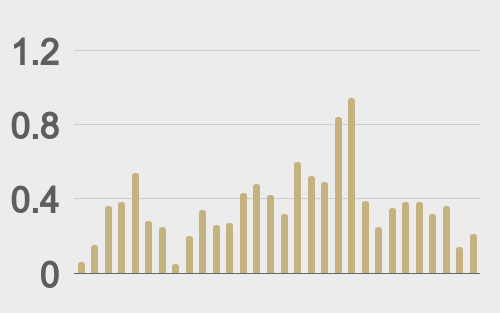
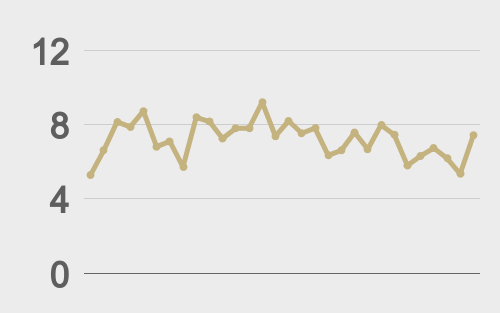
Total notional volume over the past 30 days comes in at $10.95 billion.
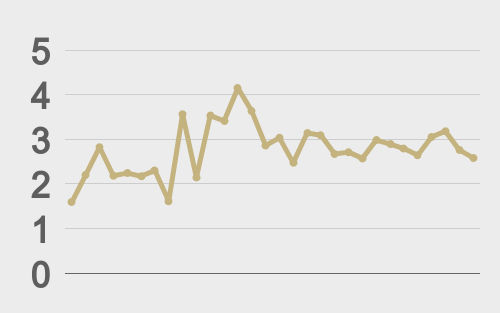
Looking at average position size over the past 30 days, we’re seeing average bitcoin position size at $7,241 and average position size for ether at $2,747.
Volatility has cooled down after peaking earlier this month. We’re looking at average daily ranges in bitcoin and ether of $3,713 and $156 respectively.
Latest industry news
There’s been a lot of renewed noise around quantum computing and the potential threat to Bitcoin, but the reality is this is far more of a long-term theoretical issue than an immediate market risk.
At a high level, quantum computers are designed to solve certain mathematical problems exponentially faster than traditional computers. The concern is that one day, a sufficiently powerful quantum machine could break the cryptographic signatures that protect Bitcoin wallets and, in theory, allow someone to derive private keys from public addresses.
But we are nowhere near that reality today.
The quantum machines that exist now are still experimental. To actually threaten Bitcoin would require millions of stable, error-corrected qubits. Today’s systems operate with a tiny fraction of that capacity. Most serious estimates suggest this is at least a decade away, and likely much longer.
More importantly, Bitcoin is not static. It’s software. The network can upgrade its cryptography to quantum-resistant algorithms well before quantum computers reach that level. This would give users plenty of time to migrate funds securely. In other words, the system can evolve alongside the threat.
There is, however, one important nuance worth highlighting. Some very early Bitcoin—most notably the roughly 1 million BTC believed to belong to Satoshi Nakamoto, along with other long-dormant coins—sits in addresses that may be more vulnerable if quantum computing ever becomes viable at scale.
To the extent this risk has gained more visibility recently, it’s possible that some of the modest weakness we’ve seen in Bitcoin reflects early-stage repricing, as the market begins to account for the scenario in which a portion of these previously assumed lost or permanently inactive coins could eventually re-enter circulation.
From a market structure standpoint, this is ultimately a healthy development. Markets function best when forward risks are transparently understood and gradually priced in over time, rather than emerging suddenly and unexpectedly.
It’s also critical to understand this isn’t a Bitcoin-specific issue. Quantum computing would first threaten banks, military systems, and internet security broadly. Bitcoin is arguably in a strong position because it is transparent, decentralized, and upgradeable, allowing it to adapt in the open.
From a market perspective, this is very similar to prior environmental concerns around Bitcoin mining. At the time, it was framed as an existential threat. Instead, the ecosystem adapted, efficiency improved, and the market ultimately moved forward.
The bottom line is quantum computing is something to monitor over the long term, but it’s not an actionable risk today. The technology isn’t close, the timeline is long, and viable solutions already exist.
Even in the eventual scenario where some dormant coins re-enter circulation, the network itself would remain secure and functional, and the core value proposition—predictable supply, decentralized verification, and censorship resistance—would remain intact.
LMAX Digital metrics
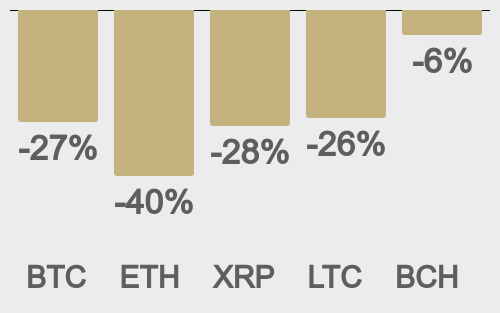
Price performance
last 30 days avg. vs USD (%)
Total volumes
last 30 days ($bn)
BTCUSD volumes
last 30 days ($bn)
BTCUSD avg. trade size
last 30 days ($k)
ETHUSD avg. trade size
last 30 days ($k)
Average daily range
BTCUSD $3,713
ETHUSD $156
Social media
@Cointelegraph
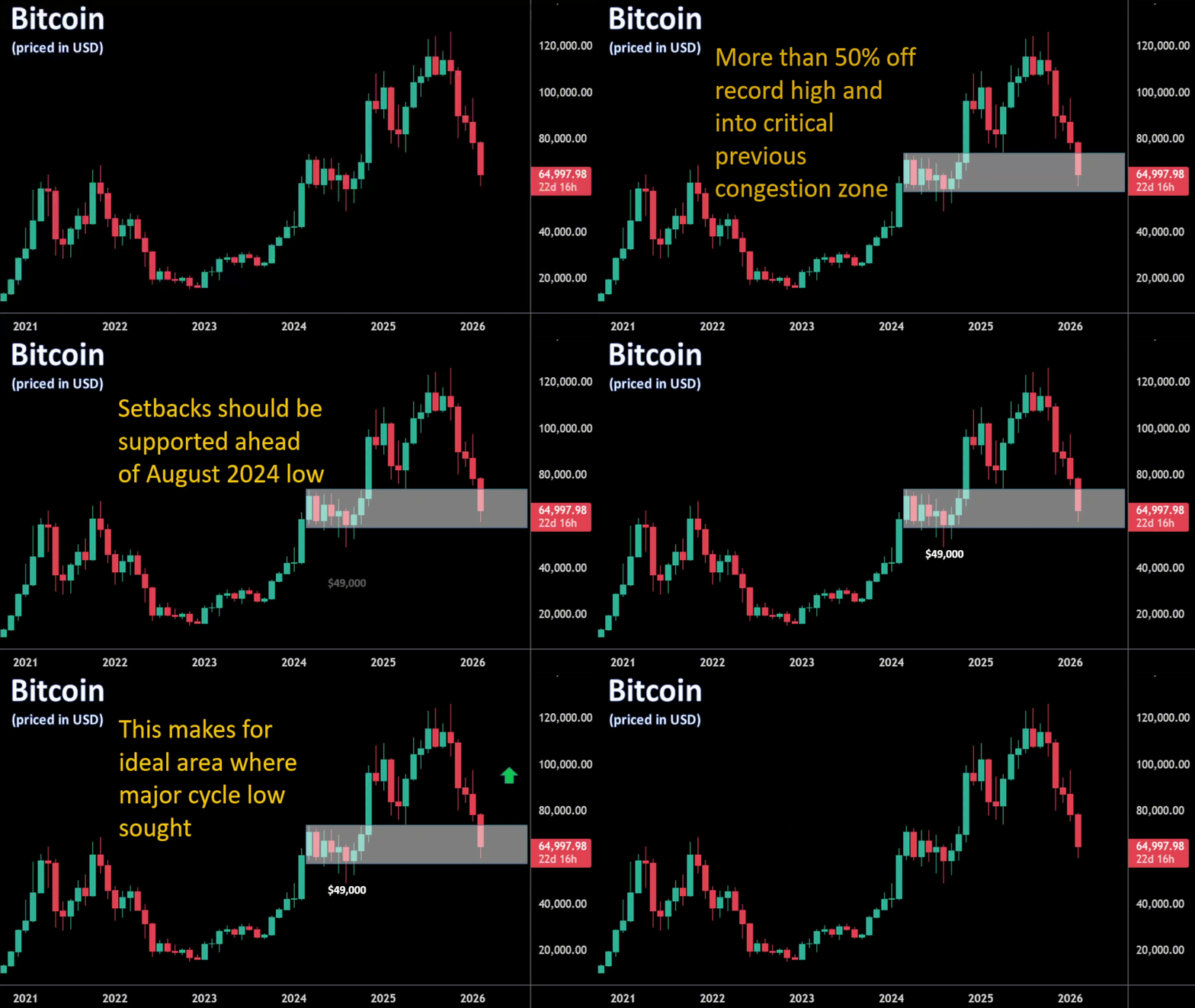
Strategy reveals it can withstand an 88% Bitcoin price decline to $8K and still have sufficient assets to fully cover its debt.
@Cointelegraph
DeFi Spot Volume is up 3x since the start of 2026.
Manage your cookie preferences below. Necessary cookies are essential for the website to function, while analytical cookies help us improve your browsing experience.
Necessary cookies
These cookies are essential for the basic functionality of the website and cannot be turned off.
Analytics cookies
These cookies help us analyse website traffic and improve our services.


 Social media