FX & Crypto Insights – Institutional thought leadership
18 August 2026 Ethereum’s institutional moment
LMAX Digital performance
LMAX Digital volumes got off to a solid start this week. Total notional volume for Monday came in at $161 million, 10% above 30-day average volume.
Bitcoin volume printed $88 million, 12% above 30-day average volume. Ether volume came in at $18 million, 24% below 30-day average volume.
Looking at average position size over the past 30 days, we’re seeing average bitcoin position size at $4,817 and average position size for ether at $1,711.
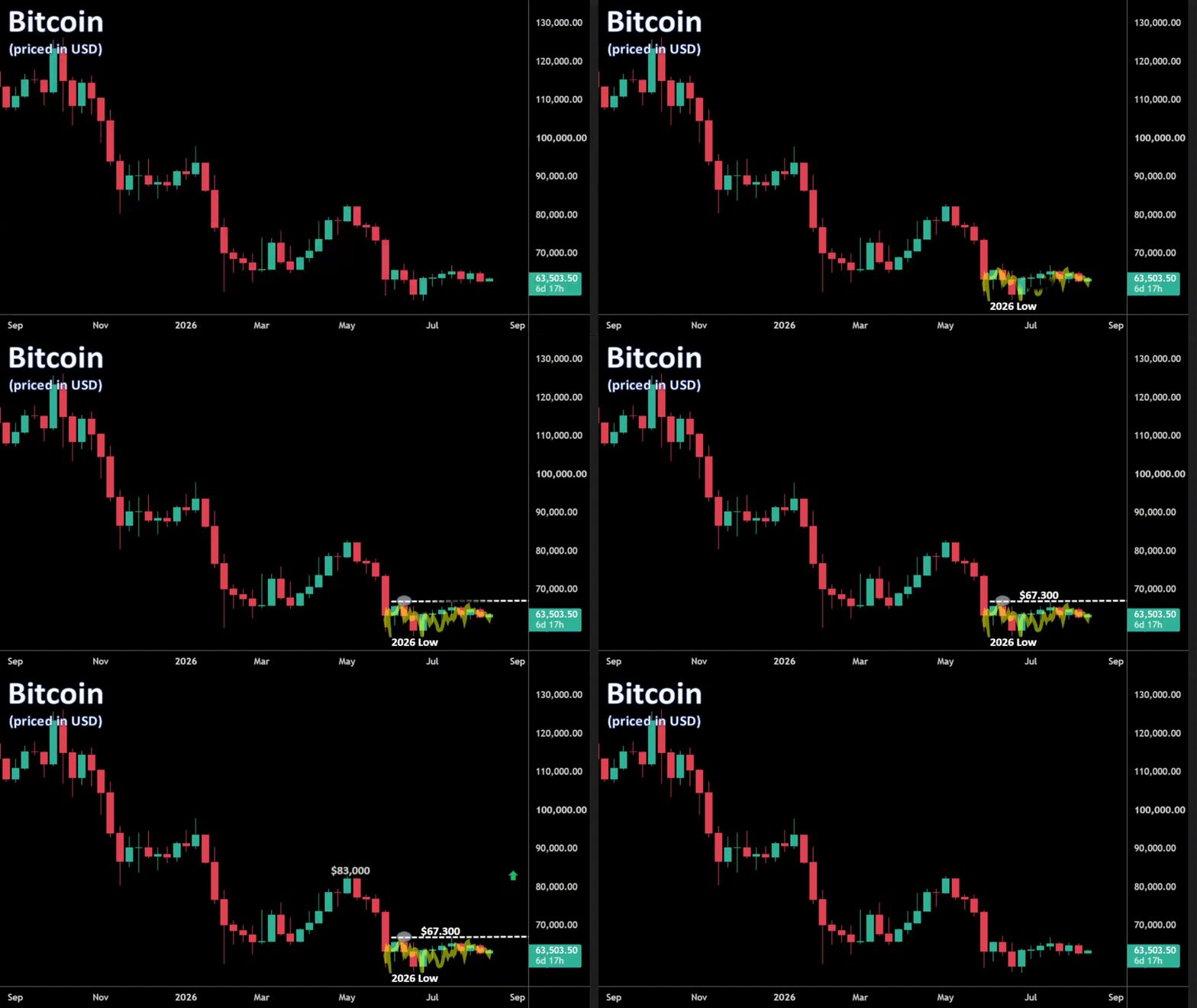
Volatility remains subdued and continues the decline to multi-month lows. We’re looking at average daily ranges in bitcoin and ether of $1,227 and $46 respectively.
Latest industry news
Ethereum may be entering one of the most important phases in its history. After years in which the investment debate focused on scalability, high transaction costs and competition from faster chains, many of those challenges are now being addressed just as institutional adoption is beginning to accelerate.
The result is an increasingly compelling structural bull case for ETH.
The foundation of that case is Ethereum’s position as a settlement layer for on-chain finance. Stablecoins, tokenized real-world assets and DeFi are increasingly becoming important components of the traditional financial system’s move on-chain.
Ethereum’s security, liquidity, decentralization and established infrastructure provide advantages that are difficult for competing networks to replicate.
At the same time, one of Ethereum’s biggest historical weaknesses is improving dramatically. Layer 1 capacity has increased while transaction costs have fallen substantially, allowing activity that was once prohibitively expensive to take place directly on Ethereum at a fraction of the previous cost.
This complements the enormous scaling capacity provided by Layer 2 networks. Importantly for ETH, transactions executed on Layer 1 generate fees in ETH, with base fees burned under EIP-1559. Lower costs can therefore encourage greater activity while allowing ETH to capture the economic value generated on the network.
ETH itself is also a productive asset. Proof-of-stake provides native staking yield, while Ethereum’s broader financial ecosystem creates additional opportunities to deploy ETH as collateral and productive capital.
As institutional investors become more comfortable with staking, custody and on-chain markets, ETH can increasingly function simultaneously as a reserve asset, productive collateral and the economic asset securing the network.
This makes the current debate around changing Ethereum’s issuance and staking economics particularly important. A growing view among leading institutional participants is that now may be precisely the wrong time to materially alter the framework.
Major financial players are finally building businesses and investment strategies around Ethereum’s existing economics, and predictability is valuable. Rather than engineering additional scarcity, there is a strong argument for allowing adoption, transaction growth and the existing fee-burn mechanism to demonstrate what the current model can deliver.
For markets, however, the fundamental story still needs confirmation from price. We continue to view $2,000 as the next major level for ETH.
A sustained recovery and establishment back above $2,000 would provide an important technical confirmation that the market is beginning to recognize the improving fundamental backdrop and could open the door to the start of the next significant leg higher.
The broader bull case is relatively simple: Ethereum has spent years addressing its biggest weaknesses just as potentially its largest source of demand is arriving.
If institutional finance increasingly moves on-chain, Ethereum appears exceptionally well positioned to capture that transition.
LMAX Digital metrics
Price performance
last 30 days avg. vs USD (%)
Total volumes
last 30 days ($bn)
BTCUSD volumes
last 30 days ($bn)
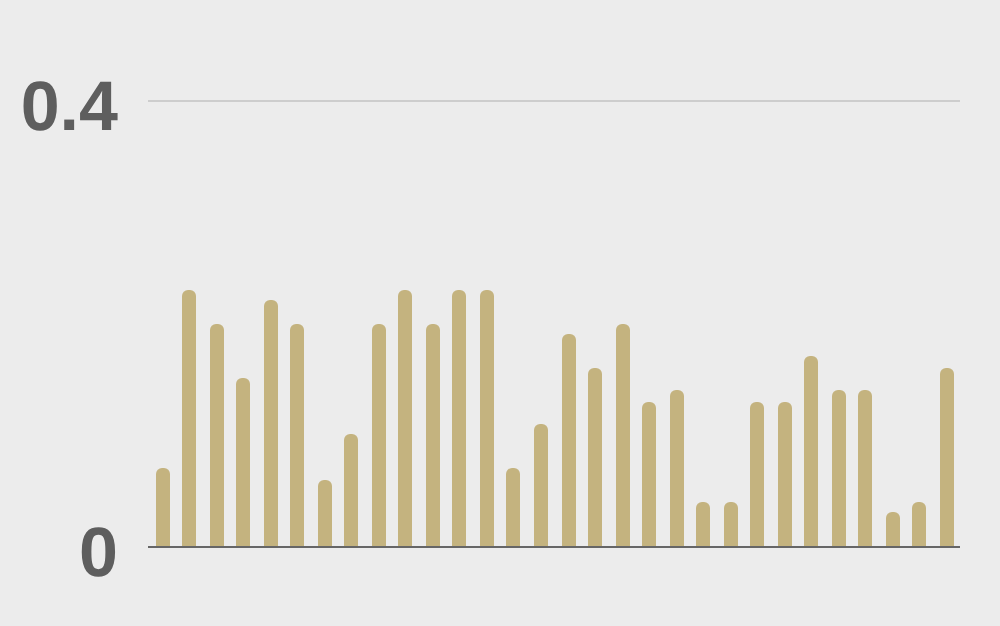
BTCUSD avg. trade size
last 30 days ($k)
ETHUSD avg. trade size
last 30 days ($k)
Average daily range
BTCUSD $1,227
ETHUSD $46
Social media
@TheBlockCo
The Blockchain Association has filed a letter supporting the SEC’s proposal to scrap outdated NMS rules.
@Cointelegraph
Tom Lee says ETH’s tailwind over the next few years will outpace prior ICO and NFT cycles.
Manage your cookie preferences below. Necessary cookies are essential for the website to function, while analytical cookies help us improve your browsing experience.
Necessary cookies
These cookies are essential for the basic functionality of the website and cannot be turned off.
Analytics cookies
These cookies help us analyse website traffic and improve our services.





 Social media