


 | ||
| 26th October 2026 | view in browser | ||
| Central banks in the crossfire | ||
| Global markets head into the new week navigating a volatile mix of escalating geopolitical tensions, surging energy prices, renewed concerns over the AI investment boom, and a pivotal stretch of central bank decisions. | ||
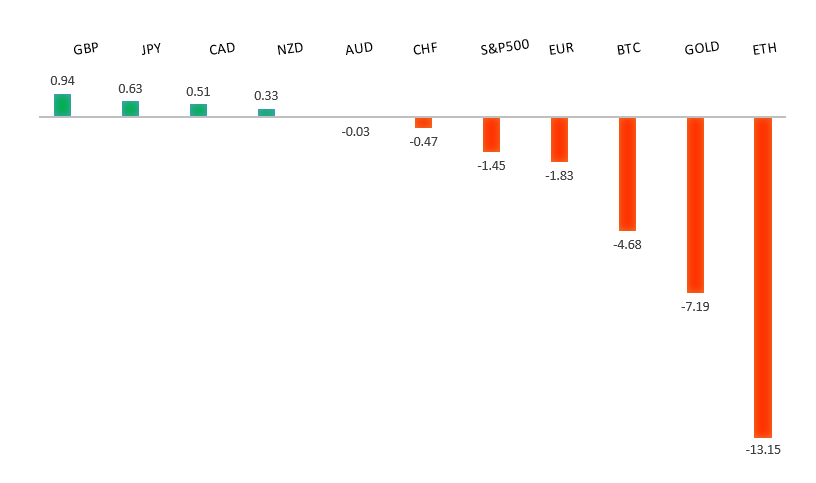
| Performance chart 30day v. USD (%) | ||
 | ||
| Technical & fundamental highlights | ||
| EURUSD: technical overview | ||
| The Euro continues to show signs of wanting to carve out a major bottom after trading down to a 20-year low in 2022. Setbacks should be exceptionally well supported above 1.1000 on a weekly close basis ahead of the next major upside extension back above 1.2000. | ||
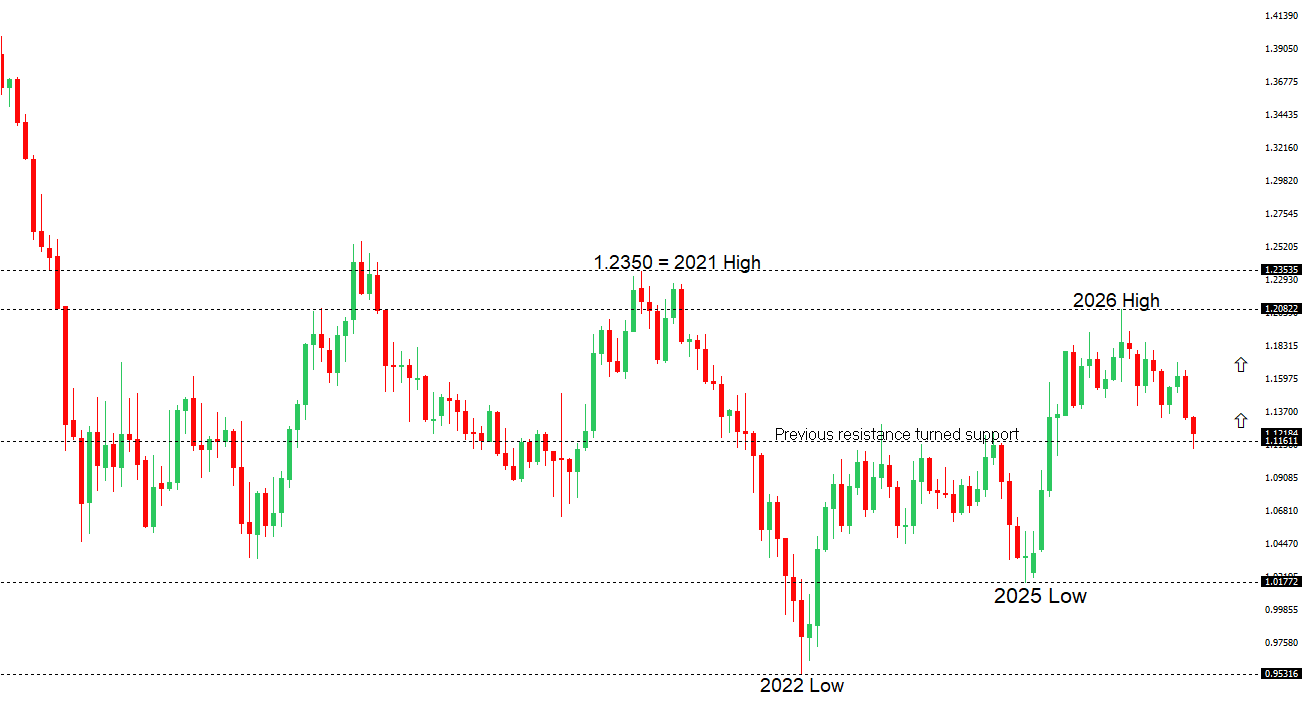 | ||
| R2 1.1337 - 1 October high - Medium R1 1.1270 - 16 October high - Medium S1 1.1181 - 19 Octoberber low - Medium S2 1.1113 - 14 Octoberber/2026 low - Strong | ||
| EURUSD: fundamental overview | ||
| The euro has come under renewed pressure, with ongoing concerns surrounding France’s fiscal position and political uncertainty continuing to weigh on sentiment, even as the broader eurozone outlook remains relatively stable. While France’s debt challenges have raised questions about fiscal discipline and sovereign borrowing costs, the risks have yet to develop into a broader systemic threat to the currency bloc. Attention is now turning to Thursday’s European Central Bank policy decision, where policymakers are expected to leave interest rates unchanged while assessing persistent inflation pressures against a still-fragile growth backdrop. Recent economic signals have reinforced the uneven nature of the eurozone recovery, with Germany’s industrial weakness and subdued domestic demand remaining important concerns. Upcoming eurozone inflation and growth releases will be particularly important in shaping expectations for the ECB’s December meeting, with markets looking for evidence that underlying price pressures remain sufficiently persistent to justify a more restrictive policy stance. Meanwhile, the euro remains sensitive to developments in US Treasury yields and expectations surrounding the Federal Reserve’s upcoming policy decision, with relative monetary policy expectations continuing to influence the broader direction. | ||
| GBPUSD: technical overview | ||
| The Pound remains exceptionally well supported on dips into the 1.3000 area, with the price largely consolidating above the psychological barrier and previous resistance turned support in the form of the 2023 high. Look for the market to continue be well supported on dips ahead of the next major upside extension through the yearly high at 1.3870 and towards a retest of the 2018 high at 1.4377 further up. Only a monthly close below 1.3000 negates. | ||
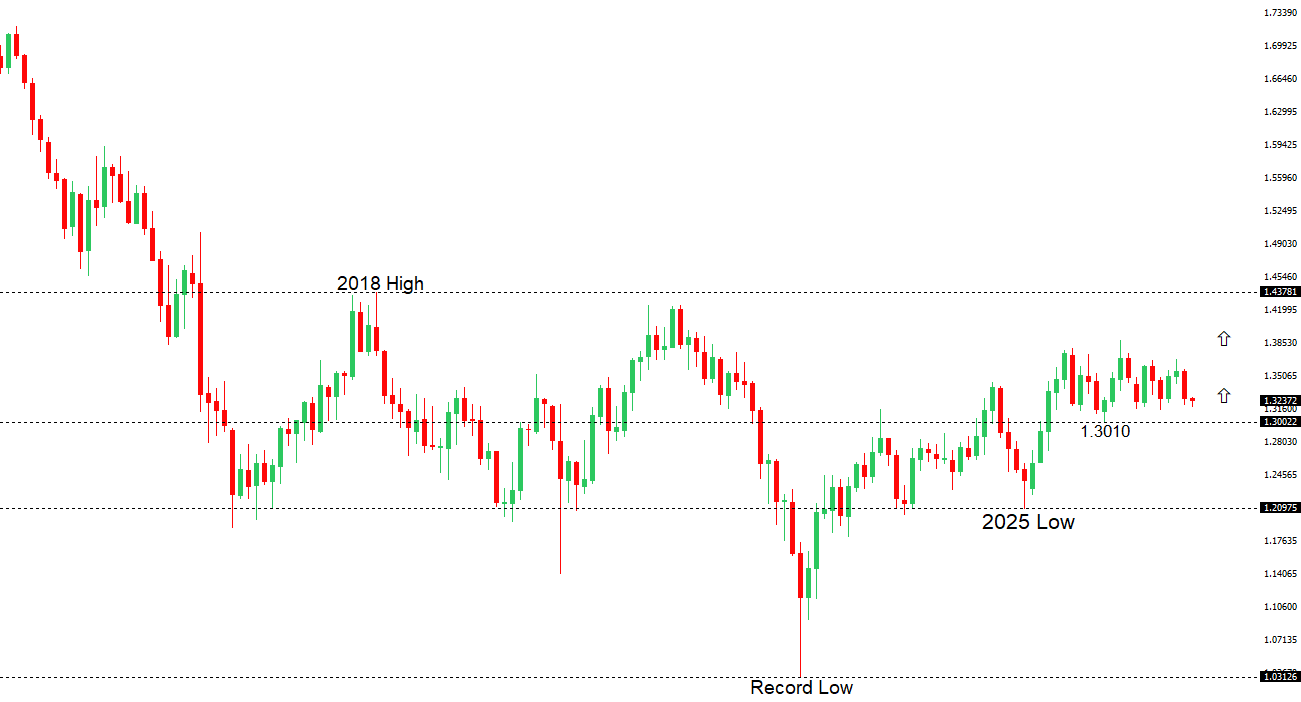 | ||
| R2 1.3498 - 16 September high - Medium R1 1.3420 - 22 October high - Medium S1 1.3297 - 20 October low - Medium S2 1.3137 - 14 October/2026 low - Strong | ||
| GBPUSD: fundamental overview | ||
| The pound has come under renewed pressure as softer UK retail sales have raised concerns about the resilience of household spending, with annual sales growth slowing sharply despite signs of improvement in broader business activity. October’s stronger composite PMI offered some reassurance that the economy continues to expand, although persistent inflation pressures remain a key consideration for the Bank of England. Recent hotter-than-expected UK inflation data have reinforced expectations that the BoE may need to maintain a restrictive policy stance or consider additional tightening, creating a difficult balancing act between containing inflation and supporting growth. Attention now turns to the government’s upcoming budget statement and the BoE’s November policy decision, with investors looking for clarity on fiscal policy, inflation risks, and the outlook for interest rates. Meanwhile, resilient US manufacturing activity has provided additional support for the dollar, adding to pressure on sterling. | ||
| USDJPY: technical overview | ||
| The recent breakdown below 155.00 suggests the market could be on the verge of a bigger structural shift, with the possibility for an end to a longer-term uptrend and the start to a period of persistent weakness. Critical support now comes in the form of the 2026 low from January at 151.97, with a drop below to strengthen the bearish outlook and open the door for a major downside extension targeting the 2024 low at 139.58. The market would need to get back above 160.00 to take the immediate pressure off the downside. | ||
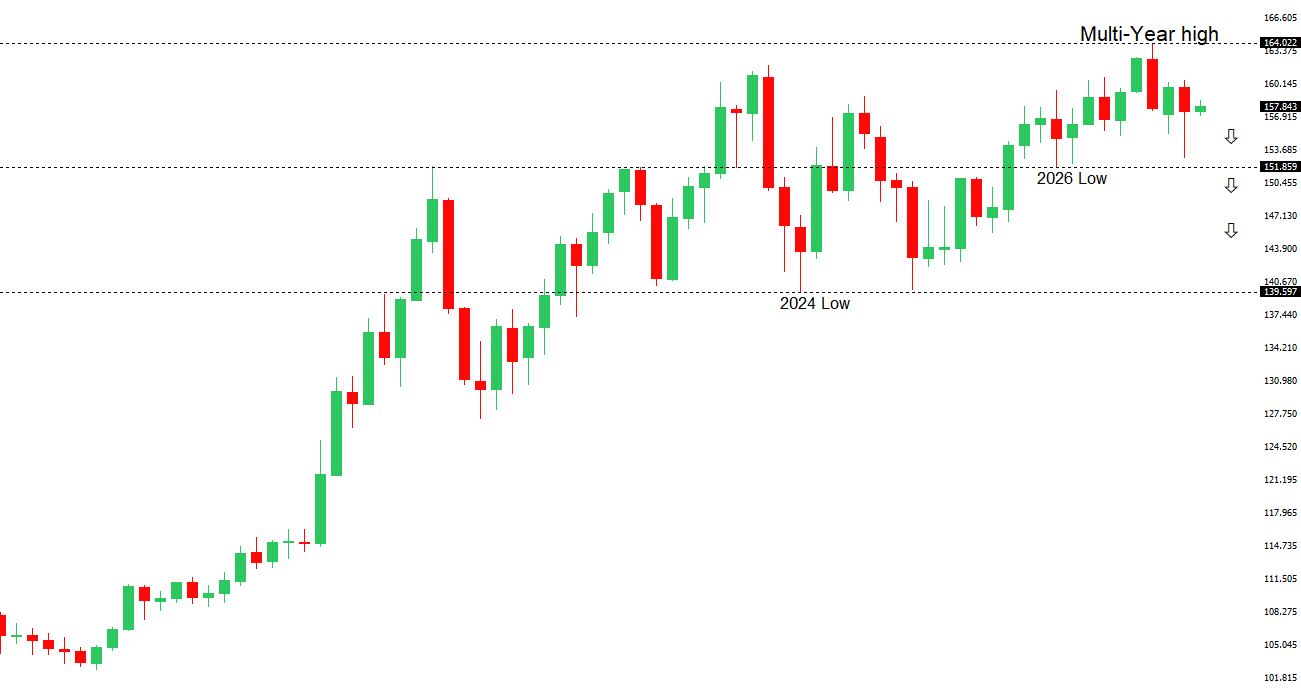 | ||
| R2 159.04 - 24 September high - Strong R1 158.26 - 22 October high - Medium S1 156.07 - 23 October low - Medium S2 155.29 - 4 September low - Strong | ||
| USDJPY: fundamental overview | ||
| The yen has found some support from softer US Treasury yields, a more cautious global risk environment, and lingering expectations that the Bank of Japan will continue normalizing monetary policy. Domestic developments remain important, with Economy Minister Kiuchi acknowledging that Japan has yet to establish the conditions needed to formally declare an end to deflation, highlighting the delicate balance between persistent inflation pressures and the sustainability of domestic demand. Meanwhile, expectations for further wage growth and underlying inflation continue to support the case for additional BOJ tightening, although concerns about economic growth and the impact of higher borrowing costs have complicated the outlook. Attention now turns to the BOJ’s October 30 policy decision, updated economic projections, and Governor Ueda’s guidance, with investors looking for greater clarity on the timing of the next rate increase. The risk of official intervention against excessive yen weakness also remains an important consideration. | ||
| AUDUSD: technical overview | ||
| There are signs of the formation of a longer-term base with the market recovering out from a meaningful longer-term support zone. The latest monthly close back above 0.7000 takes the big picture pressure off the downside and strengthens the case for a bottom, with the focus now on a push towards 0.8000. Setbacks should now be well supported ahead of 0.6700. | ||
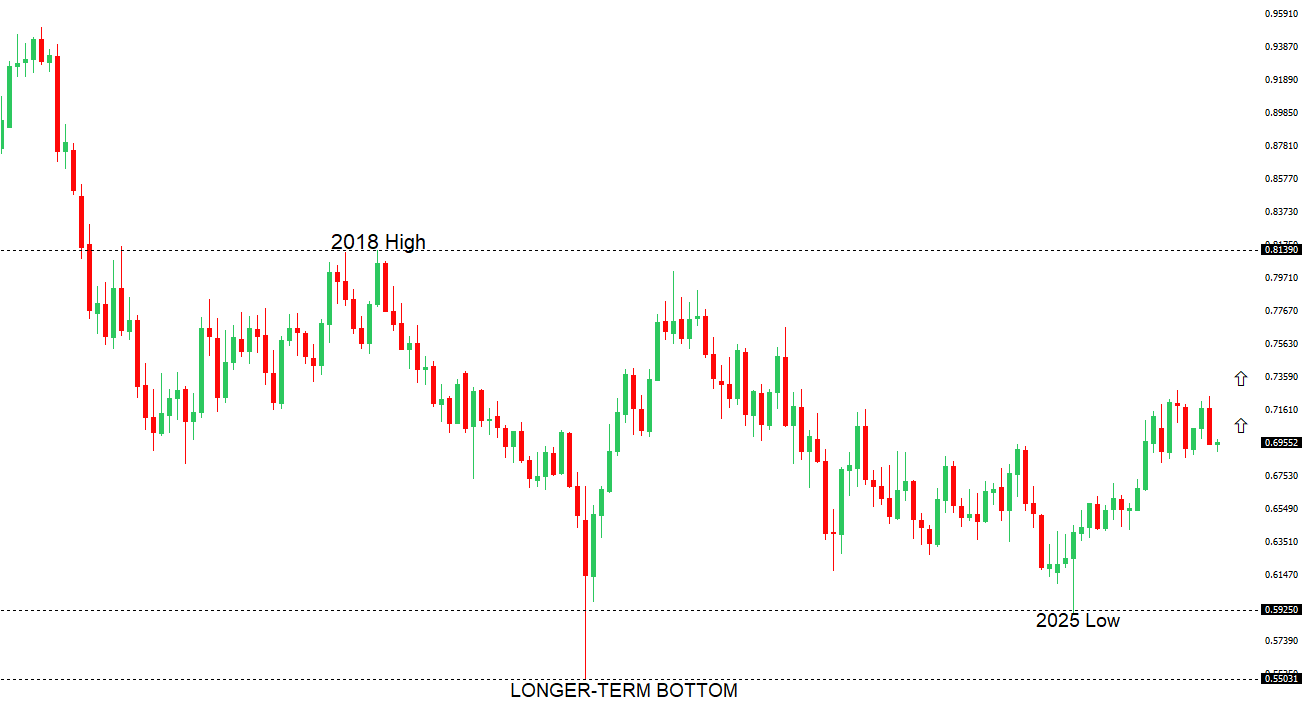 | ||
| R2 0.7100 - Figure - Medium R1 .7046 - 24 September high - Medium S1 0.6970 - 20 October low - Medium S2 0.6894 - 15 October low - Strong | ||
| AUDUSD: fundamental overview | ||
| The Australian dollar has continued to benefit from increasingly hawkish Reserve Bank of Australia expectations, with persistent inflation pressures reinforcing speculation that policymakers could deliver another rate hike as early as November. Recent comments from RBA Deputy Governor Hauser, warning that the inflation outlook has deteriorated materially relative to earlier forecasts, have strengthened the case for further tightening and helped support the currency. Australia’s sensitivity to Chinese economic developments remains an important consideration, with investors monitoring signs of stabilization in Chinese demand and the implications for Australian commodity exports. Meanwhile, softer US Treasury yields and a broadly weaker US dollar have provided additional support. Attention now turns to Australia’s upcoming quarterly inflation report, which will be particularly important in determining whether the RBA has sufficient justification to tighten policy further, alongside developments in Chinese economic activity and the Federal Reserve’s policy decision. | ||
| Suggested reading | ||
| The Agentic Information Economy, S. Fang, Project Syndicate (October 23, 2026) Wall Street Prepares for AI’s Day After, M. Mills, Axios (October 23, 2026) | ||