


 | ||
| 1st September 2026 | view in browser | ||
| Rising oil and bond yields challenge risk sentiment | ||
| Global markets head into Tuesday on a cautious footing as escalating US-Iran tensions drive oil and bond yields higher, revive inflation and rate-hike concerns, support the dollar and weigh on equities, while Eurozone inflation and upcoming US labor data move into focus. | ||
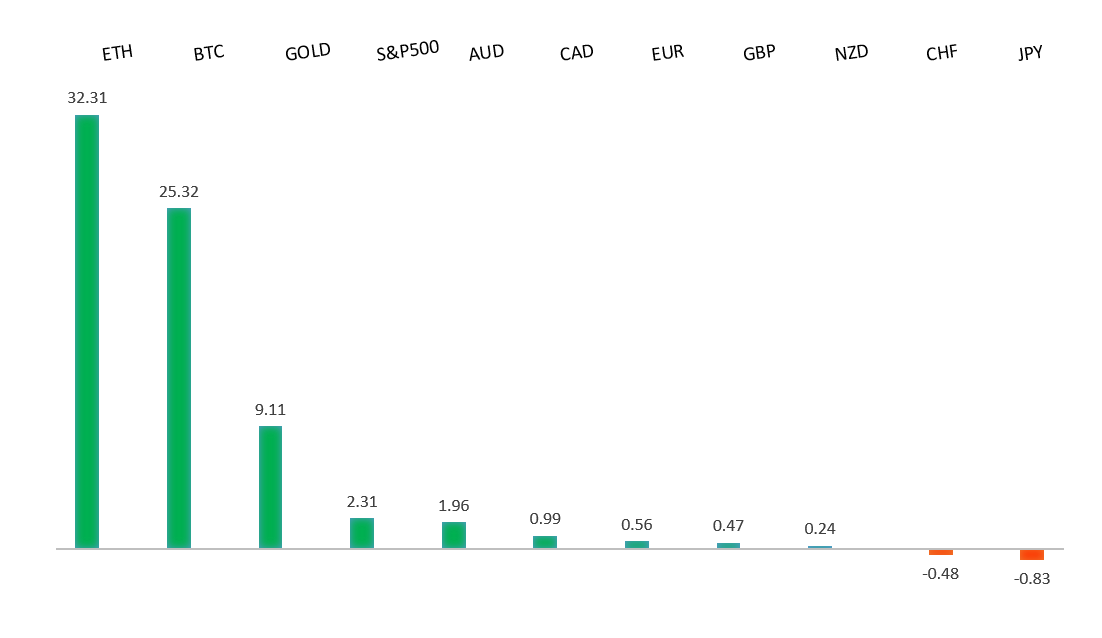
| Performance chart 30day v. USD (%) | ||
 | ||
| Technical & fundamental highlights | ||
| EURUSD: technical overview | ||
| The Euro outlook remains constructive with higher lows sought out on dips in favor of the next major upside extension targeting the 2021 high at 1.2350. Setbacks should be exceptionally well supported ahead of 1.1400. | ||
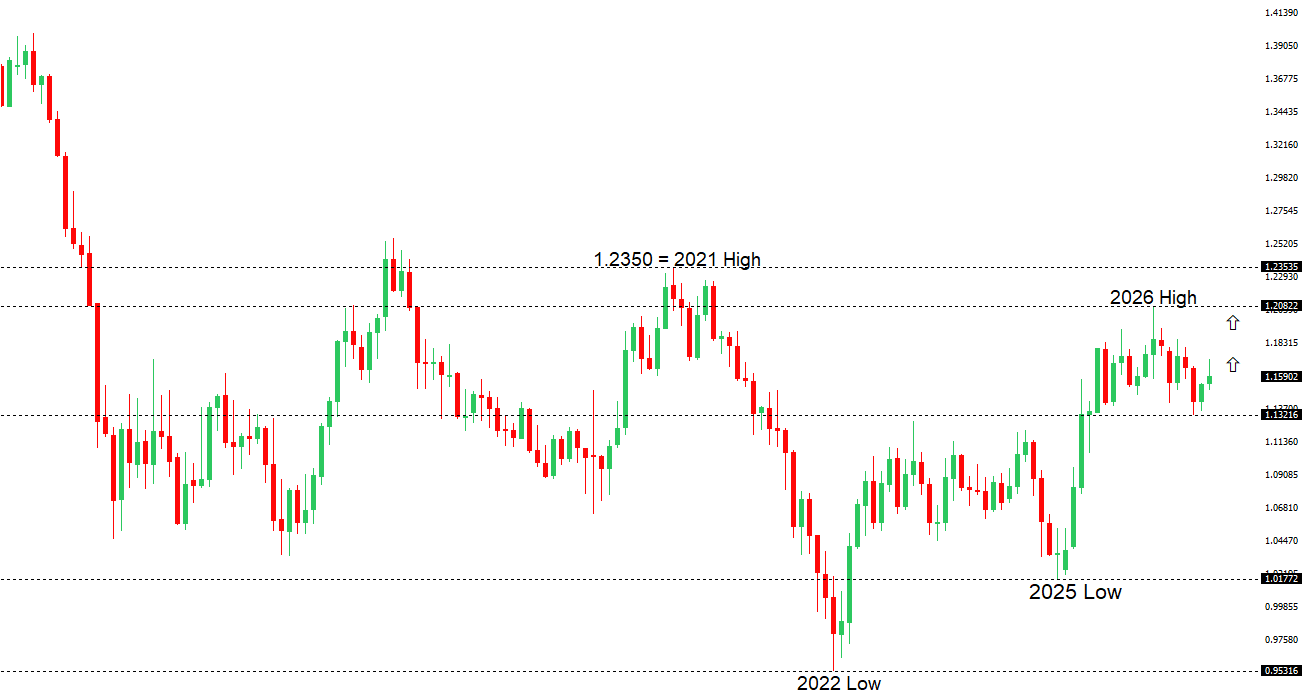 | ||
| R2 1.1712 - 21 August high - Strong R1 1.1660 - 27 August high - Medium S1 1.1567 - 18 August low - Medium S2 1.1512 - 313 August low - Strong | ||
| EURUSD: fundamental overview | ||
| The euro has struggled to extend gains as renewed dollar demand, driven by rising expectations for a September Fed rate hike and escalating US-Iran tensions, offsets an increasingly hawkish ECB outlook. Higher energy prices and Germany’s August inflation increase to 2.9% have reinforced expectations that the ECB will raise rates this month, with policymakers warning that persistent energy-driven inflation may require further tightening. This policy support has helped limit euro weakness, but with markets also repricing the Fed in a more hawkish direction, EURUSD remains caught between competing rate-hike expectations. Attention now turns to the preliminary Eurozone inflation reading, followed by key US manufacturing and labor-market data, for clarity on which central bank is likely to pursue the more forceful tightening path. | ||
| GBPUSD: technical overview | ||
| The Pound remains exceptionally well supported on dips into the 1.3000 area, with the price largely consolidating above the psychological barrier and previous resistance turned support in the form of the 2023 high. Look for the market to continue be well supported on dips ahead of the next major upside extension through the yearly high at 1.3870 and towards a retest of the 2018 high at 1.4377 further up. Only a monthly close below 1.3000 negates. | ||
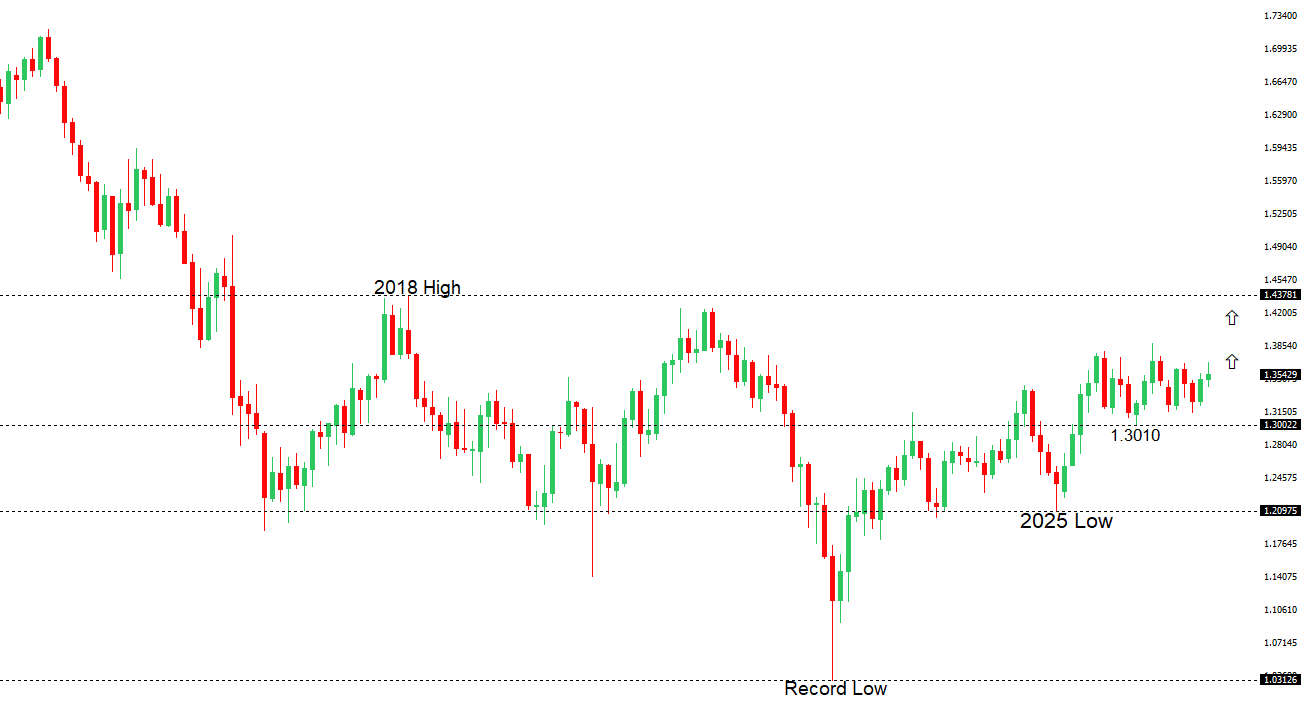 | ||
| R2 1.3676 - 21 August high - Strong R1 1.3603 - 27 August high - Medium S1 1.3523 - 19 August low - Medium S2 1.3474 - 13 Augus low - Medium | ||
| GBPUSD: fundamental overview | ||
| Sterling has come under modest pressure against the dollar, with GBPUSD slipping as Fed Chair Kevin Warsh’s hawkish Jackson Hole message boosted US yields and sharply increased expectations for a September rate hike. At the same time, downside pressure on the pound has been limited by a more constructive Bank of England outlook, with markets assigning around a 60% probability to a 25-basis-point hike at the September meeting and pricing further tightening by year-end. This leaves sterling caught between renewed dollar strength and expectations that UK interest rates may also need to remain elevated, while attention is increasingly turning toward incoming inflation data and the October UK budget for clarity on the country’s fiscal and monetary-policy outlook. | ||
| USDJPY: technical overview | ||
| The major pair has entered a period of correction and consolidation after extending its run to fresh multi-decade highs at 163.99. Setbacks are now expected to be well supported above 155.00, with only a break below to compromise the bullish structure. | ||
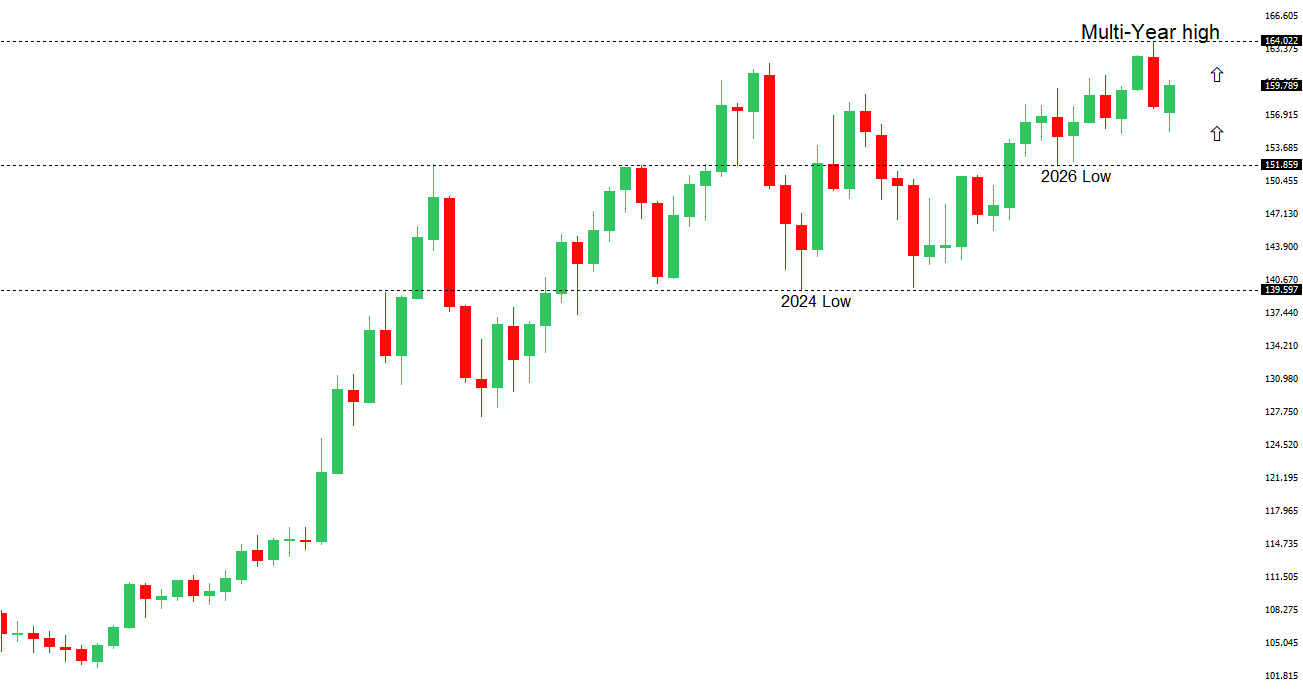 | ||
| R2 160.89 - 31 July high - Strong R1 160.21 - 28 August high - Medium S1 158.88 - 26 August low - Medium S2 158.02 - 20 August low - Strong | ||
| USDJPY: fundamental overview | ||
| The yen remains under heavy pressure, with USDJPY pushing toward 160.00 despite Japan’s 10-year government bond yield reaching 3% for the first time since 1996. The rise in yields reflects mounting fiscal and inflation concerns, but has not been enough to support the currency as investors remain focused on Japan’s still-unfavorable rate differential with the United States and doubts over how aggressively the Bank of Japan will tighten policy. US Treasury Secretary Scott Bessent’s expectation that Japanese authorities and the BoJ will take action to strengthen the yen has increased attention on the September 18 policy decision, while comments from Japanese officials stressing the importance of orderly currency moves have also revived intervention risk. For now, however, markets appear unconvinced that verbal pressure alone will reverse the yen’s weakness, leaving the currency vulnerable unless the BoJ delivers a clearly more hawkish signal or authorities intervene directly. | ||
| AUDUSD: technical overview | ||
| There are signs of the formation of a longer-term base with the market recovering out from a meaningful longer-term support zone. The latest monthly close back above 0.7000 takes the big picture pressure off the downside and strengthens the case for a bottom, with the focus now on a push towards 0.8000. Setbacks should now be well supported ahead of 0.6700. | ||
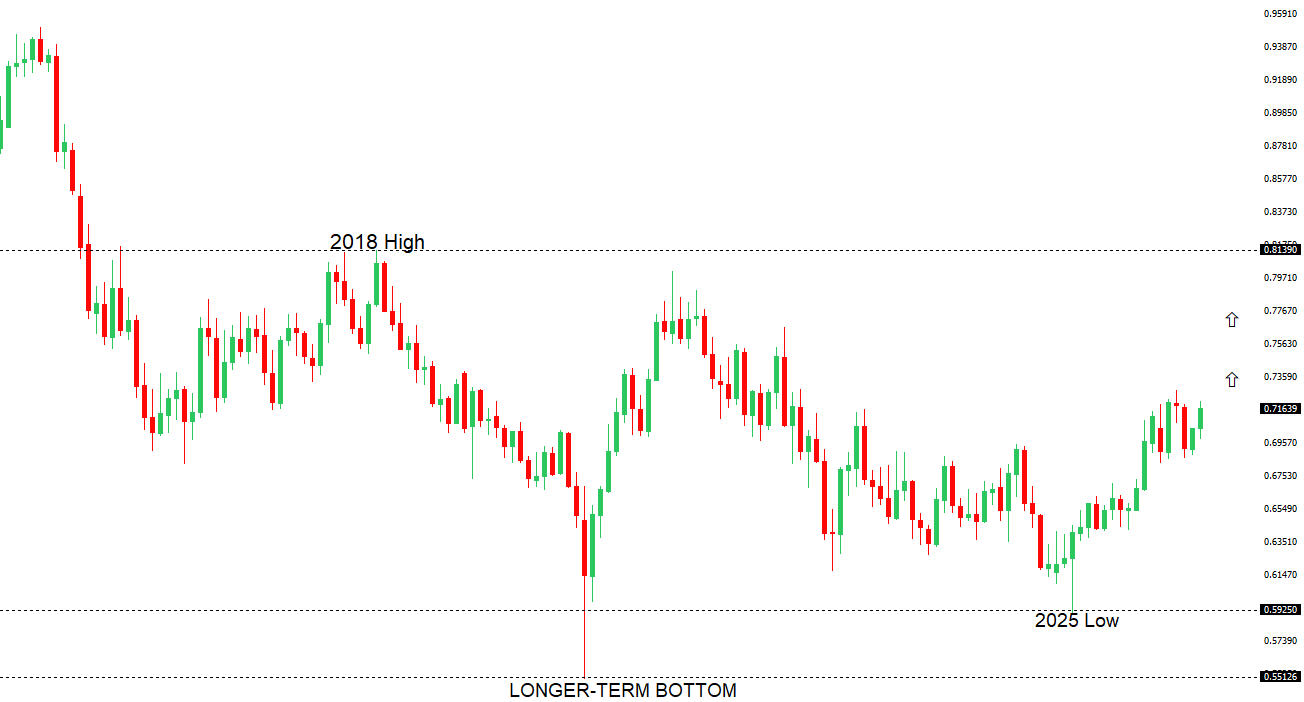 | ||
| R2 0.7222 - 17 April high - Medium R1 0.7208 - 28 August high - Medium S1 0.7138 - 25 August low - Medium S2 0.7067 - 19 August low - Medium | ||
| AUDUSD: fundamental overview | ||
| The Australian dollar has remained well supported, benefiting from stronger Chinese manufacturing data after the RatingDog PMI rose to 51.5 in August from 50.9, an encouraging signal given Australia’s close trade exposure to China. Domestic data were also mildly supportive, with Australian building approvals falling 3.6% in July, a smaller decline than expected, while annual approvals growth edged up to 9%. However, the currency’s upside has been limited by renewed US dollar demand as hawkish Federal Reserve commentary strengthens expectations for a possible September rate hike. With Fed officials continuing to emphasize persistent inflation and the need for faster progress toward the 2% target, the near-term direction for the Australian dollar remains a balance between improving China-sensitive sentiment and a widening policy advantage in favor of the US dollar. | ||
| Suggested reading | ||
| It’s Not Warsh vs. Bessent, It’s PhD Confusion About Inflation, J. Tamny, Forbes (August 30, 2026) Sept. Is Coming: So Are False Seasonality Fears, Fisher Investments (August 27, 2026) | ||