


 | ||
| 12th October 2026 | view in browser | ||
| Oil offers relief, geopolitics keeps the receipt | ||
| Markets begin the week balancing relief from softer oil prices against persistent geopolitical risks, with thin holiday trading setting the stage for a crucial test from US inflation and corporate earnings. | ||
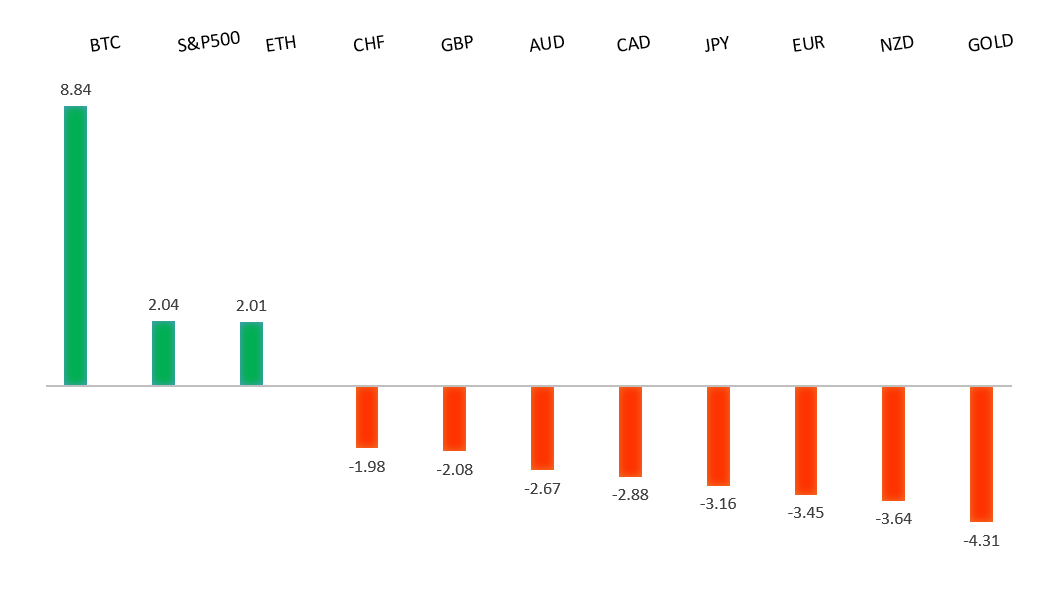
| Performance chart 30day v. USD (%) | ||
 | ||
| Technical & fundamental highlights | ||
| EURUSD: technical overview | ||
| The Euro continues to show signs of wanting to carve out a major bottom after trading down to a 20-year low in 2022. Setbacks should be exceptionally well supported above 1.1200 on a weekly close basis ahead of the next major upside extension back above 1.2000. | ||
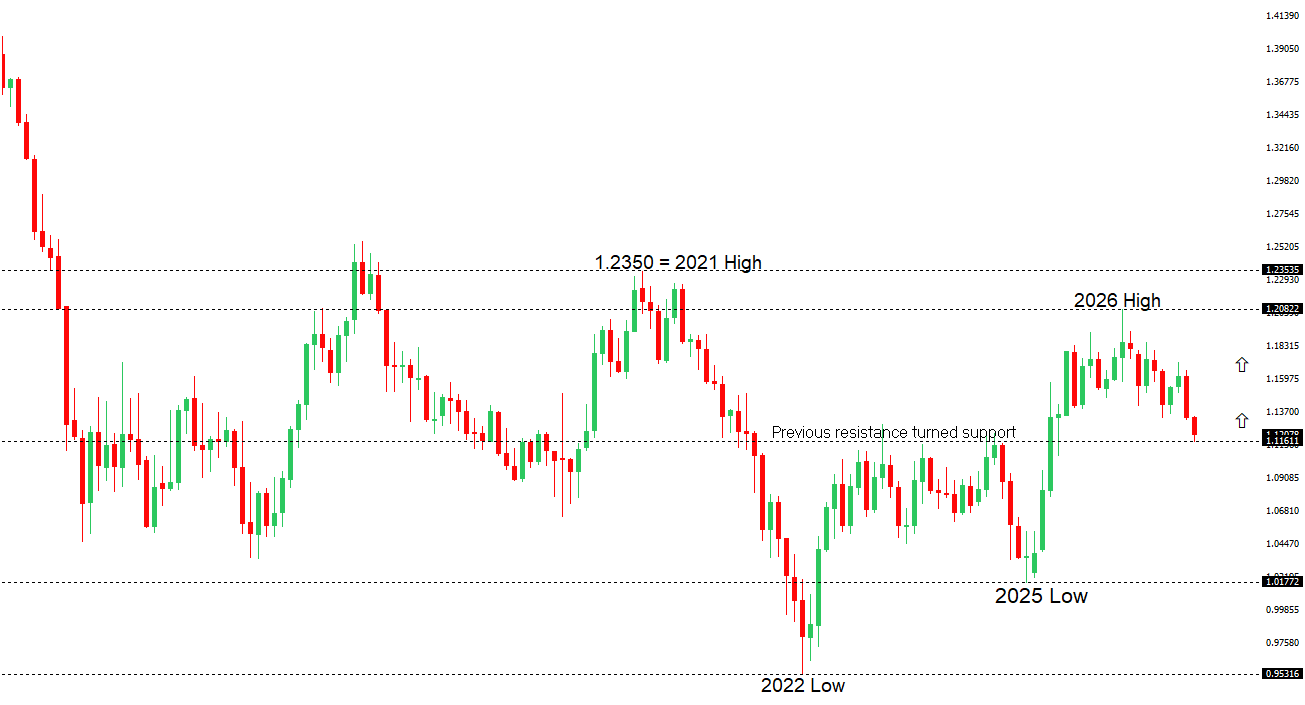 | ||
| R2 1.1337 - 1 October high - Medium R1 1.1286 - 2 October high - Medium S1 1.1161 - 4 Octoberber/2026 low - Strong S2 1.1100 - Figure - Strong | ||
| EURUSD: fundamental overview | ||
| The euro is finding some support from a softer dollar following disappointing US consumer sentiment, though rising inflation expectations complicate the Fed outlook and limit the scope for sustained relief. France’s fiscal and political uncertainty remains the main European headwind, with the selloff in government bonds raising concerns about borrowing costs and putting Italy’s budget plans under closer scrutiny. Resilient euro area activity, including an improved German growth outlook, provides a counterweight, while energy-driven inflation keeps the ECB cautious even as higher financing costs threaten growth. Potentially escalating trade tensions with China add another downside risk, leaving the euro’s recovery dependent on easing sovereign debt concerns and a more durable retreat in dollar strength. | ||
| GBPUSD: technical overview | ||
| The Pound remains exceptionally well supported on dips into the 1.3000 area, with the price largely consolidating above the psychological barrier and previous resistance turned support in the form of the 2023 high. Look for the market to continue be well supported on dips ahead of the next major upside extension through the yearly high at 1.3870 and towards a retest of the 2018 high at 1.4377 further up. Only a monthly close below 1.3000 negates. | ||
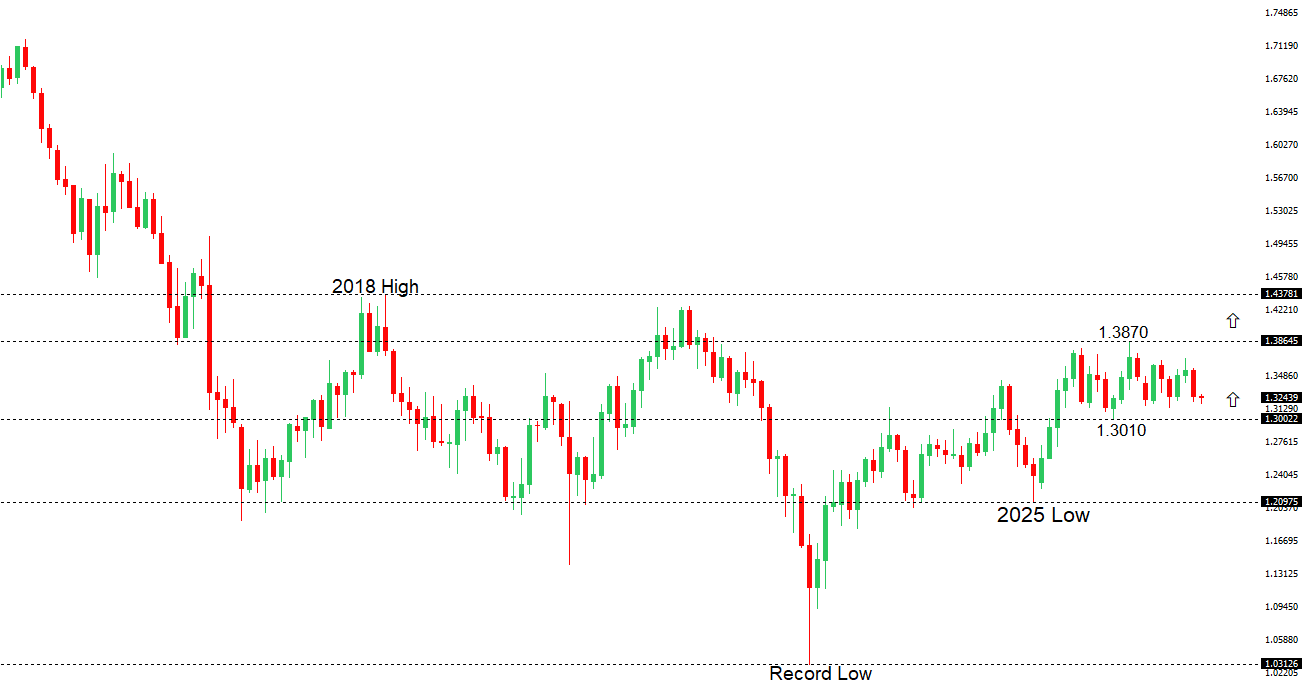 | ||
| R2 1.3407 - 17 September high - Medium R1 1.3312 - 30 September high - Medium S1 1.3181 - 1 October low - Medium S2 1.3140 - 24 June/2026 low - Strong | ||
| GBPUSD: fundamental overview | ||
| The pound is finding support at the start of the week as softer US Treasury yields weigh on the dollar, while renewed commitments to UK fiscal discipline offer some reassurance amid lingering concerns over the public finances. Attention now turns to UK growth data and comments from Bank of England Governor Andrew Bailey for clues on the economic outlook and policy path, with US inflation figures and Federal Reserve communication likely to shape the dollar side of the equation. Sterling’s recovery remains tentative, however, as uncertainty ahead of the UK budget and persistent Middle East tensions could restrain demand, particularly if renewed escalation boosts the dollar’s safe-haven appeal. | ||
| USDJPY: technical overview | ||
| The recent breakdown below 155.00 suggests the market could be on the verge of a bigger structural shift, with the possibility for an end to a longer-term uptrend and the start to a period of persistent weakness. Critical support now comes in the form of the 2026 low from January at 151.97, with a drop below to strengthen the bearish outlook and open the door for a major downside extension targeting the 2024 low at 139.58. The market would need to get back above 160.00 to take the immediate pressure off the downside. | ||
 | ||
| R2 159.04 - 24 September high - Strong R1 158.52 - 7 October high - Medium S1 156.37 - 30 September low - Medium S2 155.33 - 17 September low - Medium | ||
| USDJPY: fundamental overview | ||
| The yen is trading cautiously in holiday-thinned conditions, with expectations that the Bank of Japan will pause after September’s rate increase limiting support from domestic monetary policy. However, persistent cost pressures and Ueda’s concern about inflation overshooting target keep further tightening on the horizon. Softer US consumer sentiment and reduced expectations for an October Fed hike are providing some relief through the dollar, although the prospect of subsequent US tightening continues to constrain yen gains. Middle East tensions add uncertainty, with energy supply risks particularly relevant to Japan’s import-dependent economy. Attention now turns to this week’s US inflation releases, which could reshape Fed expectations and the yield differential driving dollar-yen. | ||
| AUDUSD: technical overview | ||
| There are signs of the formation of a longer-term base with the market recovering out from a meaningful longer-term support zone. The latest monthly close back above 0.7000 takes the big picture pressure off the downside and strengthens the case for a bottom, with the focus now on a push towards 0.8000. Setbacks should now be well supported ahead of 0.6700. | ||
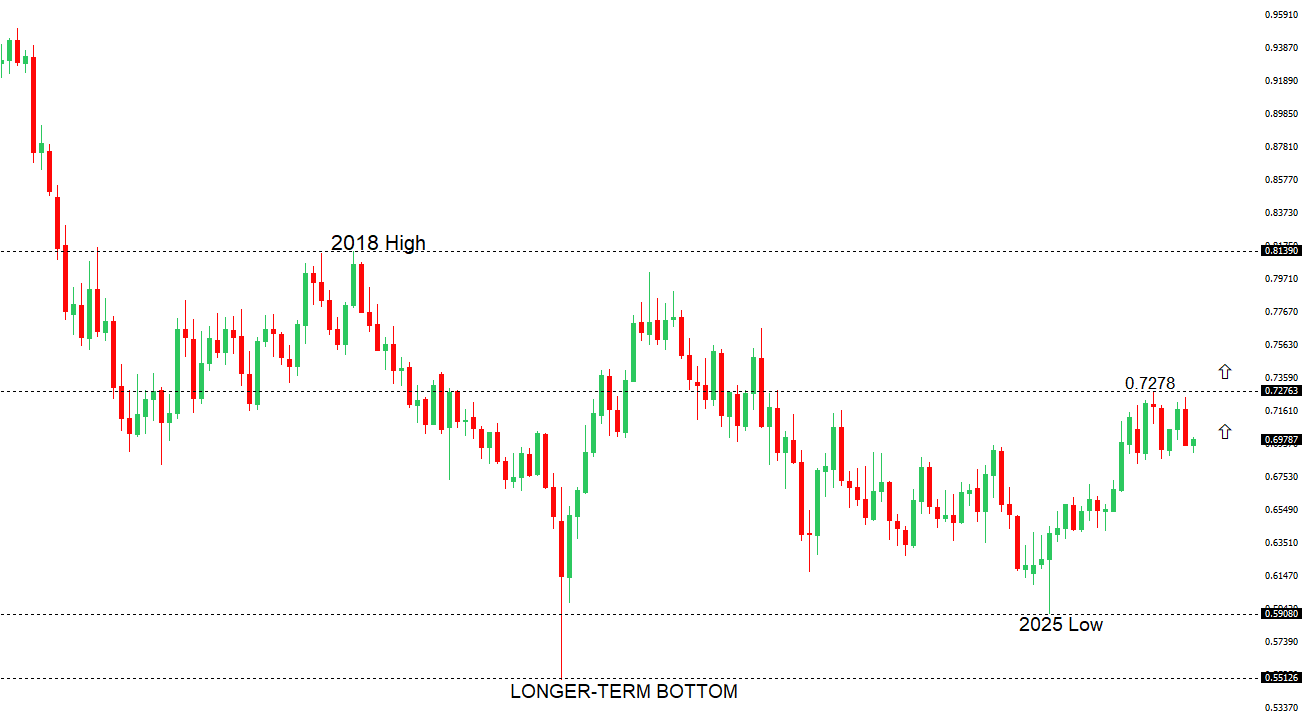 | ||
| R2 0.7142 - 15 September high - Strong R1 0.7000 - Round Number - Medium S1 0.6904 - 1 October low - Medium S2 0.6865 - 30 June low - Strong | ||
| AUDUSD: fundamental overview | ||
| The Australian dollar is drawing modest support from softer US consumer sentiment and reduced expectations for an October Fed rate hike, while easing US Treasury volatility offers a steadier backdrop for risk-sensitive currencies. However, upside remains constrained by declining expectations for a November RBA hike after Australian inflation met forecasts, leaving investors looking to Tuesday’s meeting minutes for guidance on the tightening outlook. On the US side, higher consumer inflation expectations and hawkish comments from Fed officials suggest further tightening remains possible even if policymakers pause this month. The balance leaves the Aussie supported by near-term dollar softness but vulnerable to renewed US inflation pressure and any deterioration in global risk appetite. | ||
| Suggested reading | ||
| How India is reshaping mental healthcare, M. Jha, Financial Times (October 10, 2026) Rate Rise: The Mortgage Puke Factor, M. Phillips, Axios (October 8, 2026) | ||