


 | ||
| 13th August 2026 | view in browser | ||
| Cooling inflation, lingering heat | ||
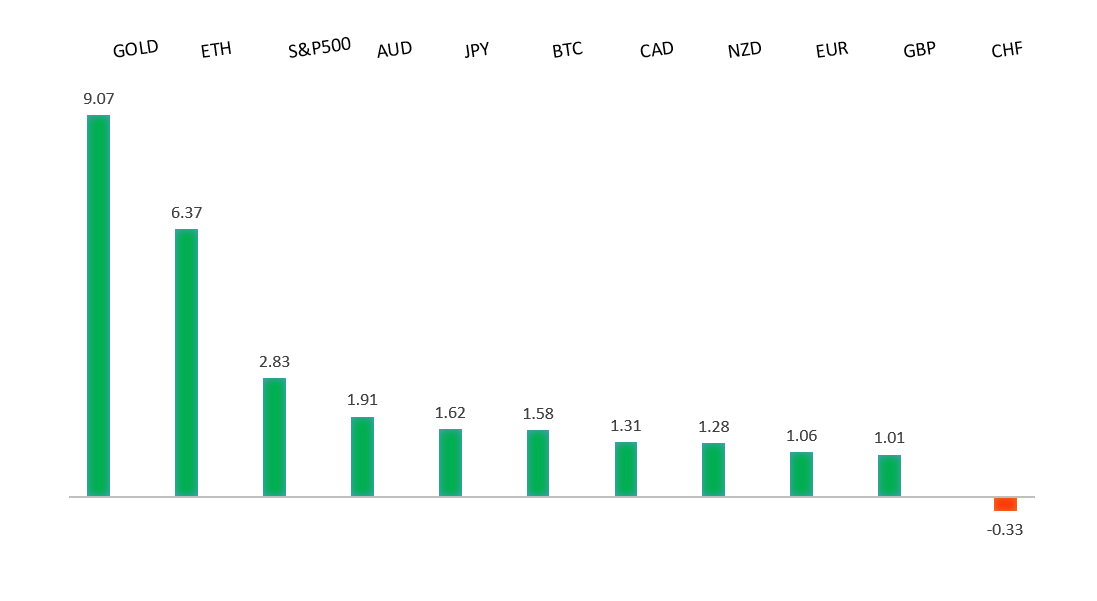
| Markets enter Thursday with the dollar firmer, technology shares supporting equities and oil leveling out, as investors balance benign US inflation and reduced Fed hike expectations against persistent risks surrounding Iran and the Strait of Hormuz. | ||
| Performance chart 30day v. USD (%) | ||
 | ||
| Technical & fundamental highlights | ||
| EURUSD: technical overview | ||
| The Euro outlook remains constructive with higher lows sought out on dips in favor of the next major upside extension targeting the 2021 high at 1.2350. Setbacks should be exceptionally well supported ahead of 1.1300. | ||
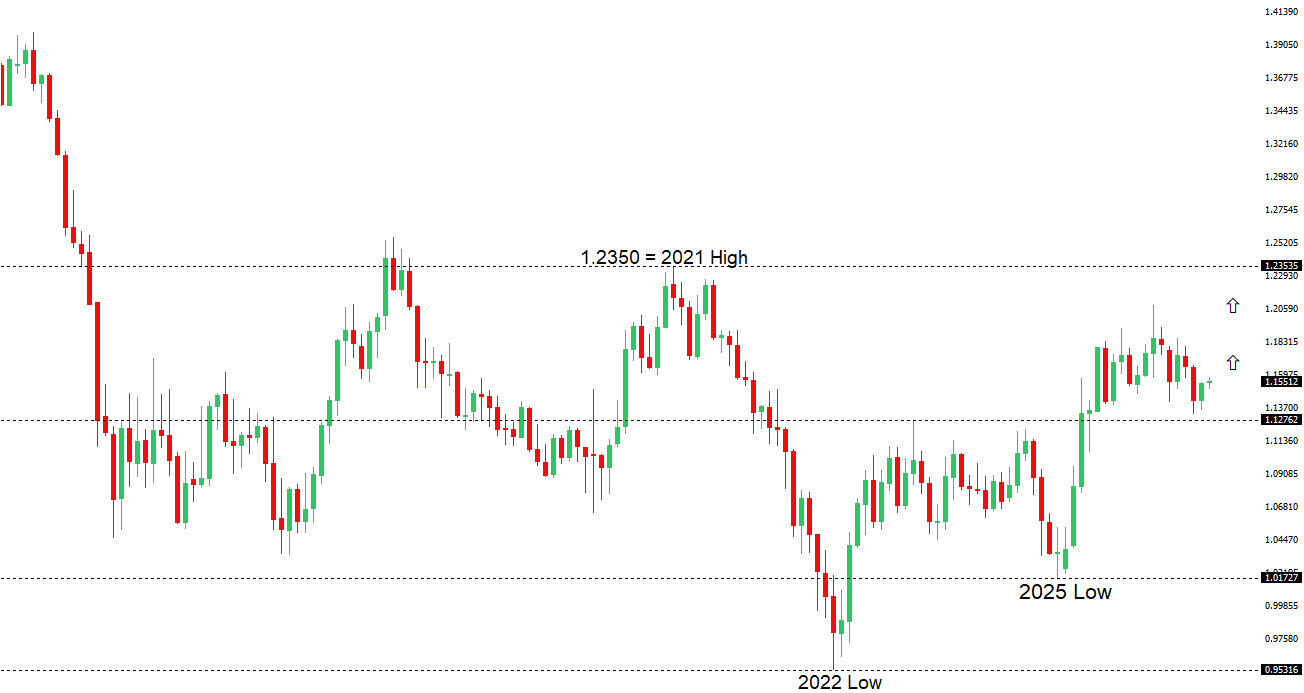 | ||
| R2 1.1623 - 15 June high - Medium R1 1.1581 - 7 August high - Medium S1 1.1500 - Figure - Medium S2 1.1434 - 30 July low - Medium | ||
| EURUSD: fundamental overview | ||
| The euro remains broadly steady against the dollar, with the single currency continuing to consolidate as it lacks a fresh domestic catalyst following the ECB’s late-July meeting. EURUSD has received some support from softer US rate expectations after July headline and core CPI eased to 3.4% and 2.5% year-on-year respectively, prompting markets to reduce the probability of a September Federal Reserve rate hike to around 40%. However, the euro has struggled to capitalize meaningfully as persistent US-Iran tensions continue to underpin safe-haven demand for the dollar, while elevated energy-related uncertainty remains a particular risk for the eurozone economy. Attention now turns to eurozone industrial production, followed by US producer prices and jobless claims, with the relative ECB-Fed policy outlook and developments in the Middle East likely to remain the dominant drivers of the pair. | ||
| GBPUSD: technical overview | ||
| The Pound remains exceptionally well supported on dips into the 1.3000 area, with the price largely consolidating above the psychological barrier and previous resistance turned support in the form of the 2023 high. Look for the market to continue be well supported on dips ahead of the next major upside extension through the yearly high at 1.3870 and towards a retest of the 2018 high at 1.4377 further up. Only a monthly close below 1.3000 negates. | ||
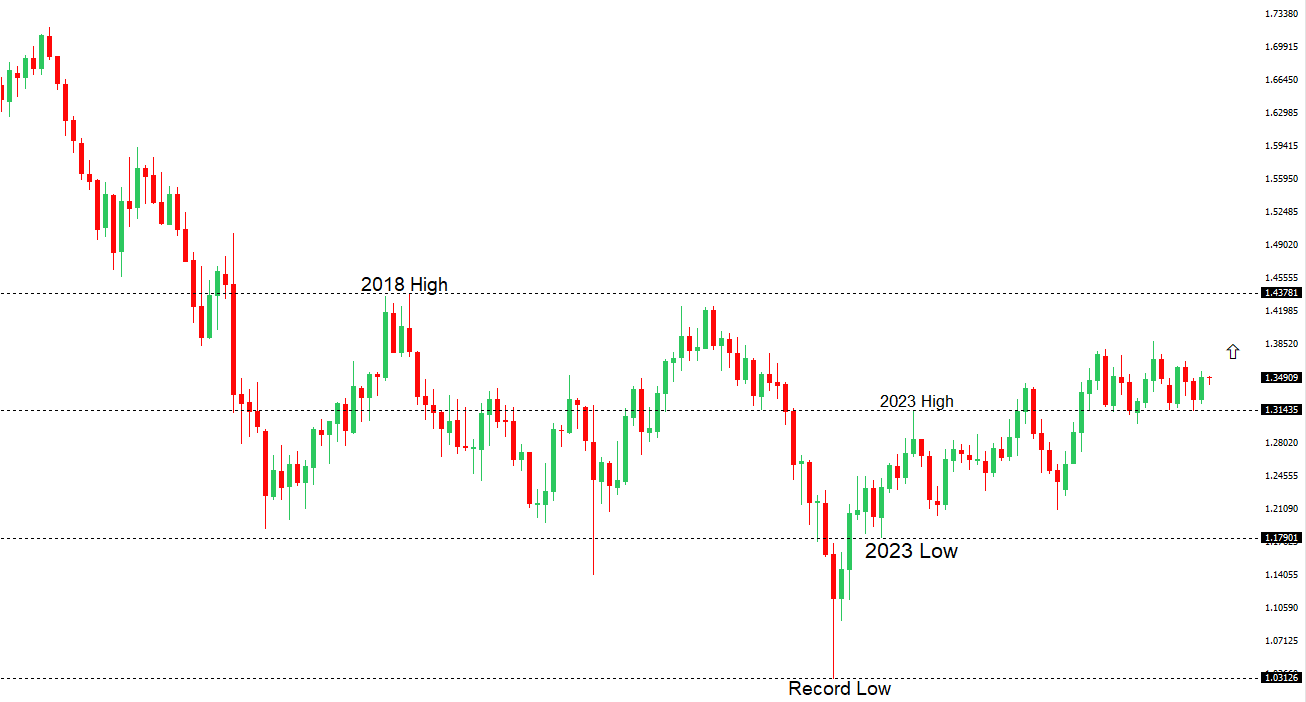 | ||
| R2 1.3558 - 15 July high - Strong R1 1.3546 - 12 August high - Medium S1 1.3333 - 30 July low - Medium S2 1.3273 - 28 July low - Strong | ||
| GBPUSD: fundamental overview | ||
| The pound remains caught between resilient UK activity and a firm US dollar, with preliminary GDP showing the economy expanded by 0.4% in Q2, matching expectations but slowing from 0.6% in Q1. The details were encouraging, as June GDP rose a stronger-than-expected 0.3%, driven by a 0.4% expansion in services and strength in retail and professional activities, although weak manufacturing and industrial production exposed an uneven underlying picture. Overall, the data should do little to alter the Bank of England’s near-term outlook, with respectable growth arguing against policy easing while elevated energy prices and related inflation risks keep the possibility of tighter policy in play. Sterling’s upside against the dollar nevertheless remains constrained by geopolitical uncertainty, safe-haven demand for the greenback and speculation that persistent US inflation pressures could prompt the Federal Reserve to raise rates, leaving GBPUSD broadly anchored around 1.3500. | ||
| USDJPY: technical overview | ||
| The major pair has entered a period of correction and consolidation after extending its run to fresh multi-decade highs at 163.99. Setbacks are now expected to be well supported above 155.00, with only a break below to compromise the bullish structure. | ||
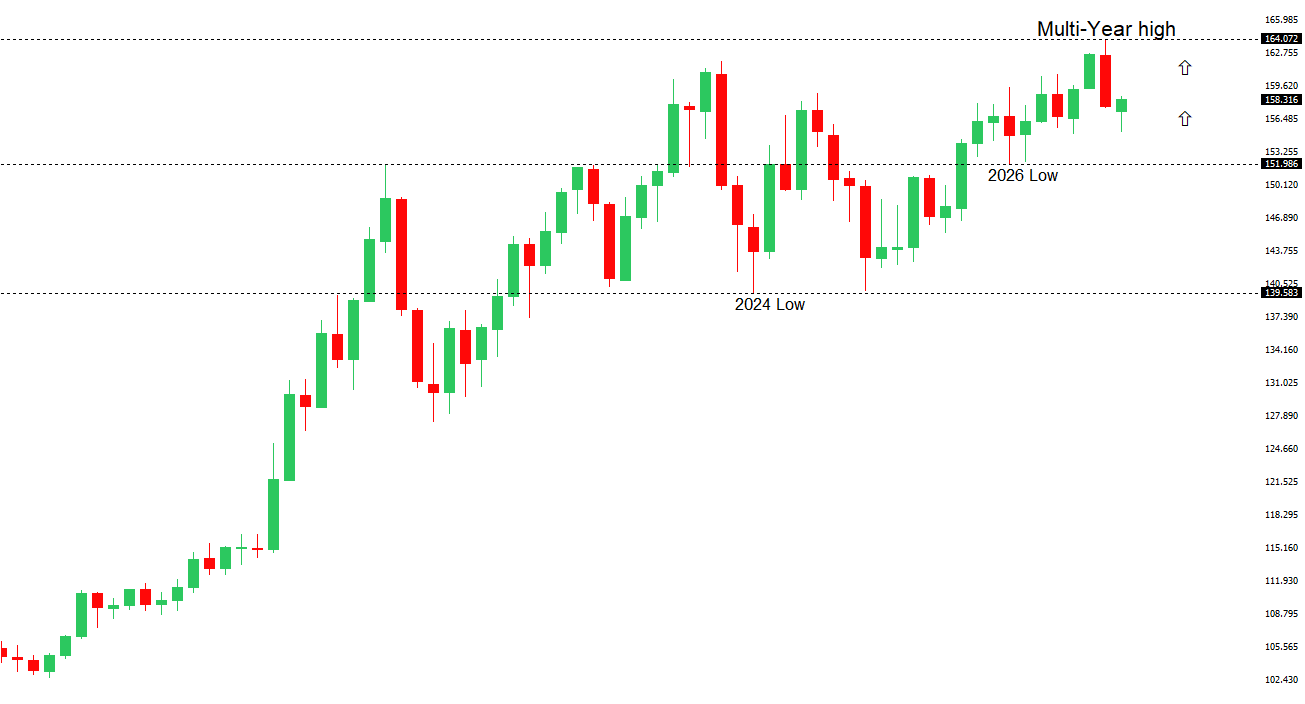 | ||
| R2 160.00 - Psychological - Strong R1 159.55 - 12 August high - Medium S1 157.54 - 10 August low - Medium S2 156.67 - 7 August low - Medium | ||
| USDJPY: fundamental overview | ||
| The yen remains pinned near 159.50 against the dollar as Japan’s still-low interest rates and the resulting carry-trade appeal continue to outweigh the impact of softer US inflation and reduced expectations for a near-term Fed hike. However, further yen weakness is being constrained by the threat of renewed intervention, particularly as USDJPY approaches the psychologically important 160.00 level, after Japan’s Finance Ministry confirmed that its latest yen-buying operation was coordinated with the US Treasury. The policy backdrop has also turned somewhat more supportive, with the Bank of Japan’s July meeting summary showing that officials discussed accelerating rate hikes amid upside inflation risks, raising the possibility of another move as early as September. For now, traders remain reluctant to push USDJPY materially higher without testing the resolve of US and Japanese authorities, while the upcoming US PPI report could influence US yields and the rate differential that remains central to the yen’s direction. | ||
| AUDUSD: technical overview | ||
| There are signs of the formation of a longer-term base with the market recovering out from a meaningful longer-term support zone. The latest monthly close back above 0.7000 takes the big picture pressure off the downside and strengthens the case for a bottom, with the focus now on a push towards 0.8000. Setbacks should now be well supported ahead of 0.6700. | ||
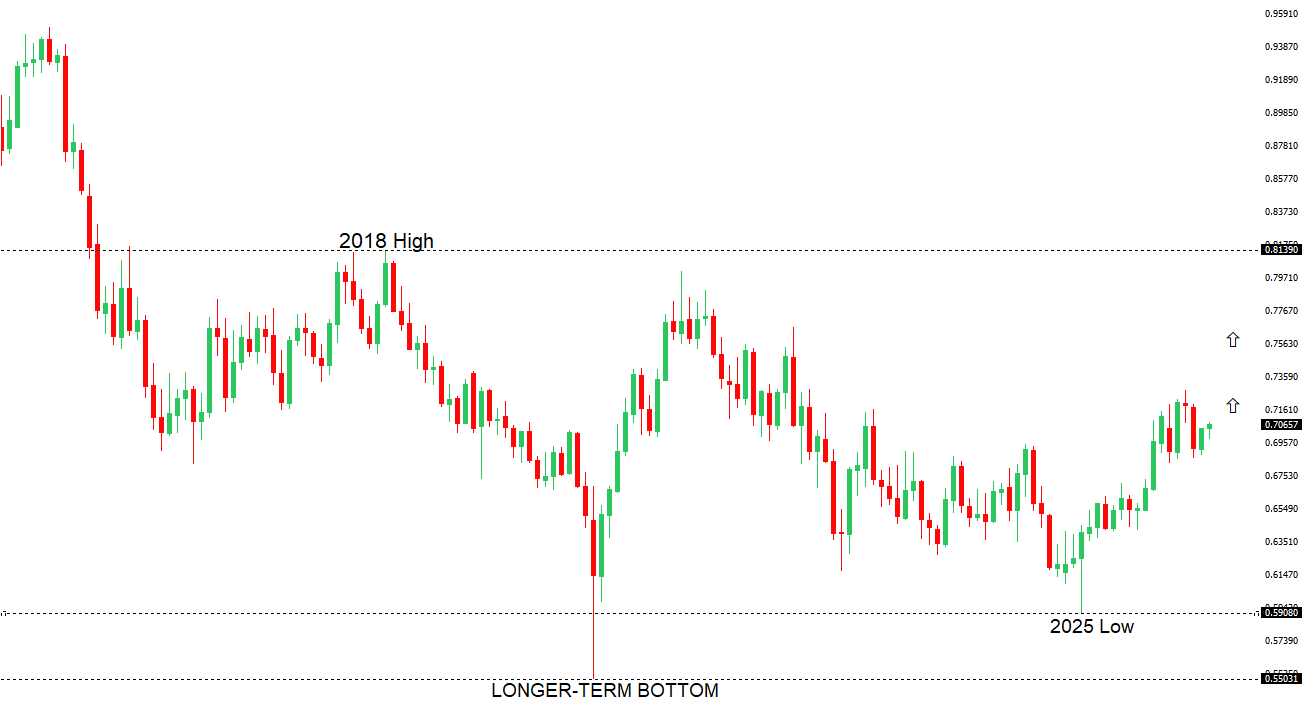 | ||
| R2 0.7100 - Figure - Medium R1 0.7092 - 12 August high - Strong S1 0.6984 - 3 August low - Medium S2 0.6922 - 29 July low - Strong | ||
| AUDUSD: fundamental overview | ||
| The Australian dollar has eased back after failing to sustain its push above 0.7100, as the US dollar’s broader recovery prompted some profit-taking. Fundamentally, the Aussie remains underpinned by the RBA’s hawkish bias after it held rates at 4.35% but warned that further tightening remains possible if inflation and demand fail to cool sufficiently. Assistant Governor Kent reinforced that message on Thursday, saying inflation risks remain skewed to the upside, while markets now assign roughly a 54% probability of another increase by December. Nevertheless, the RBA’s decision not to raise rates immediately, alongside expectations that softer labor-market conditions will eventually temper wage and price pressures, has limited the currency’s response. Meanwhile, benign US inflation has reduced expectations for a September Fed hike, but the dollar has retained enough underlying strength to keep AUDUSD below its recent highs ahead of the US PPI release. | ||
| Suggested reading | ||
| How journalists stoked 19th-century antisemitism, R. Wigglesworth, Financial Times (August 12, 2026) An MIT Economist Exposes Liberalism’s Self-Harm, J. Cartwright, Washington Post (August 11, 2026) | ||