


 | ||
| 5th August 2026 | view in browser | ||
| Equities surge as macro headwinds fade | ||
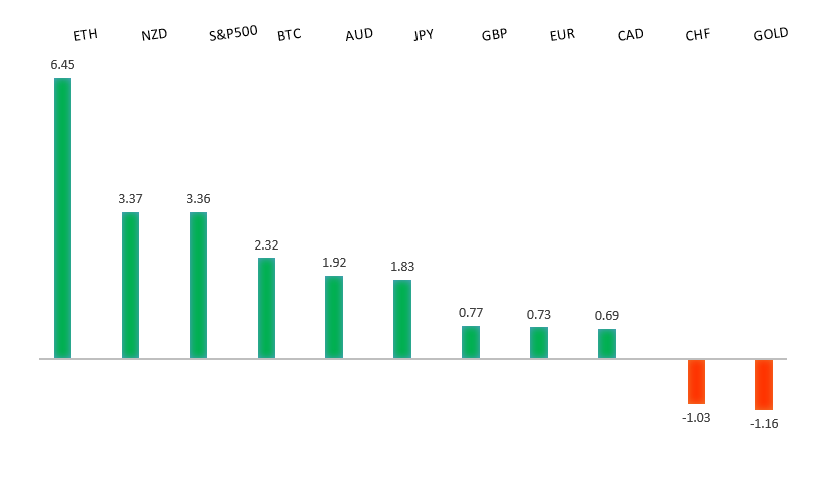
| Global markets enter Wednesday with risk sentiment firmly in the driver’s seat as easing Middle East tensions, falling oil prices, resilient earnings and renewed AI optimism lift equities to record highs, while FX and commodities remain focused on central bank expectations and this week’s key US labor market data. | ||
| Performance chart 30day v. USD (%) | ||
 | ||
| Technical & fundamental highlights | ||
| EURUSD: technical overview | ||
| The Euro outlook remains constructive with higher lows sought out on dips in favor of the next major upside extension targeting the 2021 high at 1.2350. Setbacks should be exceptionally well supported ahead of 1.1300. | ||
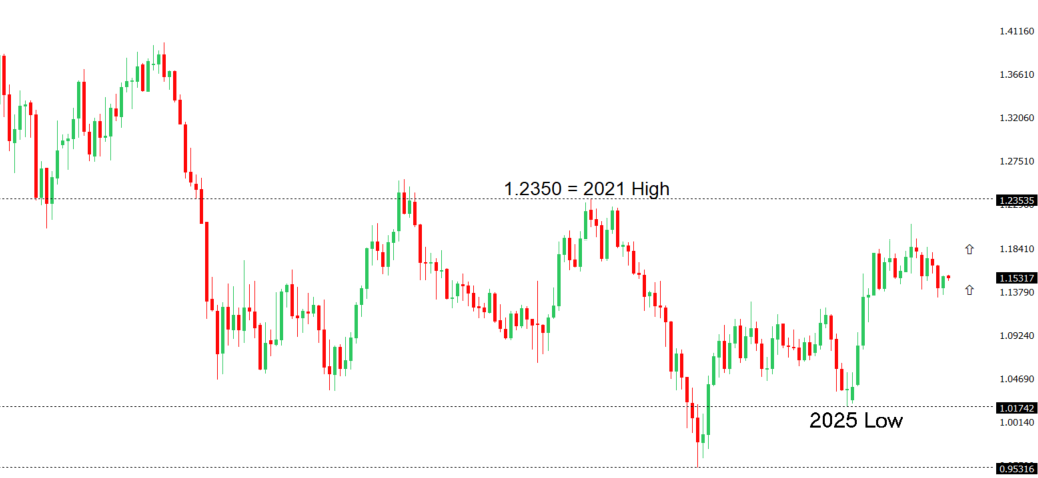 | ||
| R2 1.1623 - 15 June high - Medium R1 1.1559 - 3 August high - Medium S1 1.1500 - Figure - Medium S2 1.1434 - 30 July low - Medium | ||
| EURUSD: fundamental overview | ||
| The euro has found support after recovering back above the 1.1500 level, helped primarily by a softer US Dollar as markets continue to price in the prospect of easing geopolitical tensions in the Middle East. Optimism that negotiations between the US and Iran could ultimately lead to the reopening of the Strait of Hormuz has weighed on oil prices, reducing inflation concerns and tempering expectations for additional central bank tightening on both sides of the Atlantic. At the same time, weaker-than-expected US JOLTS job openings have reinforced expectations that US labor market momentum is gradually cooling, shifting attention to this week’s ADP employment report and Friday’s nonfarm payrolls release for further clues on the Federal Reserve’s policy outlook. While the broader medium-term trend still favors a constructive euro, investors remain cautious about aggressively rebuilding long EUR positions amid uncertainty over the Eurozone growth outlook and the impact of recent energy market volatility, leaving EURUSD likely to remain sensitive to incoming US data and any further dovish repricing of Fed expectations. | ||
| GBPUSD: technical overview | ||
| The Pound remains exceptionally well supported on dips into the 1.3000 area, with the price largely consolidating above the psychological barrier and previous resistance turned support in the form of the 2023 high. Look for the market to continue be well supported on dips ahead of the next major upside extension through the yearly high at 1.3870 and towards a retest of the 2018 high at 1.4377 further up. Only a monthly close below 1.3000 negates. | ||
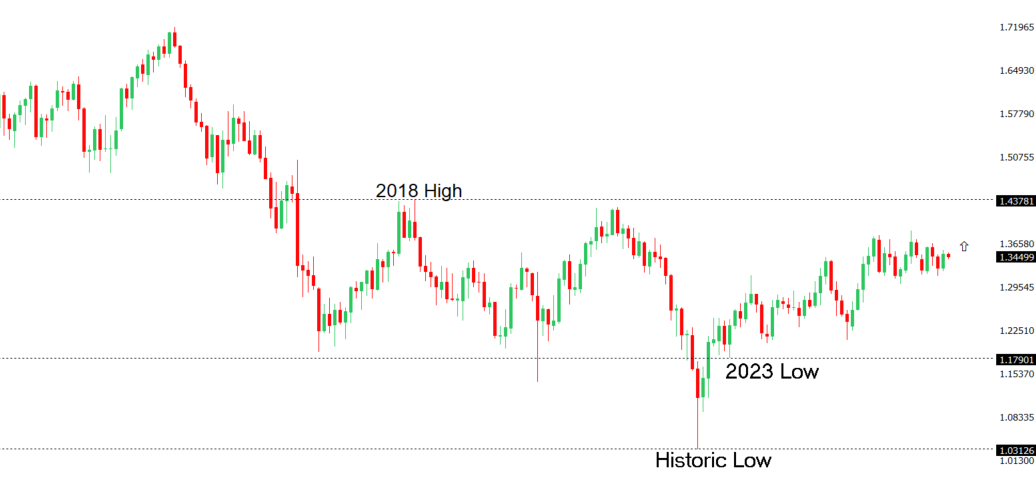 | ||
| R2 1.3558 - 15 July high - Strong R1 1.3507 - 3 August high - Medium S1 1.3333 - 30 July low - Medium S2 1.3273 - 28 July low - Strong | ||
| GBPUSD: fundamental overview | ||
| The pound has traded with a mildly constructive tone, though price action continues to be driven far more by developments in the US Dollar than by domestic UK fundamentals. While last week’s Bank of England meeting delivered a more hawkish-than-expected voting split, Governor Bailey’s insistence that policymakers are not moving closer to another rate hike tempered any Sterling support and reinforced expectations that policy will remain data dependent. Recent UK economic data, including resilient PMI readings, has helped ease concerns about the domestic growth outlook, but has done little to materially shift interest rate expectations. Instead, investors remain focused on the US side of the equation, with this week’s key US labor market releases—including JOLTS, ADP and Friday’s Nonfarm Payrolls report—expected to play the dominant role in shaping Fed expectations and driving GBPUSD. At the same time, an improvement in broader risk sentiment and easing Middle East tensions have supported higher-beta currencies more than Sterling, leaving the pound largely rangebound as markets await fresh catalysts. | ||
| USDJPY: technical overview | ||
| The major pair has entered a period of correction and consolidation after extending its run to fresh multi-decade highs at 163.99. Setbacks are now expected to be well supported above 155.00, with only a break below to compromise the bullish structure. | ||
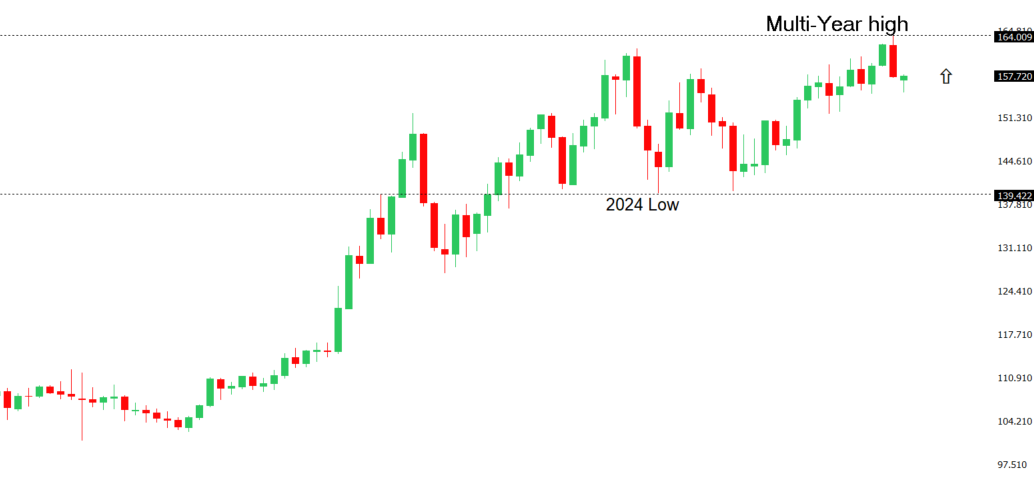 | ||
| R2 160.00 - Psychological - Strong R1 159.00 - Figure - Medium S1 157.00 - Figure - Medium S2 155.02 - 6 May low - Strong | ||
| USDJPY: fundamental overview | ||
| The yen has been driven by a combination of shifting interest rate expectations, improving domestic fundamentals and continued speculation around official intervention. While the Bank of Japan has maintained its hawkish bias, markets remain focused on whether stronger wage growth can reinforce the central bank’s confidence that inflation will remain sustainably around target, with upcoming cash earnings data seen as an important test of the wage-price cycle. At the same time, softer US labor market data has weighed modestly on US Treasury yields and narrowed US-Japan yield differentials, offering some support to the yen after an extended period of weakness. Lower oil prices have also been a positive development for Japan as a major energy importer, while reports pointing to easing tensions around the Strait of Hormuz have further reduced energy price pressures. Nevertheless, USDJPY remains supported on dips as markets continue to balance the prospect of additional Federal Reserve tightening against expectations for only gradual Bank of Japan policy normalization. Alongside these macro drivers, traders remain highly alert to the risk of further Japanese authorities stepping into the market to support the currency, with intervention expectations continuing to influence price action whenever USDJPY approaches elevated levels. | ||
| AUDUSD: technical overview | ||
| There are signs of the formation of a longer-term base with the market recovering out from a meaningful longer-term support zone. The latest monthly close back above 0.7000 takes the big picture pressure off the downside and strengthens the case for a bottom, with the focus now on a push towards 0.8000. Setbacks should now be well supported ahead of 0.6700. | ||
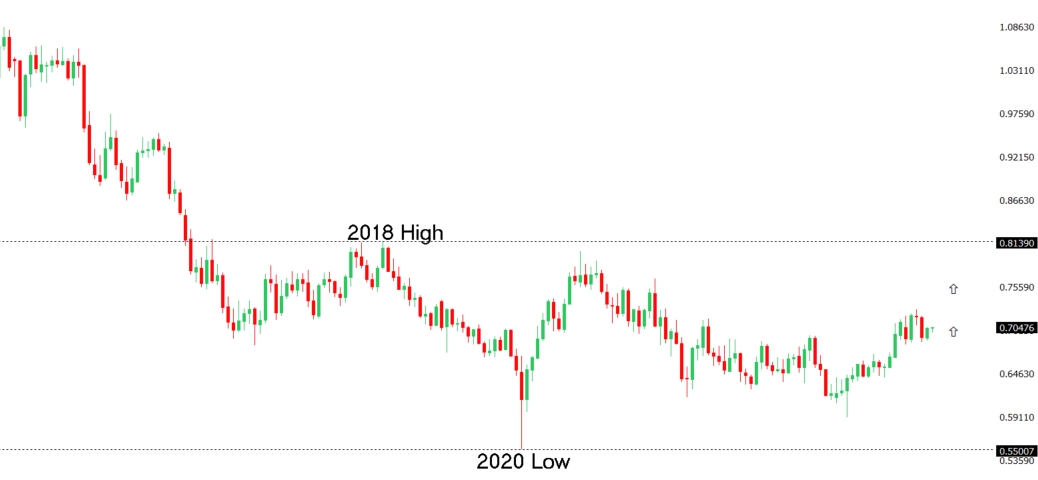 | ||
| R2 0.7089 - 15 June high - Strong R1 0.7050 - Mid-Figure - Medium S1 0.6922 - 29 July low - Medium S2 0.6865 - 30 June low - Strong | ||
| AUDUSD: fundamental overview | ||
| The Australian Dollar has strengthened as a softer US Dollar, lower US Treasury yields and an improvement in overall risk sentiment have combined with an increasingly supportive domestic backdrop. Australia’s latest PMI data reinforced the constructive outlook, with the services sector expanding at a six-month high of 53.6 in July and the composite PMI accelerating to 53.2, its strongest reading since January. The rebound was driven by the first increase in new orders in five months, firmer business confidence, continued hiring and a return to growth across both the manufacturing and services sectors, pointing to an economy that is regaining momentum. At the same time, the reacceleration in output price inflation and a build-up in backlogs suggest underlying capacity pressures are beginning to emerge, reinforcing expectations that the RBA will maintain its cautious, data-dependent stance with the possibility of additional tightening still on the table if inflation proves sticky. China’s steady economic backdrop continues to provide a modest source of support rather than a major catalyst, while lingering geopolitical uncertainty in the Middle East remains a headwind for broader risk sentiment. Looking ahead, attention now shifts to Australia’s labour market data, with another resilient employment report likely to strengthen the case for the Aussie to extend gains above the 0.7000 level, particularly if accompanied by continued US Dollar softness. | ||
| Suggested reading | ||
| Will lab-grown gems bury diamond mining?, L. Hook, Financial Times (August 4, 2026) One of the Best Investing Stories That You’ll Hear All Year, C. Reilly, RiskHedge (August 3, 2026) | ||