


 | ||
| 6th August 2026 | view in browser | ||
| Jobs jitters meet a fading dollar | ||
| Markets head into Thursday with investors balancing softer US economic data, easing geopolitical tensions and shifting Fed expectations ahead of Friday’s pivotal US jobs report, while gold extends its rally, the Dollar remains under pressure and equities consolidate near record highs. | ||
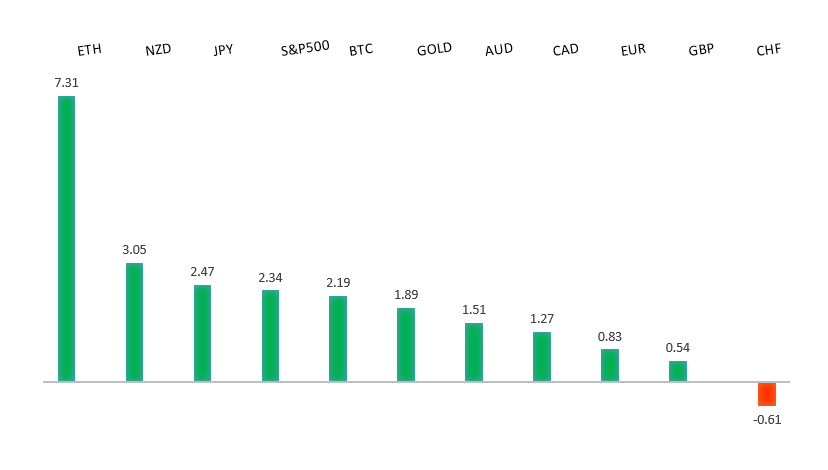
| Performance chart 30day v. USD (%) | ||
 | ||
| Technical & fundamental highlights | ||
| EURUSD: technical overview | ||
| The Euro outlook remains constructive with higher lows sought out on dips in favor of the next major upside extension targeting the 2021 high at 1.2350. Setbacks should be exceptionally well supported ahead of 1.1300. | ||
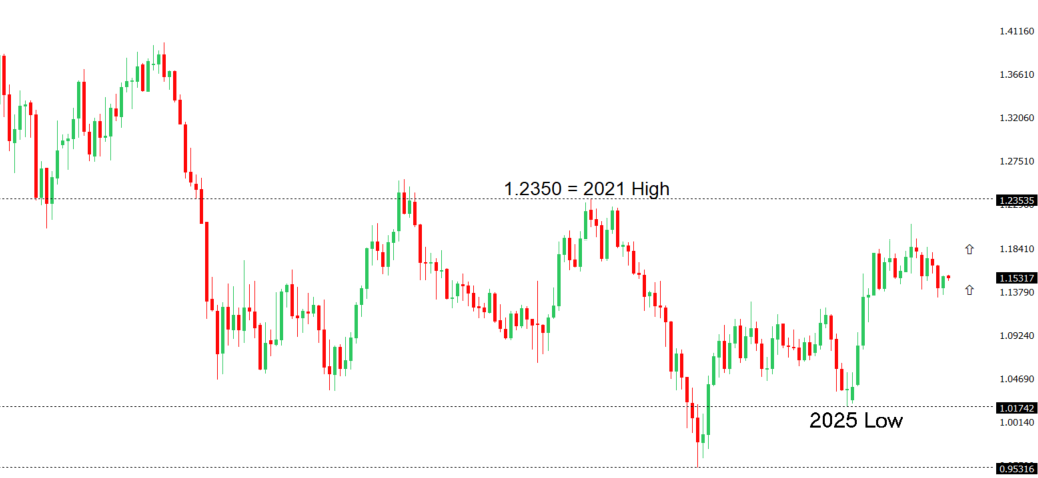 | ||
| R2 1.1623 - 15 June high - Medium R1 1.1600 - Figure - Medium S1 1.1500 - Figure - Medium S2 1.1434 - 30 July low - Medium | ||
| EURUSD: fundamental overview | ||
| The euro has remained well supported, with EURUSD extending its recovery toward the upper end of its recent range as broad-based US Dollar weakness outweighs the lack of fresh Eurozone-specific catalysts. Softer-than-expected US labor market data, including weaker JOLTS job openings and a disappointing ADP employment report, has reinforced expectations that the Federal Reserve may not need to maintain as restrictive a policy stance if Friday’s nonfarm payrolls report also disappoints. At the same time, uncertainty surrounding negotiations over the Strait of Hormuz continues to inject geopolitical risk into markets, though hopes for a diplomatic resolution have prevented a more pronounced flight to safety. With the Eurozone calendar remaining relatively light, the euro is taking its cues primarily from US economic data and Fed expectations, leaving Friday’s US jobs report as the key near-term catalyst. A softer payrolls outcome would likely add further pressure on the US Dollar and support additional euro gains, although firm US wage growth could temper expectations for Fed easing and limit the upside. | ||
| GBPUSD: technical overview | ||
| The Pound remains exceptionally well supported on dips into the 1.3000 area, with the price largely consolidating above the psychological barrier and previous resistance turned support in the form of the 2023 high. Look for the market to continue be well supported on dips ahead of the next major upside extension through the yearly high at 1.3870 and towards a retest of the 2018 high at 1.4377 further up. Only a monthly close below 1.3000 negates. | ||
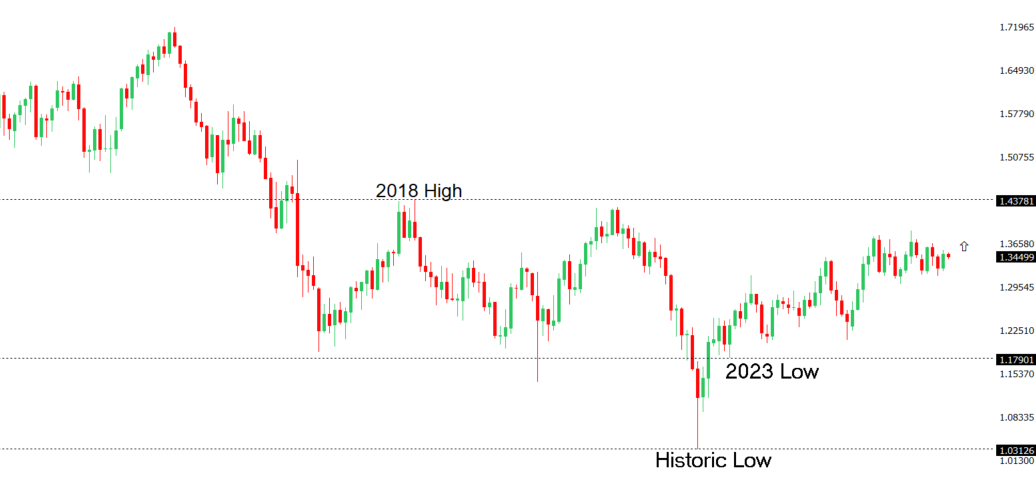 | ||
| R2 1.3558 - 15 July high - Strong R1 1.3507 - 3 August high - Medium S1 1.3333 - 30 July low - Medium S2 1.3273 - 28 July low - Strong | ||
| GBPUSD: fundamental overview | ||
| The pound has been trading with a modestly constructive tone, though its direction continues to be driven primarily by broad US Dollar dynamics rather than UK-specific developments. Sterling has benefited from softer demand for the Greenback as easing geopolitical tensions in the Middle East and growing optimism over a potential US-Iran agreement to reopen the Strait of Hormuz have encouraged a more risk-friendly market backdrop. Domestically, last week’s Bank of England decision remains in focus after policymakers voted 6-3 to keep rates unchanged, a more hawkish split than expected, although Governor Andrew Bailey’s comments reinforced the view that disinflation remains on track and that policy will remain data dependent. With the UK parliament in summer recess and the next BoE meeting not until mid-September, domestic catalysts are limited, leaving GBPUSD largely at the mercy of incoming US economic data and Federal Reserve expectations. Attention now turns to Friday’s US nonfarm payrolls report, with a softer-than-expected outcome likely to weigh further on the Dollar and support Sterling, while a stronger labor market or firmer wage growth could revive Fed tightening expectations and limit the pound’s upside. | ||
| USDJPY: technical overview | ||
| The major pair has entered a period of correction and consolidation after extending its run to fresh multi-decade highs at 163.99. Setbacks are now expected to be well supported above 155.00, with only a break below to compromise the bullish structure. | ||
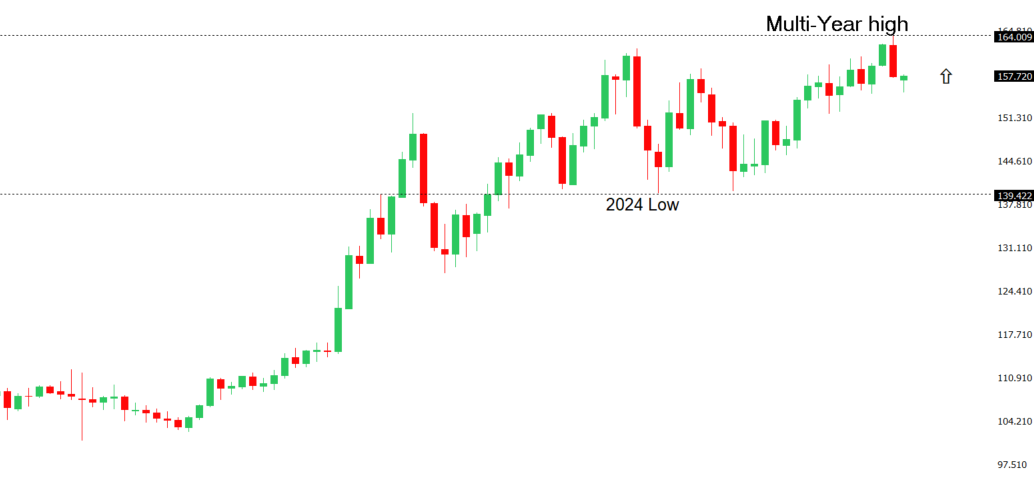 | ||
| R2 160.00 - Psychological - Strong R1 159.00 - Figure - Medium S1 157.00 - Figure - Medium S2 155.02 - 6 May low - Strong | ||
| USDJPY: fundamental overview | ||
| The Yen has stabilized after an unprecedented bout of coordinated intervention by Japanese and US authorities, with USDJPY holding near the 157.50–158.00 area after retreating sharply from four-decade highs above 164. While the intervention has succeeded in halting the Yen’s slide in the near term, investors remain skeptical that official action alone can deliver a lasting reversal without a meaningful shift in underlying fundamentals. Markets continue to view the wide US-Japan interest rate differential as the primary driver of Yen weakness, although expectations that the Bank of Japan could continue gradually normalizing policy amid persistent domestic inflation have offered some support. Attention has now shifted back to US economic data, with Wednesday’s weaker-than-expected ADP employment report reinforcing expectations that softer US labor market conditions could eventually weigh on the US Dollar and narrow the rate gap. Traders will now closely watch Thursday’s jobless claims and Friday’s Nonfarm Payrolls report, as another downside surprise could extend Yen gains without requiring further intervention, while a stronger-than-expected payrolls report would likely revive Dollar demand and renew pressure on Japanese authorities to defend the currency. | ||
| AUDUSD: technical overview | ||
| There are signs of the formation of a longer-term base with the market recovering out from a meaningful longer-term support zone. The latest monthly close back above 0.7000 takes the big picture pressure off the downside and strengthens the case for a bottom, with the focus now on a push towards 0.8000. Setbacks should now be well supported ahead of 0.6700. | ||
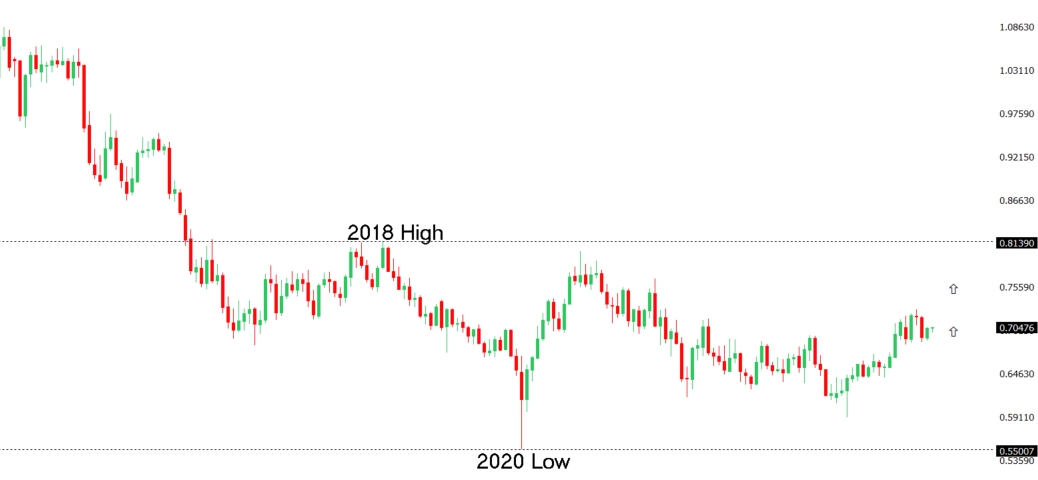 | ||
| R2 0.7089 - 15 June high - Strong R1 0.7065 - 5 August high - Medium S1 0.6922 - 29 July low - Medium S2 0.6865 - 30 June low - Strong | ||
| AUDUSD: fundamental overview | ||
| The Australian dollar has extended its recovery, climbing to fresh multi-week highs primarily on broad-based US dollar weakness and improving global risk sentiment rather than any major shift in Australia’s domestic outlook. Hopes for progress toward a US-Iran agreement and easing geopolitical tensions have weighed on the greenback, allowing the Aussie to break above the 0.7000 level, while resilient Australian fundamentals continue to provide an underlying cushion. Recent data showed both manufacturing and services activity remaining in expansion territory, employment growth remains robust, and the RBA continues to signal that it stands ready to tighten further if inflation proves more persistent, even as softer second-quarter inflation has led markets to expect rates to remain on hold next week. Looking ahead, Australian and Chinese trade data will be closely watched given China’s importance as Australia’s largest trading partner, particularly after softer Chinese services activity pointed to some moderation in momentum. At the same time, the near-term direction for AUDUSD is still likely to hinge more on the US dollar, with investors focused on incoming US labor market data and Federal Reserve expectations, while the sizeable speculative short positioning in the Australian dollar leaves room for additional upside if US data disappoints and prompts further short covering. | ||
| Suggested reading | ||
| Ancient Rome’s poor didn’t scrimp on dining, R. Wigglesworth, Financial Times (August 5, 2026) Why Wealth Taxes Always Fail, C. Enache, Project Syndicate (August 5, 2026) | ||