


 | ||
| 27th February 2026 | view in browser | ||
| Euro holds firm, Pound stumbles | ||
| The euro has traded in a narrow range despite ongoing tariff and geopolitical uncertainty, but volatility could pick up today with key inflation data, political developments weighing on the pound, stronger Tokyo CPI pressuring dollar-yen, China easing FX rules, and month-end flows alongside US data adding further directional risk. | ||
| Performance chart 30day v. USD (%) | ||
 | ||
| Technical & fundamental highlights | ||
| EURUSD: technical overview | ||
| The Euro outlook remains constructive with higher lows sought out on dips in favor of the next major upside extension targeting the 2021 high at 1.2350. Setbacks should be exceptionally well supported ahead of 1.1500. | ||
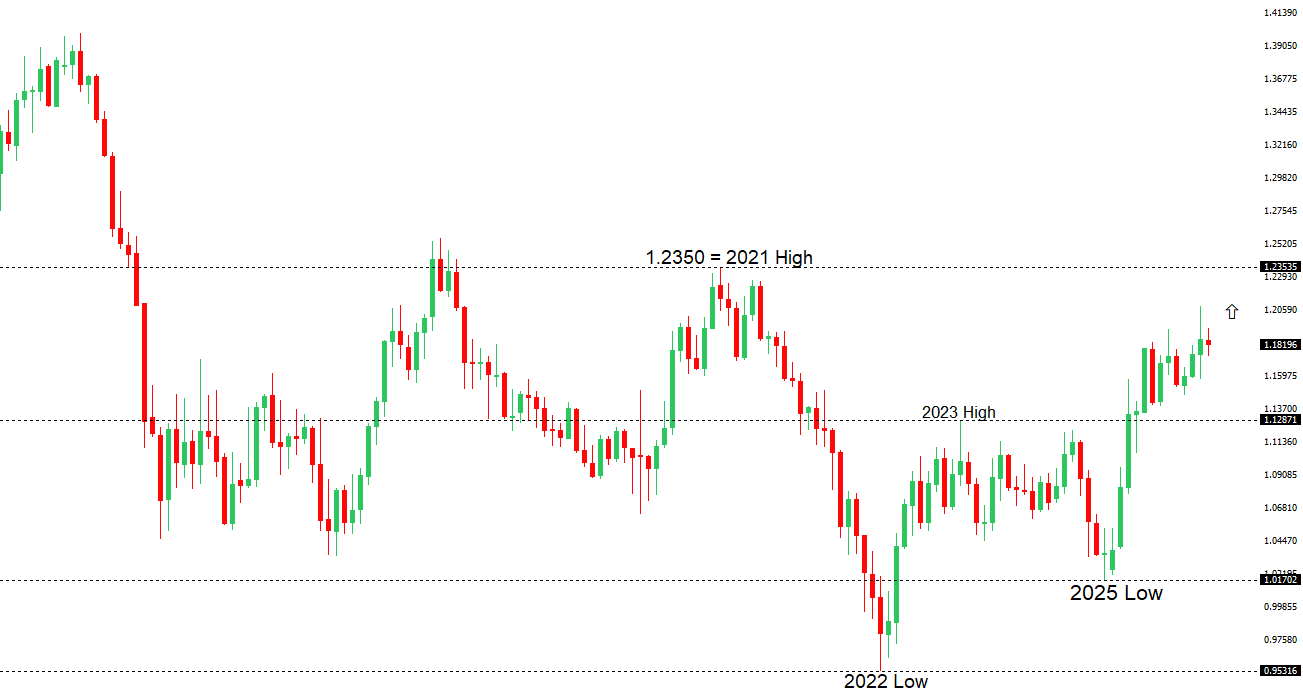 | ||
| R2 1.2081 - 27 Janaury/2026 high - Strong R1 1.1929 - 10 February high - Medium S1 1.1742 - 19 February low - Medium S2 1.1728 - 23 January low - Medium | ||
| EURUSD: fundamental overview | ||
| The euro has been mostly trading sideways in recent sessions, as markets weigh US tariff threats, trade policy uncertainty, and ongoing US-Iran tensions. Germany’s growing trade deficit with China—driven by concerns over Chinese industrial overcapacity and an undervalued yuan—is adding structural pressure on the euro by undermining European manufacturing competitiveness and increasing the risk of strained EU-China relations. At the same time, weaker inflation readings have put the ECB on the defensive, and any further slowdown in upcoming data could revive rate-cut expectations, adding additional downside risk for the currency. | ||
| USDJPY: technical overview | ||
| There are signs of a meaningful top in place after the market put in a multi-year high in 2024. At this point, rallies should be well capped ahead of 160.00 in favor of a fresh down-leg back towards the 2024 low at 139.58. The recent break below 154.39 strengthens the outlook. | ||
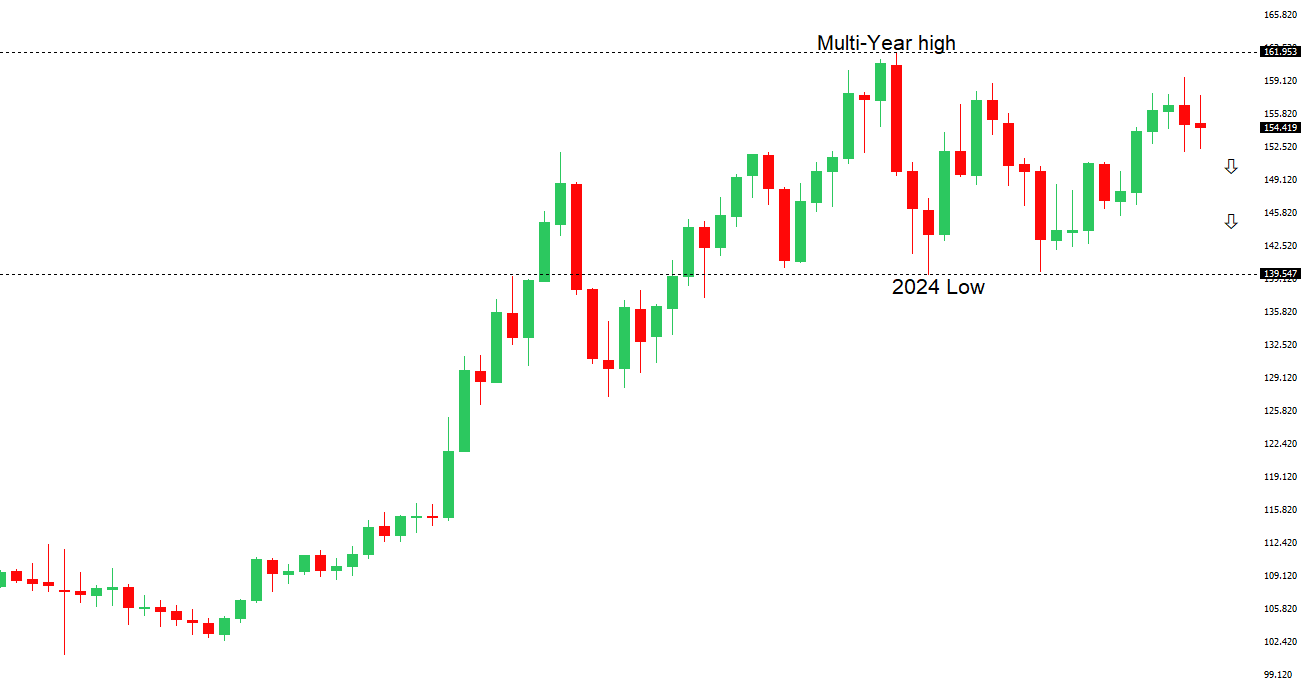 | ||
| R2 157.66 - 9 February high - Strong R1 156.83 - 25 February high - Medium S1 154.00 - 23 February low - Medium S2 151.97 - 28 January/2026 low - Strong | ||
| USDJPY: fundamental overview | ||
| The yen strengthened modestly following Tokyo CPI data that showed inflation cooling at the headline level but remaining firm underneath, reinforcing expectations that the Bank of Japan will continue gradual rate hikes, potentially as soon as April. While policymakers remain cautious and political pressure favors accommodative policy, markets are increasingly positioning for further normalization, which should be supportive for the yen over time. Still, softer core inflation and wide global rate differentials suggest the yen is more likely to see two-way volatility rather than a sustained one-direction move, even as domestic demand shows signs of improvement. | ||
| AUDUSD: technical overview | ||
| There are signs of the formation of a longer-term base with the market recovering out from a meaningful longer-term support zone. A monthly close back above 0.7000 will take the big picture pressure off the downside and strengthen case for a bottom. Setbacks should now be well supported ahead of 0.6700. | ||
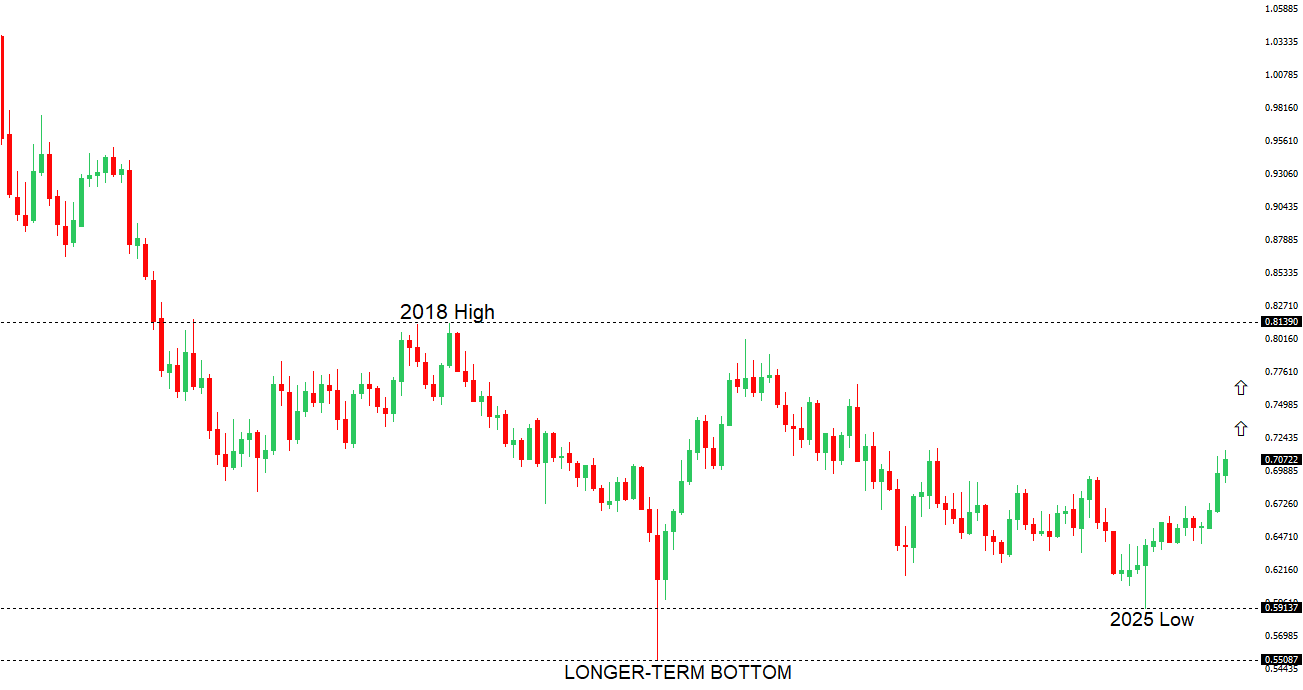 | ||
| R2 0.7158 - 2023 high - Strong R1 0.7147 - 12 February/2026 high - Strong S1 0.7007 - 9 February low - Medium S2 0.6897 - 6 February low - Strong | ||
| AUDUSD: fundamental overview | ||
| The Australian dollar is up on the day and continues to build a stronger base above the early-February lows, supported by the RBA’s relatively hawkish stance and resilient domestic fundamentals. While January private credit growth slowed on a monthly basis, annual growth remains firm, and broader data—including solid business investment and inflation still above target—reinforce expectations that policy will stay restrictive for now. This rate advantage versus a more easing-leaning Fed should help underpin the AUD and limit near-term downside, with any further RBA rate hikes more likely later in 2026 as incoming inflation and growth data confirm the outlook. | ||
| Suggested reading | ||
| Ai Can Do Many Things But Market Analysis? Nope., J. Rekenthaler, Morningstar (February 26, 2026) The U.S. Economy Needs Competition That AI Can Provide, B. Khurana, Barron’s (February 24, 2026) | ||