


 | ||
| 10th September 2025 | view in browser | ||
| Fed rate cut looms as jobs data sinks | ||
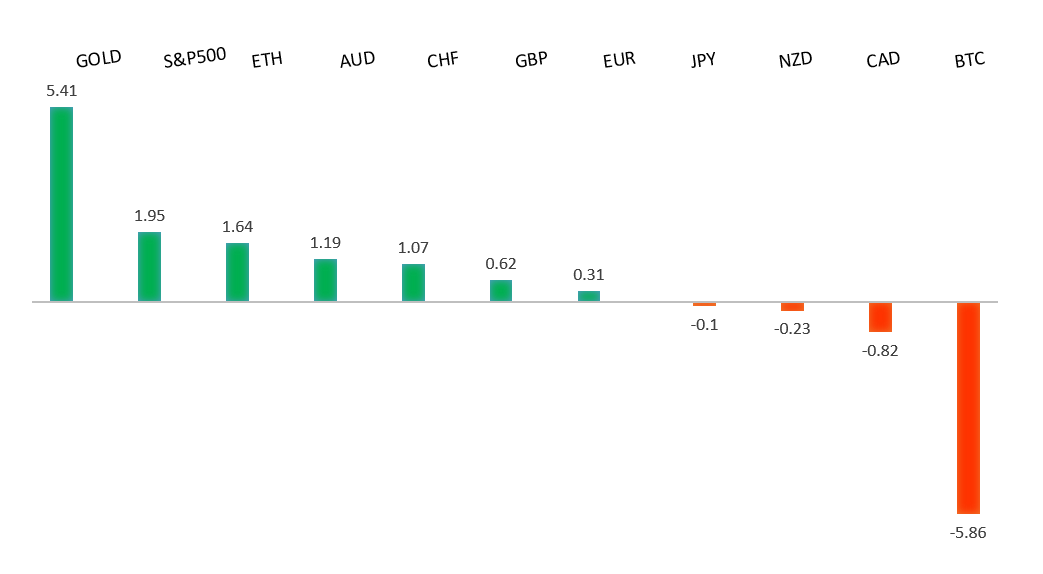
| The U.S. dollar has held steady as markets await August PPI and CPI data, pivotal for the Federal Reserve’s September rate cut decision, with expectations leaning toward 66 basis points of easing this year, possibly starting with a 25bp or 50bp cut next week after a 911,000-job downward revision through March. | ||
| Performance chart 30day v. USD (%) | ||
 | ||
| Technical & fundamental highlights | ||
| EURUSD: technical overview | ||
| The Euro has broken out from a multi-month consolidation off a critical longer-term low. This latest push through the 2023 high (1.1276) lends further support to the case for a meaningful bottom, setting the stage for a bullish structural shift and the next major upside extension targeting the 2021 high at 1.2350. Setbacks should be exceptionally well supported ahead of 1.1000. | ||
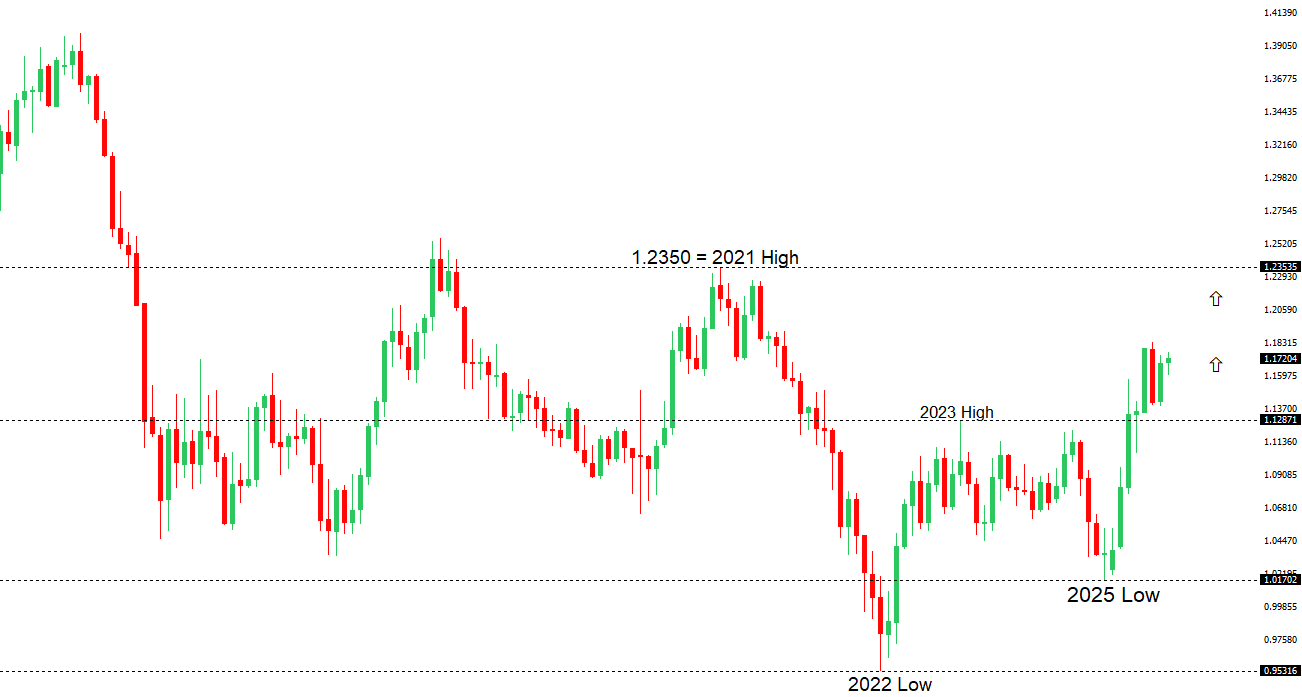 | ||
| R2 1.1830 - 1 July/2025 high - Strong R1 1.1789 - 24 July high - Medium S1 1.1608 - 3 September low - Medium S2 1.1574 - 27 August low - Strong | ||
| EURUSD: fundamental overview | ||
| The euro is gaining strength against the dollar due to diverging monetary policies, with the Federal Reserve likely to cut rates up to three times this year, while the European Central Bank is expected to hold rates steady, with only a slight chance of one cut before 2026. Political uncertainty in France, including the appointment of Sebastien Lecornu as the new prime minister, is unlikely to significantly impact the euro’s positive momentum. A substantial downward revision of U.S. jobs data by 911,000 has increased expectations for a significant Fed rate cut, potentially boosting the euro further, with forecasts suggesting it could surpass $1.20 by year-end. | ||
| USDJPY: technical overview | ||
| There are signs of a meaningful top in place after the market put in a multi-year high in 2024. At this point, the door is now open for a deeper setback below the 2024 low at 139.58, exposing a retest of the 2023 low. Rallies should be well capped below 152.00. | ||
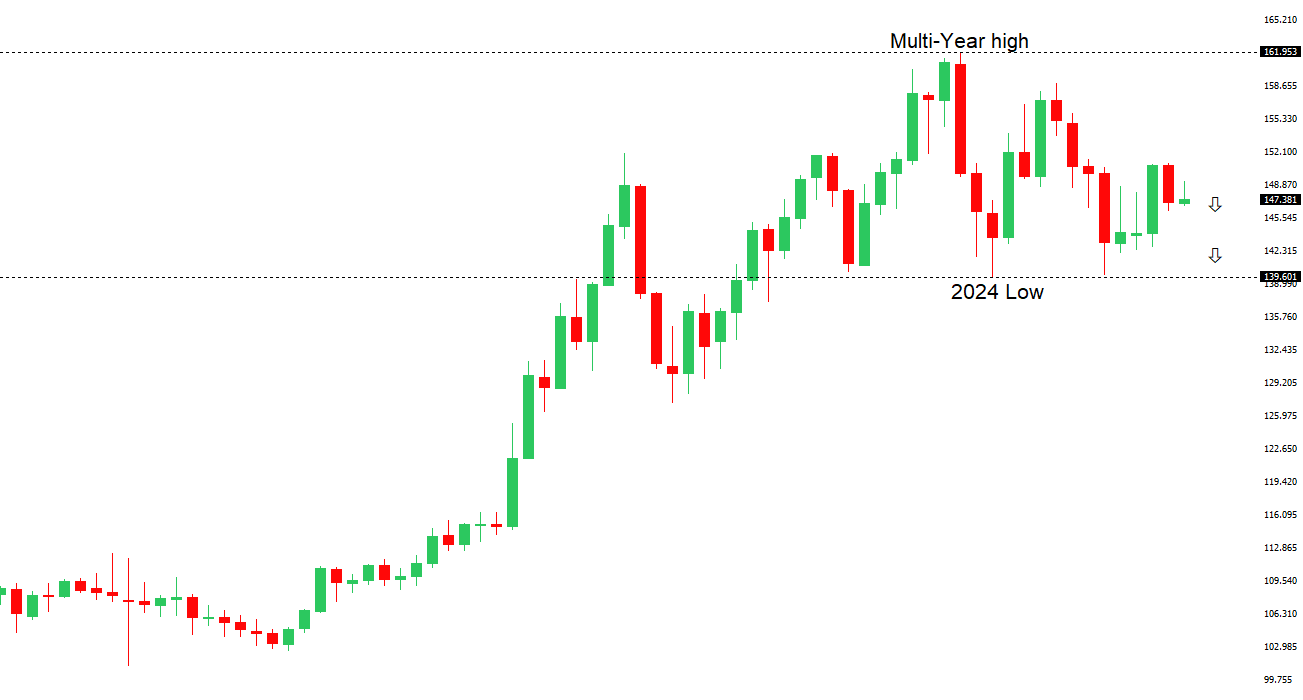 | ||
| R2 150.92 - 1 August high - Strong R1 149.14 - 3 September high - Medium S1 146.21 - 14 August low - Medium S2 145.85 - 24 July low - Strong | ||
| USDJPY: fundamental overview | ||
| The Yen has been focused on narrowing US-Japan interest rate differentials and Japan’s political uncertainty following Ishiba’s resignation. The Bank of Japan is likely to maintain its 0.5% benchmark rate in September, with potential rate hikes in October or December as economic indicators like strong corporate profits and rising wages support tightening, despite political risks. Uncertainty over Japan’s next prime minister, with candidates like Sanae Takaichi favoring expansive policies or Shinjiro Koizumi leaning toward reforms, could impact yen strength and Japanese government bond yields. Robust foreign demand for Japan’s machine tools (up 8.1% year-over-year) contrasts with weaker domestic orders, signaling mixed economic conditions, while hedge funds increasingly bet on yen strength amid expectations of tighter BOJ policy. | ||
| AUDUSD: technical overview | ||
| There are signs of the potential formation of a longer-term base with the market trading down into a meaningful longer-term support zone. Only a monthly close below 0.5500 would give reason for rethink. A monthly close back above 0.7000 will take the big picture pressure off the downside and strengthen case for a bottom. | ||
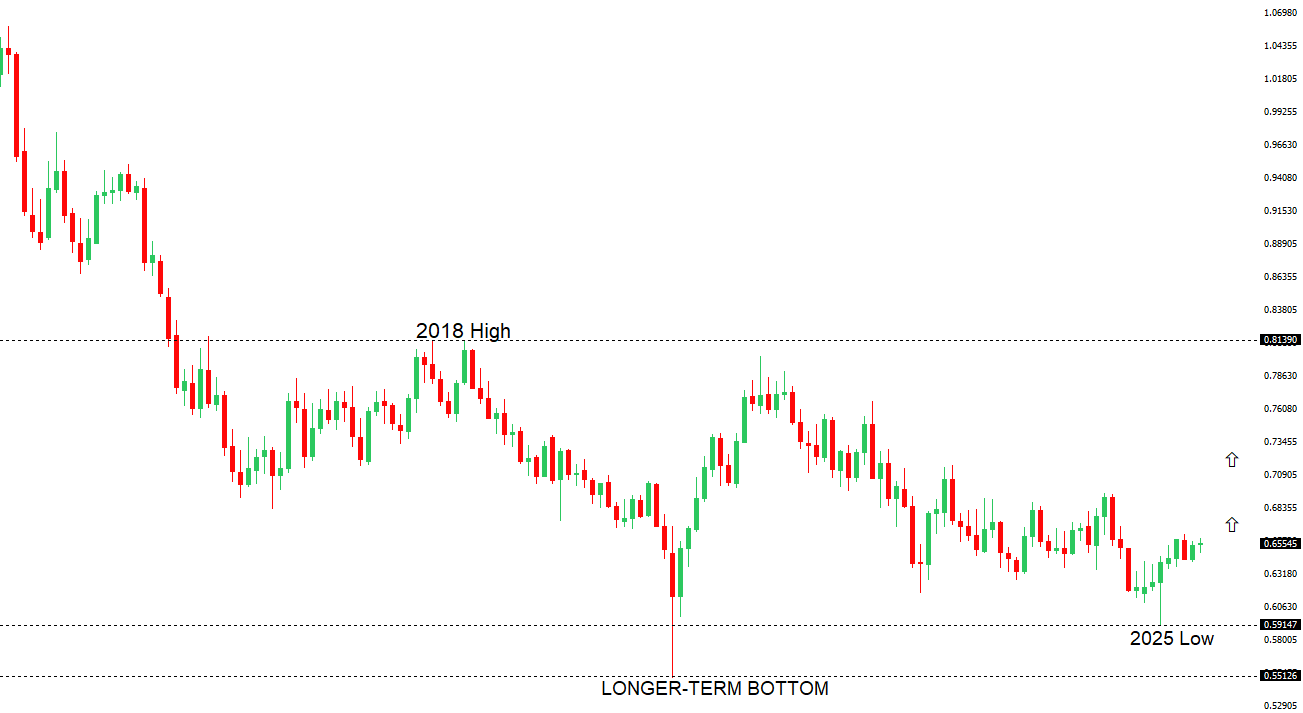 | ||
| R2 0.6700 - Figure - Medium R1 0.6625 - 24 July/2025 high - Strong S1 0.6483 - 2 September low - Medium S1 0.6414 - 22 August low - Strong | ||
| AUDUSD: fundamental overview | ||
| The Australian dollar is nearing yearly highs against the US dollar due to a weaker USD following disappointing US jobs data and expectations of a Federal Reserve rate cut in September. Strong Australian economic growth, driven by robust household spending and exports, has reduced the likelihood of a November rate cut by the Reserve Bank of Australia to about 80%. Despite a recent drop in consumer confidence and mixed business sentiment, the RBA is likely to hold rates steady but may consider further cuts if consumer spending weakens, while positive economic data from China supports AUD strength. | ||
| Suggested reading | ||
| Technology and demographics are driving the uptake of medical robots, M. Peel, FT Alphaville (September 2, 2025) The Trend In Employment Is What’s Worrisome, J. Calhoun, Alhambra (September 7, 2025) | ||