


 | ||
| 25th August 2026 | view in browser | ||
| Markets cautious as key event risk builds | ||
| Markets head into Tuesday cautiously, with the dollar under pressure from lower Treasury yields and fiscal concerns, technology weakness weighing on global equities, trade and geopolitical tensions supporting volatility, and investors looking ahead to US consumer confidence, PCE inflation, Nvidia earnings and Jackson Hole. | ||
| Performance chart 30day v. USD (%) | ||
 | ||
| Technical & fundamental highlights | ||
| EURUSD: technical overview | ||
| The Euro outlook remains constructive with higher lows sought out on dips in favor of the next major upside extension targeting the 2021 high at 1.2350. Setbacks should be exceptionally well supported ahead of 1.1400. | ||
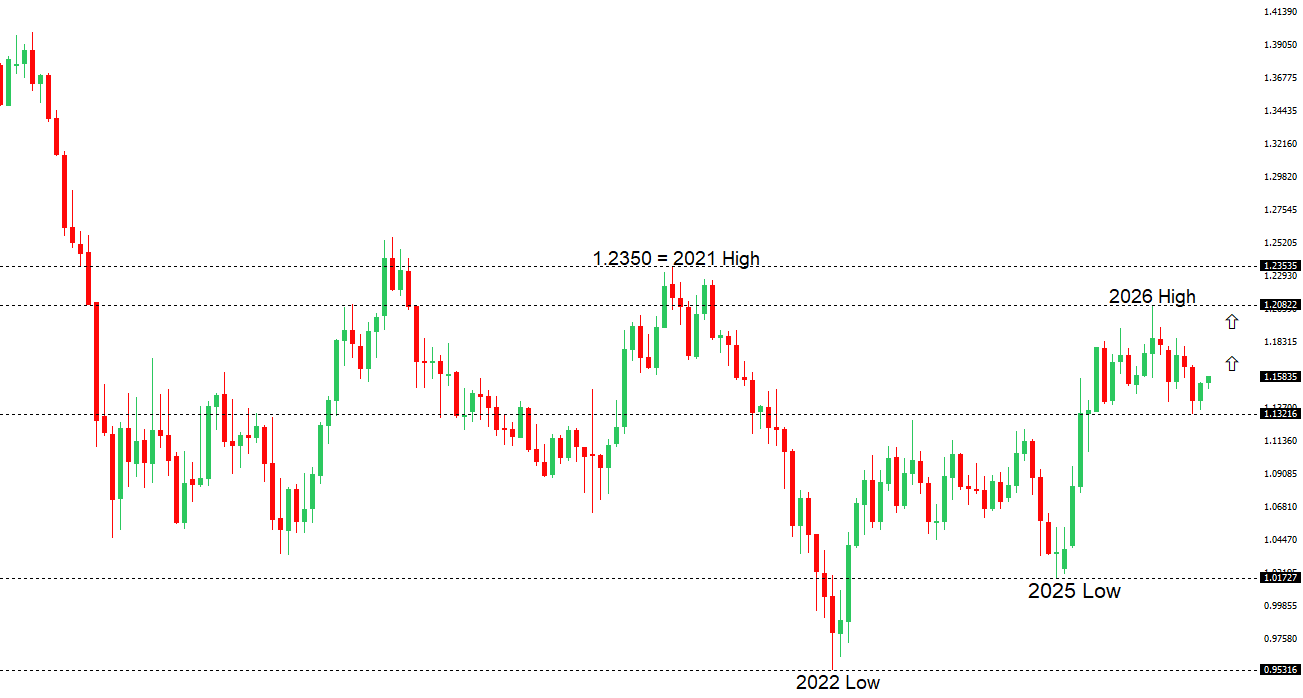 | ||
| R2 1.1797 - 6 May high - Medium R1 1.1712 - 21 August high - Medium S1 1.1570 - 19 May low - Medium S2 1.1512 - 313 August low - Medium | ||
| EURUSD: fundamental overview | ||
| The euro remains supported by increasingly hawkish ECB expectations, with elevated oil and gas prices, rising bond yields and persistent Middle East tensions reinforcing concerns that the energy shock will keep Eurozone inflation above target. Markets are leaning toward another 25-basis-point rate hike in September after the ECB raised rates in June and held steady in July, although the Governing Council continues to stress that policy will depend on incoming data and the persistence of price pressures. The single currency has also benefited from a broadly subdued US Dollar following the Treasury’s expansion of long-dated bond buybacks, while improving German investor sentiment has offered some reassurance over the regional growth outlook. Attention now turns to German Ifo business sentiment, US consumer confidence and PCE inflation, followed by Fed Chair Warsh’s Jackson Hole speech, with relative ECB-Fed rate expectations likely to remain the principal driver of EURUSD. | ||
| GBPUSD: technical overview | ||
| The Pound remains exceptionally well supported on dips into the 1.3000 area, with the price largely consolidating above the psychological barrier and previous resistance turned support in the form of the 2023 high. Look for the market to continue be well supported on dips ahead of the next major upside extension through the yearly high at 1.3870 and towards a retest of the 2018 high at 1.4377 further up. Only a monthly close below 1.3000 negates. | ||
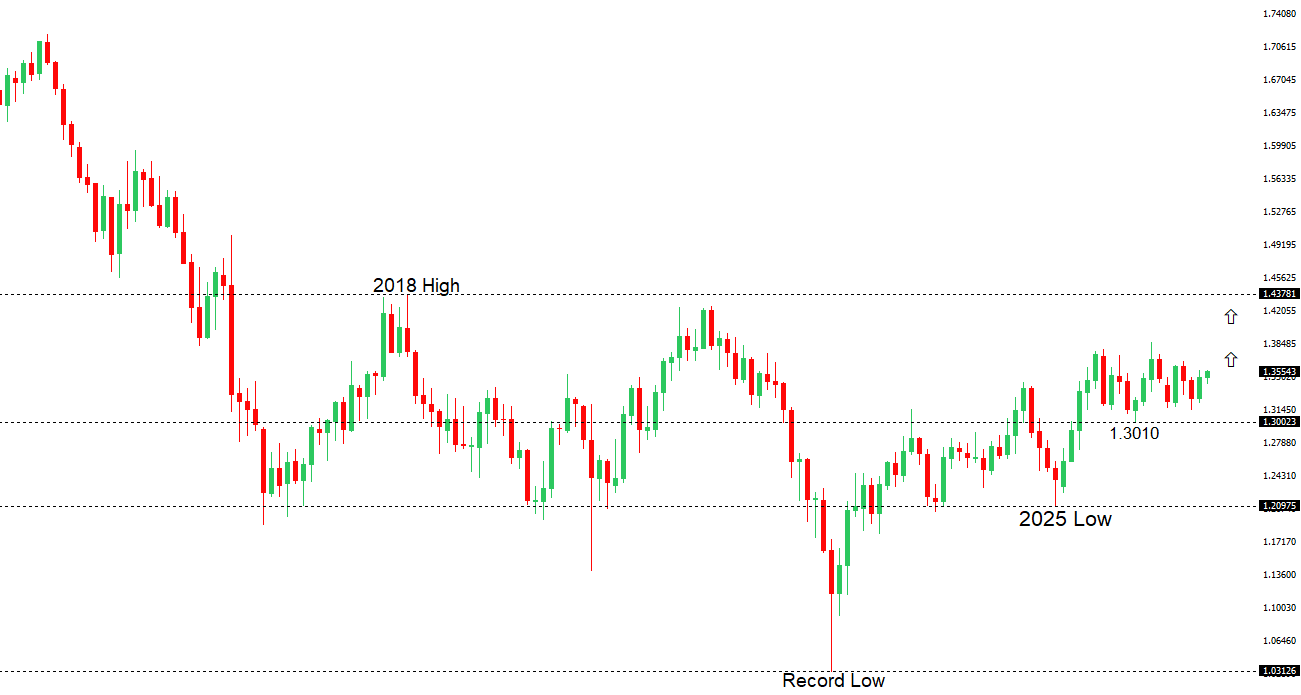 | ||
| R2 1.3700 - Figure - Strong R1 1.3676 - 21 August high - Medium S1 1.3523 - 19 August low - Medium S2 1.3474 - 13 Augus low - Medium | ||
| GBPUSD: fundamental overview | ||
| The pound remains one of the stronger G7 currencies, with GBPUSD holding near five-month highs after gaining roughly four cents from its early-August low. The advance has been driven primarily by broad US dollar weakness following the Treasury’s expanded long-dated bond buybacks, but sterling has also benefited from expectations that persistent UK inflation, resilient business activity and elevated gilt yields will keep the Bank of England restrictive, with markets pricing another rate increase by year-end. July inflation accelerated to 2.9%, while the UK ten-year yield remains above 5%, reinforcing sterling’s interest-rate appeal even as weaker employment data point to an increasingly uncomfortable mix of inflation and slowing labor demand. With little UK data scheduled this week, near-term direction should be dictated mainly by US core PCE, Jackson Hole and the Fed Chair’s speech, although concerns surrounding Britain’s fiscal position and the October Budget remain an important medium-term constraint on the pound. | ||
| USDJPY: technical overview | ||
| The major pair has entered a period of correction and consolidation after extending its run to fresh multi-decade highs at 163.99. Setbacks are now expected to be well supported above 155.00, with only a break below to compromise the bullish structure. | ||
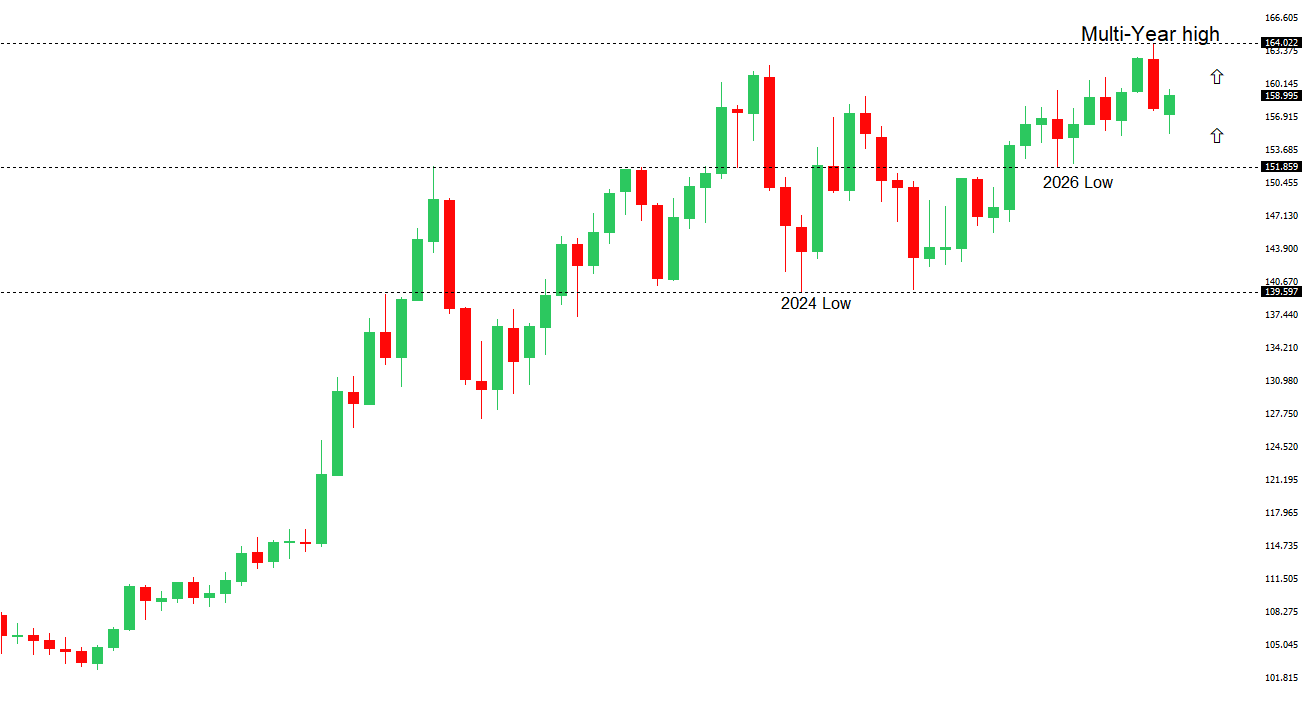 | ||
| R2 160.00 - Psychological - Strong R1 159.78 - 17 August high - Medium S1 158.02 - 20 August low - Medium S2 156.67 - 7 August low - Medium | ||
| USDJPY: fundamental overview | ||
| The yen remains under pressure against the US dollar, with the wide US-Japan interest-rate differential continuing to support carry trades, while concerns over Japan’s heavy debt burden, expansionary fiscal policy and rising long-term borrowing costs have further undermined confidence in the currency. The rebound generated by the large joint US-Japan intervention in late July has largely faded, highlighting the difficulty of achieving a lasting reversal without a meaningful narrowing in rate differentials. Elevated oil prices are another headwind for energy-import-dependent Japan, although expectations that the Bank of Japan could raise rates again in September or October, together with the threat of renewed intervention, are limiting more aggressive yen selling. On the US side, elevated Treasury yields and geopolitical tensions remain broadly supportive of the dollar, but concerns over US fiscal sustainability and reduced expectations for an immediate Fed rate hike have kept USDJPY from extending decisively higher, leaving upcoming US PCE inflation data and Fed Chair Warsh’s Jackson Hole speech as the next major catalysts. | ||
| AUDUSD: technical overview | ||
| There are signs of the formation of a longer-term base with the market recovering out from a meaningful longer-term support zone. The latest monthly close back above 0.7000 takes the big picture pressure off the downside and strengthens the case for a bottom, with the focus now on a push towards 0.8000. Setbacks should now be well supported ahead of 0.6700. | ||
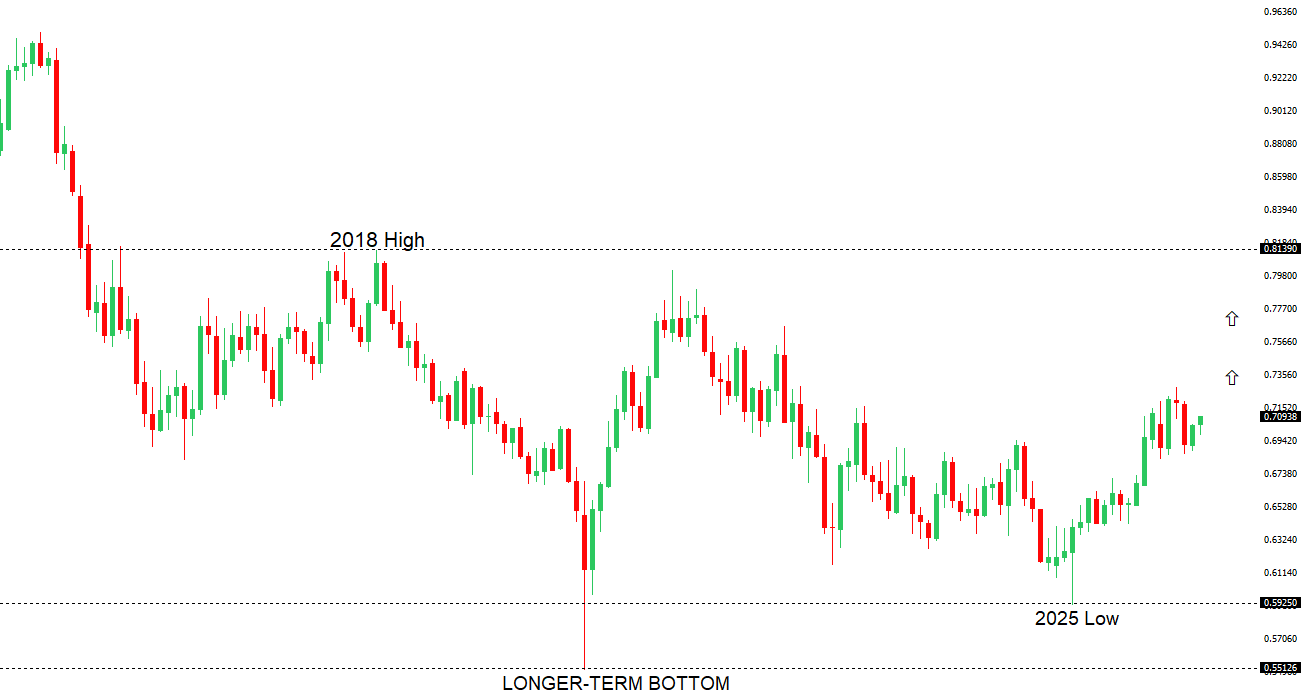 | ||
| R2 0.7201 - 29 May high - Strong R1 0.7181 - 21 August high - Medium S1 0.7067 - 19 August low - Medium S2 0.6984 - 3 August low - Strong | ||
| AUDUSD: fundamental overview | ||
| The Australian dollar remains well supported near recent highs after the RBA’s August meeting minutes revealed a live debate over another rate increase. While the Board unanimously held the cash rate at 4.35%, several members saw a case for pre-emptive tightening amid upside inflation risks from elevated oil prices, weak productivity and the AI-driven data-center investment boom, although softer employment, housing and inflation indicators gave policymakers scope to wait for more data. The Aussie is also benefiting from a broadly subdued US dollar as the Treasury’s expanded long-dated bond-buyback plans and uncertainty surrounding tougher secondary sanctions on Iran weigh on US sentiment. Near-term direction will now depend heavily on US PCE inflation and Fed Chair Warsh’s Jackson Hole address, with any hawkish Fed signal presenting the main risk to the currency’s recent strength. | ||
| Suggested reading | ||
| Are graduates prepared for the AI era?, I. Berwick, Financial Times (August 24, 2026) How Scott Bessent’s Treasury Is Undercutting Fed’s Warsh, G. Robb, Marketwatch (August 21, 2026) | ||