


 | ||
| 26th August 2026 | view in browser | ||
| Australian Dollar surges while geopolitical risks ease | ||
| Markets enter Wednesday with a cautiously constructive tone as US-Iran de-escalation hopes weigh on oil and yields, the Australian dollar outperforms following hot inflation data, and investors await US PCE, Nvidia earnings and Jackson Hole. | ||
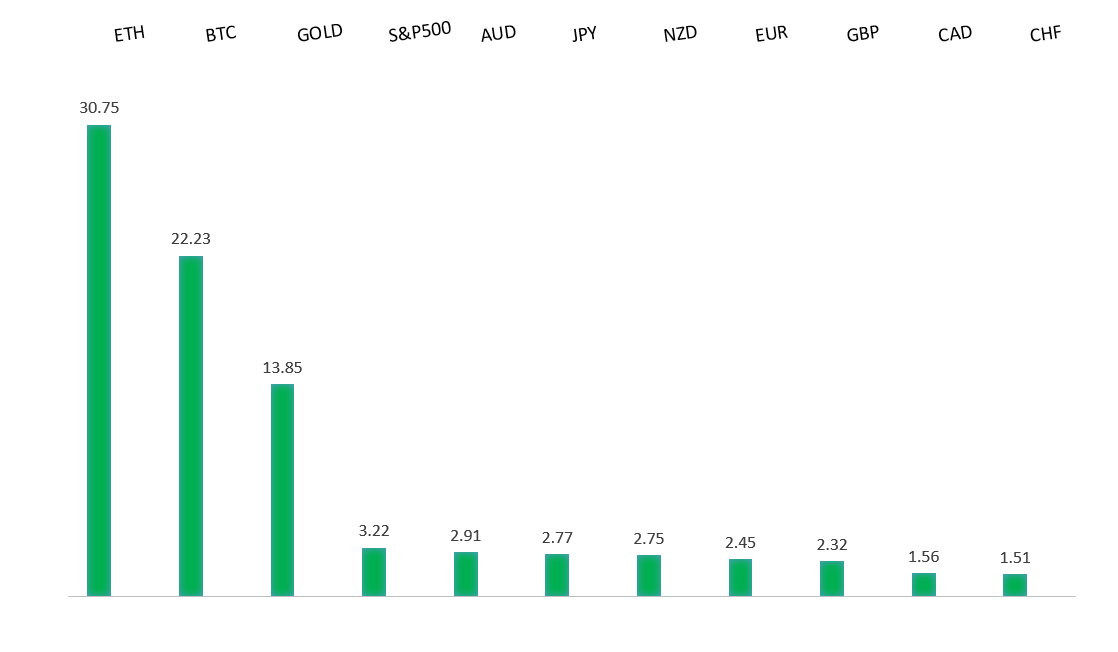
| Performance chart 30day v. USD (%) | ||
 | ||
| Technical & fundamental highlights | ||
| EURUSD: technical overview | ||
| The Euro outlook remains constructive with higher lows sought out on dips in favor of the next major upside extension targeting the 2021 high at 1.2350. Setbacks should be exceptionally well supported ahead of 1.1400. | ||
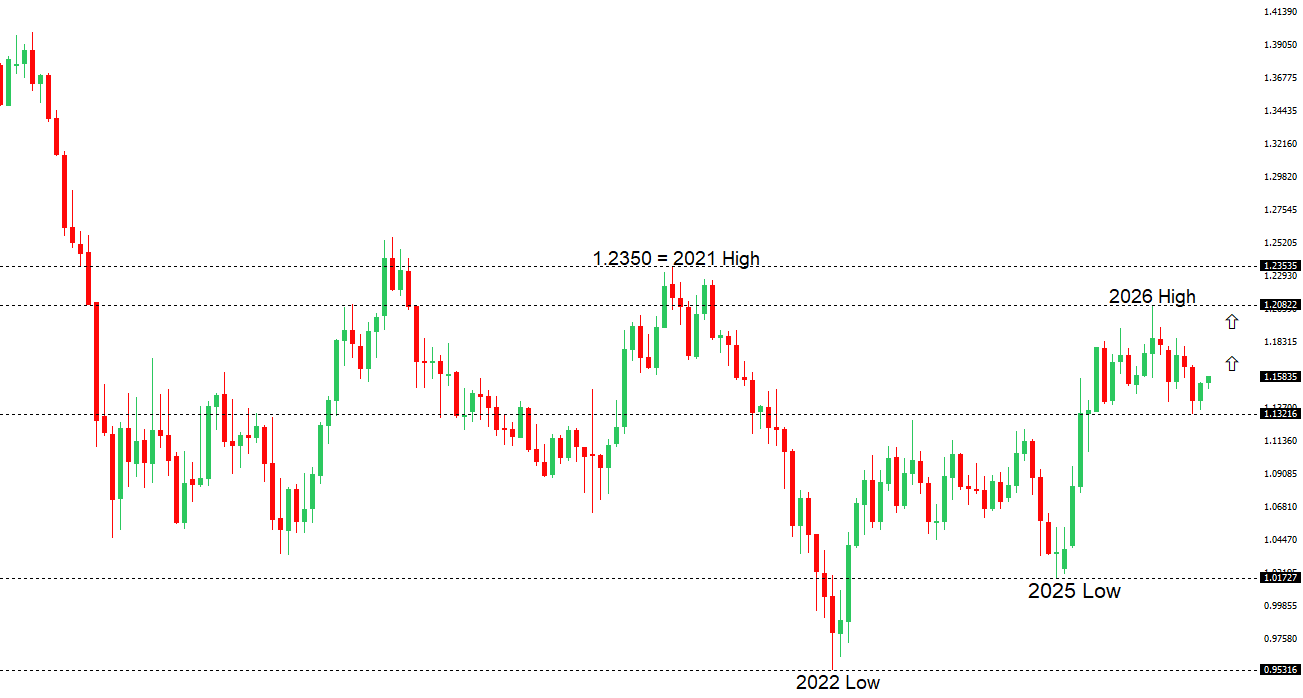 | ||
| R2 1.1797 - 6 May high - Medium R1 1.1712 - 21 August high - Medium S1 1.1570 - 19 May low - Medium S2 1.1512 - 313 August low - Medium | ||
| EURUSD: fundamental overview | ||
| The euro has been underpinned by increasingly hawkish ECB expectations, with Isabel Schnabel warning that inflation is likely to remain above the 2% target for an extended period and stressing the need to prevent energy-driven price pressures from generating second-round effects. Her comments reinforce expectations that the ECB will raise rates again in September, particularly as the eurozone economy continues to show resilience despite elevated energy costs. Nevertheless, the single currency has struggled to extend its gains, with EURUSD slipping as the dollar firms ahead of today’s US PCE inflation report. The near-term direction will therefore depend heavily on whether the US data strengthens expectations for further Fed tightening, while falling German and US bond yields and uncertainty over how far the ECB will tighten beyond September are also limiting conviction. | ||
| GBPUSD: technical overview | ||
| The Pound remains exceptionally well supported on dips into the 1.3000 area, with the price largely consolidating above the psychological barrier and previous resistance turned support in the form of the 2023 high. Look for the market to continue be well supported on dips ahead of the next major upside extension through the yearly high at 1.3870 and towards a retest of the 2018 high at 1.4377 further up. Only a monthly close below 1.3000 negates. | ||
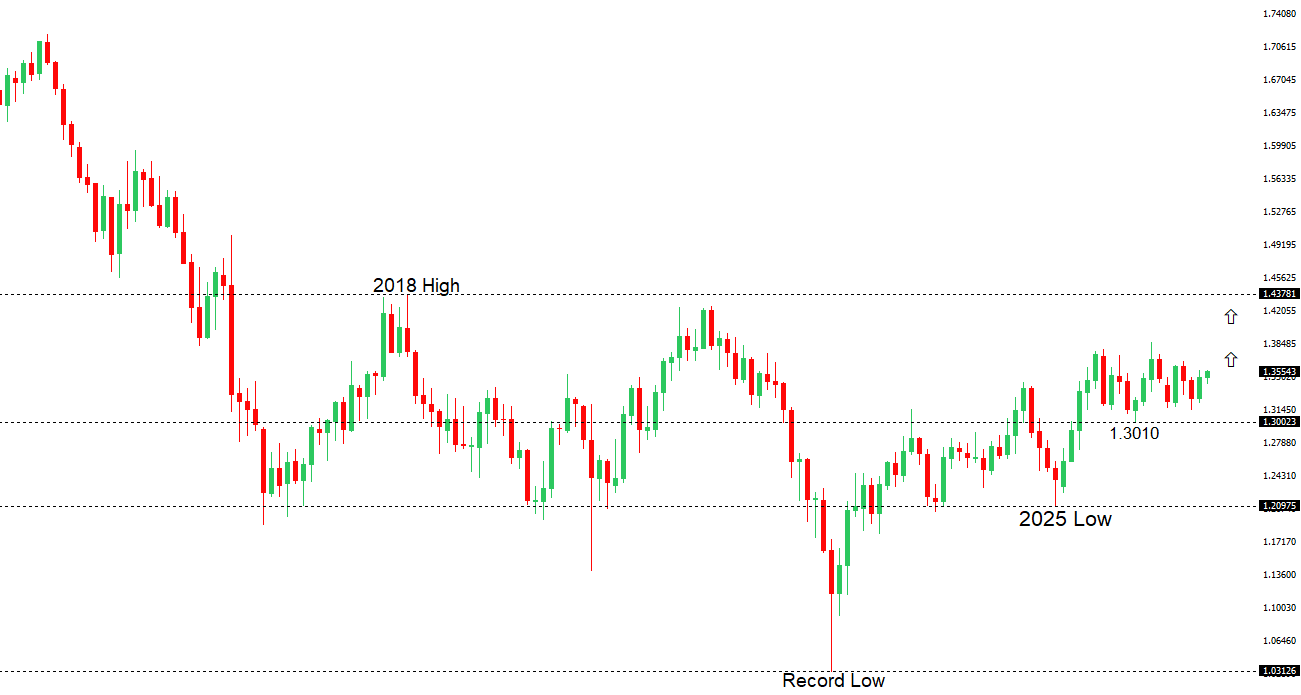 | ||
| R2 1.3700 - Figure - Strong R1 1.3676 - 21 August high - Medium S1 1.3523 - 19 August low - Medium S2 1.3474 - 13 Augus low - Medium | ||
| GBPUSD: fundamental overview | ||
| Sterling remains close to a six-month high against the dollar, supported by a combination of resilient UK activity, sticky inflation and growing expectations that the Bank of England could raise rates again before year-end. Recent PMI and confidence data have pointed to improving economic momentum, while July inflation accelerated to 2.9% and the latest Citi/YouGov survey showed a renewed rise in public inflation expectations, reinforcing the market’s relatively hawkish BoE pricing. GBPUSD has nevertheless edged back below the mid-1.3600s as traders reduce exposure ahead of the US PCE report and Fed Chair Warsh’s Jackson Hole address. Softer US yields, reduced expectations of further Fed tightening and hopes for Iran diplomacy continue to limit the dollar’s recovery, although elevated gilt yields and uncertainty surrounding the UK’s October budget remain important domestic constraints on further sterling gains. | ||
| USDJPY: technical overview | ||
| The major pair has entered a period of correction and consolidation after extending its run to fresh multi-decade highs at 163.99. Setbacks are now expected to be well supported above 155.00, with only a break below to compromise the bullish structure. | ||
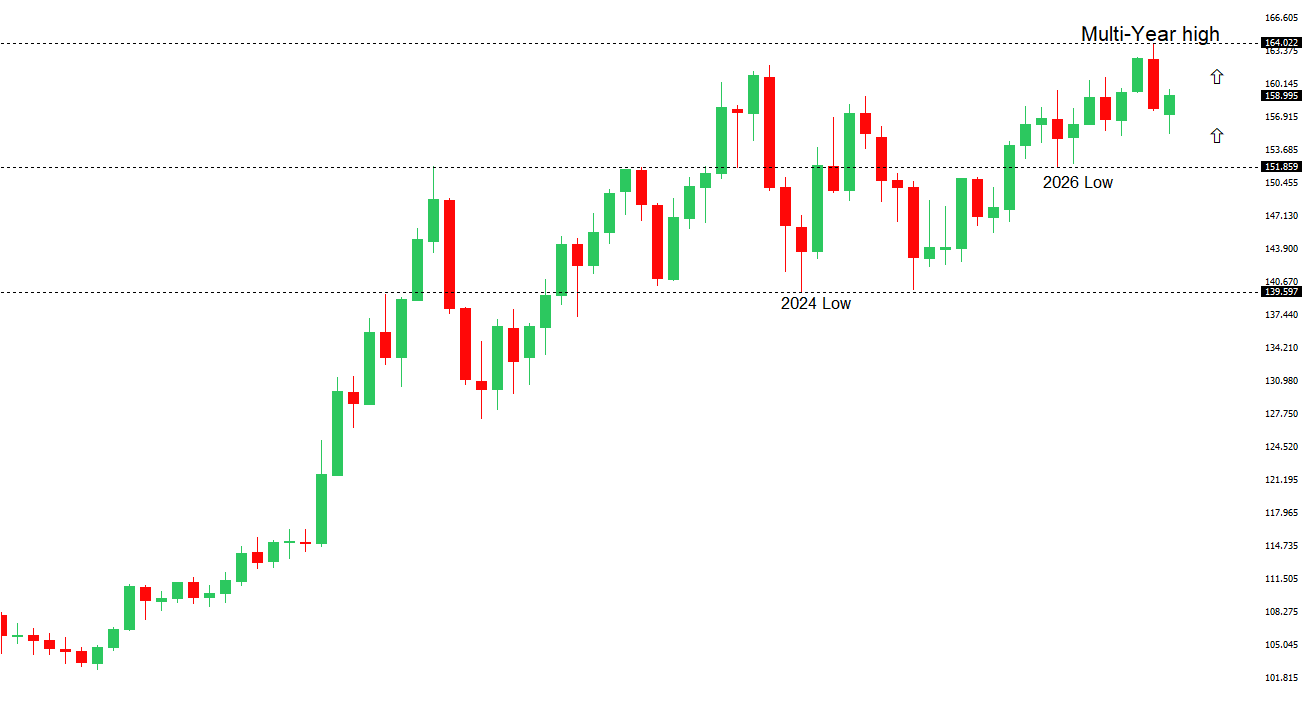 | ||
| R2 160.00 - Psychological - Strong R1 159.78 - 17 August high - Medium S1 158.02 - 20 August low - Medium S2 156.67 - 7 August low - Medium | ||
| USDJPY: fundamental overview | ||
| The yen remains caught between increasingly supportive domestic inflation signals and the still-wide US-Japan interest-rate differential. Economy Minister Minoru Kiuchi said consumer prices should continue to rise gradually because of the Middle East situation, while Japanese corporate-services inflation accelerated to 3.6% year-on-year in July, reinforcing expectations that the Bank of Japan could raise rates again as soon as September. Higher Japanese yields and the continuing threat of official intervention are helping to limit further yen weakness, but elevated US yields, concerns over Japan’s fiscal outlook and doubts that modest BoJ tightening will rapidly close the rate gap continue to constrain any sustained recovery. Easing Middle East tensions and lower oil prices offer some relief for energy-importing Japan, leaving the yen’s near-term direction particularly sensitive to US inflation data and the resulting shift in Fed expectations. | ||
| AUDUSD: technical overview | ||
| There are signs of the formation of a longer-term base with the market recovering out from a meaningful longer-term support zone. The latest monthly close back above 0.7000 takes the big picture pressure off the downside and strengthens the case for a bottom, with the focus now on a push towards 0.8000. Setbacks should now be well supported ahead of 0.6700. | ||
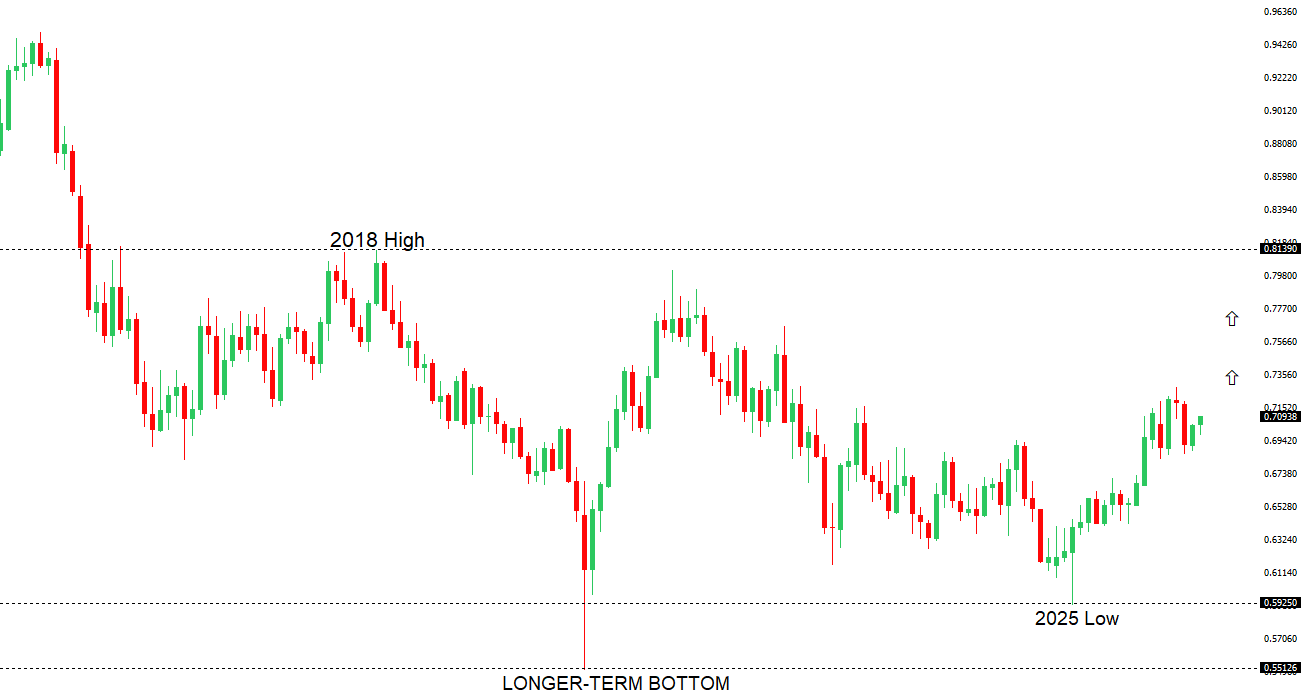 | ||
| R2 0.7201 - 29 May high - Strong R1 0.7187 - 26 August high - Medium S1 0.7067 - 19 August low - Medium S2 0.6984 - 3 August low - Strong | ||
| AUDUSD: fundamental overview | ||
| The Australian dollar has outperformed after hotter-than-expected July inflation reinforced expectations that the RBA may need to tighten policy again. Headline CPI rose 1.0% on the month and 3.5% year-on-year, while the more policy-relevant trimmed mean held at an elevated 3.6%, highlighting persistent underlying price pressures despite the moderation in annual headline inflation from 3.8%. This strengthens the message from the RBA’s latest meeting, where policymakers kept the cash rate at 4.35% but explicitly retained the option of another increase if upside inflation risks materialize, including those stemming from energy prices, resilient demand and domestic capacity pressures. The resulting hawkish repricing has lifted Australian yields and supported the AUD, particularly against the softer New Zealand dollar, although the next move against the US dollar will also depend heavily on the upcoming US PCE inflation report and its implications for Fed policy. | ||
| Suggested reading | ||
| The emails that shamed Wall Street, G. Tett, Financial Times (August 25, 2026) A Debt Crisis? Interest Rates Aren’t Saying So, J. Calhoun, Alhambra (August 23, 2026) | ||