


 | ||
| 14th August 2026 | view in browser | ||
| Rate fears fade, risk appetite holds | ||
| Global markets head into Friday with equities near record highs and the dollar softer on easing Fed rate-hike expectations, while geopolitical tensions around Iran and Russia keep oil, gold and broader risk sentiment volatile. | ||
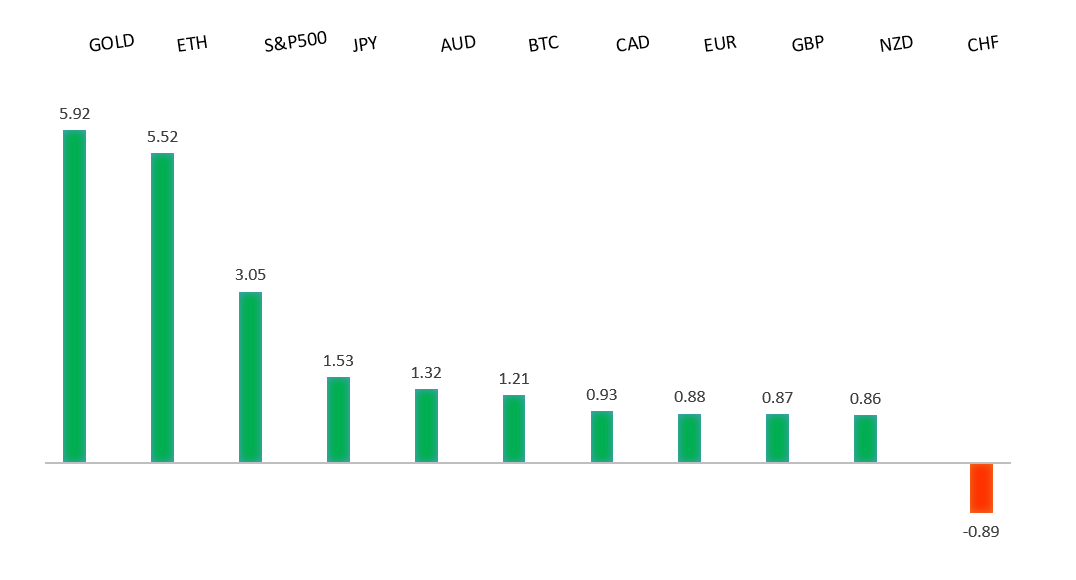
| Performance chart 30day v. USD (%) | ||
 | ||
| Technical & fundamental highlights | ||
| EURUSD: technical overview | ||
| The Euro outlook remains constructive with higher lows sought out on dips in favor of the next major upside extension targeting the 2021 high at 1.2350. Setbacks should be exceptionally well supported ahead of 1.1300. | ||
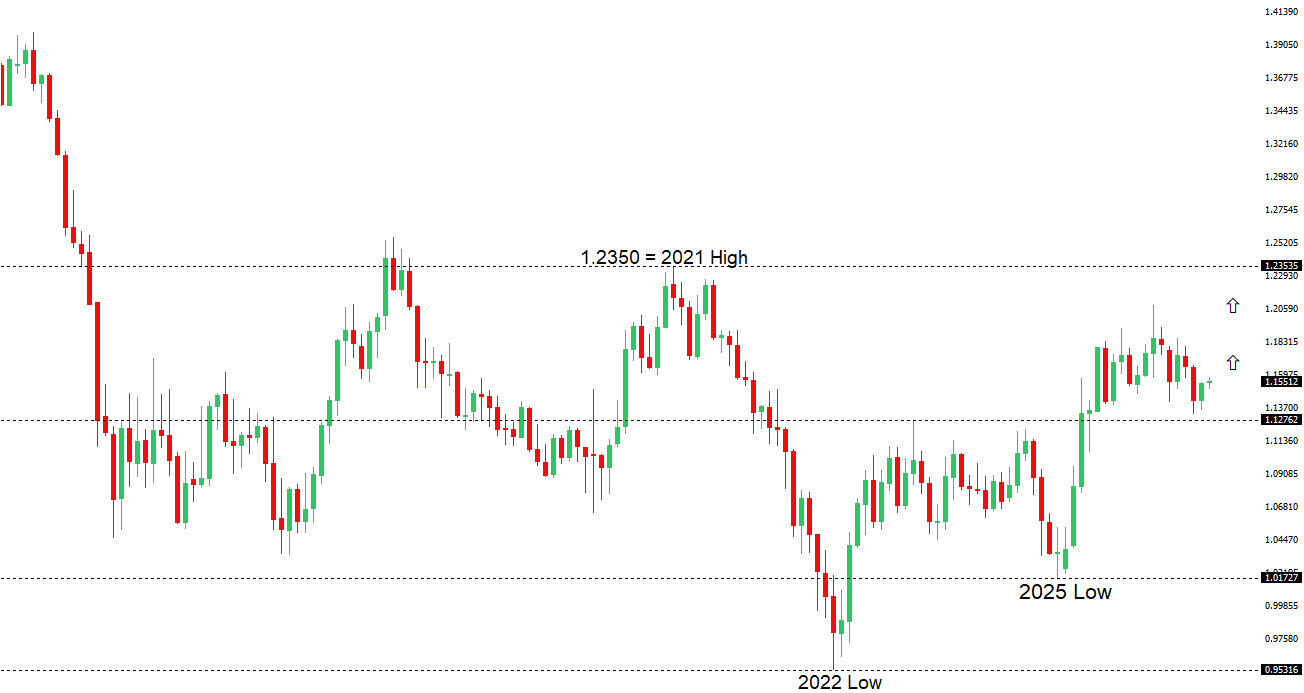 | ||
| R2 1.1623 - 15 June high - Medium R1 1.1581 - 7 August high - Medium S1 1.1500 - Figure - Medium S2 1.1434 - 30 July low - Medium | ||
| EURUSD: fundamental overview | ||
| The euro is trading firmer against the dollar, supported primarily by a widening shift in relative rate expectations after softer US inflation data reduced the likelihood of another Federal Reserve hike. July US producer prices were unchanged on the month, below the 0.2% forecast, while core PPI rose a modest 0.2%, reinforcing the cooling signal from CPI and weighing on the dollar. In contrast, expectations for further ECB tightening have strengthened, with a Reuters poll showing 83% of economists expect a final 25-basis-point hike in September as euro-area inflation remains above target. The euro has also drawn support from the region’s resilient 0.4% second-quarter growth and an improvement in August investor confidence. However, upside remains restrained by geopolitical tensions surrounding Russia and NATO territory, the US-Iran confrontation and renewed Red Sea attacks, which continue to underpin safe-haven demand for the dollar. | ||
| GBPUSD: technical overview | ||
| The Pound remains exceptionally well supported on dips into the 1.3000 area, with the price largely consolidating above the psychological barrier and previous resistance turned support in the form of the 2023 high. Look for the market to continue be well supported on dips ahead of the next major upside extension through the yearly high at 1.3870 and towards a retest of the 2018 high at 1.4377 further up. Only a monthly close below 1.3000 negates. | ||
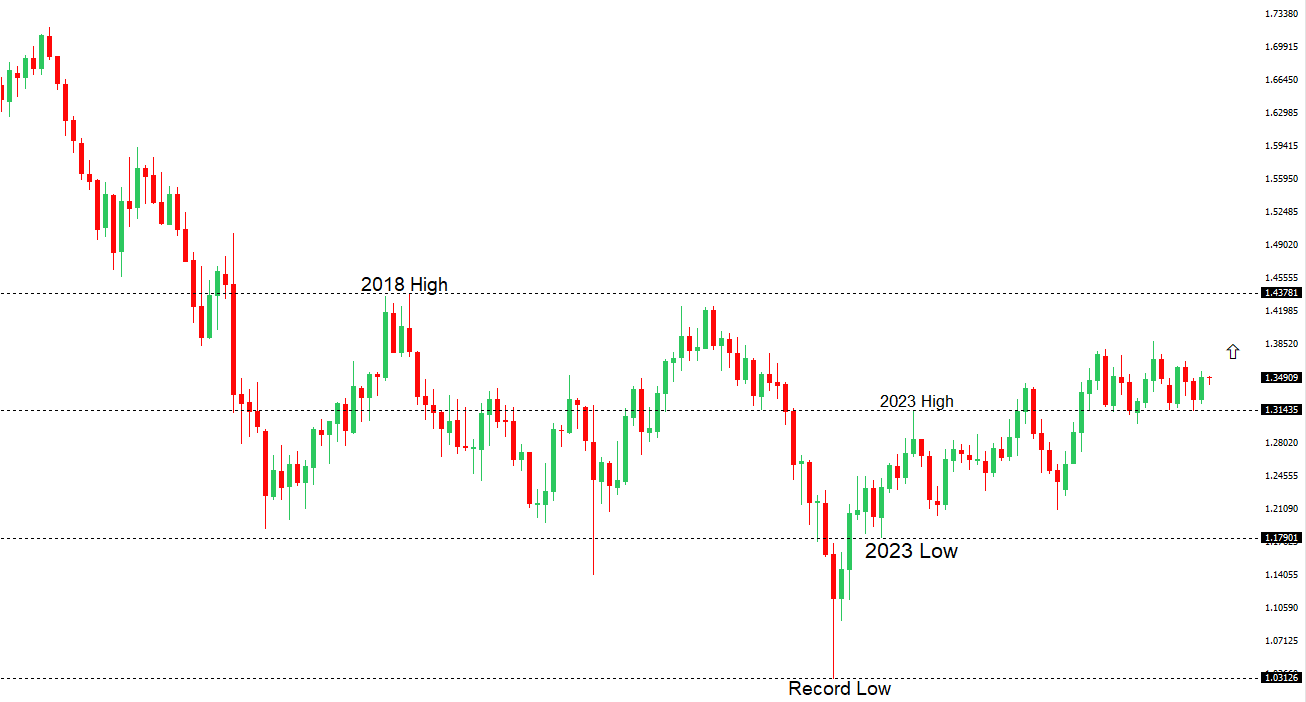 | ||
| R2 1.3558 - 15 July high - Strong R1 1.3546 - 12 August high - Medium S1 1.3333 - 30 July low - Medium S2 1.3273 - 28 July low - Strong | ||
| GBPUSD: fundamental overview | ||
| The pound has strengthened against the US dollar, supported by a combination of resilient UK growth and a softer US inflation backdrop. UK GDP expanded by 0.4% in the second quarter, in line with forecasts but slowing from 0.6% previously, with services remaining the principal growth engine and the economy proving relatively resilient despite the Middle East conflict and higher energy costs. The data reinforced the Bank of England’s comparatively hawkish policy outlook, with Chief Economist Pill arguing that the strength of activity supports the case for higher interest rates as inflation remains above target. At the same time, cooler-than-expected US CPI and PPI readings have reduced expectations for a September Fed hike and weakened the dollar, although geopolitical risks and the threat of further energy-price pressure remain potential headwinds for sterling. Attention now turns to US retail sales for the next directional catalyst. | ||
| USDJPY: technical overview | ||
| The major pair has entered a period of correction and consolidation after extending its run to fresh multi-decade highs at 163.99. Setbacks are now expected to be well supported above 155.00, with only a break below to compromise the bullish structure. | ||
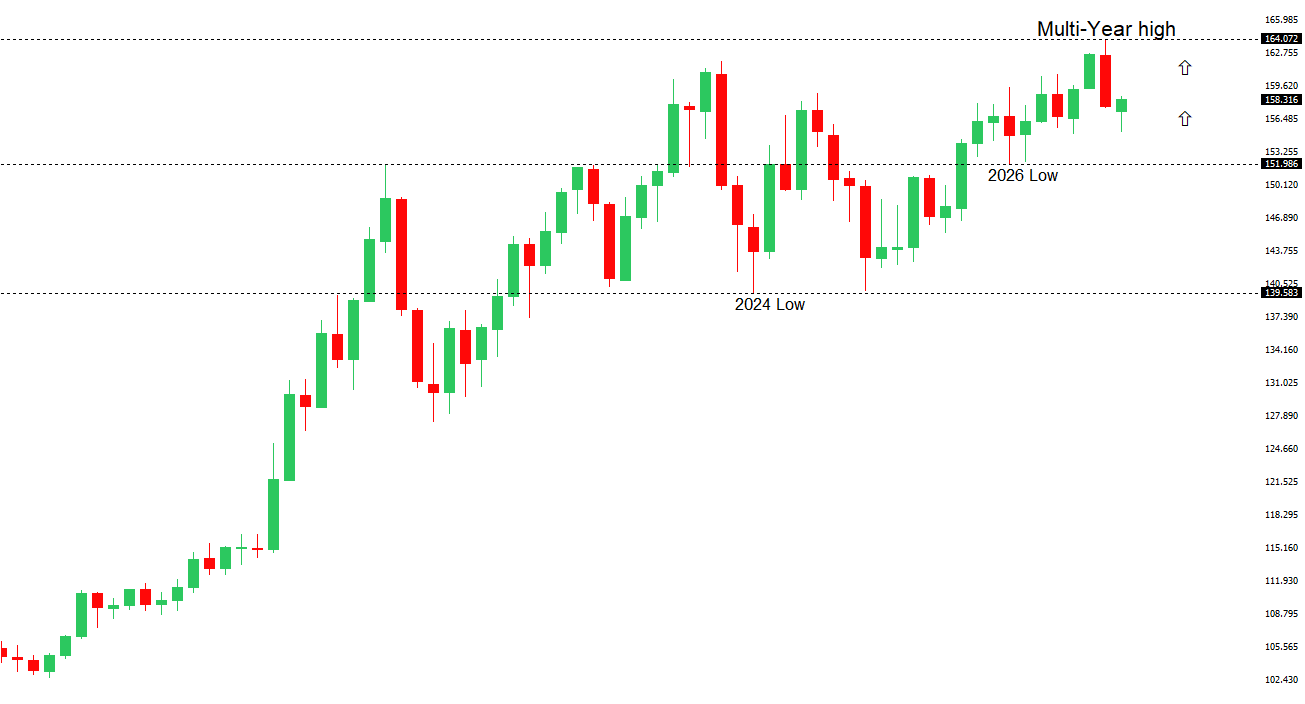 | ||
| R2 160.00 - Psychological - Strong R1 159.57 - 13 August high - Medium S1 157.54 - 10 August low - Medium S2 156.67 - 7 August low - Medium | ||
| USDJPY: fundamental overview | ||
| The yen remains under pressure against the dollar, with the boost from recent coordinated US-Japan intervention fading as Japan’s still-wide interest-rate disadvantage keeps carry-trade demand intact. Softer US inflation and weak employment data have reduced expectations for an immediate Federal Reserve hike, while rising speculation that the Bank of Japan could tighten again as early as September has offered the yen some support. However, Japan’s low borrowing costs and lingering fiscal concerns continue to limit any sustained recovery. With the yen approaching the closely watched 160 level, intervention risk is rising again, leaving USDJPY caught between a softer Fed outlook and the threat of further Japanese policy action on one side, and the persistent US-Japan rate gap on the other. | ||
| AUDUSD: technical overview | ||
| There are signs of the formation of a longer-term base with the market recovering out from a meaningful longer-term support zone. The latest monthly close back above 0.7000 takes the big picture pressure off the downside and strengthens the case for a bottom, with the focus now on a push towards 0.8000. Setbacks should now be well supported ahead of 0.6700. | ||
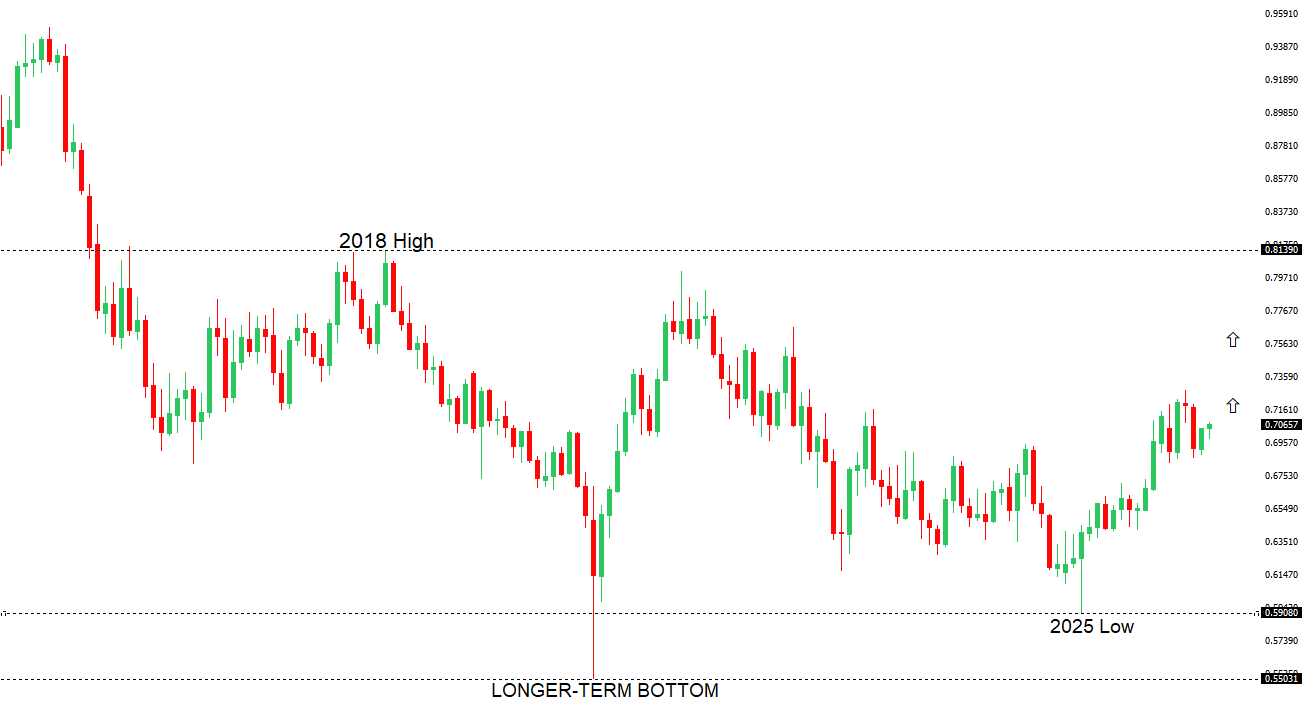 | ||
| R2 0.7100 - Figure - Medium R1 0.7092 - 12 August high - Strong S1 0.6984 - 3 August low - Medium S2 0.6922 - 29 July low - Strong | ||
| AUDUSD: fundamental overview | ||
| The Australian dollar has come under modest pressure as evidence that the RBA’s earlier tightening is increasingly weighing on household demand and housing activity offsets the central bank’s continued hawkish bias. Assistant Governor Kent said this year’s three rate increases are having their intended effect through higher mortgage payments, weaker spending and tighter financial conditions, but stressed that further tightening remains possible if inflation risks intensify, particularly through persistently high oil prices, resilient global demand or disappointing productivity. The RBA kept the cash rate at 4.35% this week after raising it by 75 basis points since February, leaving markets pricing a meaningful risk of another increase by year-end. Meanwhile, softer US producer inflation has reduced expectations for a September Fed hike and weakened the broader US dollar, limiting the Aussie’s downside, with attention now turning to US retail sales and RBA Governor Michele Bullock’s parliamentary testimony for the next policy signals. | ||
| Suggested reading | ||
| The World Economy Is Swerving, Destination Unknown, M. El-Erian, Project Syndicate (August 10, 2026) What Critics Get Wrong About the 60/40 Portfolio, J. Kephart, Morningstar (August 13, 2026) | ||