


 | ||
| 18th August 2026 | view in browser | ||
| Dovish Fed signal meets hawkish oil market | ||
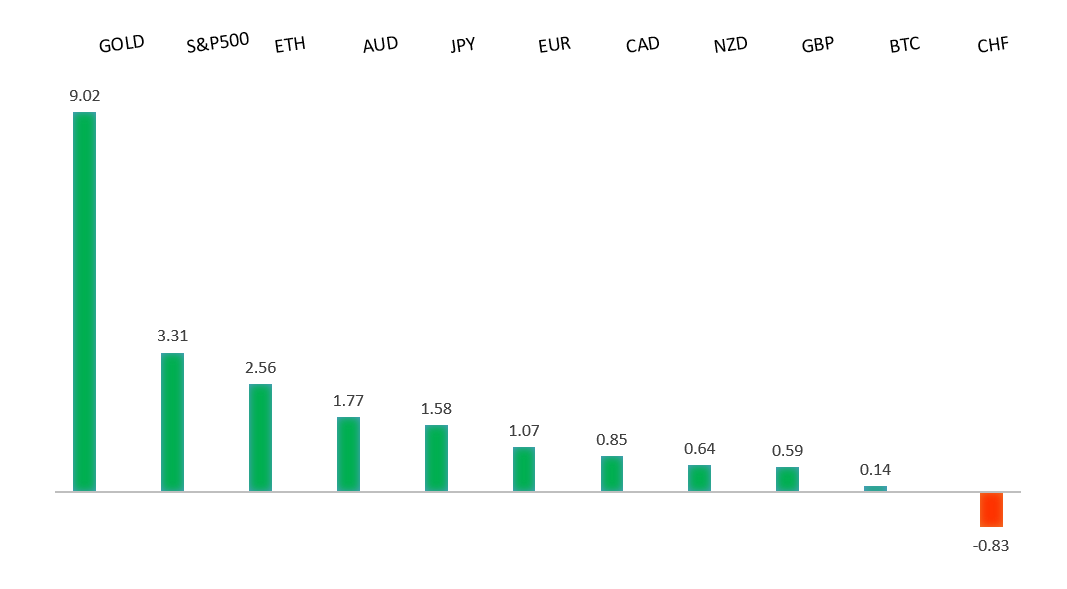
| Markets are caught between fading Fed hike expectations and mounting geopolitical risks, with renewed Hormuz tensions driving oil and bond yields higher, supporting the Dollar and weighing on equities and gold. | ||
| Performance chart 30day v. USD (%) | ||
 | ||
| Technical & fundamental highlights | ||
| EURUSD: technical overview | ||
| The Euro outlook remains constructive with higher lows sought out on dips in favor of the next major upside extension targeting the 2021 high at 1.2350. Setbacks should be exceptionally well supported ahead of 1.1300. | ||
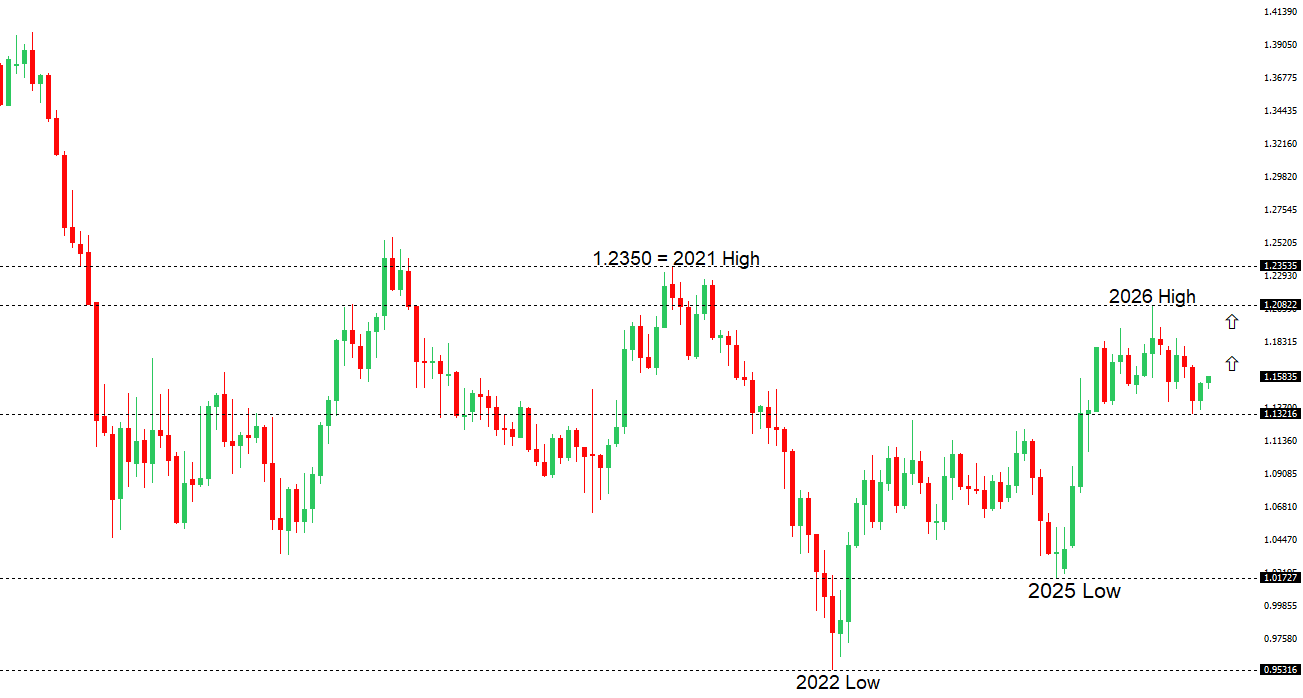 | ||
| R2 1.1623 - 15 June high - Medium R1 1.1615 - 17 August high - Medium S1 1.1500 - Figure - Medium S2 1.1434 - 30 July low - Medium | ||
| EURUSD: fundamental overview | ||
| The euro remains close to a two-month high, supported by growing expectations that the ECB will deliver another 25-basis-point rate hike in September as euro-area inflation remains elevated. The euro has also benefited from broad dollar weakness after softer US inflation, employment and retail-sales data reduced expectations for an imminent Fed hike. However, renewed strength in oil prices is limiting the euro’s advance by reviving US inflation concerns and safe-haven demand for the dollar, while also posing a potential terms-of-trade and growth headwind for the energy-importing euro area. The near-term balance therefore remains modestly constructive for the euro, although Wednesday’s FOMC minutes will be important in determining whether the recent pullback in Fed tightening expectations, and corresponding pressure on the dollar, can be sustained. September Fed hike expectations have fallen sharply following the latest softer US data. | ||
| GBPUSD: technical overview | ||
| The Pound remains exceptionally well supported on dips into the 1.3000 area, with the price largely consolidating above the psychological barrier and previous resistance turned support in the form of the 2023 high. Look for the market to continue be well supported on dips ahead of the next major upside extension through the yearly high at 1.3870 and towards a retest of the 2018 high at 1.4377 further up. Only a monthly close below 1.3000 negates. | ||
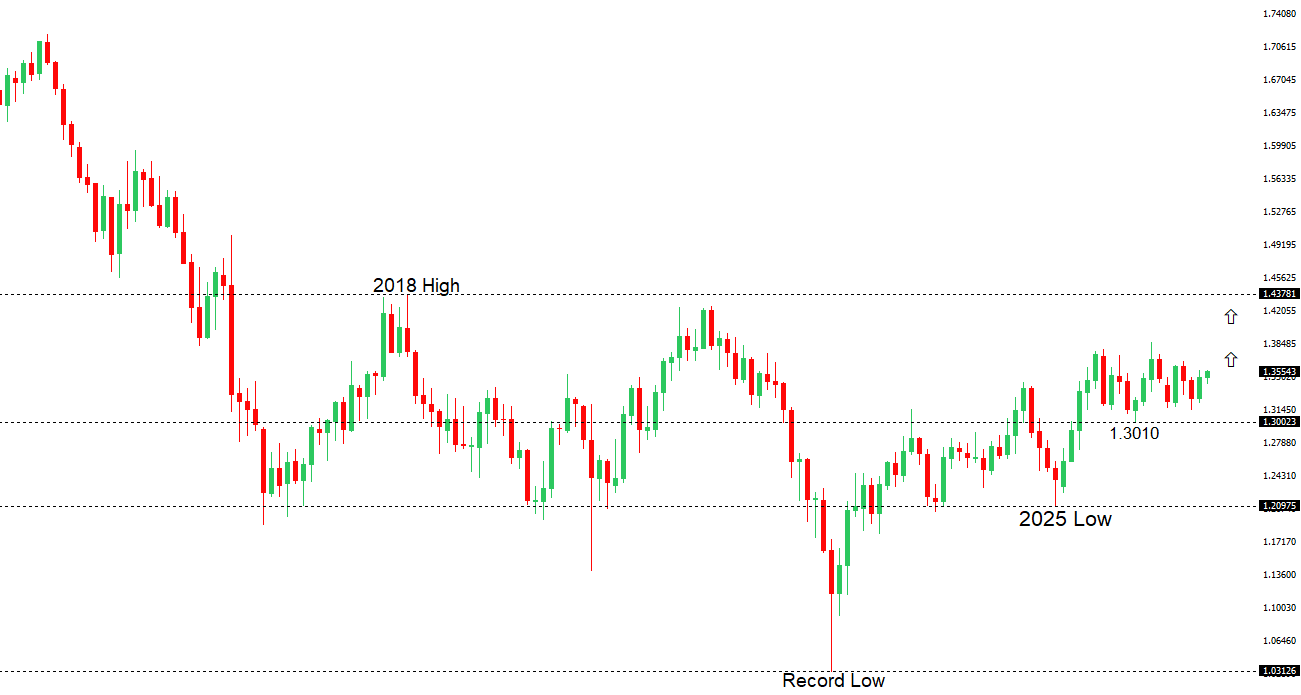 | ||
| R2 1.3600 - Figure - Medium R1 1.3572 - 17 August high - Strong S1 1.3474 - 13 August low - Medium S2 1.3400 - 31 July low - Medium | ||
| GBPUSD: fundamental overview | ||
| The pound remains supported against the dollar, primarily reflecting a favorable shift in relative rate expectations. Softer US inflation, producer-price and retail-sales data have reduced the perceived likelihood of a September Federal Reserve rate hike, weighing on the dollar, while resilient UK growth and recent hawkish comments from Bank of England Chief Economist Pill have reinforced expectations that the BoE could raise rates at least once this year. Sterling’s advance has nevertheless become more cautious ahead of a busy UK data calendar, beginning with Tuesday’s employment report and followed by inflation and retail-sales figures. Particular attention will be paid to unemployment and wage growth, with the latter offering an important signal on domestic inflation persistence and the scope for further BoE tightening. The latest available official figures showed unemployment at 4.9%, although continuing concerns over the reliability of the UK Labour Force Survey warrant some caution when interpreting the release. | ||
| USDJPY: technical overview | ||
| The major pair has entered a period of correction and consolidation after extending its run to fresh multi-decade highs at 163.99. Setbacks are now expected to be well supported above 155.00, with only a break below to compromise the bullish structure. | ||
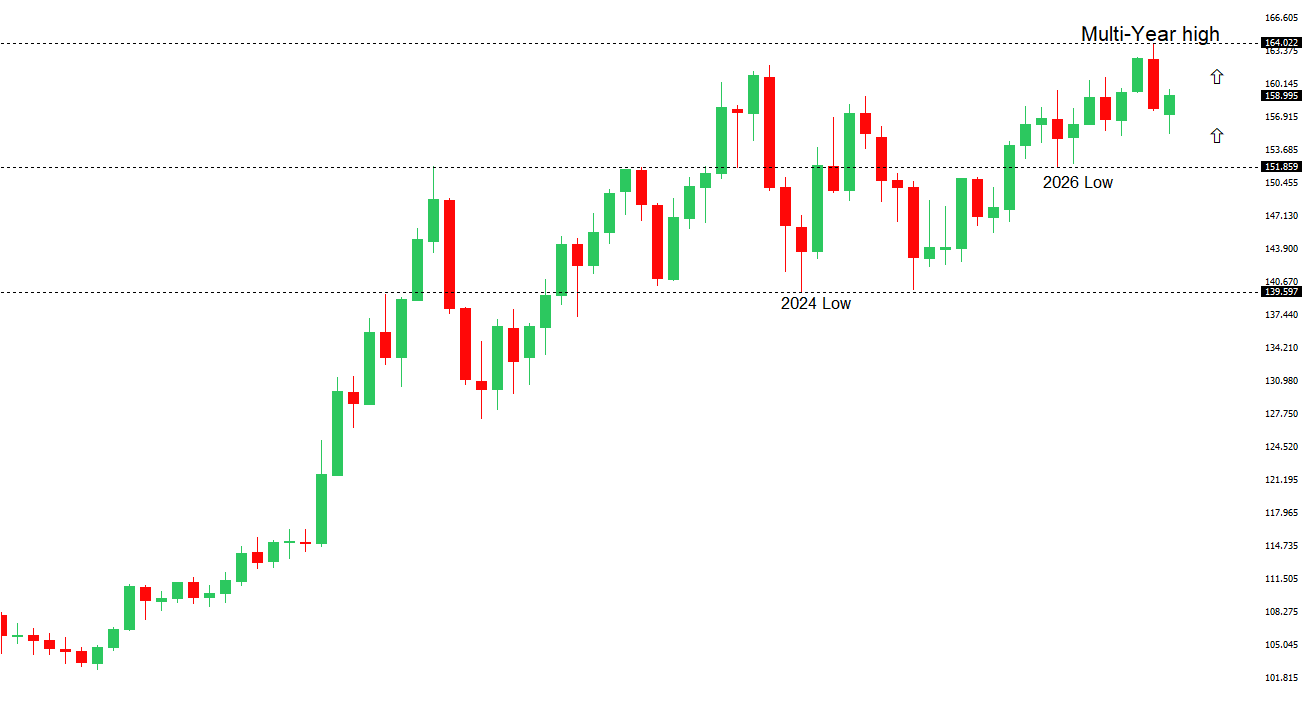 | ||
| R2 160.00 - Psychological - Strong R1 159.60 - 17 August high - Medium S1 157.54 - 10 August low - Medium S2 156.67 - 7 August low - Medium | ||
| USDJPY: fundamental overview | ||
| The yen remains close to a two-week low against the dollar, with hawkish Bank of Japan expectations struggling to offset concerns about the strength of Japan’s economy. Markets continue to price a high probability of a 25-basis-point BoJ rate increase in September, supported by the latest Summary of Opinions showing that several policymakers favor further tightening amid persistent upside inflation risks. However, weaker-than-expected second-quarter GDP growth, alongside signs that the expansion relied heavily on net exports, government consumption and inventories rather than domestic demand, has raised doubts about how aggressively the BoJ can proceed. At the same time, softer US economic data and reduced expectations for a September Fed hike are helping to limit additional yen selling, leaving USDJPY caught between narrowing policy-rate expectations and lingering concerns over Japan’s underlying growth momentum ahead of Wednesday’s FOMC minutes. | ||
| AUDUSD: technical overview | ||
| There are signs of the formation of a longer-term base with the market recovering out from a meaningful longer-term support zone. The latest monthly close back above 0.7000 takes the big picture pressure off the downside and strengthens the case for a bottom, with the focus now on a push towards 0.8000. Setbacks should now be well supported ahead of 0.6700. | ||
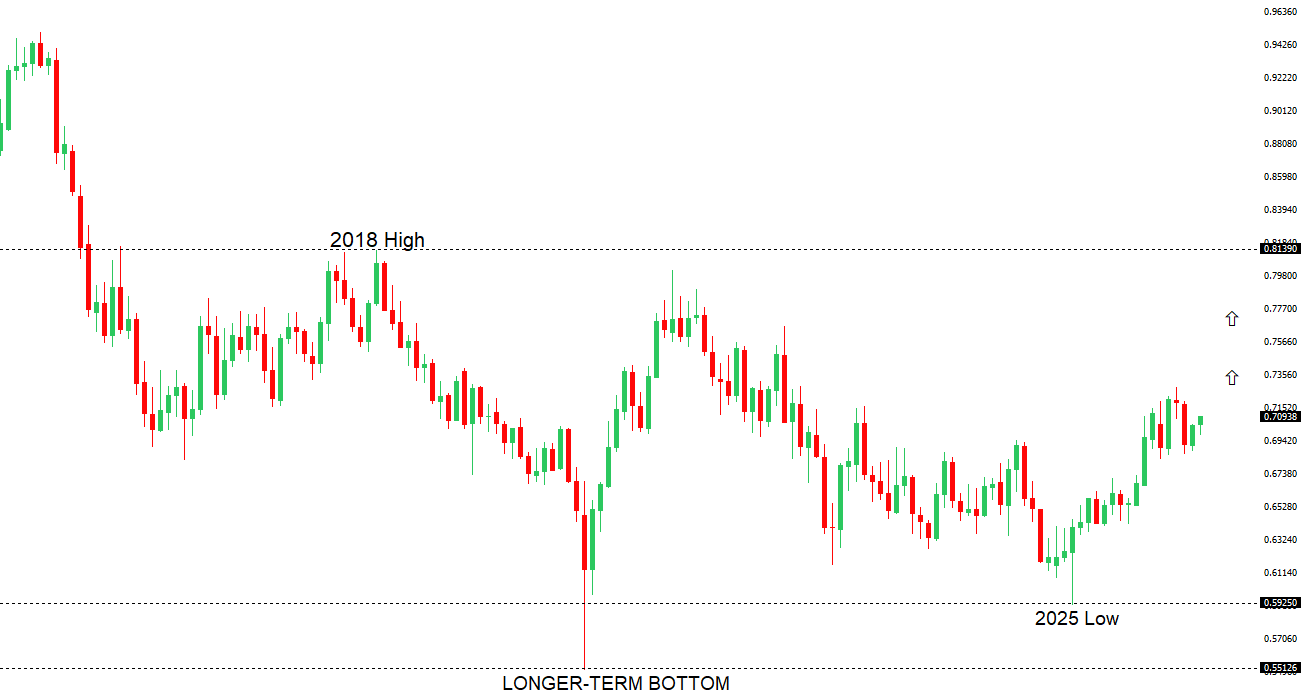 | ||
| R2 0.7201 - 29 May high - Strong R1 0.7130 - 17 August high - Medium S1 0.7022 - 7 August low - Medium S2 0.6984 - 3 August low - Strong | ||
| AUDUSD: fundamental overview | ||
| The Australian Dollar remains well supported, benefiting primarily from broad US Dollar weakness as softer US labor, inflation and retail-sales data have reduced expectations for a Federal Reserve rate hike in September. Domestically, sentiment improved after the RBA held the cash rate at 4.35%, with the Westpac Consumer Confidence Index rising 6.0% in August, although it remains well below year-ago levels. The RBA continues to signal that inflation is too high and has not ruled out further tightening, providing an additional yield-based tailwind for the currency, even as markets lean toward an extended pause. Attention now turns to Wednesday’s second-quarter Wage Price Index and Thursday’s labor-market report, although broadly expected outcomes are unlikely to materially alter RBA pricing. Meanwhile, escalating US-Iran tensions and the continued disruption to Middle East shipping present a mixed influence, potentially supporting the Aussie through higher commodity prices while limiting gains through weaker global risk appetite. | ||
| Suggested reading | ||
| The Fed Can’t Attain ‘Price Stability,’ Nor Would It Be Desirable, J. Tamny, Forbes (August 16, 2026) Yen Intervention Sets a Precedent for Future Interventions, N. Sargen, The Hill (August 14, 2026) | ||