


 | ||
| 19th August 2026 | view in browser | ||
| Risk-off tone builds ahead of FOMC Minutes | ||
| Global markets are risk-off into Wednesday as escalating Gulf tensions, rising oil prices and elevated bond yields pressure equities, while the dollar remains subdued ahead of key UK inflation data and the FOMC minutes. | ||
| Performance chart 30day v. USD (%) | ||
 | ||
| Technical & fundamental highlights | ||
| EURUSD: technical overview | ||
| The Euro outlook remains constructive with higher lows sought out on dips in favor of the next major upside extension targeting the 2021 high at 1.2350. Setbacks should be exceptionally well supported ahead of 1.1300. | ||
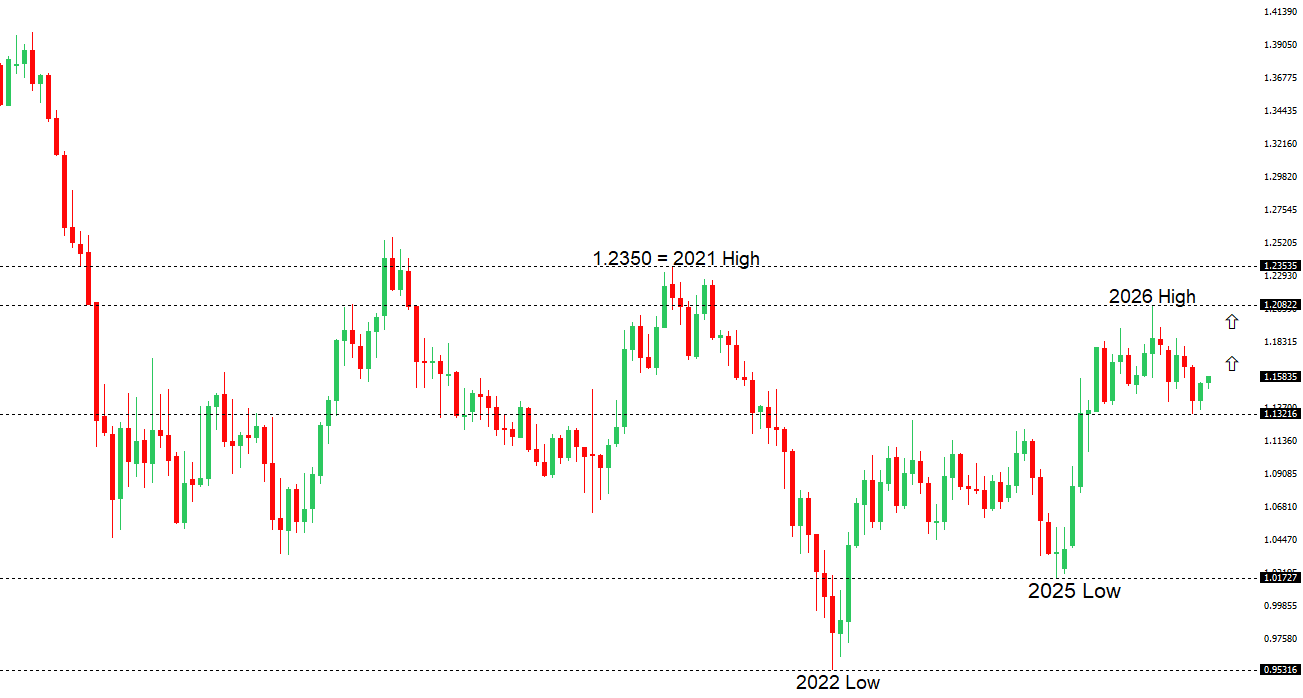 | ||
| R2 1.1623 - 15 June high - Medium R1 1.1615 - 17 August high - Medium S1 1.1500 - Figure - Medium S2 1.1434 - 30 July low - Medium | ||
| EURUSD: fundamental overview | ||
| The euro remains firm near a two-month high, supported primarily by a more favorable shift in relative rate expectations. Softer US inflation, weak July employment and disappointing retail sales have reduced expectations for another Federal Reserve increase, while markets continue to price a strong likelihood of a 25-basis-point ECB hike in September as elevated energy costs keep Eurozone inflation near 3%. ECB chief economist Lane reinforced the inflation concern but maintained a cautious, meeting-by-meeting stance, suggesting that any further tightening will remain data-dependent. The euro has also drawn support from an improvement in Germany’s ZEW expectations index to 34.2 in August from 26.3, although high energy prices and transport disruptions continue to cloud the region’s growth outlook. Attention now turns to Christine Lagarde’s remarks and the FOMC minutes, while a further escalation in the US-Iran conflict remains a downside risk through its potential to strengthen the safe-haven dollar and intensify Europe’s energy burden. | ||
| GBPUSD: technical overview | ||
| The Pound remains exceptionally well supported on dips into the 1.3000 area, with the price largely consolidating above the psychological barrier and previous resistance turned support in the form of the 2023 high. Look for the market to continue be well supported on dips ahead of the next major upside extension through the yearly high at 1.3870 and towards a retest of the 2018 high at 1.4377 further up. Only a monthly close below 1.3000 negates. | ||
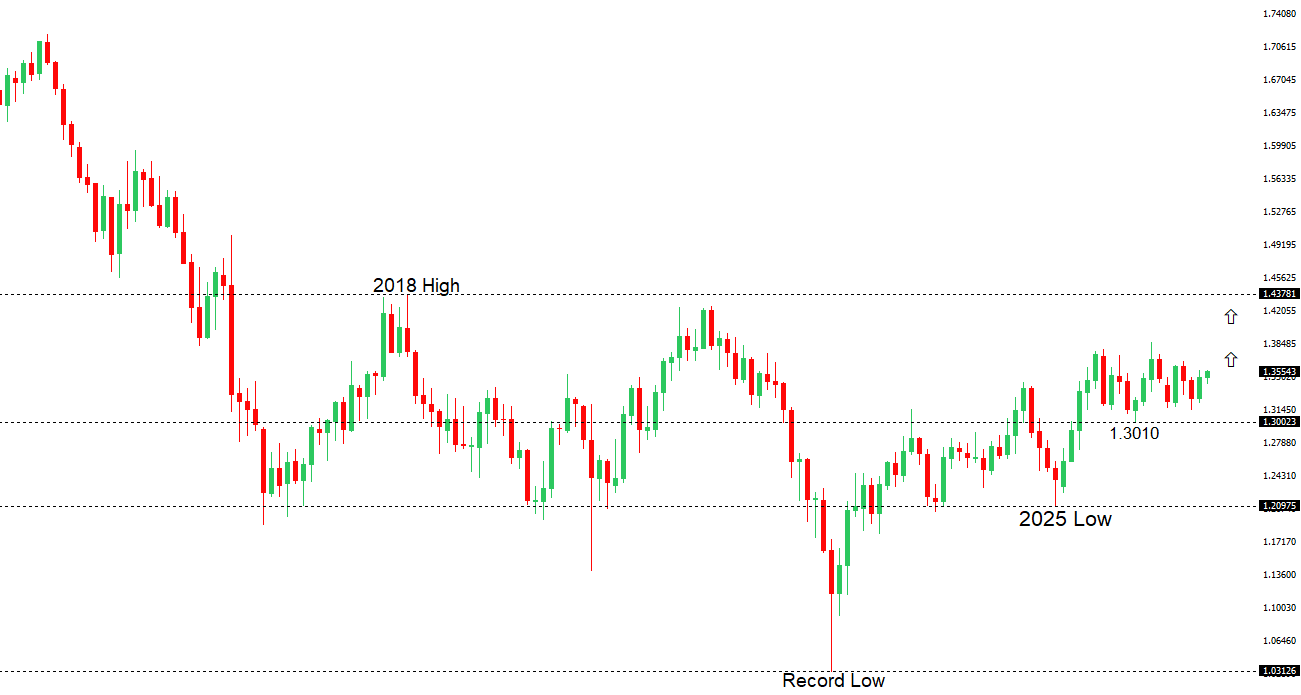 | ||
| R2 1.3600 - Figure - Medium R1 1.3572 - 17 August high - Strong S1 1.3474 - 13 August low - Medium S2 1.3400 - 31 July low - Medium | ||
| GBPUSD: fundamental overview | ||
| The pound has come under modest pressure after softer UK labor-market data tempered expectations for near-term Bank of England tightening. Unemployment held at 4.9% in the three months to June, above the 4.8% consensus, while total wage growth slowed to 4.1%, private-sector pay growth weakened to 2.8% and vacancies fell to their lowest level in several years, collectively pointing to cooling labor demand. The figures leave markets pricing only limited BoE tightening through year-end, although renewed energy-driven inflation risks mean policymakers are unlikely to dismiss the possibility entirely. Attention now turns to UK CPI, particularly services inflation, for evidence of whether underlying price pressures remain persistent enough to offset the softer employment picture. Sterling’s downside against the dollar has nevertheless been contained by fading expectations of a September Federal Reserve rate hike following weaker US employment, retail-sales and inflation data. | ||
| USDJPY: technical overview | ||
| The major pair has entered a period of correction and consolidation after extending its run to fresh multi-decade highs at 163.99. Setbacks are now expected to be well supported above 155.00, with only a break below to compromise the bullish structure. | ||
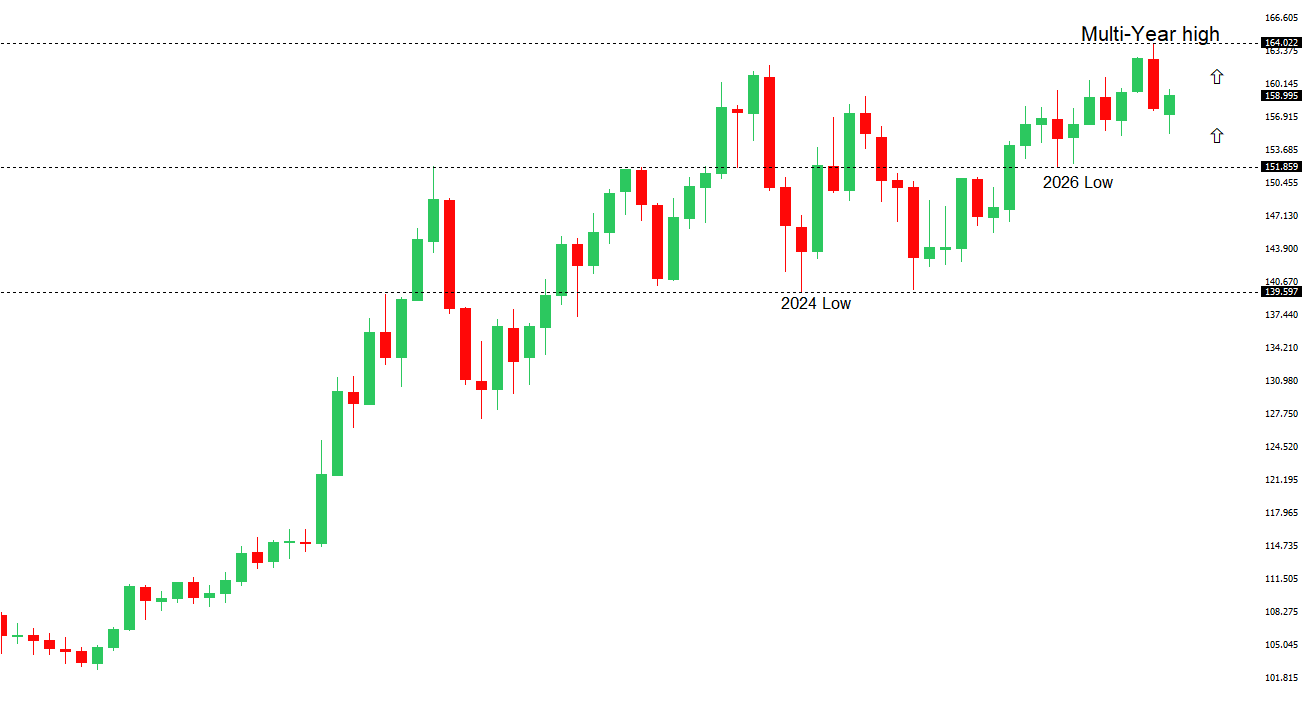 | ||
| R2 160.00 - Psychological - Strong R1 159.78 - 17 August high - Medium S1 157.54 - 10 August low - Medium S2 156.67 - 7 August low - Medium | ||
| USDJPY: fundamental overview | ||
| The yen has strengthened modestly as investors price an increasingly high probability that the Bank of Japan will raise interest rates as early as September. Persistently above-target Japanese inflation and recent BoJ commentary have reinforced the prospect of further policy normalization, while softer US employment and inflation data have reduced expectations for a near-term Federal Reserve hike, narrowing the relative policy gap and weighing on USDJPY. However, the yen’s recovery remains constrained by concerns over Japan’s fiscal outlook, particularly the government’s proposed temporary reduction in the consumption tax on food without a clearly identified replacement revenue source. Attention now turns to Friday’s national CPI report for further evidence on whether domestic inflation is strong enough to support an imminent BoJ move. | ||
| AUDUSD: technical overview | ||
| There are signs of the formation of a longer-term base with the market recovering out from a meaningful longer-term support zone. The latest monthly close back above 0.7000 takes the big picture pressure off the downside and strengthens the case for a bottom, with the focus now on a push towards 0.8000. Setbacks should now be well supported ahead of 0.6700. | ||
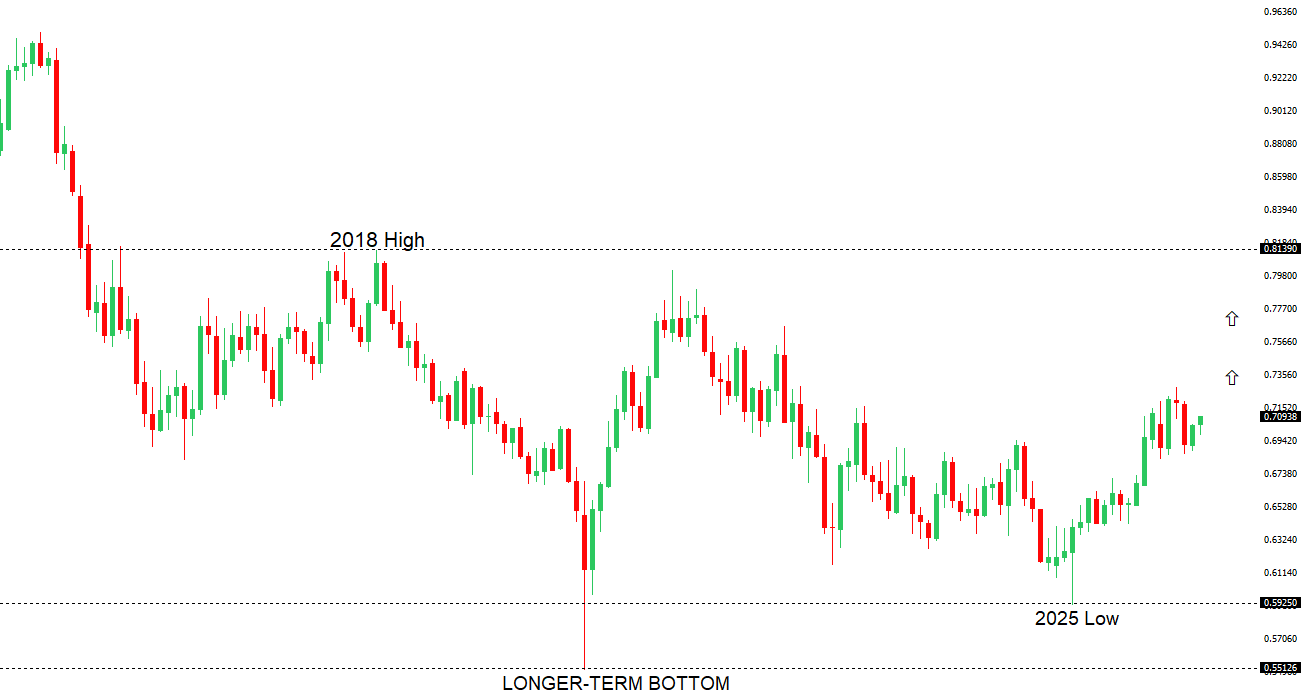 | ||
| R2 0.7201 - 29 May high - Strong R1 0.7130 - 17 August high - Medium S1 0.7022 - 7 August low - Medium S2 0.6984 - 3 August low - Strong | ||
| AUDUSD: fundamental overview | ||
| The Australian dollar has eased despite a generally supportive domestic rate backdrop, as investors took profits following its recent rise and Australia’s wage data offered no fresh hawkish surprise. The Wage Price Index increased 0.8% in Q2 and 3.2% year-on-year, matching expectations but confirming that annual wage growth is gradually cooling. Nevertheless, RBA Deputy Governor Hauser stressed that inflation remains too high and warned that rates may need to rise again if upside risks from the Middle East conflict, the AI investment boom or weak productivity materialize, reinforcing the RBA’s tightening bias after it held the cash rate at 4.35%. The Aussie is also receiving some underlying support from a softer US dollar, with weak US retail sales, subdued inflation and the recent deterioration in employment reducing expectations for another Fed hike. Attention now turns to Australia’s July employment report for further evidence on whether the domestic economy is slowing sufficiently to ease the RBA’s inflation concerns. | ||
| Suggested reading | ||
| Answers to Some Impossible Investor Questions, J. Calhoun, Alhambra (August 16, 2026) The Price of the Fed’s Silence, S. Lewarne, AIER (August 17, 2026) | ||