


 | ||
| 3rd July 2026 | view in browser | ||
| Holiday trading begins with the dollar on the defensive | ||
| Markets head into the new day with the US dollar under pressure after soft payrolls, though relatively hawkish central bank expectations remain intact as traders navigate thinner conditions ahead of the US holiday. | ||
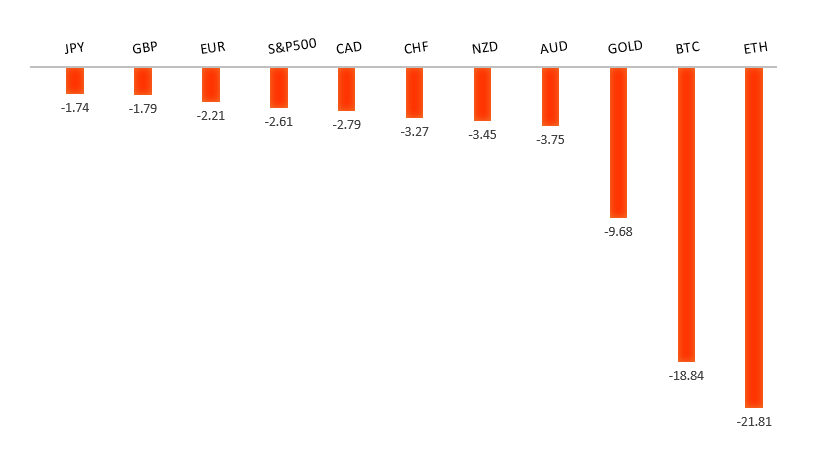
| Performance chart 30day v. USD (%) | ||
 | ||
| Technical & fundamental highlights | ||
| EURUSD: technical overview | ||
| The Euro outlook remains constructive with higher lows sought out on dips in favor of the next major upside extension targeting the 2021 high at 1.2350. Setbacks should be exceptionally well supported ahead of 1.1300. | ||
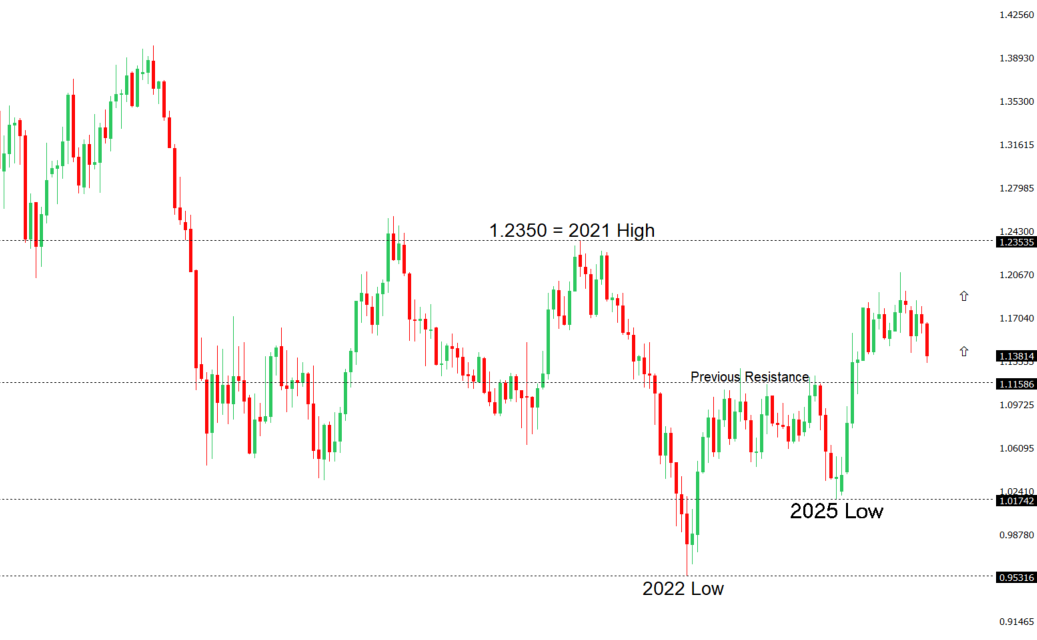 | ||
| R2 1.1529 - 18 June high - Medium R1 1.1473 - 2 July high - Medium S1 1.1325 - 24 June/2026 low - Medium S2 1.1300 - Figure - Medium | ||
| EURUSD: fundamental overview | ||
| The euro is finding support primarily from broad US Dollar weakness following a much softer-than-expected June US employment report, which prompted markets to scale back expectations for another near-term Federal Reserve rate hike and pushed US Treasury yields lower. However, the single currency’s own fundamental backdrop remains mixed. While softer-than-expected Eurozone inflation has reinforced expectations that the European Central Bank is approaching the end of its tightening cycle, ECB President Christine Lagarde has pushed back against premature dovish repricing, defending June’s rate hike as appropriate given persistent underlying inflation pressures—particularly in the services sector—and reiterating that future policy decisions will remain data dependent. At the same time, Germany’s newly announced package of structural reforms—including measures to reduce bureaucracy, improve labor market flexibility and support long-term fiscal sustainability—has modestly improved sentiment toward the region’s largest economy, complementing ongoing fiscal spending on infrastructure and defense. Meanwhile, lingering geopolitical tensions in the Middle East continue to underpin safe-haven demand for the US Dollar, leaving EURUSD largely caught between improving sentiment toward Europe and the Fed’s still relatively hawkish policy stance, with markets continuing to expect US interest rates to remain restrictive even after the softer payrolls report. | ||
| GBPUSD: technical overview | ||
| The Pound remains exceptionally well supported on dips into the 1.3000 area, with the price largely consolidating above the psychological barrier and previous resistance turned support in the form of the 2023 high. Look for the market to continue be well supported on dips ahead of the next major upside extension through the yearly high at 1.3870 and towards a retest of the 2018 high at 1.4377 further up. Only a monthly close below 1.3000 negates. | ||
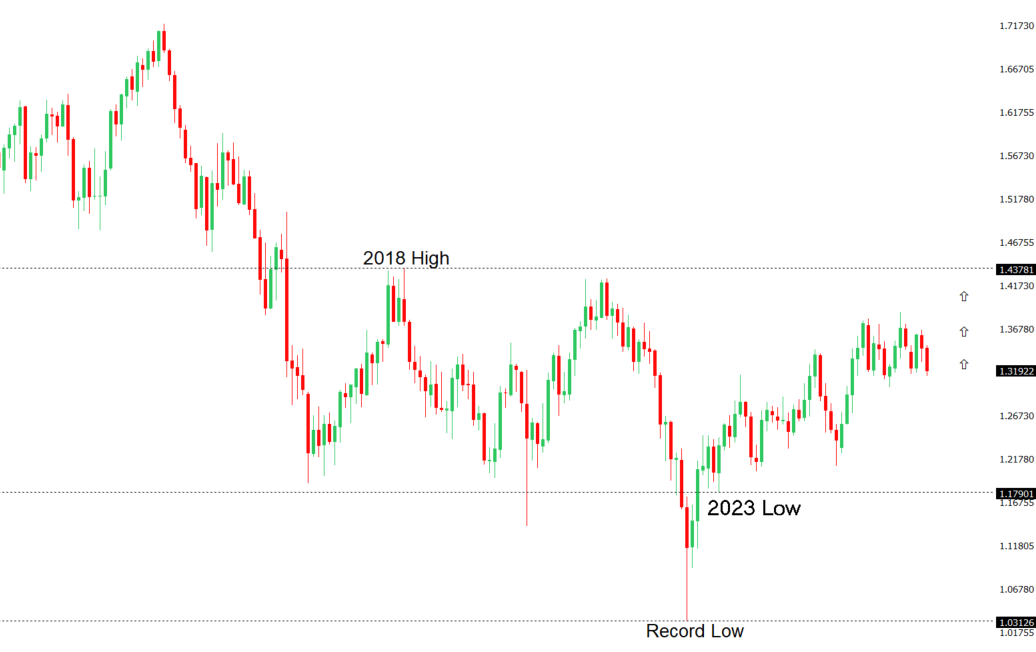 | ||
| R2 1.3461 - 15 June high - Medium R1 1.3385 - 2 July high - Medium S1 1.3262 - 2 July low - Medium S2 1.3212 - 30 June low - Medium | ||
| GBPUSD: fundamental overview | ||
| The British Pound is finding support from a combination of a sharply weaker US Dollar and a still relatively hawkish Bank of England backdrop. Softer-than-expected US June payrolls, downward revisions to prior months’ employment data and falling US Treasury yields have prompted markets to scale back expectations for further Federal Reserve tightening, weighing broadly on the greenback and lifting GBPUSD. Domestically, sterling has remained resilient despite ongoing political uncertainty following Prime Minister Keir Starmer’s resignation, as leadership frontrunner Andy Burnham’s commitment to maintaining fiscal discipline has helped reassure investors and limit political risk premiums. At the same time, Bank of England policymakers continue to strike a cautious but inflation-focused tone. Governor Andrew Bailey has resisted signaling imminent policy easing, while MPC member Catherine Mann reiterated that inflation risks remain tilted to the upside and warned an “activist” policy response may still be required if inflation expectations deteriorate. That combination continues to support UK yields and reinforces expectations that UK interest rates are likely to remain restrictive for longer, providing an underlying pillar of support for the Pound even as near-term price action remains heavily influenced by shifts in US Dollar sentiment. | ||
| USDJPY: technical overview | ||
| The major pair has extended its run to fresh multi-decade highs, with the latest push through 160.00 opening the door for further upside towards 165.00-170.00. At the same time, daily studies are looking quite stretched, suggesting we could see a healthy correction on the horizon. A break back below 160.63 would now strengthen the case for a larger pullback. Until then, the market will continue to be focused on additional gains. | ||
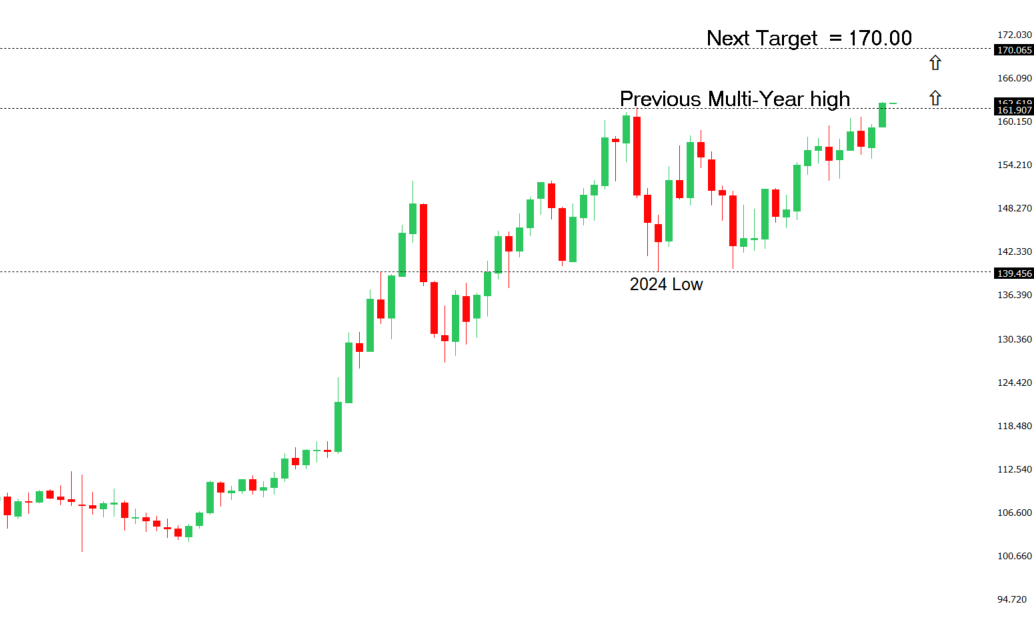 | ||
| R2 163.00 - Figure - Medium R1 162.84 - Multi-Year high/1 July 2026 - Strong S1 161.00 - Figure - Medium S2 160.63 - 2 July low - Medium | ||
| USDJPY: fundamental overview | ||
| The Yen has strengthened after a combination of softer-than-expected US labor market data and a sharp rise in intervention expectations triggered a broad unwind in USDJPY longs. Reports that Japanese authorities may stop telegraphing potential FX intervention and instead target speculative positioning without advance warning have significantly increased caution among traders, particularly with thinner liquidity around the US Independence Day holiday. Meanwhile, Japan’s latest services PMI showed activity returning to stronger expansion alongside the fastest input cost inflation in four years, reinforcing the case for further Bank of Japan policy normalization even as subdued business confidence argues for a gradual approach. While the Bank of Japan’s June rate hike to 1.00% marked its highest policy rate since 1995, the roughly 250–275 basis point interest rate differential with the Federal Reserve continues to support carry trade demand and limits the Yen’s ability to sustain gains on monetary policy alone. As a result, intervention remains the market’s primary catalyst for supporting the currency. Looking ahead, attention shifts to next week’s US data and the release of the FOMC minutes, which will help determine whether softer US economic momentum continues to erode Dollar support, while any signs of actual intervention from Tokyo remain a key risk for USDJPY. | ||
| AUDUSD: technical overview | ||
| There are signs of the formation of a longer-term base with the market recovering out from a meaningful longer-term support zone. The latest monthly close back above 0.7000 takes the big picture pressure off the downside and strengthens the case for a bottom, with the focus now on a push towards 0.8000. Setbacks should now be well supported ahead of 0.6700. | ||
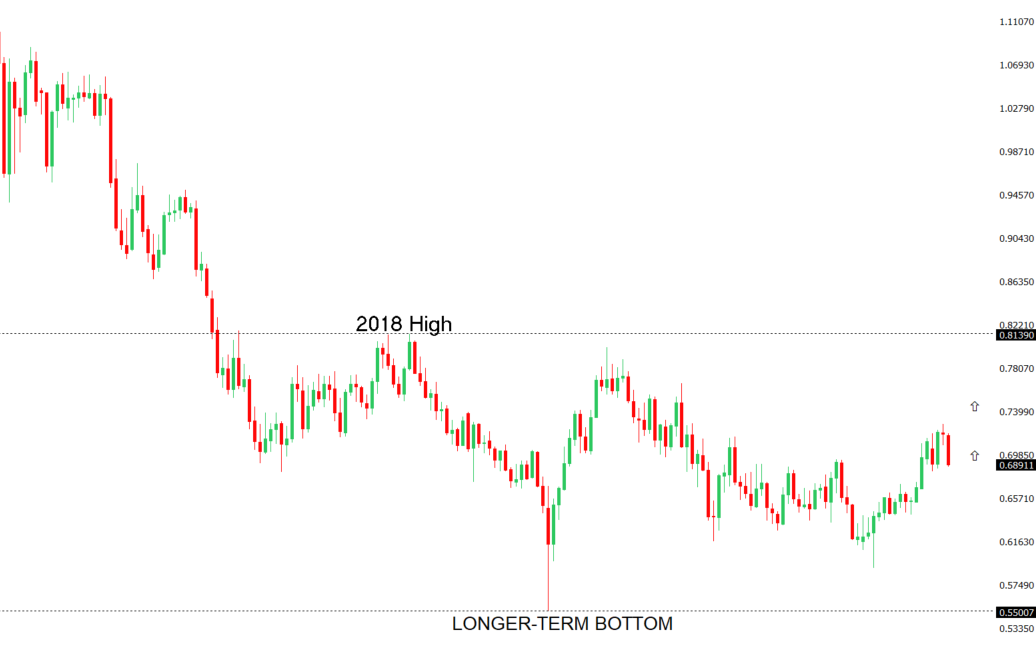 | ||
| R2 0.7089 - 15 June high - Strong R1 0.6979 - 11 June low - Medium S1 0.6865 - 30 June low - Medium S2 0.6833 - 30 March low - Strong | ||
| AUDUSD: fundamental overview | ||
| The Australian dollar recovered alongside the broader weakness in the US dollar after a softer-than-expected US jobs report briefly boosted expectations for Federal Reserve easing, although AUDUSD surrendered much of its initial rally as markets continued to grapple with the prospect of a more hawkish Fed under Chair Kevin Warsh. Domestically, Australia’s latest PMI data offered a mixed picture. The composite PMI returned to expansion at 50.4 and services activity rose back above the 50 threshold to 50.5, but the underlying details were less encouraging. New orders contracted for a fourth consecutive month, business confidence fell to its lowest level since late 2023, and firms largely relied on increased staffing to support activity while working through existing backlogs rather than benefiting from stronger demand. At the same time, easing input and output price pressures reinforced the view that inflation continues to moderate. With the Reserve Bank of Australia still maintaining one of the more restrictive policy stances among major central banks, the Australian dollar retains some underlying support, though its near-term direction continues to be driven primarily by US dollar dynamics, expectations for Fed policy, developments in China, and broader global risk sentiment. | ||
| Suggested reading | ||
| How a greeting card company produced a 200x return in just 18 months, G. Tett, Financial Times (July 2, 2026) Evidence Dumb Money Is Transforming Stock Market, J. Adinolfi, Marketwatch (July 1, 2026) | ||