


 | ||
| 6th July 2026 | view in browser | ||
| Risk assets extend gains as Fed expectations soften | ||
| Global markets begin the week with a constructive risk tone as softer Fed expectations lift equities and weigh on the dollar, although persistent uncertainty surrounding the Strait of Hormuz continues to keep a geopolitical risk premium embedded in energy markets. | ||
| Performance chart 30day v. USD (%) | ||
 | ||
| Technical & fundamental highlights | ||
| EURUSD: technical overview | ||
| The Euro outlook remains constructive with higher lows sought out on dips in favor of the next major upside extension targeting the 2021 high at 1.2350. Setbacks should be exceptionally well supported ahead of 1.1300. | ||
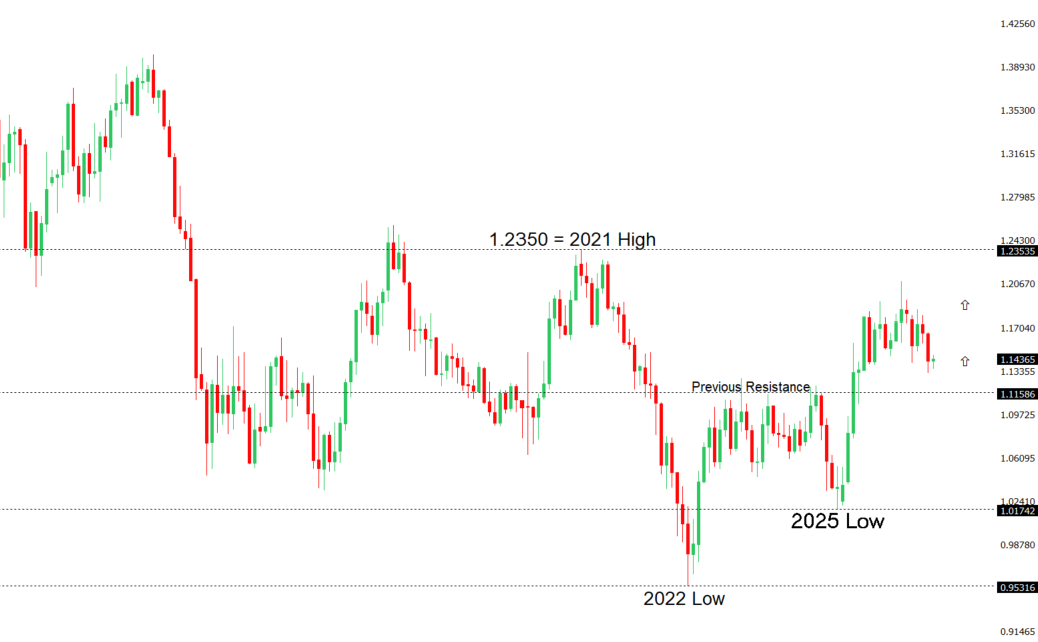 | ||
| R2 1.1529 - 18 June high - Medium R1 1.1473 - 2 July high - Medium S1 1.1325 - 24 June/2026 low - Medium S2 1.1300 - Figure - Medium | ||
| EURUSD: fundamental overview | ||
| The euro begins the new week on relatively steady footing, though its upside remains constrained by a widening policy divergence with the United States as markets continue to price a more hawkish Federal Reserve relative to the ECB. While the ECB delivered a precautionary rate hike in June, recent comments from Governing Council member Emmanuel Moulin reinforce the view that policymakers see themselves in a comfortable position and are not embarking on a fresh tightening cycle, with easing oil prices and the reopening of the Strait of Hormuz reducing immediate inflation risks. That has encouraged investors to scale back expectations for additional ECB tightening later this year, limiting euro yield support. At the same time, improving risk sentiment and China’s renewed push to strengthen trade and investment ties with European businesses ahead of the China-EU summit offers a modest constructive backdrop for the euro by supporting the region’s export outlook and broader growth sentiment. Overall, however, EURUSD remains largely driven by the balance between a softer energy outlook and improving European growth prospects on one side, and the prospect of relatively higher US interest rates and resilient dollar demand on the other. | ||
| GBPUSD: technical overview | ||
| The Pound remains exceptionally well supported on dips into the 1.3000 area, with the price largely consolidating above the psychological barrier and previous resistance turned support in the form of the 2023 high. Look for the market to continue be well supported on dips ahead of the next major upside extension through the yearly high at 1.3870 and towards a retest of the 2018 high at 1.4377 further up. Only a monthly close below 1.3000 negates. | ||
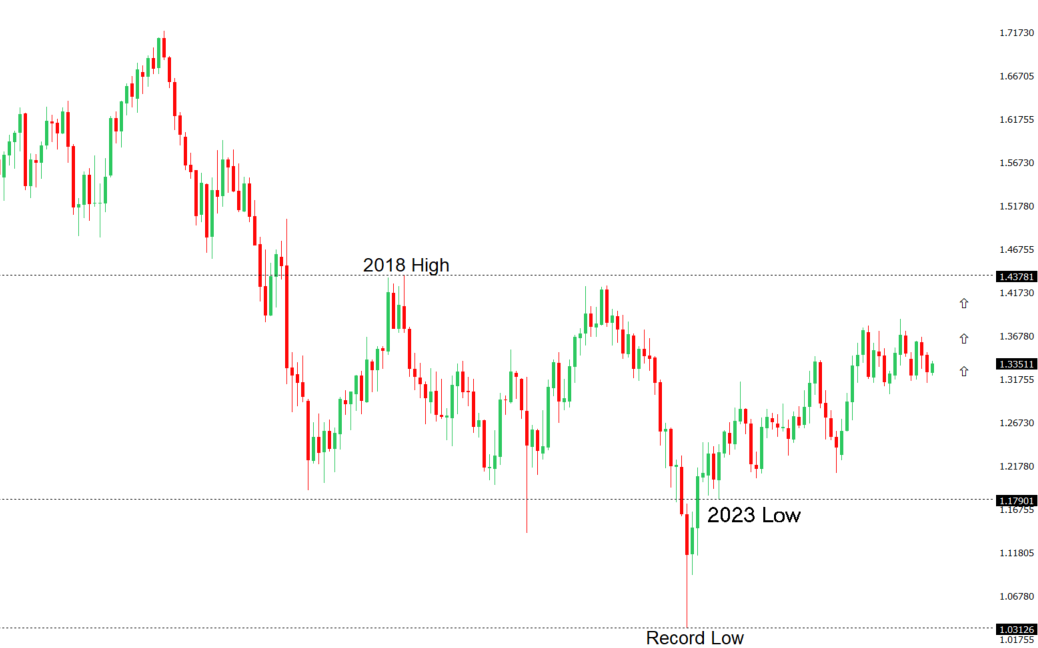 | ||
| R2 1.3461 - 15 June high - Medium R1 1.3385 - 2 July high - Medium S1 1.3262 - 2 July low - Medium S2 1.3212 - 30 June low - Medium | ||
| GBPUSD: fundamental overview | ||
| Sterling has been supported primarily by broad US dollar weakness after softer US labor market data prompted markets to scale back expectations for a near-term Federal Reserve rate hike, narrowing yield support for the greenback and lifting GBPUSD. On the domestic side, the pound continues to draw support from a relatively resilient Bank of England outlook, with Governor Bailey reiterating that inflation would already be back at target were it not for the impact of the Middle East conflict, reinforcing the view that underlying UK inflation pressures remain contained but that policymakers are not yet ready to declare victory. Markets continue to price meaningful odds of another BoE rate hike later this year, helping preserve sterling’s yield appeal. Political developments have also been modestly supportive, with Andy Burnham’s commitment to fiscal discipline and maintaining the state pension triple lock easing concerns over fiscal credibility following the recent leadership transition, although investors remain focused on upcoming budget decisions for confirmation that spending plans will remain consistent with fiscal rules. Overall, the combination of a softer US dollar, relatively hawkish BoE expectations and reduced UK political risk has kept sterling well supported heading into the new week. | ||
| USDJPY: technical overview | ||
| The major pair has extended its run to fresh multi-decade highs, with the latest push through 160.00 opening the door for further upside towards 165.00-170.00. At the same time, daily studies are looking quite stretched, suggesting we could see a healthy correction on the horizon. A break back below 160.63 would now strengthen the case for a larger pullback. Until then, the market will continue to be focused on additional gains. | ||
 | ||
| R2 163.00 - Figure - Medium R1 162.84 - Multi-Year high/1 July 2026 - Strong S1 161.00 - Figure - Medium S2 160.48 - 3 July low - Medium | ||
| USDJPY: fundamental overview | ||
| The Yen remains under pressure as the new week begins, with USDJPY pushing higher after only a modest pullback from fresh multi-decade highs. While softer US labor market data has trimmed expectations for additional Federal Reserve tightening and provided some temporary support for the yen, the wide interest rate differential between the Fed and the Bank of Japan continues to underpin carry trade demand against the Japanese currency. At the same time, intervention risks remain elevated, with Finance Minister Katayama reiterating that Tokyo stands ready to act against excessive currency moves while maintaining close coordination with US authorities. Domestically, a 30-year high in Japanese government bond yields, growing evidence that yen weakness is squeezing businesses through higher import costs, and debate over whether fiscal expansion will limit further BOJ tightening are all keeping markets focused on Japan’s policy outlook. Meanwhile, lingering geopolitical uncertainty surrounding the Strait of Hormuz continues to pose an additional risk for Japan given its dependence on imported energy, reinforcing the sensitivity of the yen to shifts in global risk sentiment and oil prices. | ||
| AUDUSD: technical overview | ||
| There are signs of the formation of a longer-term base with the market recovering out from a meaningful longer-term support zone. The latest monthly close back above 0.7000 takes the big picture pressure off the downside and strengthens the case for a bottom, with the focus now on a push towards 0.8000. Setbacks should now be well supported ahead of 0.6700. | ||
 | ||
| R2 0.7089 - 15 June high - Strong R1 0.6979 - 11 June low - Medium S1 0.6865 - 30 June low - Medium S2 0.6833 - 30 March low - Strong | ||
| AUDUSD: fundamental overview | ||
| The Australian dollar has found renewed support as softer-than-expected US labor market data triggered a broad US Dollar pullback, prompting markets to scale back expectations for near-term Federal Reserve tightening and improving demand for higher-beta currencies. Domestically, Australia’s June PMI data provided an additional tailwind after both the manufacturing and services sectors unexpectedly returned to expansion, suggesting economic activity has stabilized despite lingering softness in demand. That said, underlying details remain more mixed, with new orders still contracting, business confidence at a two-and-a-half-year low and easing price pressures reinforcing expectations that the Reserve Bank of Australia can remain patient on further policy tightening. Broader risk sentiment has also improved at the start of the week, helping cyclical currencies such as the Aussie, while investors continue to monitor incoming Chinese economic data and policy developments given Australia’s close trade links with China. | ||
| Suggested reading | ||
| Nashville: the price of success, C. Jones, Financial Times (July 3, 2026) The Fundamental Flaw Of Prediction Markets, J. Klement, Klement on Investing (July 1, 2026) | ||