


 | ||
| 7th July 2026 | view in browser | ||
| Record stocks, mixed dollar, eyes on the Fed | ||
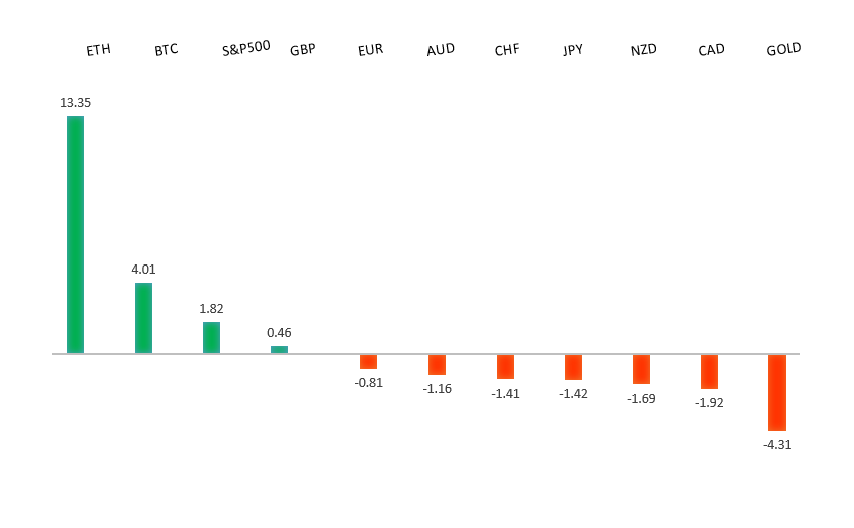
| Global markets enter the day with a constructive risk backdrop as record US equities, a mixed dollar, contained oil prices and growing focus on Fed communication set the stage for German industrial production, US ADP employment and Wednesday’s closely watched FOMC minutes. | ||
| Performance chart 30day v. USD (%) | ||
 | ||
| Technical & fundamental highlights | ||
| EURUSD: technical overview | ||
| The Euro outlook remains constructive with higher lows sought out on dips in favor of the next major upside extension targeting the 2021 high at 1.2350. Setbacks should be exceptionally well supported ahead of 1.1300. | ||
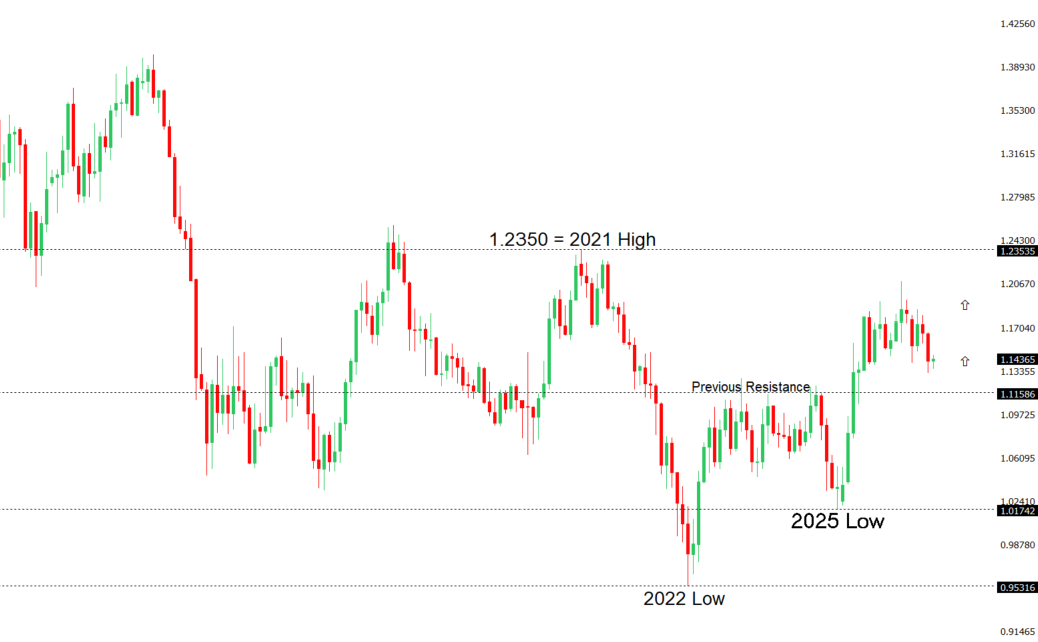 | ||
| R2 1.1529 - 18 June high - Medium R1 1.1473 - 2 July high - Medium S1 1.1325 - 24 June/2026 low - Medium S2 1.1300 - Figure - Medium | ||
| EURUSD: fundamental overview | ||
| The euro has found a more constructive footing as signs of resilience in the eurozone economy help offset fading expectations for additional ECB tightening. Business activity returned to the 50.0 expansion threshold in June, while stronger-than-expected industrial production in France and Spain prompted upgrades to second-quarter growth forecasts, reinforcing the view that the worst of the energy shock may be passing. Although softer eurozone inflation has led markets to scale back expectations for further ECB rate hikes, policymakers continue to resist declaring victory over inflation, with ECB Executive Board member Isabel Schnabel warning that the recent energy shock cannot simply be looked through because of the risk of broader second-round price pressures, while Chief Economist Philip Lane has continued to leave the door open to a final 25 basis point hike in September. Meanwhile, the US Dollar has lost momentum after weaker-than-expected US payrolls data prompted investors to pare back Federal Reserve tightening expectations, helping narrow policy divergence and limit downside pressure on EURUSD, although lingering geopolitical tensions around the Strait of Hormuz continue to underpin safe-haven demand for the greenback and cap stronger euro gains. | ||
| GBPUSD: technical overview | ||
| The Pound remains exceptionally well supported on dips into the 1.3000 area, with the price largely consolidating above the psychological barrier and previous resistance turned support in the form of the 2023 high. Look for the market to continue be well supported on dips ahead of the next major upside extension through the yearly high at 1.3870 and towards a retest of the 2018 high at 1.4377 further up. Only a monthly close below 1.3000 negates. | ||
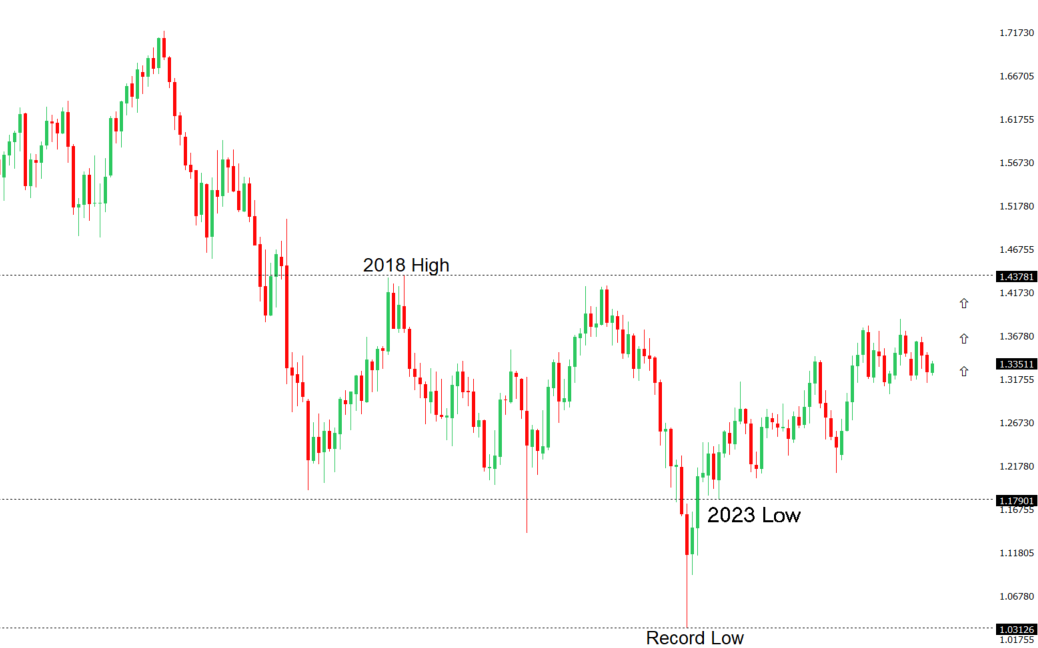 | ||
| R2 1.3461 - 15 June high - Medium R1 1.3400 - Figure - Medium S1 1.3262 - 2 July low - Medium S2 1.3212 - 30 June low - Medium | ||
| GBPUSD: fundamental overview | ||
| Sterling has extended its recovery, with GBPUSD posting a string of consecutive daily gains as the US Dollar continues to unwind its post-Fed rally following last week’s much weaker-than-expected US payrolls report, which prompted markets to scale back expectations for further near-term Federal Reserve tightening. The pound has also drawn support from easing political uncertainty after the UK’s Labour leadership transition appeared to become increasingly orderly, reducing the risk premium that had weighed on the currency since the Prime Minister’s resignation. Domestically, the Bank of England remains one of the more hawkish major central banks after its June meeting produced a 7-2 vote to keep rates unchanged, with two policymakers favoring another hike and inflation still expected to remain above target later this year despite lower energy prices. That combination of relatively firm UK rate expectations and fading US dollar strength has underpinned sterling’s recent advance, although traders remain cautious ahead of the FOMC minutes, upcoming Bank of England communications and developments in the Labour leadership process, all of which could shape the next leg for GBPUSD. | ||
| USDJPY: technical overview | ||
| The major pair has extended its run to fresh multi-decade highs, with the latest push through 160.00 opening the door for further upside towards 165.00-170.00. At the same time, daily studies are looking quite stretched, suggesting we could see a healthy correction on the horizon. A break back below 160.63 would now strengthen the case for a larger pullback. Until then, the market will continue to be focused on additional gains. | ||
 | ||
| R2 163.00 - Figure - Medium R1 162.84 - Multi-Year high/1 July 2026 - Strong S1 161.00 - Figure - Medium S2 160.48 - 3 July low - Medium | ||
| USDJPY: fundamental overview | ||
| The Yen remains under pressure as wide US-Japan yield differentials continue to underpin carry trades despite the Bank of Japan’s June rate hike to 1.00%, with markets viewing the move as insufficient to materially narrow the roughly 250bp policy gap with the Federal Reserve. Reports that Japanese authorities have shifted away from issuing verbal intervention warnings in favor of targeting speculative positioning have reduced the deterrent effect that previously supported the currency, allowing USDJPY to climb back toward cycle highs above 162 as traders increasingly view any intervention as tactical rather than level-based. While the risk of surprise official action continues to discourage aggressive Yen selling, investors remain focused on incoming wage data for evidence of sustained domestic inflation pressures that could bring forward another BoJ rate hike. At the same time, expectations that the Fed could still tighten policy again this year continue to favor the US Dollar, leaving the Yen fundamentally weighed down by persistent carry demand unless stronger Japanese inflation data or decisive intervention shifts the narrative. | ||
| AUDUSD: technical overview | ||
| There are signs of the formation of a longer-term base with the market recovering out from a meaningful longer-term support zone. The latest monthly close back above 0.7000 takes the big picture pressure off the downside and strengthens the case for a bottom, with the focus now on a push towards 0.8000. Setbacks should now be well supported ahead of 0.6700. | ||
 | ||
| R2 0.7089 - 15 June high - Strong R1 0.6979 - 11 June low - Medium S1 0.6865 - 30 June low - Medium S2 0.6833 - 30 March low - Strong | ||
| AUDUSD: fundamental overview | ||
| The Australian Dollar continues to draw support from a softer US Dollar after last week’s disappointing US payrolls report prompted markets to scale back expectations for near-term Federal Reserve tightening, offsetting the impact of otherwise resilient US economic data. While the latest ISM services survey remained firmly in expansionary territory and Fed Governor Christopher Waller maintained a hawkish tone, investors remain focused on signs of cooling in the US labor market and await the FOMC minutes for further guidance under Chair Kevin Warsh. On the domestic front, the Reserve Bank of Australia’s latest meeting minutes reinforced that policymakers remain prepared to raise interest rates again if inflation proves persistent, preserving the RBA’s relatively hawkish stance among major central banks and helping underpin the Aussie. At the same time, improving Australian PMI data have pointed to a return to modest economic expansion, although softer business confidence and weaker new orders suggest the recovery remains fragile, while broader sentiment toward China and global risk appetite continue to play an important role in shaping the Australian Dollar’s direction. | ||
| Suggested reading | ||
| Warsh Must Explain That The Fed Simply Can’t Fight Inflation, J. Tamny, Forbes (July 5, 2026) The Fed Needs Independence, Not Immunity, N. Cachanosky, The Daily Economy (July 6, 2026) | ||