


 | ||
| 11th August 2026 | view in browser | ||
| Macro tensions and US inflation data positioning | ||
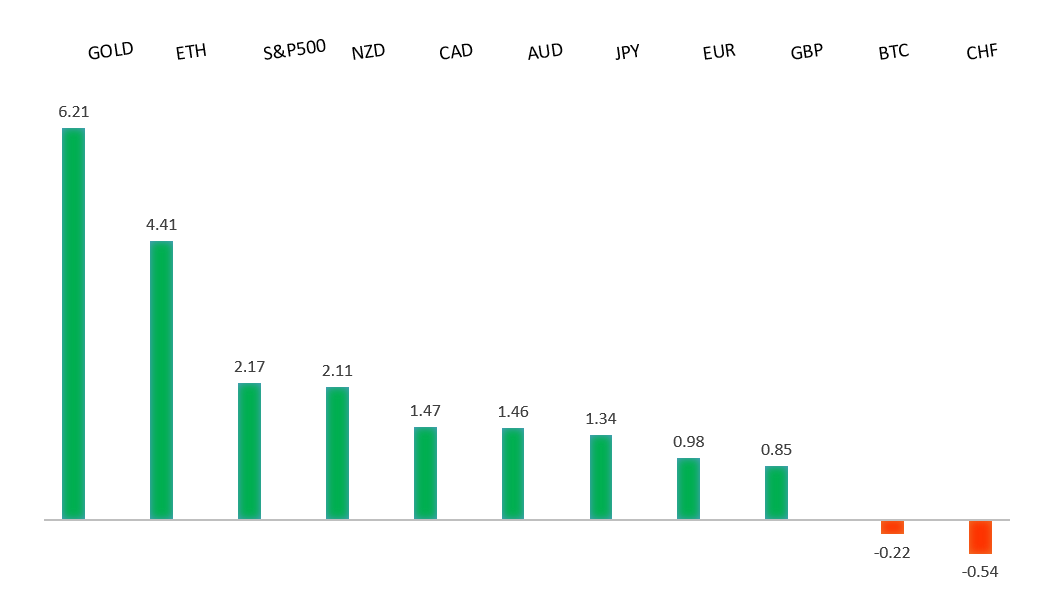
| Markets head into Tuesday with investors focused on the RBA’s hawkish hold, persistent Middle East tensions and the looming US CPI report, which is expected to provide the next major catalyst for global markets. | ||
| Performance chart 30day v. USD (%) | ||
 | ||
| Technical & fundamental highlights | ||
| EURUSD: technical overview | ||
| The Euro outlook remains constructive with higher lows sought out on dips in favor of the next major upside extension targeting the 2021 high at 1.2350. Setbacks should be exceptionally well supported ahead of 1.1300. | ||
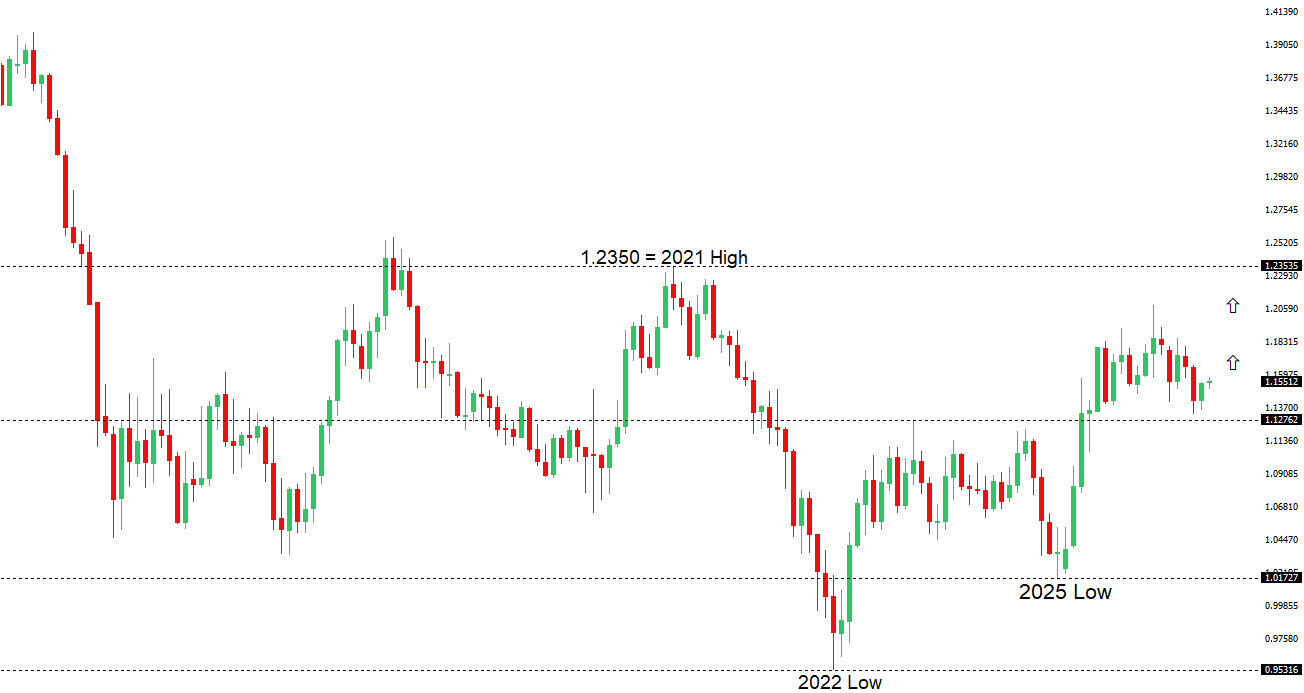 | ||
| R2 1.1623 - 15 June high - Medium R1 1.1581 - 7 August high - Medium S1 1.1500 - Figure - Medium S2 1.1434 - 30 July low - Medium | ||
| EURUSD: fundamental overview | ||
| The euro is holding broadly steady around the mid-1.1500s against the dollar, close to its strongest level since mid-June, with recent support coming primarily from broad dollar weakness after the disappointing US employment report reduced expectations for an immediate Federal Reserve rate hike. The single currency has also drawn modest support from improving regional sentiment, with the eurozone Sentix investor-confidence index moving into positive territory in August for the first time in several months. However, upside remains limited by subdued euro-area growth and uncertainty surrounding the inflationary consequences of the Middle East conflict, which prompted the ECB to leave rates unchanged in July and retain a data-dependent stance. Renewed gains in oil prices as US-Iran negotiations stall are especially important for the eurozone as a major energy importer, potentially weakening growth while complicating the ECB’s inflation outlook. Near-term direction therefore remains largely dollar-driven, with traders awaiting Wednesday’s US CPI and Thursday’s PPI figures for clearer guidance on whether the Fed could still raise rates later this year. | ||
| GBPUSD: technical overview | ||
| The Pound remains exceptionally well supported on dips into the 1.3000 area, with the price largely consolidating above the psychological barrier and previous resistance turned support in the form of the 2023 high. Look for the market to continue be well supported on dips ahead of the next major upside extension through the yearly high at 1.3870 and towards a retest of the 2018 high at 1.4377 further up. Only a monthly close below 1.3000 negates. | ||
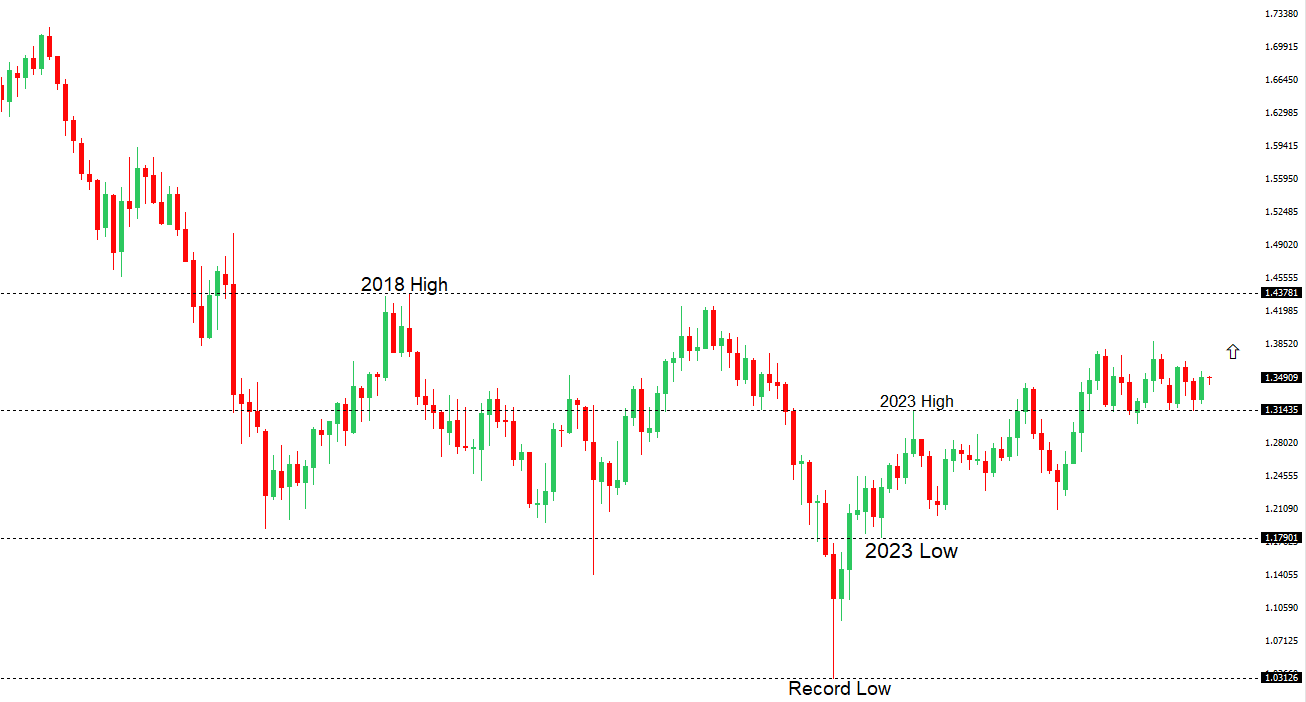 | ||
| R2 1.3558 - 15 July high - Strong R1 1.3531 - 11 August high - Medium S1 1.3333 - 30 July low - Medium S2 1.3273 - 28 July low - Strong | ||
| GBPUSD: fundamental overview | ||
| The pound remains firm around 1.3500 against the dollar and close to a three-week high, supported by a modestly softer US rate outlook after weak payrolls prompted markets to price out a near-term Federal Reserve hike. Sterling has also retained some support from expectations that the Bank of England could still tighten policy later this year, although those expectations have been scaled back and may leave the currency vulnerable if incoming UK data disappoint. The BoE held Bank Rate at 3.75% in July by a 6–3 vote, reflecting continued concern over inflation and the potential impact of elevated energy prices linked to uncertainty surrounding the Strait of Hormuz. Attention now shifts to Thursday’s UK GDP release, with growth expected to moderate from the first quarter and the June economy potentially contracting slightly, while Wednesday’s US CPI report will determine whether the dollar’s recent recovery can extend. Overall, GBPUSD remains underpinned by relative rate expectations, but its next decisive move will depend on the UK growth figures and the US inflation signal. | ||
| USDJPY: technical overview | ||
| The major pair has entered a period of correction and consolidation after extending its run to fresh multi-decade highs at 163.99. Setbacks are now expected to be well supported above 155.00, with only a break below to compromise the bullish structure. | ||
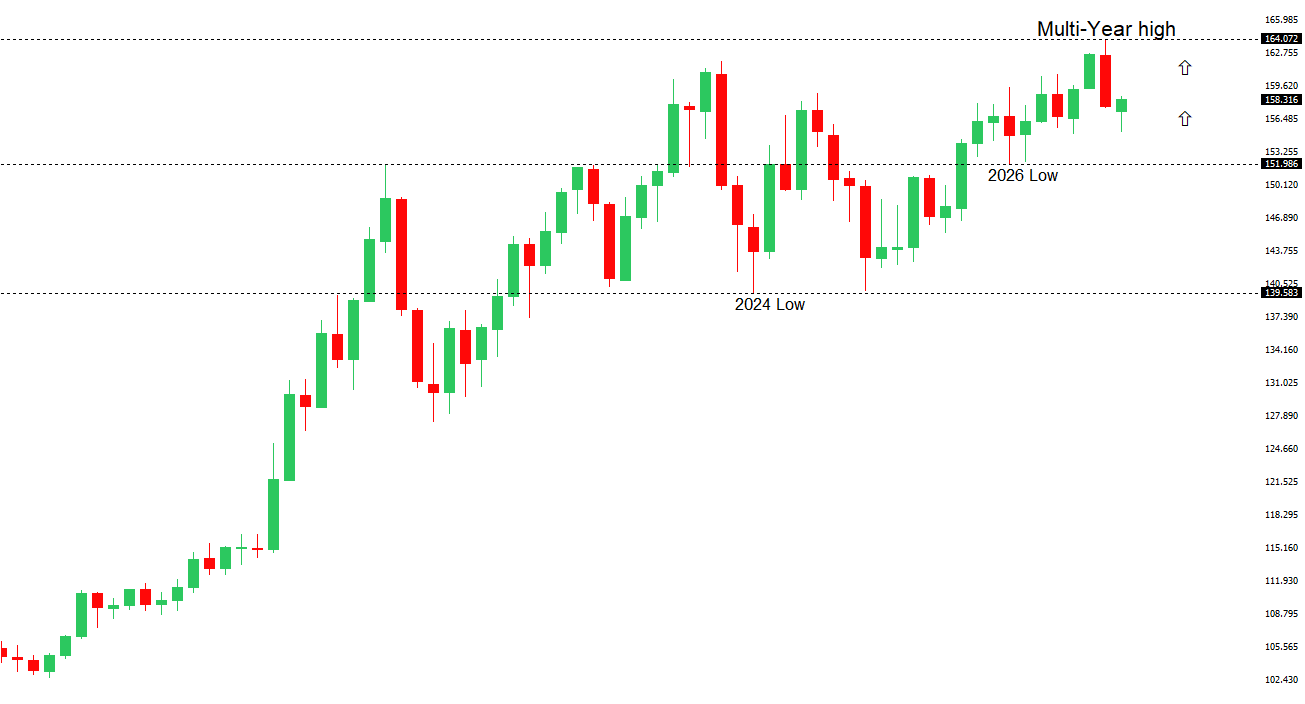 | ||
| R2 160.00 - Psychological - Strong R1 159.37 - 10 August high - Medium S1 157.54 - 10 August low - Medium S2 156.67 - 7 August low - Medium | ||
| USDJPY: fundamental overview | ||
| The yen remains fundamentally weak near 159 per dollar, having surrendered almost half of the gains generated by last week’s rare joint US-Japan intervention, as wide interest-rate differentials and carry demand continue to outweigh the threat of renewed official action. Thin liquidity during Japan’s Mountain Day holiday has kept trading subdued, although the approach of 160 leaves markets highly sensitive to another intervention attempt. The policy backdrop is becoming more supportive: the Bank of Japan’s latest Summary of Opinions revealed growing concern that inflation risks could require faster tightening, strengthening expectations for another rate increase as early as September after the policy rate was raised to 1% in June. Nevertheless, intervention alone is viewed as unlikely to reverse the yen’s longer-term decline without sustained BoJ tightening, while elevated oil prices are worsening Japan’s import outlook and lifting US Treasury yields. Attention now turns to US inflation data, which will shape Fed expectations and the US-Japan yield spread, leaving USDJPY caught between renewed intervention and BoJ hike risk on one side and still-favorable dollar carry dynamics on the other. | ||
| AUDUSD: technical overview | ||
| There are signs of the formation of a longer-term base with the market recovering out from a meaningful longer-term support zone. The latest monthly close back above 0.7000 takes the big picture pressure off the downside and strengthens the case for a bottom, with the focus now on a push towards 0.8000. Setbacks should now be well supported ahead of 0.6700. | ||
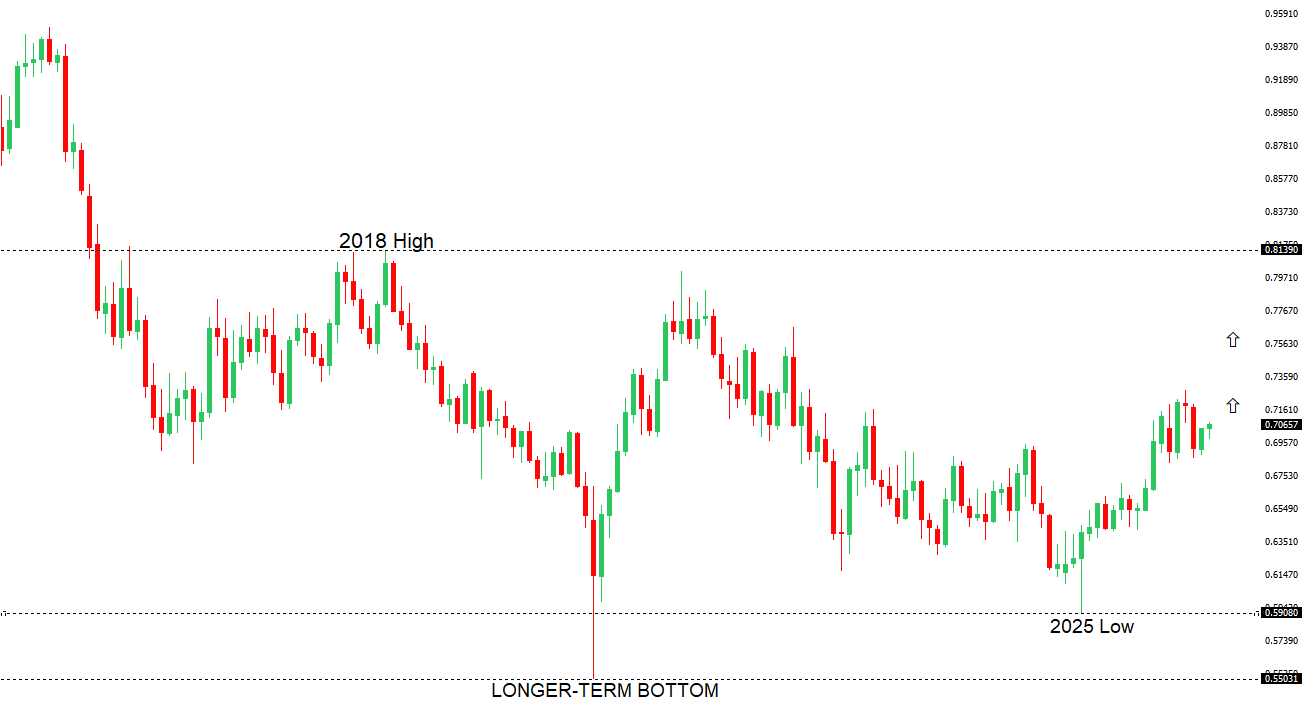 | ||
| R2 0.7089 - 15 June high - Strong R1 0.7078 - 7 August high - Medium S1 0.6922 - 29 July low - Medium S2 0.6865 - 30 June low - Strong | ||
| AUDUSD: fundamental overview | ||
| The Australian dollar has edged lower following the Reserve Bank of Australia’s widely expected decision to leave the cash rate unchanged at 4.35%, with the initial decline reflecting some disappointment that the Middle East conflict has delivered a smaller inflationary impact than previously feared. However, the downside has remained limited, with the RBA maintaining a hawkish bias by warning that inflation is not expected to return to the midpoint of its target range until late 2027, that the risks remain tilted to the upside and that it is prepared to raise rates again if necessary. The Aussie therefore remains near its strongest level since mid-June, supported by Australia’s comparatively restrictive rate outlook, although signs of softer household demand and housing activity argue against an imminent hike. Attention now shifts to Governor Michele Bullock’s guidance and this week’s US CPI and PPI releases, which will determine whether the recent weakness in the US dollar can persist and provide the next directional catalyst. | ||
| Suggested reading | ||
| How to fix the housing crisis, J. Burn-Murdoch, Financial Times (August 11, 2026) No Such Thing As Central Bank “Monetary Accommodation”, J. Tamny, Forbes (August 9, 2026) | ||