

Day Image
24th November 2025 | view in browser
Cautious optimism as the new week gets going

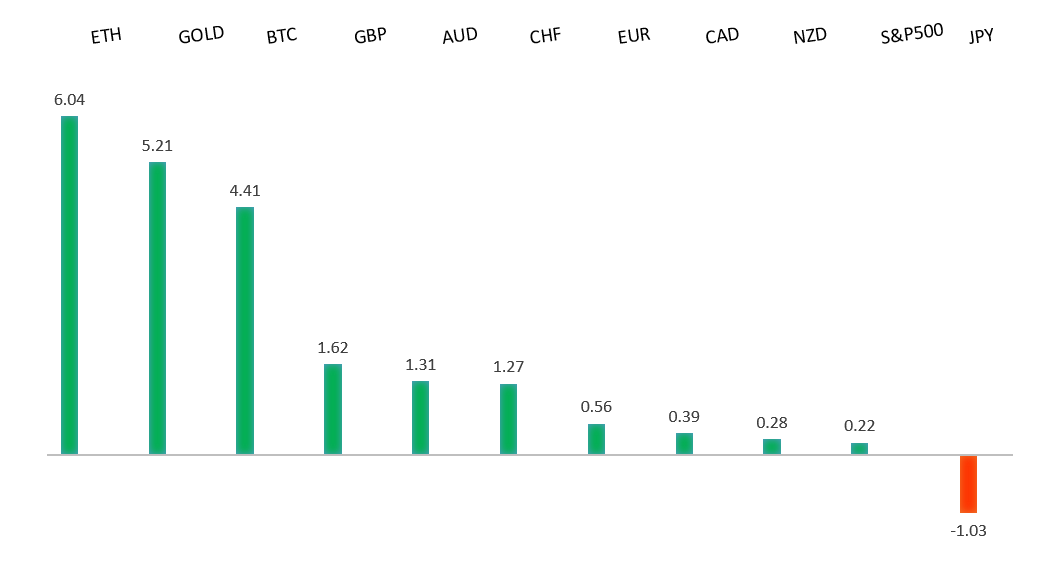
Global markets start the week in a cautious but slightly more optimistic tone, with Fed commentary driving expectations for a possible December rate cut and pushing Treasury yields sharply lower.


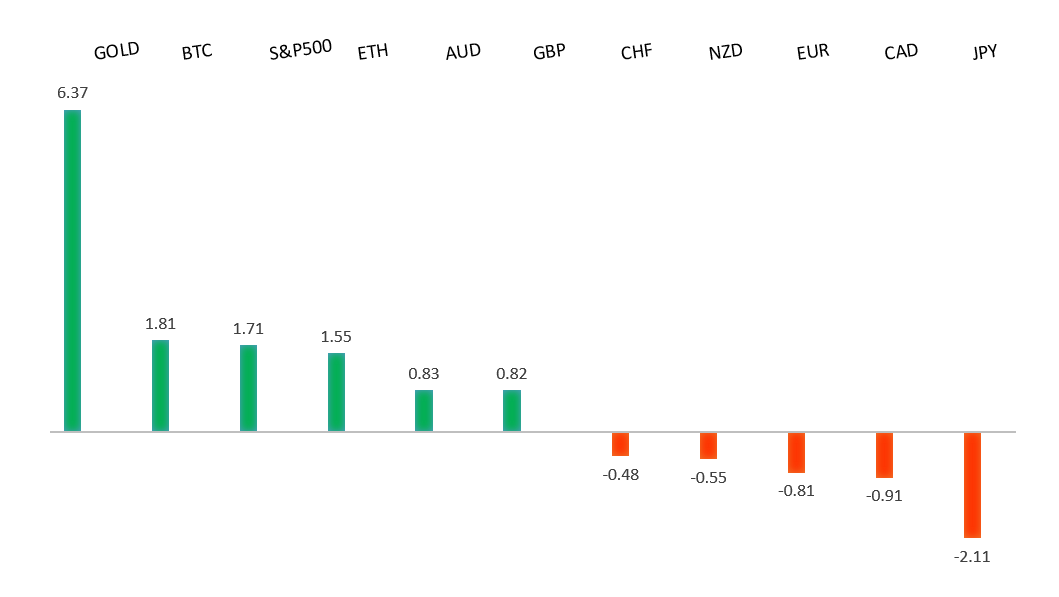
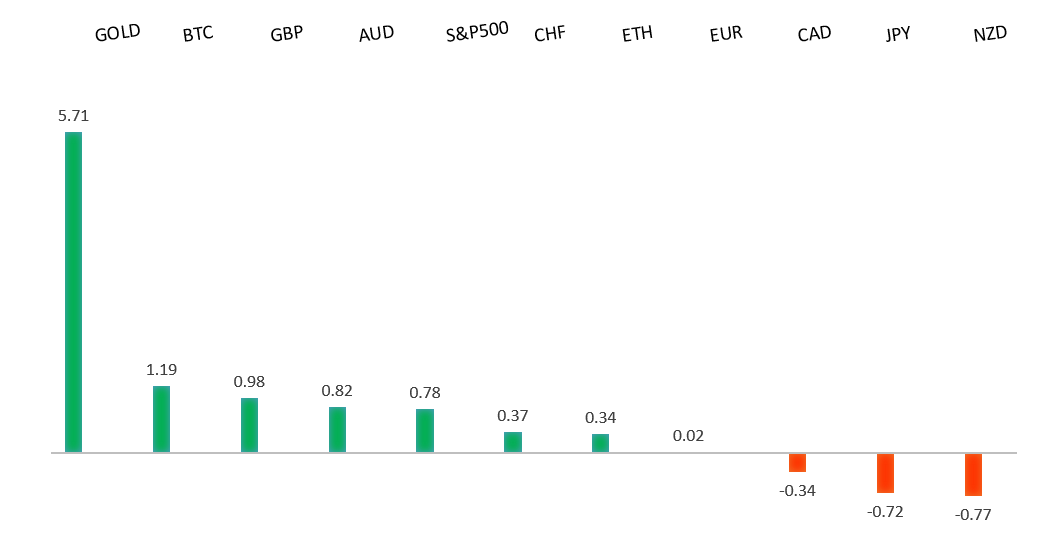
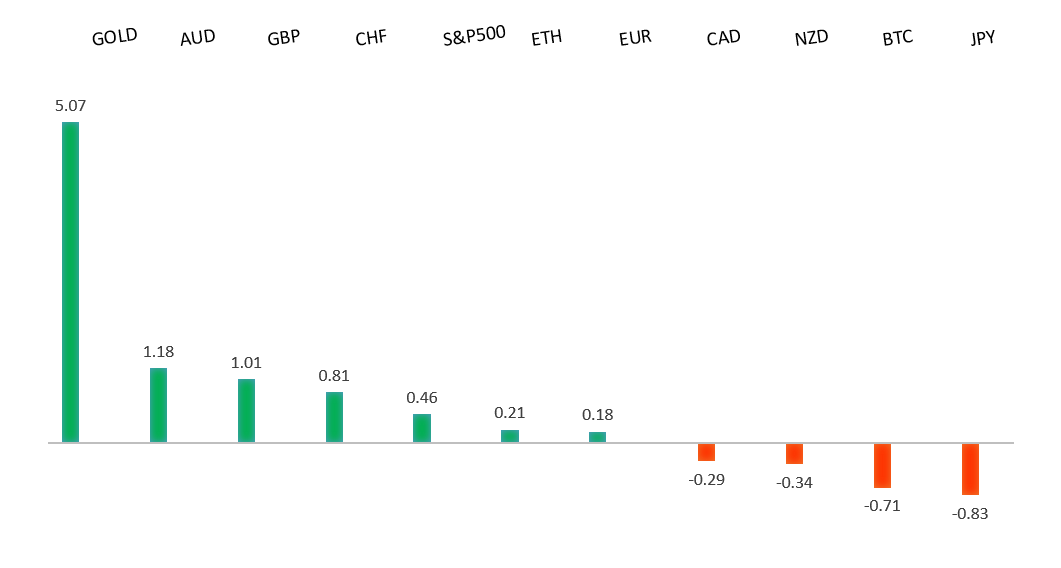
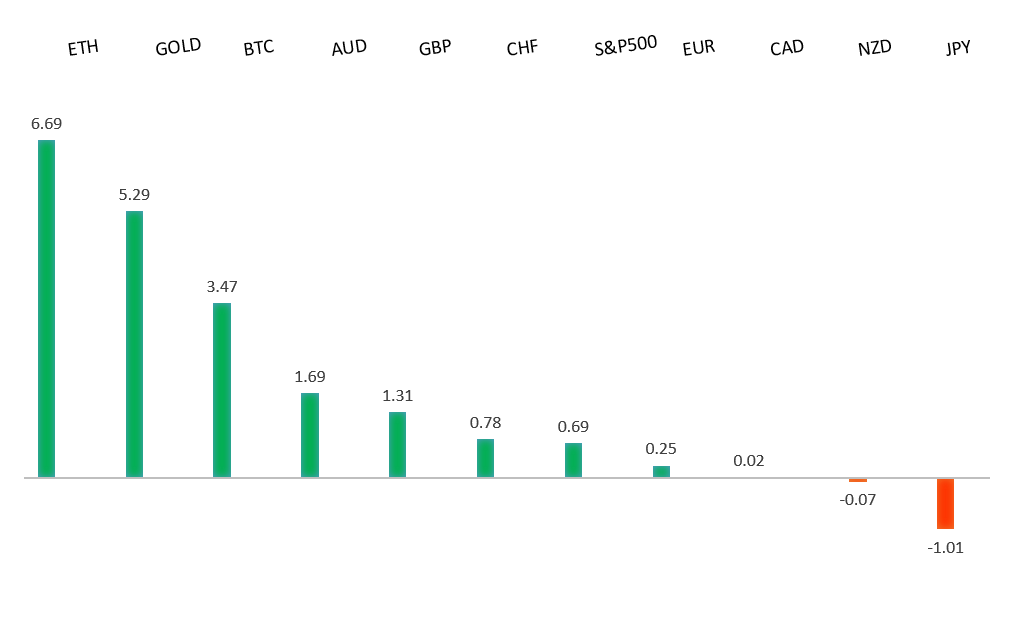
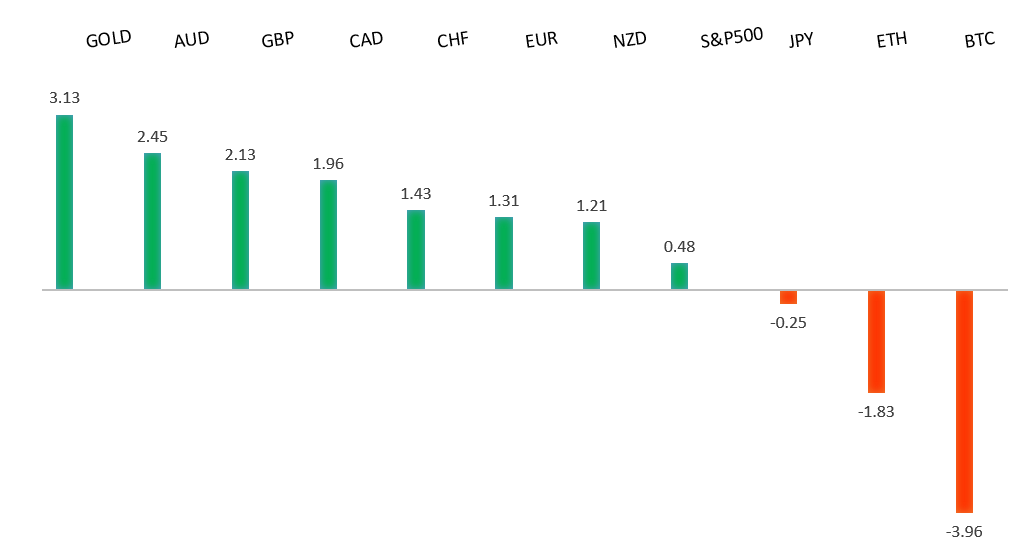
Performance chart 30day v. USD (%)
Performance Chart
 
 
Technical & fundamental highlights
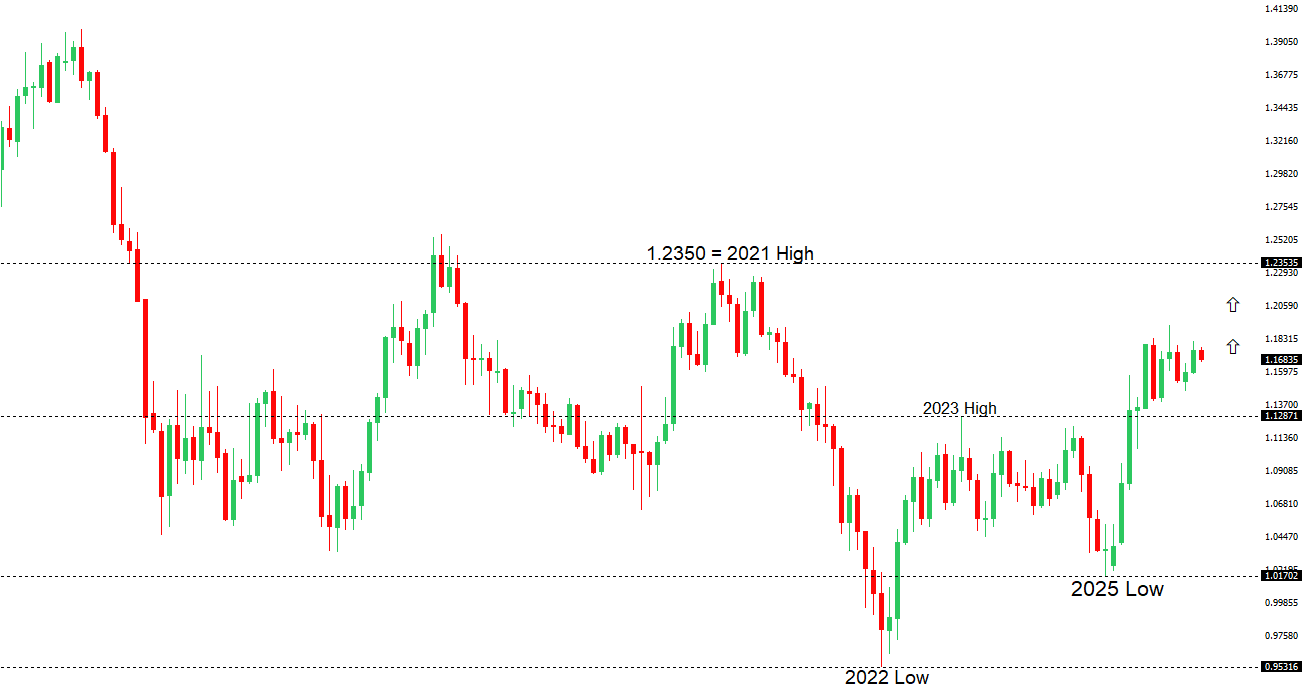
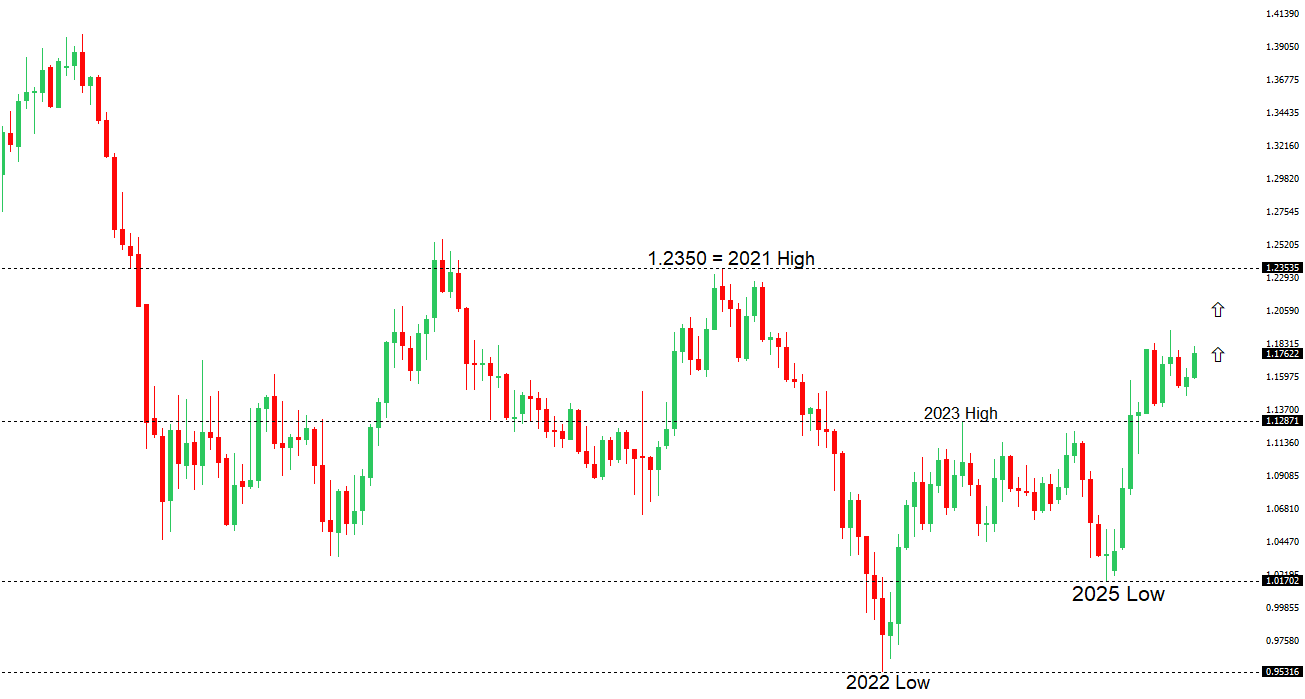
EURUSD: technical overview

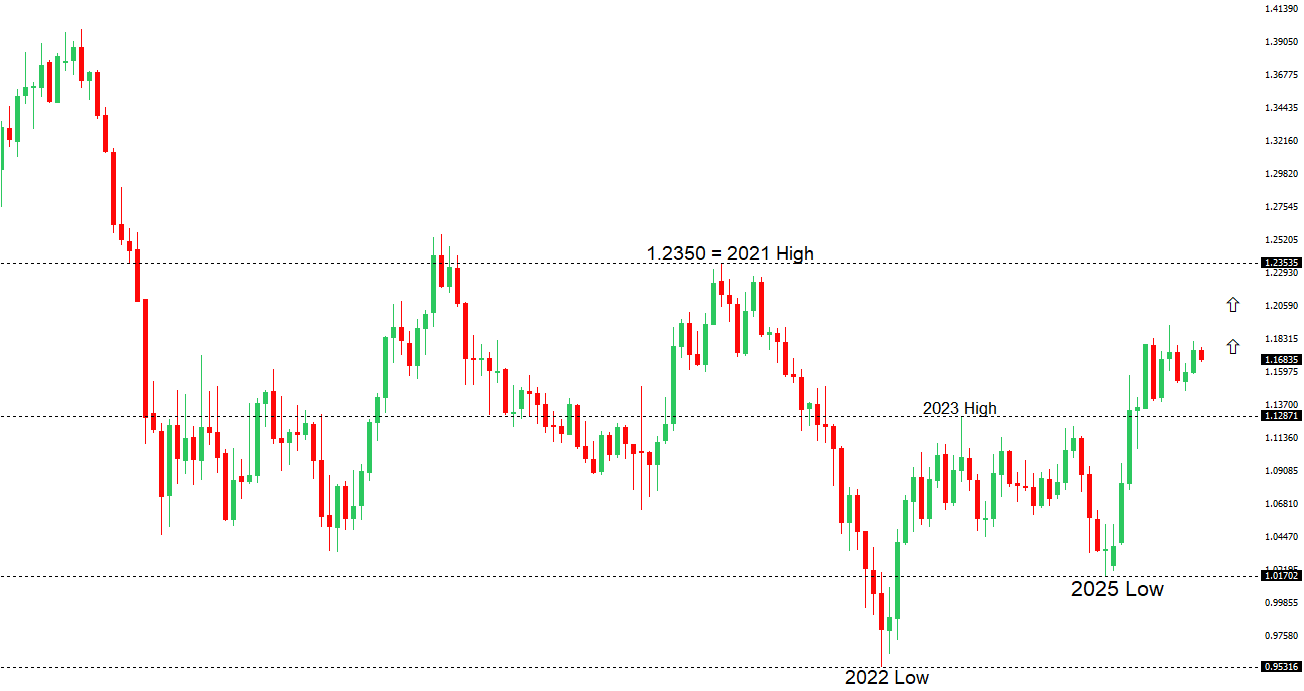
The Euro outlook remains constructive with higher lows sought out on dips in favor of the next major upside extension targeting the 2021 high at 1.2350. Setbacks should be exceptionally well supported ahead of 1.1300.

EURUSD Chart
R2 1.1729 - 17 October high -Strong
R1 1.1669 - 28 October high - Medium
S1 1.1469 - 5 November low - Medium
S2 1.1392 - 1 August low - Strong
EURUSD: fundamental overview

Eurozone data show the economy holding modest momentum, with November’s PMI easing slightly but still supported by stronger services even as manufacturing remains pressured by U.S. tariffs. Wage growth has cooled sharply, reinforcing the ECB’s confidence that inflation is moving toward target and supporting its wait-and-see stance, with potential easing only if weakness persists. Recent comments from officials signal little urgency for further rate moves, and with the Fed expected to cut rates in 2026, the narrowing rate gap may favor the euro alongside improving eurozone growth aided by German stimulus. Geopolitical risks linger—particularly pressure on Ukraine to accept concessions—which markets view as a drag on the euro. This week’s data, including ECB inflation expectations and German IFO, GfK, and retail sales, will be watched for confirmation that sentiment and activity remain resilient.

 
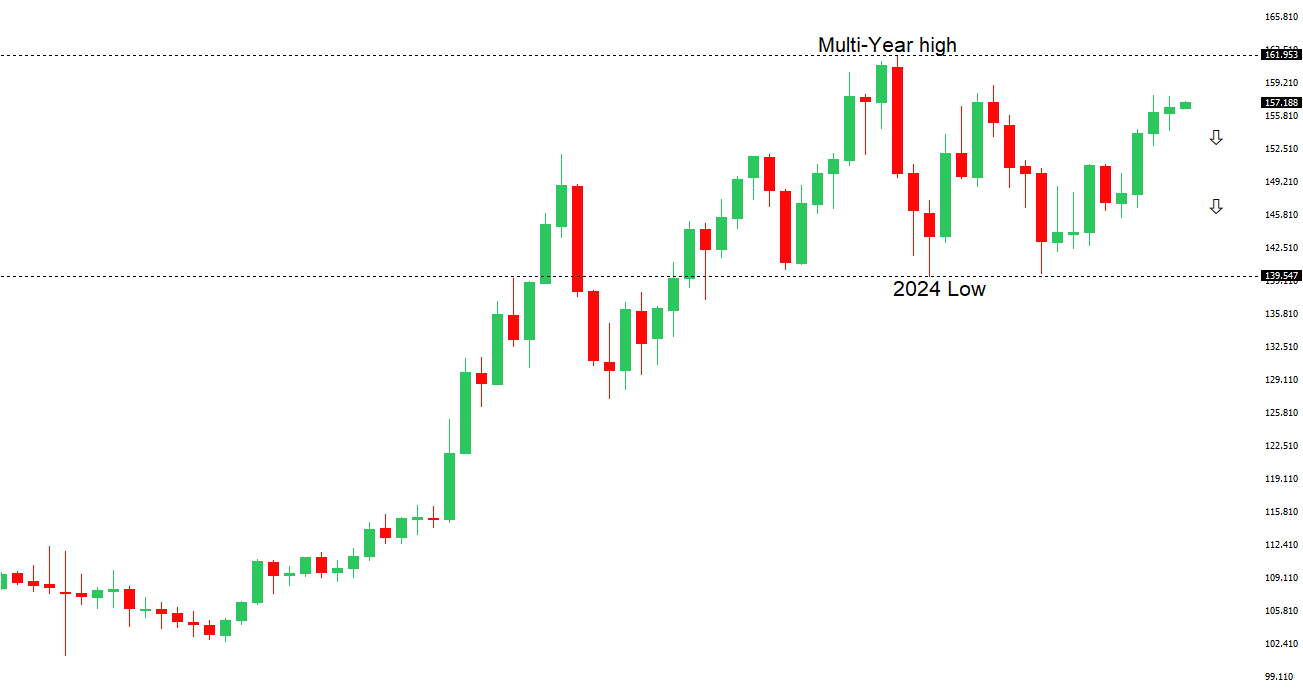
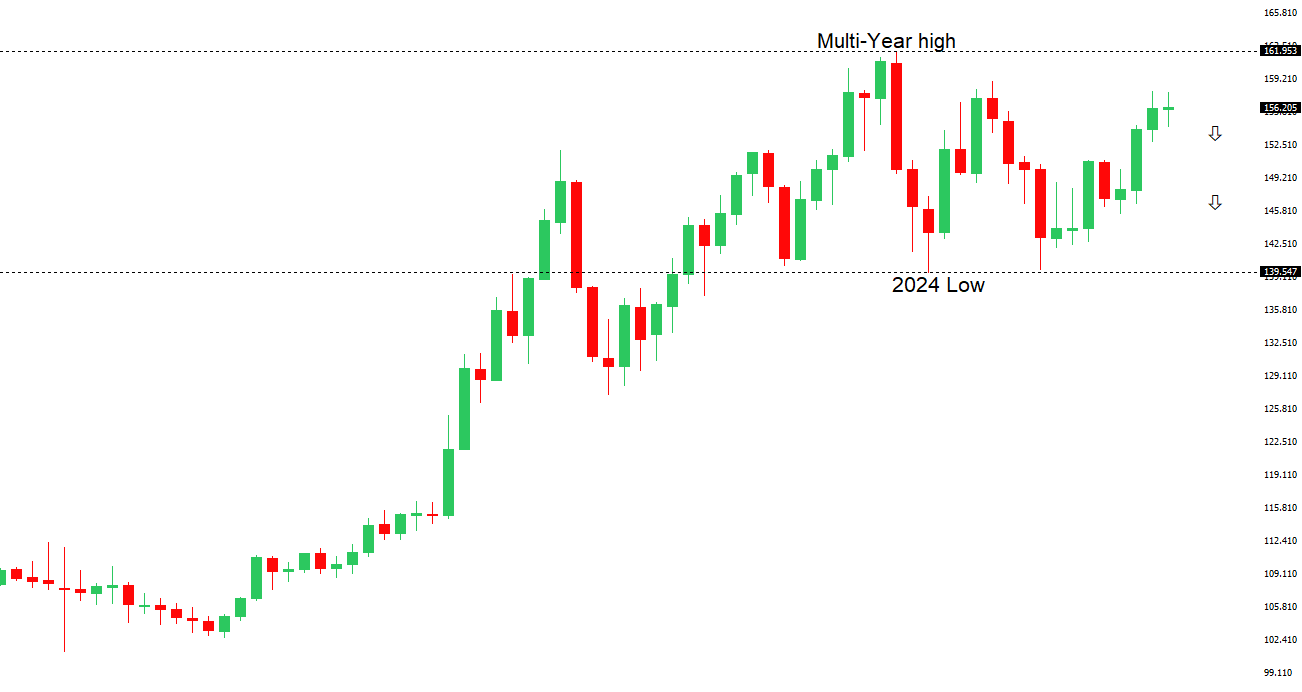
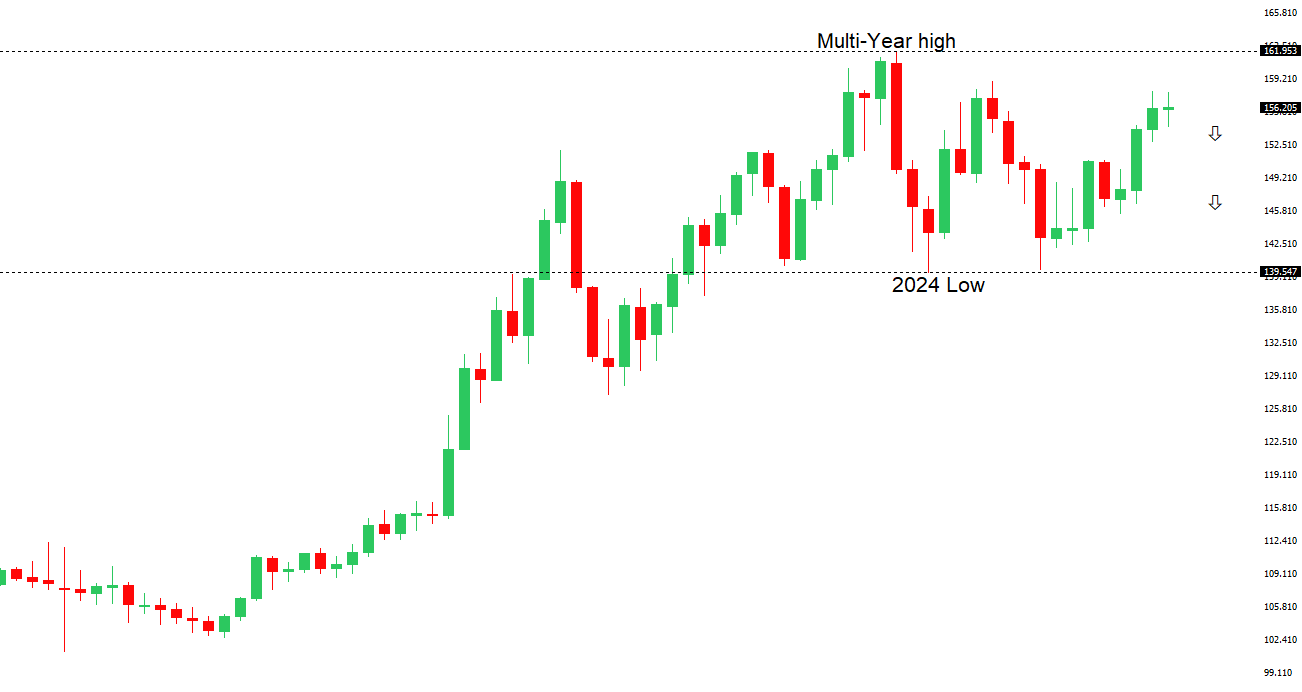
USDJPY: technical overview

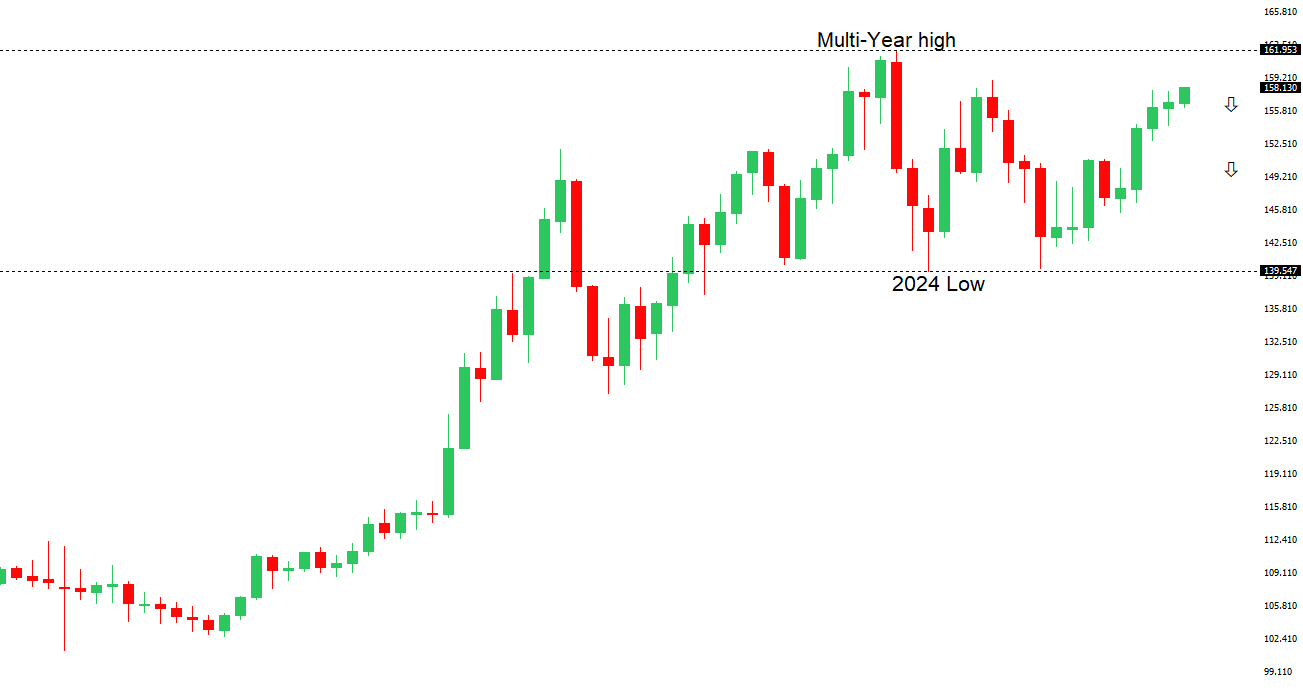
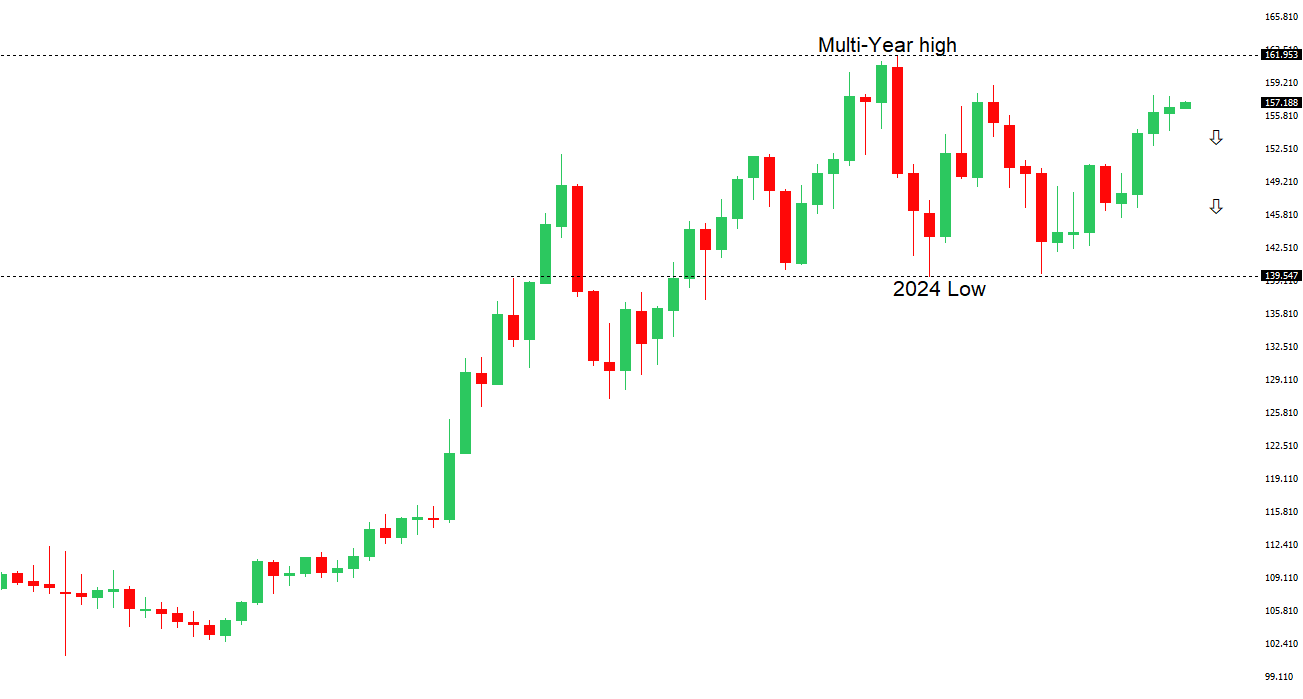
There are signs of a meaningful top in place after the market put in a multi-year high in 2024. At this point, rallies should be well capped ahead of 160.00 ahead of a fresh down-leg back towards the 2024 low at 139.58.

USDJPY Chart
R2 158.88 - 10 January/2025 high - Strong
R1 157.90 - 20 November high - Medium
S1 156.00 - Figure - Medium
S2 155.21 - 19 November low - Medium
USDJPY: fundamental overview

Japan’s yen remains under pressure despite recent verbal warnings from Finance Minister Katayama and hints from BOJ officials that a rate hike is nearing. A large ¥21.3 trillion stimulus package, funded mostly through new bond issuance, has fueled worries about Japan’s heavy debt load, rising yields, and fiscal sustainability—factors that could weaken the currency further. Markets see the government favoring loose fiscal policy and only cautious monetary tightening, raising doubts that any upcoming BOJ rate hike will be more than a one-off. Geopolitical tensions with China and Japan’s latest military moves add to upside risks for USDJPY. Without a meaningful policy shift, any FX intervention is likely to offer only brief relief. Meanwhile, economists’ forecasts point to modest GDP growth, slightly firmer inflation, and a BOJ policy rate of 0.75% by late 2025, with key data and BOJ commentary this week likely to shape near-term expectations.

 
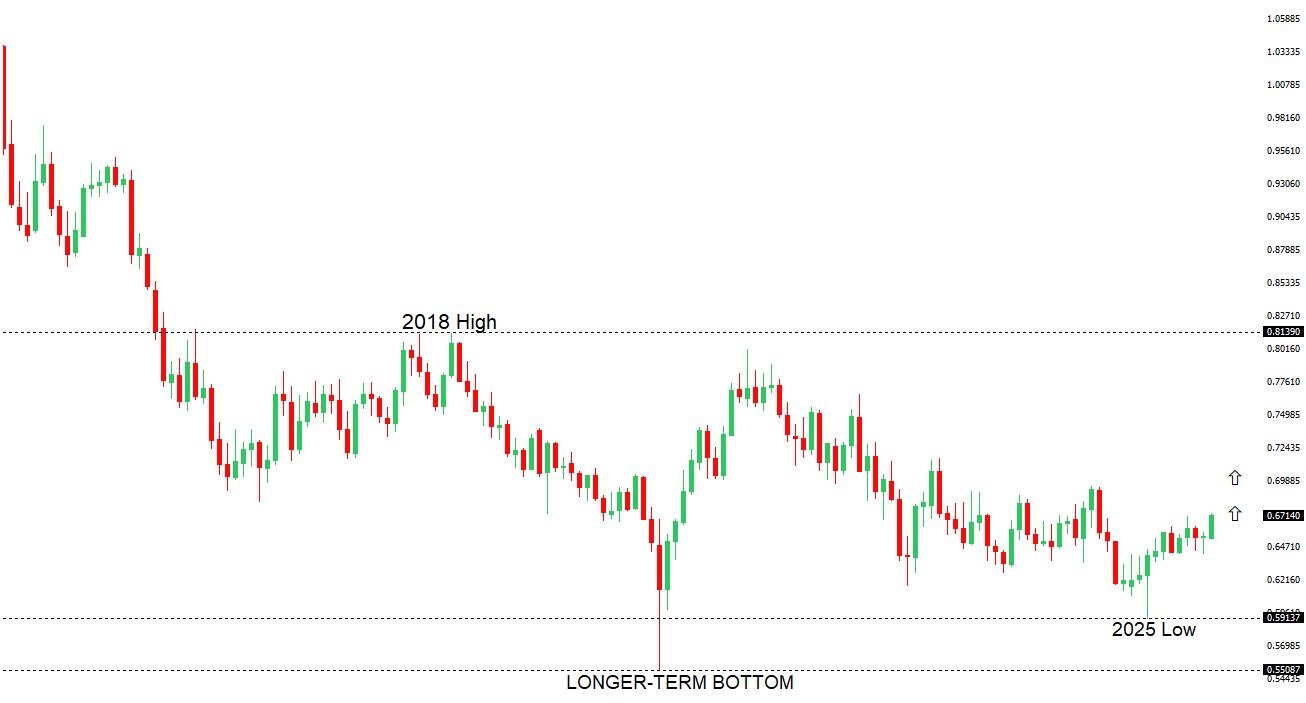
AUDUSD: technical overview

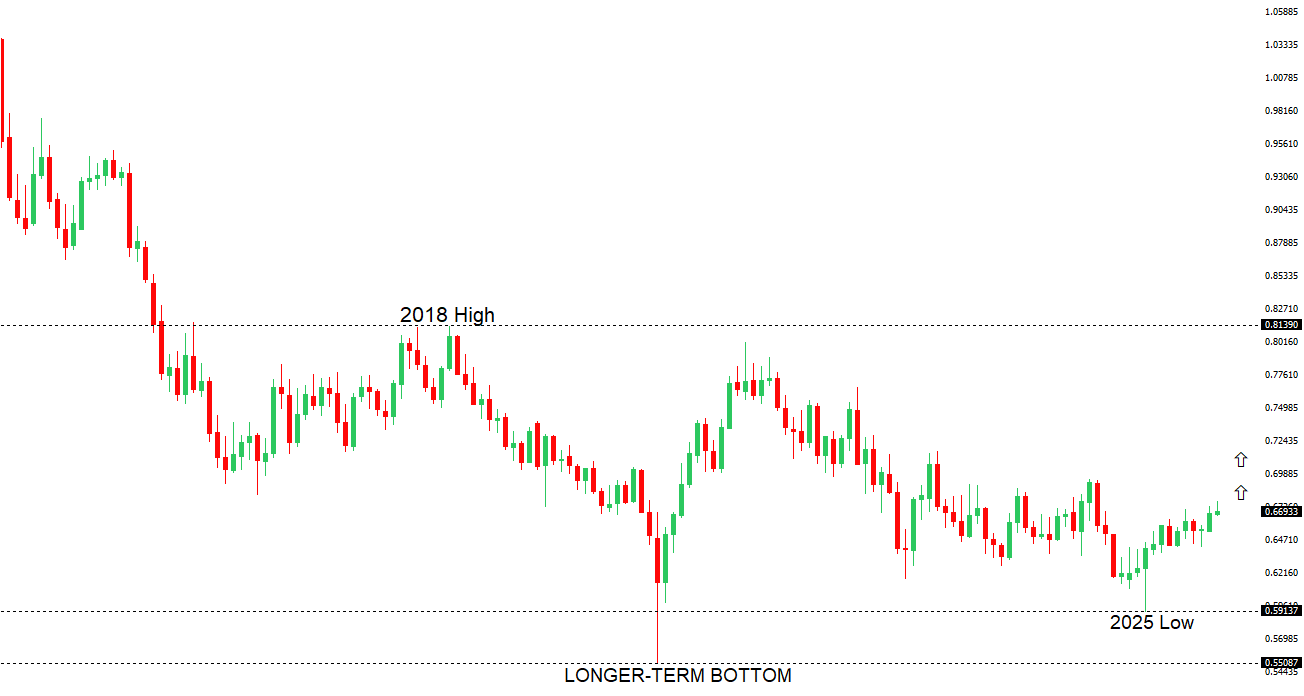
There are signs of the potential formation of a longer-term base with the market trading down into a meaningful longer-term support zone. Only a monthly close below 0.5500 would give reason for rethink. A monthly close back above 0.7000 will take the big picture pressure off the downside and strengthen case for a bottom.

AUDUSD Chart
R2 0.6629 - 1 October high - Strong
R1 0.6618 - 29 October high - Medium
S1 0.6421 - 21 November low - Medium
S1 0.6372 - 23 June low - Strong
AUDUSD: fundamental overview

The Australian Dollar found support at 0.6421 as markets rebounded on rising expectations of a Fed rate cut in December, though a close above the 200-day moving average is still needed to confirm stability. Hopes of new Chinese property stimulus and a firmer yuan are also helping AUD sentiment. At home, the RBA remains cautious: despite three earlier cuts, policymakers now see sticky inflation, a tight labor market, and solid wage growth keeping rates on hold for some time. Recent Australian data reinforces this view, with some analysts suggesting the easing cycle may be over—potentially leaving Australia with one of the highest G10 rates if the Fed cuts in 2026. Meanwhile, Australia’s growth outlook has brightened on stronger commodity exports and the removal of U.S. food-import tariffs. This week’s new monthly CPI is expected to show only a slight easing, keeping the focus on inflation trends.

 
Suggested reading

Rate Cut Drama Could Put Lisa Cook In The Hot Seat, N. Irwin, Axios (November 21, 2025)

The Economy Is Likely to Reaccelerate in 2026, T. Slok, Apollo Academy (November 20, 2025)


Any opinions, news, research, analyses, prices or other information ("information") contained on this Blog, constitutes marketing communication and it has not been prepared in accordance with legal requirements designed to promote the independence of investment research. Further, the information contained within this Blog does not contain (and should not be construed as containing) investment advice or an investment recommendation, or an offer of, or solicitation for, a transaction in any financial instrument. LMAX Group has not verified the accuracy or basis-in-fact of any claim or statement made by any third parties as comments for every Blog entry.

LMAX Group will not accept liability for any loss or damage, including without limitation to, any loss of profit, which may arise directly or indirectly from use of or reliance on such information. No representation or warranty is given as to the accuracy or completeness of the above information. While the produced information was obtained from sources deemed to be reliable, LMAX Group does not provide any guarantees about the reliability of such sources. Consequently any person acting on it does so entirely at his or her own risk. It is not a place to slander, use unacceptable language or to promote LMAX Group or any other FX and CFD provider and any such postings, excessive or unjust comments and attacks will not be allowed and will be removed from the site immediately.

Day Image
21st November 2025 | view in browser
Fed talk and soft data sour year end hopes

Markets started Thursday on a positive note thanks to Nvidia’s strong earnings, with a generally constructive tone in FX and rates, but sentiment quickly soured after Fed officials highlighted renewed inflation concerns.


Performance chart 30day v. USD (%)
Performance Chart
 
 
Technical & fundamental highlights
EURUSD: technical overview

The Euro outlook remains constructive with higher lows sought out on dips in favor of the next major upside extension targeting the 2021 high at 1.2350. Setbacks should be exceptionally well supported ahead of 1.1300.

EURUSD Chart
R2 1.1729 - 17 October high -Strong
R1 1.1669 - 28 October high - Medium
S1 1.1469 - 5 November low - Medium
S2 1.1392 - 1 August low - Strong
EURUSD: fundamental overview

ECB official Gabriel Makhlouf says the current policy stance is appropriate and sees no need to change rates unless clear evidence emerges, urging against overreacting to small or temporary dips below the 2% inflation target. While upcoming forecasts could push some policymakers toward a cut, he’s not concerned about inflation slightly undershooting—around 1.8%—as expectations remain well anchored. A narrowing rate gap with the Fed, combined with expected Eurozone growth support from German fiscal measures, could help the euro, which one major bank notes is already undervalued by about 2%. Recent Eurozone data, however, paints a mixed picture: German producer prices show tentative stabilization, but construction output has weakened sharply and consumer confidence remains deeply negative, signaling persistent economic fragility despite easing price pressures.

 
USDJPY: technical overview

There are signs of a meaningful top in place after the market put in a multi-year high in 2024. At this point, rallies should be well capped ahead of 160.00 ahead of a fresh down-leg back towards the 2024 low at 139.58.

USDJPY Chart
R2 158.88 - 10 January/2025 high - Strong
R1 157.90 - 20 November high - Medium
S1 156.00 - Figure - Medium
S2 155.21 - 19 November low - Medium
USDJPY: fundamental overview

Recent remarks from members of Japan’s leadership have intensified yen weakness by suggesting the BOJ is unlikely to raise rates before March 2026 and may be facing growing government influence over its decisions. Finance Minister Katayama’s comments about potentially revising the BOJ–government accord, along with her signaling no immediate plans to address yen weakness, have fueled concerns about reduced central-bank independence and encouraged speculative pressure on the currency. At the same time, a massive new stimulus package requiring heavier bond issuance, rising geopolitical friction with China, and expectations that the Fed will drive future direction all keep USDJPY biased upward. Even with inflation running above the BOJ’s 2% target for a record stretch, any near-term rate hike may be seen as a one-off, leaving dovish policy, negative real rates, and a weakening yen as the likely outlet—making any intervention short-lived.

 
AUDUSD: technical overview

There are signs of the potential formation of a longer-term base with the market trading down into a meaningful longer-term support zone. Only a monthly close below 0.5500 would give reason for rethink. A monthly close back above 0.7000 will take the big picture pressure off the downside and strengthen case for a bottom.

AUDUSD Chart
R2 0.6629 - 1 October high - Strong
R1 0.6618 - 29 October high - Medium
S1 0.6415 - 21 August low - Medium
S1 0.6372 - 23 June low - Strong
AUDUSD: fundamental overview

The Australian dollar fell with the broader risk-off tone in crypto and equities, but strong support levels and an oversold RSI suggest downside may be limited. The RBA remains on hold as Australia’s labor market stays very tight, wages are elevated, and inflation risks linger, prompting policymakers to adopt a patient, data-dependent stance after earlier rate cuts. Recent economic data—from firm PMIs to solid spending and wage figures—reinforces expectations that easing is likely finished, with some analysts seeing rates steady at 3.60% through 2025. If the RBA stays paused while the Fed cuts in 2026, Australia could hold the highest G10 yield, supporting the Aussie. Meanwhile, improved export prospects—including tariff relief from the U.S. and record iron ore shipments—add to Australia’s constructive growth outlook.

 
Suggested reading

10 Life Lessons From Warren Buffett, D. Lefkovitz, Morningstar (November 19, 2025)

When Will The Stock Market Bubble Burst?, D. Lachman, AEIdeas (November 19, 2025)


Any opinions, news, research, analyses, prices or other information ("information") contained on this Blog, constitutes marketing communication and it has not been prepared in accordance with legal requirements designed to promote the independence of investment research. Further, the information contained within this Blog does not contain (and should not be construed as containing) investment advice or an investment recommendation, or an offer of, or solicitation for, a transaction in any financial instrument. LMAX Group has not verified the accuracy or basis-in-fact of any claim or statement made by any third parties as comments for every Blog entry.

LMAX Group will not accept liability for any loss or damage, including without limitation to, any loss of profit, which may arise directly or indirectly from use of or reliance on such information. No representation or warranty is given as to the accuracy or completeness of the above information. While the produced information was obtained from sources deemed to be reliable, LMAX Group does not provide any guarantees about the reliability of such sources. Consequently any person acting on it does so entirely at his or her own risk. It is not a place to slander, use unacceptable language or to promote LMAX Group or any other FX and CFD provider and any such postings, excessive or unjust comments and attacks will not be allowed and will be removed from the site immediately.

Day Image
20th November 2025 | view in browser
Nvidia lifts sentiment as Fed doubts grow

Federal Reserve minutes from the October meeting reveal deep divisions over the path of interest rates, with disagreements over both the recent rate cut and the outlook for December, where policymakers will be forced to decide policy without October or November employment data due to BLS delays from the government shutdown.


Performance chart 30day v. USD (%)
Performance Chart
 
 
Technical & fundamental highlights
EURUSD: technical overview

The Euro outlook remains constructive with higher lows sought out on dips in favor of the next major upside extension targeting the 2021 high at 1.2350. Setbacks should be exceptionally well supported ahead of 1.1300.

EURUSD Chart
R2 1.1729 - 17 October high -Strong
R1 1.1669 - 28 October high - Medium
S1 1.1469 - 5 November low - Medium
S2 1.1392 - 1 August low - Strong
EURUSD: fundamental overview

The eurozone’s current account surplus edged up in September to €23.1bn, supported by solid goods and services trade despite ongoing income deficits, though the surplus has generally been shrinking relative to GDP. Analysts see this as evidence of resilience driven by steady exports and contained inflation, but warn that industrial weakness and global trade uncertainties may limit future gains. Inflation data for October confirmed sticky price pressures, reinforcing expectations that the ECB will keep rates steady. One well regarded analyst argues the euro is slightly undervalued and could appreciate ahead of key U.S. data releases, forecasting EURUSD at 1.18 by year-end as U.S. rate-cut expectations build. Meanwhile, Germany’s October PPI is expected to stabilize, signaling that industrial price declines are easing but underlying demand and manufacturing challenges persist.

 
USDJPY: technical overview

There are signs of a meaningful top in place after the market put in a multi-year high in 2024. At this point, rallies should be well capped ahead of 160.00 ahead of a fresh down-leg back towards the 2024 low at 139.58.

USDJPY Chart
R2 158.88 - 10 January/2025 high - Strong
R1 158.00 - Figure - Medium
S1 156.00 - Figure - Medium
S2 155.21 - 19 November low - Medium
USDJPY: fundamental overview

Recent remarks from key Japanese officials have fueled further yen weakness by signaling limited room for near-term monetary tightening and raising doubts about the Bank of Japan’s independence. Comments suggesting no rate hike before March 2026, hints that the BOJ–government accord may be revised, and indications that yen weakness was not even discussed with Governor Ueda all reinforced the view that policy is being steered more by politics than economics. With speculation rising, no sign of imminent FX intervention, and expectations of a large new fiscal stimulus—alongside tense China relations—markets see any potential BOJ rate hike as “one and done,” leaving the path of least resistance for USDJPY still upward unless the U.S. Federal Reserve shifts to faster rate cuts.

 
AUDUSD: technical overview

There are signs of the potential formation of a longer-term base with the market trading down into a meaningful longer-term support zone. Only a monthly close below 0.5500 would give reason for rethink. A monthly close back above 0.7000 will take the big picture pressure off the downside and strengthen case for a bottom.

AUDUSD Chart
R2 0.6629 - 1 October high - Strong
R1 0.6618 - 29 October high - Medium
S1 0.6451 - 19 November low - Medium
S1 0.6440 - 14 October low - Strong
AUDUSD: fundamental overview

Nvidia’s strong earnings boosted global risk sentiment and helped the AUD rebound from its 200-day moving average, while recent Australian data continues to keep the odds of rate cuts low. Indicators like the Westpac Leading Index show improving economic momentum into 2026, and steady wage growth suggests inflation risks remain contained but not eliminated. With resilient consumer confidence, strong home lending, and stable employment, the RBA is expected to keep rates on hold, with some analysts believing the easing cycle has ended. Policymakers remain cautious about reigniting inflation, and upcoming comments from RBA chief economist Sarah Hunter may lean slightly hawkish given the strengthening demand backdrop.

 
Suggested reading

There’s No Such Thing As a K-Shaped Economy, J. Tamny, RCM (November 19, 2025)

The Fed’s Rate Decision Isn’t the Market’s Biggest Worry, M. Hulbert, Marketwatch (November 18, 2025)


Any opinions, news, research, analyses, prices or other information ("information") contained on this Blog, constitutes marketing communication and it has not been prepared in accordance with legal requirements designed to promote the independence of investment research. Further, the information contained within this Blog does not contain (and should not be construed as containing) investment advice or an investment recommendation, or an offer of, or solicitation for, a transaction in any financial instrument. LMAX Group has not verified the accuracy or basis-in-fact of any claim or statement made by any third parties as comments for every Blog entry.

LMAX Group will not accept liability for any loss or damage, including without limitation to, any loss of profit, which may arise directly or indirectly from use of or reliance on such information. No representation or warranty is given as to the accuracy or completeness of the above information. While the produced information was obtained from sources deemed to be reliable, LMAX Group does not provide any guarantees about the reliability of such sources. Consequently any person acting on it does so entirely at his or her own risk. It is not a place to slander, use unacceptable language or to promote LMAX Group or any other FX and CFD provider and any such postings, excessive or unjust comments and attacks will not be allowed and will be removed from the site immediately.

Day Image
19th November 2025 | view in browser
UK CPI, Fed Minutes, Nvidia earnings anchor market focus

The Pound is holding steady ahead of the UK’s October CPI release, expected to ease, with softer household energy costs offsetting still-firm food and fuel prices.


Performance chart 30day v. USD (%)
Performance Chart
 
 
Technical & fundamental highlights
EURUSD: technical overview

The Euro outlook remains constructive with higher lows sought out on dips in favor of the next major upside extension targeting the 2021 high at 1.2350. Setbacks should be exceptionally well supported ahead of 1.1300.

EURUSD Chart
R2 1.1729 - 17 October high -Strong
R1 1.1669 - 28 October high - Medium
S1 1.1469 - 5 November low - Medium
S2 1.1392 - 1 August low - Strong
EURUSD: fundamental overview

The ECB has slightly eased banks’ capital requirements for 2026, reflecting confidence in a sector that is already strongly capitalized, with CET1 ratios far above minimum levels. This move frees up capital for lending and shareholder payouts, which can support bank stocks and strengthen the euro. One European bank analyst sees the euro as modestly undervalued and expects it to appreciate further, especially as upcoming U.S. economic data—delayed by the recent government shutdown—may weaken the dollar and reinforce expectations of a December Fed rate cut. This bank projects the euro to reach about $1.18 by year-end.

 
USDJPY: technical overview

There are signs of a meaningful top in place after the market put in a multi-year high in 2024. At this point, the door is now open for a deeper setback below the 2024 low at 139.58, exposing a retest of the 2023 low. Rallies should be well capped above 155.00.

USDJPY Chart
R2 155.98 - 28 January high - Medium
R1 155.74 - 18 November high - Medium
S1 153.62 - 14 November low - Medium
S2 152.82 - 7 November low - Strong
USDJPY: fundamental overview

Japan’s yen remains under pressure as traders test the limits of government tolerance, despite Finance Minister Katayama’s warnings. Weak GDP data and Prime Minister Takaichi’s upcoming large fiscal stimulus—possibly as high as ¥25 trillion—raise concerns that expanded bond issuance could further weigh on the currency. Diplomatic tensions with China and potential trade retaliation add another layer of downside risk. Meanwhile, BOJ Governor Ueda signals only gradual tightening, and markets increasingly expect a single near-term rate hike that may not be followed by more. With fiscal expansion looming and the yen sliding, upcoming meetings between Ueda and key cabinet ministers are drawing scrutiny for signs of intervention or shifts in policy coordination.

 
AUDUSD: technical overview

There are signs of the potential formation of a longer-term base with the market trading down into a meaningful longer-term support zone. Only a monthly close below 0.5500 would give reason for rethink. A monthly close back above 0.7000 will take the big picture pressure off the downside and strengthen case for a bottom.

AUDUSD Chart
R2 0.6629 - 1 October high - Strong
R1 0.6618 - 29 October high - Medium
S1 0.6458 - 5 November low - Medium
S1 0.6440 - 14 October low - Strong
AUDUSD: fundamental overview

China’s heightened tensions with Japan over comments on Taiwan and a risk-off slump in global equities have weighed on risk currencies like the AUD and NZD. Still, sentiment is partly supported by President Trump’s removal of U.S. tariffs on products including Australian beef, offering a boost to Australia’s export sector. Domestically, resilient economic indicators and steady wage growth suggest the RBA is likely to hold rates at 3.60% through next year, with recent data—such as improving leading indicators and stable wages—reinforcing a cautious, mildly hawkish stance. Forecasts point to steady GDP growth and slightly higher inflation into 2026, while economists note that although wage pressures remain contained, they continue to be a key consideration for the RBA’s inflation outlook.

 
Suggested reading

What if you could create the perfect stock from scratch?, C. Reilly, RiskHedge (November 17, 2025)

This Is Not The Economic Paper You’re Looking For, J. Calhoun, Alhambra (November 16, 2025)


Any opinions, news, research, analyses, prices or other information ("information") contained on this Blog, constitutes marketing communication and it has not been prepared in accordance with legal requirements designed to promote the independence of investment research. Further, the information contained within this Blog does not contain (and should not be construed as containing) investment advice or an investment recommendation, or an offer of, or solicitation for, a transaction in any financial instrument. LMAX Group has not verified the accuracy or basis-in-fact of any claim or statement made by any third parties as comments for every Blog entry.

LMAX Group will not accept liability for any loss or damage, including without limitation to, any loss of profit, which may arise directly or indirectly from use of or reliance on such information. No representation or warranty is given as to the accuracy or completeness of the above information. While the produced information was obtained from sources deemed to be reliable, LMAX Group does not provide any guarantees about the reliability of such sources. Consequently any person acting on it does so entirely at his or her own risk. It is not a place to slander, use unacceptable language or to promote LMAX Group or any other FX and CFD provider and any such postings, excessive or unjust comments and attacks will not be allowed and will be removed from the site immediately.

Day Image
18th November 2025 | view in browser
Yen under fire, Bitcoin slips, all eyes on Nvidia

The US dollar began the day on a strong footing, with USDJPY climbing above 155.00 despite dovish remarks from Fed Governor Waller, who reiterated support for a December rate cut amid labor market weakness and pressure on lower-income households.


Performance chart 30day v. USD (%)
Performance Chart
 
 
Technical & fundamental highlights
EURUSD: technical overview

The Euro outlook remains constructive with higher lows sought out on dips in favor of the next major upside extension targeting the 2021 high at 1.2350. Setbacks should be exceptionally well supported ahead of 1.1300.

EURUSD Chart
R2 1.1729 - 17 October high -Strong
R1 1.1669 - 28 October high - Medium
S1 1.1469 - 5 November low - Medium
S2 1.1392 - 1 August low - Strong
EURUSD: fundamental overview

The European Commission has raised its 2024 growth forecast for the eurozone to 1.3% from 0.9%, though it slightly lowered its 2026 outlook to 1.2%. Despite this, stronger-than-expected growth in the first three quarters, supported by rising consumer spending and investment, suggests continuing momentum. Inflation is projected to ease to 1.9% by 2026, while unemployment is expected to drop to 6.2%. Risks remain, including market volatility—especially in the US tech sector—domestic political uncertainty, and climate-related events. Meanwhile, China and Germany have agreed to deepen financial cooperation, enhancing yuan internationalization through measures like promoting offshore yuan markets and allowing RMB bonds as collateral. This could boost demand for the yuan and possibly support the euro through increased investment flows. Upcoming eurozone data releases include PMI figures and consumer confidence indicators later this week.

 
USDJPY: technical overview

There are signs of a meaningful top in place after the market put in a multi-year high in 2024. At this point, the door is now open for a deeper setback below the 2024 low at 139.58, exposing a retest of the 2023 low. Rallies should be well capped above 155.00.

USDJPY Chart
R2 155.98 - 28 January high - Medium
R1 155.38 - 18 November high - Medium
S1 152.82 - 7 November low - Medium
S2 151.54 - 29 October low - Strong
USDJPY: fundamental overview

The yen has slightly rebounded after Japan’s finance minister cautioned against excessive currency volatility, but persistent concerns over PM Takaichi’s proposed fiscal stimulus and Japan’s widening interest rate gap with the U.S. continue to weigh on it. Despite a shrinking Bank of Japan balance sheet and signals of potential rate hikes as early as December or January, markets see limited follow-through and expect yen weakness to persist unless the U.S. Federal Reserve cuts rates more aggressively. Tensions with China and weak economic data—such as an unexpected GDP contraction—add to downside risks, though upcoming inflation and trade data, along with a key meeting between PM Takaichi and BOJ Governor Ueda, may offer fresh direction.

 
AUDUSD: technical overview

There are signs of the potential formation of a longer-term base with the market trading down into a meaningful longer-term support zone. Only a monthly close below 0.5500 would give reason for rethink. A monthly close back above 0.7000 will take the big picture pressure off the downside and strengthen case for a bottom.

AUDUSD Chart
R2 0.6629 - 1 October high - Strong
R1 0.6618 - 29 October high - Medium
S1 0.6458 - 5 November low - Medium
S1 0.6440 - 14 October low - Strong
AUDUSD: fundamental overview

China’s escalating tensions with Japan over comments on Taiwan and broader risk-off sentiment—highlighted by equity and bitcoin sell-offs ahead of key U.S. data—are weighing on risk-sensitive currencies like the Australian and New Zealand dollars. However, there’s longer-term optimism as President Trump has rolled back tariffs on imported food, including Australian beef, boosting confidence in Australia’s export sectors. With resilient economic indicators and concerns about inflation, the Reserve Bank of Australia is expected to hold rates steady at 3.6%, supported by recent data and a cautious policy stance. One well know bank believes the easing cycle is over, and upcoming remarks from the RBA’s chief economist may reinforce a hawkish tone.

 
Suggested reading

Can AI save America’s $1.3 trillion problem?, S. McBride, RiskHedge (November 15, 2025)

Is the Biggest Tech Rally of Our Era Built on a Lie?, J. Kilhefner, InvestorPlace (November 15, 2025)


Any opinions, news, research, analyses, prices or other information ("information") contained on this Blog, constitutes marketing communication and it has not been prepared in accordance with legal requirements designed to promote the independence of investment research. Further, the information contained within this Blog does not contain (and should not be construed as containing) investment advice or an investment recommendation, or an offer of, or solicitation for, a transaction in any financial instrument. LMAX Group has not verified the accuracy or basis-in-fact of any claim or statement made by any third parties as comments for every Blog entry.

LMAX Group will not accept liability for any loss or damage, including without limitation to, any loss of profit, which may arise directly or indirectly from use of or reliance on such information. No representation or warranty is given as to the accuracy or completeness of the above information. While the produced information was obtained from sources deemed to be reliable, LMAX Group does not provide any guarantees about the reliability of such sources. Consequently any person acting on it does so entirely at his or her own risk. It is not a place to slander, use unacceptable language or to promote LMAX Group or any other FX and CFD provider and any such postings, excessive or unjust comments and attacks will not be allowed and will be removed from the site immediately.

Day Image
17th November 2025 | view in browser
Markets tread carefully as global risks resurface

The Euro has eased slightly after peaking ahead of 1.1700, as reports suggest the EU may downgrade its 2026 growth outlook due to trade tensions, US tariffs, and ongoing economic and political strains in Germany and France.


Performance chart 30day v. USD (%)
Performance Chart
 
 
Technical & fundamental highlights
EURUSD: technical overview

The Euro outlook remains constructive with higher lows sought out on dips in favor of the next major upside extension targeting the 2021 high at 1.2350. Setbacks should be exceptionally well supported ahead of 1.1300.

EURUSD Chart
R2 1.1729 - 17 October high -Strong
R1 1.1669 - 28 October high - Medium
S1 1.1469 - 5 November low - Medium
S2 1.1392 - 1 August low - Strong
EURUSD: fundamental overview

The euro managed a second weekly gain despite Friday’s pullback, as expectations for a Fed rate cut in December declined. Eurozone GDP rose modestly in Q3, but nearly half the region—including Germany and Italy—saw stagnation or contraction, raising concerns about uneven growth and policy effectiveness. The ECB is unlikely to cut rates soon, with inflation near 2% and policy seen as neutral, but ongoing weakness in key economies could pressure the euro if peripheral strength fades. Most banks remain optimistic, with forecasts for EURUSD near 1.20 by end-2025 and up to 1.24 by mid-2026, though outcomes hinge on central bank decisions, US growth, and geopolitics. Markets are also speculating about ECB President Lagarde’s successor, with hawkish candidates like Knot, Nagel, and De Cos in focus. Key data this week includes flash PMIs, Germany’s PPI, eurozone consumer confidence, and the EU’s autumn economic forecast.

 
USDJPY: technical overview

There are signs of a meaningful top in place after the market put in a multi-year high in 2024. At this point, the door is now open for a deeper setback below the 2024 low at 139.58, exposing a retest of the 2023 low. Rallies should be well capped above 155.00.

USDJPY Chart
R2 155.98 - 28 January high - Medium
R1 155.05 - 12 November high - Medium
S1 152.82 - 7 November low - Medium
S2 151.54 - 29 October low - Strong
USDJPY: fundamental overview

Despite rising talk of foreign exchange intervention, most traders still view direct action by Japan as unlikely in the near term, even with USDJPY nearing 160 again. Investors see “Abenomics 2.0” under PM Sanae Takaichi as yen-negative, especially after she shifted to multi-year budgeting and appointed reflationist advisors, signaling more spending and loose policy ahead. A large stimulus package worth ¥15–20 trillion is expected soon, though pushback could shrink it and temper yen weakness. Tensions with China and weak economic data—including a 1.8% GDP contraction—add pressure, while upcoming inflation and trade figures could influence expectations of a Bank of Japan policy shift. Overall, fiscal expansion and diplomatic risks point to continued yen softness unless spending is curbed or the BOJ tightens sooner than expected.

 
AUDUSD: technical overview

There are signs of the potential formation of a longer-term base with the market trading down into a meaningful longer-term support zone. Only a monthly close below 0.5500 would give reason for rethink. A monthly close back above 0.7000 will take the big picture pressure off the downside and strengthen case for a bottom.

AUDUSD Chart
R2 0.6629 - 1 October high - Strong
R1 0.6618 - 29 October high - Medium
S1 0.6458 - 5 November low - Medium
S1 0.6440 - 14 October low - Strong
AUDUSD: fundamental overview

US President Donald Trump reversed his earlier protectionist stance by signing an executive order removing tariffs on imported foods, including Australian beef, coffee, and bananas—providing a direct boost to Australian agriculture and supporting risk sentiment globally. This comes alongside strong Australian labor data for October, with unemployment falling to 4.3% and a surge in full-time employment, reinforcing the economy’s tight conditions and prompting markets to push back expectations of interest rate cuts by the RBA until at least 2026. The central bank is now expected to maintain its current policy stance due to solid domestic momentum and concerns about inflation, with upcoming RBA minutes and remarks from officials likely to emphasize a hawkish outlook.

 
Suggested reading

Longest Shutdown Did Not Arrest This Bull Market, Fisher Investments (November 14, 2025)

The Market’s Decline Can Net You Big Opportunities, P. V. Doorn, Marketwatch (November 14, 2025)


Any opinions, news, research, analyses, prices or other information ("information") contained on this Blog, constitutes marketing communication and it has not been prepared in accordance with legal requirements designed to promote the independence of investment research. Further, the information contained within this Blog does not contain (and should not be construed as containing) investment advice or an investment recommendation, or an offer of, or solicitation for, a transaction in any financial instrument. LMAX Group has not verified the accuracy or basis-in-fact of any claim or statement made by any third parties as comments for every Blog entry.

LMAX Group will not accept liability for any loss or damage, including without limitation to, any loss of profit, which may arise directly or indirectly from use of or reliance on such information. No representation or warranty is given as to the accuracy or completeness of the above information. While the produced information was obtained from sources deemed to be reliable, LMAX Group does not provide any guarantees about the reliability of such sources. Consequently any person acting on it does so entirely at his or her own risk. It is not a place to slander, use unacceptable language or to promote LMAX Group or any other FX and CFD provider and any such postings, excessive or unjust comments and attacks will not be allowed and will be removed from the site immediately.

Day Image
14th November 2025 | view in browser
Hawkish rhetoric does nothing for Dollar

Global markets come into Friday on the back of an unusually broad risk-off move that saw equities, carry trades, crypto, the dollar index, and gold all sold, even as Treasury yields rose and Fed officials pushed a more cautious—or even slightly hawkish—tone.


Performance chart 30day v. USD (%)
Performance Chart
 
 
Technical & fundamental highlights
EURUSD: technical overview

The Euro outlook remains constructive with higher lows sought out on dips in favor of the next major upside extension targeting the 2021 high at 1.2350. Setbacks should be exceptionally well supported ahead of 1.1300.

EURUSD Chart
R2 1.1729 - 17 October high -Strong
R1 1.1669 - 28 October high - Medium
S1 1.1469 - 5 November low - Medium
S2 1.1392 - 1 August low - Strong
EURUSD: fundamental overview

The ECB’s latest bulletin shows it is keeping interest rates unchanged as inflation nears its 2% goal, with eurozone growth supported by a strong labour market and earlier rate cuts, though global uncertainty keeps policymakers cautious. Analysts expect the euro to strengthen—potentially moving above $1.20 next year and toward $1.22–1.24 by 2026—driven by improving eurozone growth, potential oil price declines, and a widening policy gap with the Fed. Major US banks share this broadly bullish outlook, while markets are also beginning to speculate about Christine Lagarde’s successor, with Knot, Nagel, and De Cos seen as frontrunners. Recent data, however, show softer industrial production, highlighting an uneven economic backdrop.

 
USDJPY: technical overview

There are signs of a meaningful top in place after the market put in a multi-year high in 2024. At this point, the door is now open for a deeper setback below the 2024 low at 139.58, exposing a retest of the 2023 low. Rallies should be well capped above 155.00.

USDJPY Chart
R2 155.98 - 28 January high - Medium
R1 155.05 - 12 November high - Medium
S1 152.82 - 7 November low - Medium
S2 151.54 - 29 October low - Strong
USDJPY: fundamental overview

Japan’s finance minister issued another warning as the yen slid near 155, highlighting growing concerns over the weak currency but offering little confidence that intervention is imminent. Markets see PM Takaichi’s shift toward looser fiscal policy, her appointment of pro-reflation advisers, and expectations of a large stimulus package as signals that Abenomics-style easing will continue—keeping pressure on the yen. Traders also view her comments about closer coordination with the BOJ as a sign that rate hikes could be further delayed. Although the BOJ may still raise rates once in December or January, investors doubt it will go much further, leaving the yen’s fate largely dependent on whether the Fed starts cutting rates; without that, USDJPY is likely to remain biased higher.

 
AUDUSD: technical overview

There are signs of the potential formation of a longer-term base with the market trading down into a meaningful longer-term support zone. Only a monthly close below 0.5500 would give reason for rethink. A monthly close back above 0.7000 will take the big picture pressure off the downside and strengthen case for a bottom.

AUDUSD Chart
R2 0.6629 - 1 October high - Strong
R1 0.6618 - 29 October high - Medium
S1 0.6458 - 5 November low - Medium
S1 0.6440 - 14 October low - Strong
AUDUSD: fundamental overview

Australia’s job market strengthened in October, with unemployment slipping to 4.3% and more than 42,000 new jobs added—mostly full-time—while underemployment also eased, signaling a still-tight labour market. The stronger data lifted the Australian dollar and bond yields as investors pushed back expectations for future RBA rate cuts. With inflation risks lingering and the economy showing resilience—from steady wage growth to improving consumer sentiment and housing activity—the RBA is expected to keep policy on hold for now. Analysts see low market volatility ahead as global interest rates settle near neutral levels, which could boost carry-trade demand; in this environment, Australia’s relatively high rates and improving growth outlook position the Aussie dollar as a potential G-10 outperformer.

 
Suggested reading

China: Chip Limits Bite, L. Wei, WSJ (November 11, 2025)

Investor Noise, Not News, Fisher Investments (November 12, 2025)


Any opinions, news, research, analyses, prices or other information ("information") contained on this Blog, constitutes marketing communication and it has not been prepared in accordance with legal requirements designed to promote the independence of investment research. Further, the information contained within this Blog does not contain (and should not be construed as containing) investment advice or an investment recommendation, or an offer of, or solicitation for, a transaction in any financial instrument. LMAX Group has not verified the accuracy or basis-in-fact of any claim or statement made by any third parties as comments for every Blog entry.

LMAX Group will not accept liability for any loss or damage, including without limitation to, any loss of profit, which may arise directly or indirectly from use of or reliance on such information. No representation or warranty is given as to the accuracy or completeness of the above information. While the produced information was obtained from sources deemed to be reliable, LMAX Group does not provide any guarantees about the reliability of such sources. Consequently any person acting on it does so entirely at his or her own risk. It is not a place to slander, use unacceptable language or to promote LMAX Group or any other FX and CFD provider and any such postings, excessive or unjust comments and attacks will not be allowed and will be removed from the site immediately.

Day Image
13th November 2025 | view in browser
Mixed signals define global macro mood

Germany’s weak growth outlook, despite massive fiscal efforts, set a cautious tone for global markets as the Council of Economic Experts cut its 2026 forecast and warned that Berlin’s spending is failing to generate real momentum.


Performance chart 30day v. USD (%)
Performance Chart
 
 
Technical & fundamental highlights
EURUSD: technical overview

The Euro outlook remains constructive with higher lows sought out on dips in favor of the next major upside extension targeting the 2021 high at 1.2350. Setbacks should be exceptionally well supported ahead of 1.1300.

EURUSD Chart
R2 1.1729 - 17 October high -Strong
R1 1.1669 - 28 October high - Medium
S1 1.1469 - 5 November low - Medium
S2 1.1392 - 1 August low - Strong
EURUSD: fundamental overview

ECB officials signaled that interest rates are likely to stay put unless major economic shocks emerge, with Isabel Schnabel saying current policy is well-positioned and inflation near target. Martin Kocher noted that Trump-era trade tensions hurt Europe less than feared, though long-term forecasts—especially for 2028—remain highly uncertain. Some economists argued that political turmoil in the U.S. could weaken the dollar’s dominance, offering Europe a chance to strengthen the euro’s global role through deeper financial integration and a true eurobond market. Banks remain broadly bullish on EURUSD, generally targeting around 1.20 by end-2025 and 1.22–1.24 in 2026, depending on monetary policy, U.S. growth, and geopolitics. Meanwhile, Eurozone industrial production for September is expected to rebound sharply, signaling tentative stabilization in manufacturing, though vulnerabilities from external risks and tight financing remain.

 
USDJPY: technical overview

There are signs of a meaningful top in place after the market put in a multi-year high in 2024. At this point, the door is now open for a deeper setback below the 2024 low at 139.58, exposing a retest of the 2023 low. Rallies should be well capped above 155.00.

USDJPY Chart
R2 155.98 - 28 January high - Medium
R1 155.05 - 12 November high - Medium
S1 152.82 - 7 November low - Medium
S2 151.54 - 29 October low - Strong
USDJPY: fundamental overview

Japan’s finance minister again warned about yen weakness as USDJPY tested 155, though traders doubt near-term intervention since Japan hasn’t acted since the pair hit 160 in July 2024. Markets see PM Takaichi’s “Abenomics 2” approach—looser fiscal rules, reflation-leaning appointments, and a potential ¥15–20 trillion stimulus— as signaling prolonged easy conditions and a weaker yen, even as she maintains a balanced stance on monetary policy and avoids pressuring the BOJ. Investors expect only a single BOJ rate hike in December or January, meaning yen strength would likely depend more on future Fed cuts than Japanese policy. Recent data showed machine tool orders surging on strong foreign demand and PPI staying firm, underscoring ongoing inflation pressures that keep the BOJ on a slow normalization path.

 
AUDUSD: technical overview

There are signs of the potential formation of a longer-term base with the market trading down into a meaningful longer-term support zone. Only a monthly close below 0.5500 would give reason for rethink. A monthly close back above 0.7000 will take the big picture pressure off the downside and strengthen case for a bottom.

AUDUSD Chart
R2 0.6629 - 1 October high - Strong
R1 0.6618 - 29 October high - Medium
S1 0.6458 - 5 November low - Medium
S1 0.6440 - 14 October low - Strong
AUDUSD: fundamental overview

Australia’s latest data—rising consumer confidence, stronger business sentiment, robust home-loan growth, and better-than-expected employment figures—suggests a firm economic backdrop that makes near-term RBA rate cuts unlikely. Officials, including Deputy Governor Hauser, highlight limited spare capacity and the need for productivity gains to avoid inflation pressures, reinforcing the RBA’s cautious stance. Additionally, improved budget conditions and potentially lower government bond issuance support a stronger outlook for the Australian dollar.

 
Suggested reading

Milei Wants to Turn Argentina Into a Mining Powerhouse, R. Dube, WSJ (November 11, 2025)

How To Get Zero Inflation For Three Centuries, J. Soriano, American Thinker (November 10, 2025)


Any opinions, news, research, analyses, prices or other information ("information") contained on this Blog, constitutes marketing communication and it has not been prepared in accordance with legal requirements designed to promote the independence of investment research. Further, the information contained within this Blog does not contain (and should not be construed as containing) investment advice or an investment recommendation, or an offer of, or solicitation for, a transaction in any financial instrument. LMAX Group has not verified the accuracy or basis-in-fact of any claim or statement made by any third parties as comments for every Blog entry.

LMAX Group will not accept liability for any loss or damage, including without limitation to, any loss of profit, which may arise directly or indirectly from use of or reliance on such information. No representation or warranty is given as to the accuracy or completeness of the above information. While the produced information was obtained from sources deemed to be reliable, LMAX Group does not provide any guarantees about the reliability of such sources. Consequently any person acting on it does so entirely at his or her own risk. It is not a place to slander, use unacceptable language or to promote LMAX Group or any other FX and CFD provider and any such postings, excessive or unjust comments and attacks will not be allowed and will be removed from the site immediately.

Day Image
12th November 2025 | view in browser
Yen on the edge: Tokyo turns up the heat

The Yen sunk to a nine-month low against the US Dollar, prompting Japan’s Finance Minister Katayama to warn of rapid, one-sided moves and stress growing concerns over its weakness.


Performance chart 30day v. USD (%)
Performance Chart
 
 
Technical & fundamental highlights
EURUSD: technical overview

The Euro outlook remains constructive with higher lows sought out on dips in favor of the next major upside extension targeting the 2021 high at 1.2350. Setbacks should be exceptionally well supported ahead of 1.1300.

EURUSD Chart
R2 1.1729 - 17 October high -Strong
R1 1.1669 - 28 October high - Medium
S1 1.1469 - 5 November low - Medium
S2 1.1392 - 1 August low - Strong
EURUSD: fundamental overview

Investor confidence in Germany weakened in November as the ZEW index fell to 38.5, reflecting doubts about the country’s recovery despite slight improvements in current conditions. While government spending on defense and infrastructure is supporting modest growth, industrial data shows an uneven rebound. External pressures—such as U.S. tariffs and competition with China—pose risks, though Germany still expects growth around 1.3–1.4%, with potential spillover benefits for Europe. The ECB has paused rate cuts as inflation nears target, and officials like Martin Kocher warn of uncertainty beyond 2027 despite signs of stability. Meanwhile, some economists suggest U.S. institutional decline could open a chance for Europe to elevate the euro’s global role through stronger economic union and a potential eurobond market.

 
USDJPY: technical overview

There are signs of a meaningful top in place after the market put in a multi-year high in 2024. At this point, the door is now open for a deeper setback below the 2024 low at 139.58, exposing a retest of the 2023 low. Rallies should be well capped above 155.00.

USDJPY Chart
R2 155.00 - Round Number - Strong
R1 154.80 - 12 November high - Medium
S1 152.82 - 7 November low - Medium
S2 151.54 - 29 October low - Strong
USDJPY: fundamental overview

Weakness in the yen persists amid PM Takaichi’s shift toward looser fiscal goals (yen to a nine month low), raising concerns over Japan’s long-term debt and dampening demand for government bonds. Meanwhile, the BOJ’s October meeting notes and recent remarks from board member Junko Nakagawa suggest conditions are aligning for a gradual rate hike once inflation and wage growth targets are met. However, any BOJ move in December or January is expected to be modest, with markets viewing it as a “one-off” unless the Fed eases policy more sharply. On a brighter note, Japan’s October Economy Watchers Survey showed continued improvement, with sentiment rising to multi-month highs as front line workers observed a mild recovery despite ongoing price pressures.

 
AUDUSD: technical overview

There are signs of the potential formation of a longer-term base with the market trading down into a meaningful longer-term support zone. Only a monthly close below 0.5500 would give reason for rethink. A monthly close back above 0.7000 will take the big picture pressure off the downside and strengthen case for a bottom.

AUDUSD Chart
R2 0.6629 - 1 October high - Strong
R1 0.6618 - 29 October high - Medium
S1 0.6458 - 5 November low - Medium
S1 0.6440 - 14 October low - Strong
AUDUSD: fundamental overview

Australia’s strong November consumer confidence and solid business sentiment suggest the RBA is unlikely to cut interest rates soon. Deputy Governor Hauser highlighted limited spare capacity and the need for productivity gains to curb inflation risks. With rates held at 3.6% and no easing expected until mid-2026, yield dynamics favor AUD strength, supported by higher GDP forecasts and firm domestic demand. Rising home and investor loans, fueled by lower borrowing costs and tight rental markets, point to robust housing activity. Combined with stable labor conditions and steady commodity prices, these trends reinforce the RBA’s cautious stance and outlook for continued AUD resilience.

 
Suggested reading

The “native AI” stock with $1T potential, S. McBride, RiskHedge (November 10, 2025)

Warren Buffett’s (Last) Letter To Shareholders, Berkshire Hathaway (November 10, 2025)


Any opinions, news, research, analyses, prices or other information ("information") contained on this Blog, constitutes marketing communication and it has not been prepared in accordance with legal requirements designed to promote the independence of investment research. Further, the information contained within this Blog does not contain (and should not be construed as containing) investment advice or an investment recommendation, or an offer of, or solicitation for, a transaction in any financial instrument. LMAX Group has not verified the accuracy or basis-in-fact of any claim or statement made by any third parties as comments for every Blog entry.

LMAX Group will not accept liability for any loss or damage, including without limitation to, any loss of profit, which may arise directly or indirectly from use of or reliance on such information. No representation or warranty is given as to the accuracy or completeness of the above information. While the produced information was obtained from sources deemed to be reliable, LMAX Group does not provide any guarantees about the reliability of such sources. Consequently any person acting on it does so entirely at his or her own risk. It is not a place to slander, use unacceptable language or to promote LMAX Group or any other FX and CFD provider and any such postings, excessive or unjust comments and attacks will not be allowed and will be removed from the site immediately.

Day Image
11th November 2025 | view in browser
Dollar on the defensive as fed cuts loom

The U.S. dollar extended its retreat this week as weak labor data, political uncertainty, and a sell-off in AI stocks weighed on sentiment, though progress toward ending the record 40-day government shutdown offered some relief.


Performance chart 30day v. USD (%)
Performance Chart
 
 
Technical & fundamental highlights
EURUSD: technical overview

The Euro outlook remains constructive with higher lows sought out on dips in favor of the next major upside extension targeting the 2021 high at 1.2350. Setbacks should be exceptionally well supported ahead of 1.1300.

EURUSD Chart
R2 1.1729 - 17 October high -Strong
R1 1.1669 - 28 October high - Medium
S1 1.1469 - 5 November low - Medium
S2 1.1392 - 1 August low - Strong
EURUSD: fundamental overview

ECB officials signaled growing optimism about the eurozone economy, noting easing inflation—particularly in services—and steadier growth than expected. Vice President de Guindos said the current interest rate level is appropriate, while Board member Elderson cited reduced global tensions and rising defense spending as supportive factors. Policymakers remain cautious about further rate cuts after eight reductions, holding the deposit rate at 2% as inflation nears target. Analysts at one major bank expect stable policy through mid-next year and a stronger euro ahead. Meanwhile, Germany’s November ZEW Survey is forecast to rise slightly to 41, reflecting cautious optimism amid ongoing economic challenges.

 
USDJPY: technical overview

There are signs of a meaningful top in place after the market put in a multi-year high in 2024. At this point, the door is now open for a deeper setback below the 2024 low at 139.58, exposing a retest of the 2023 low. Rallies should be well capped below 155.00.

USDJPY Chart
R2 154.80 - 12 February high - Strong
R1 154.50 - 11 November high - Medium
S1 152.82 - 7 November low - Medium
S2 151.54 - 29 October low - Strong
USDJPY: fundamental overview

The yen briefly strengthened past the November 4 high of 154.48 but lacked sustained gains. Optimism over a potential U.S. government reopening lifted Treasury yields and risk sentiment, keeping the yen weak. Meanwhile, Prime Minister Sanae Takaichi’s shift toward multi-year budgeting and higher spending reinforced expectations of continued fiscal stimulus and delayed Bank of Japan tightening. Her appointment of reflationist policymakers and a possible ¥15–20 trillion stimulus package further signaled prolonged easy conditions. However, BOJ comments suggested readiness for a cautious rate hike once inflation and growth targets are met. Still, any move is likely limited, and sustained yen strength would depend more on U.S. monetary policy—particularly if the Federal Reserve begins cutting rates more aggressively.

 
AUDUSD: technical overview

There are signs of the potential formation of a longer-term base with the market trading down into a meaningful longer-term support zone. Only a monthly close below 0.5500 would give reason for rethink. A monthly close back above 0.7000 will take the big picture pressure off the downside and strengthen case for a bottom.

AUDUSD Chart
R2 0.6629 - 1 October high - Strong
R1 0.6618 - 29 October high - Medium
S1 0.6458 - 5 November low - Medium
S1 0.6440 - 14 October low - Strong
AUDUSD: fundamental overview

RBA Deputy Governor Andrew Hauser highlighted that Australia’s economy is running near full capacity, limiting growth without sparking inflation. He stressed that higher productivity and investment are needed to expand supply and sustain growth. The RBA’s decision to hold rates at 3.6% and signal no easing until mid-2026 reinforces a focus on inflation control, supporting AUD strength, further buoyed by steady GDP growth, firm labour markets, and rising asset prices. Risk-on sentiment from U.S. political developments and resilient commodity prices also lift the Aussie, while undervaluation and reduced bearish positioning strengthen its medium-term outlook. Surging consumer confidence and solid business conditions point to renewed domestic optimism, though policymakers must balance this against potential inflation pressures.

 
Suggested reading

As AI Costs Collapse, Innovation Is Poised To Take Off, S. McBride, RiskHedge (November 7, 2025)

Will the Growth of Stablecoins Drain Bank Deposits?, P. Kupiec, RCM (November 10, 2025)


Any opinions, news, research, analyses, prices or other information ("information") contained on this Blog, constitutes marketing communication and it has not been prepared in accordance with legal requirements designed to promote the independence of investment research. Further, the information contained within this Blog does not contain (and should not be construed as containing) investment advice or an investment recommendation, or an offer of, or solicitation for, a transaction in any financial instrument. LMAX Group has not verified the accuracy or basis-in-fact of any claim or statement made by any third parties as comments for every Blog entry.

LMAX Group will not accept liability for any loss or damage, including without limitation to, any loss of profit, which may arise directly or indirectly from use of or reliance on such information. No representation or warranty is given as to the accuracy or completeness of the above information. While the produced information was obtained from sources deemed to be reliable, LMAX Group does not provide any guarantees about the reliability of such sources. Consequently any person acting on it does so entirely at his or her own risk. It is not a place to slander, use unacceptable language or to promote LMAX Group or any other FX and CFD provider and any such postings, excessive or unjust comments and attacks will not be allowed and will be removed from the site immediately.