

Day Image
27th October 2025 | view in browser
CPI cools, Fed rate cut looms

The September CPI report showed U.S. inflation cooling more than expected, with core CPI rising only 0.2% month-over-month and 3% year-over-year, reinforcing expectations for a Federal Reserve 25-basis-point rate cut at this week, lowering the target range to 3.75–4.00%.


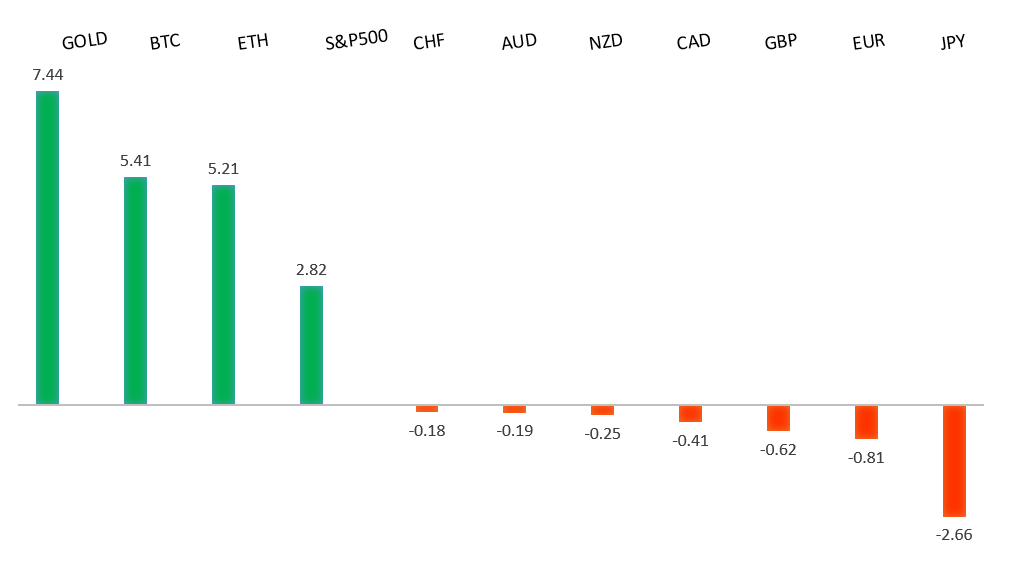
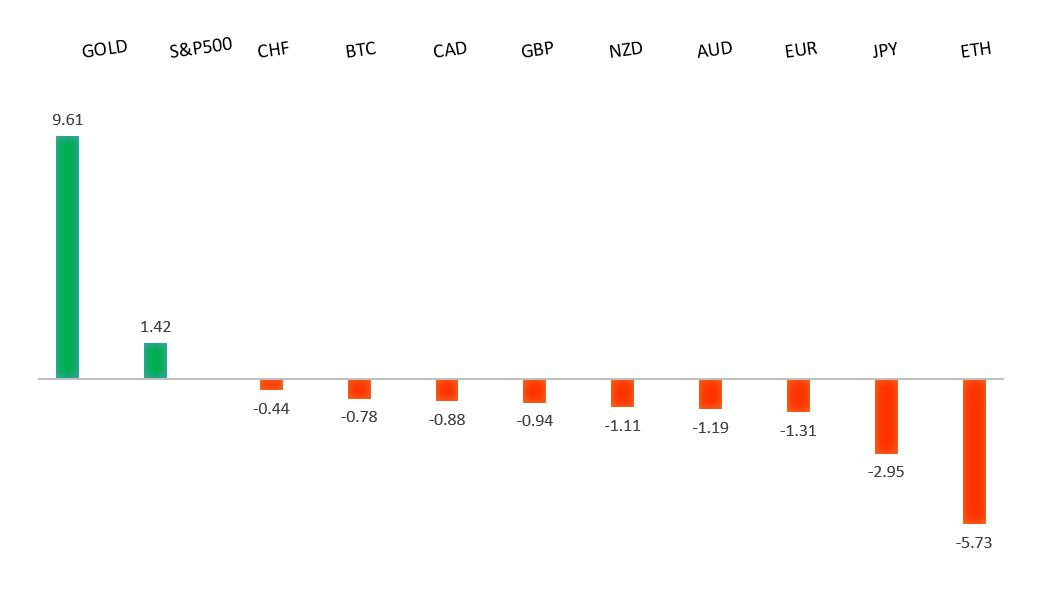
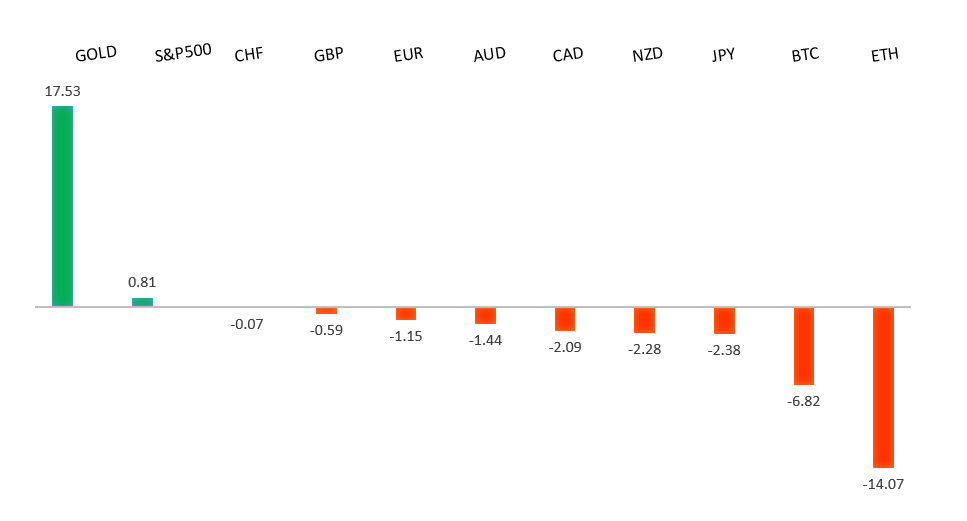
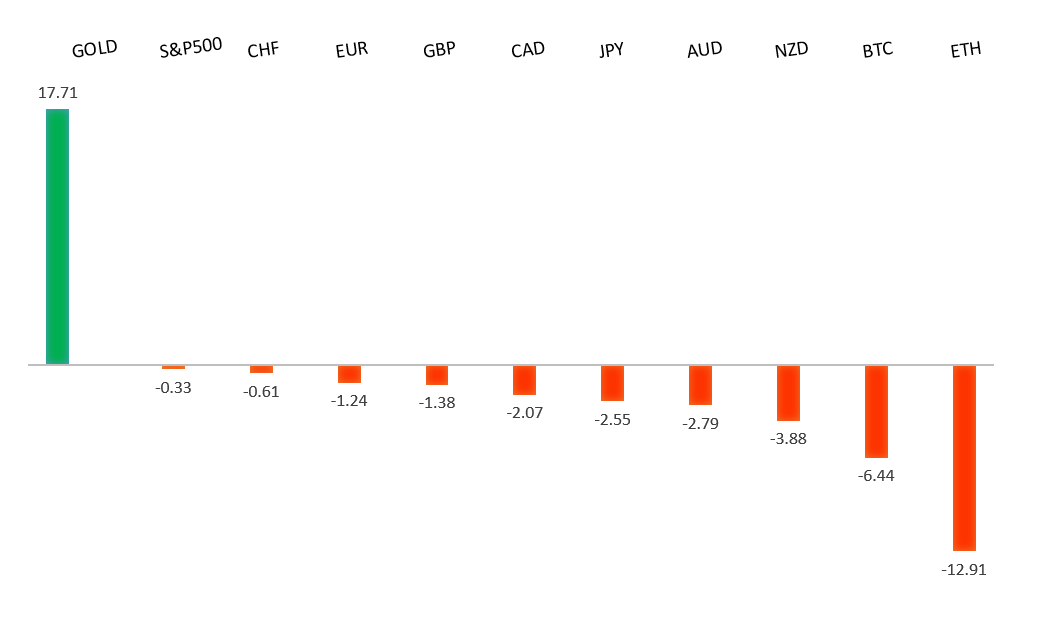
Performance chart 30day v. USD (%)
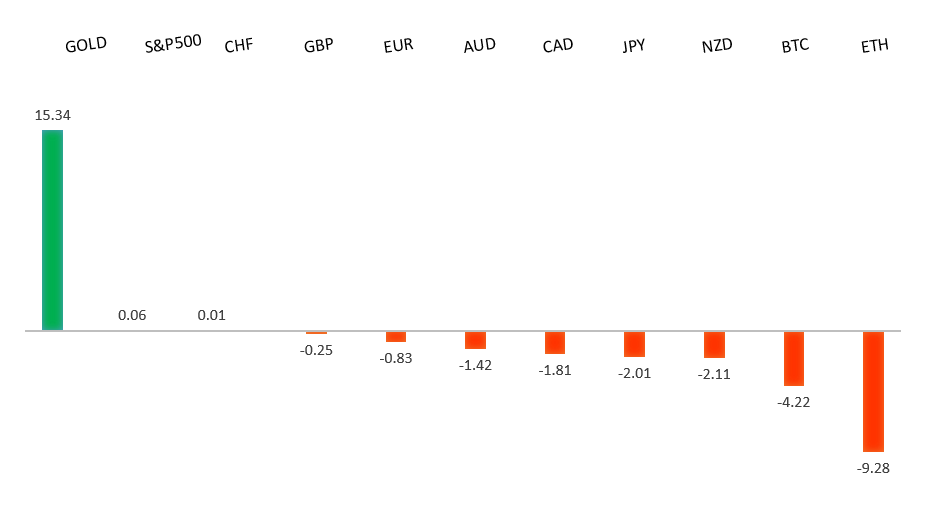
Performance Chart
 
 
Technical & fundamental highlights
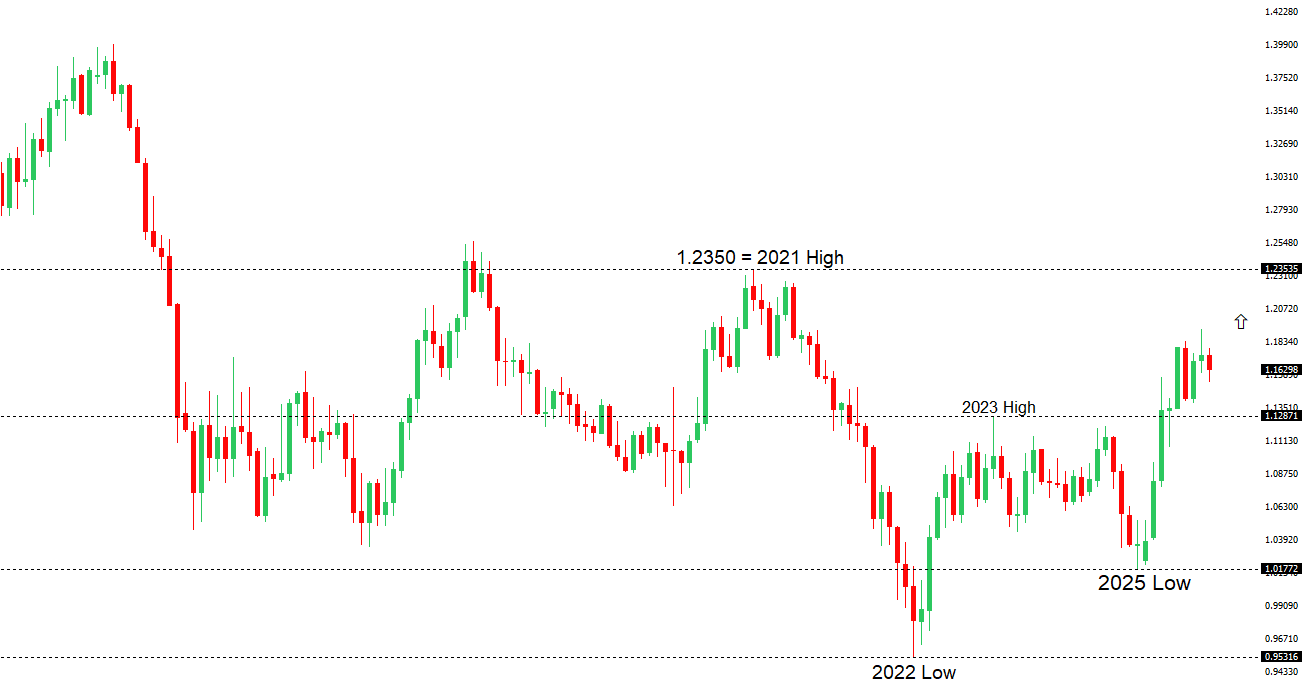
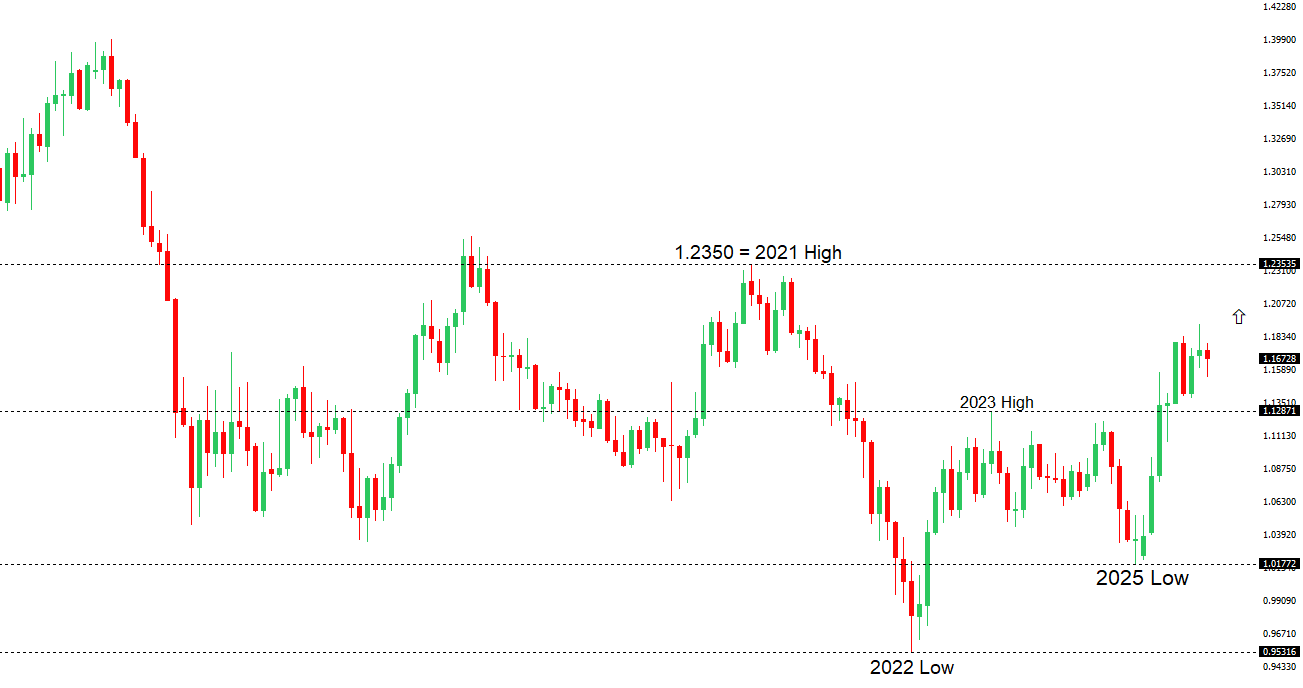
EURUSD: technical overview

The Euro outlook remains constructive with higher lows sought out on dips in favor of the next major upside extension targeting the 2021 high at 1.2350. Setbacks should be exceptionally well supported ahead of 1.1300.

EURUSD Chart
R2 1.1779 - 1 October high -Strong
R1 1.1729 - 17 October high - Medium
S1 1.1542 - 9 October low - Medium
S2 1.1528 - 5 August low - Strong
EURUSD: fundamental overview

The European Central Bank is expected to maintain steady interest rates at its October 30, 2025, meeting, confident in a stable economic outlook supported by Germany’s fiscal stimulus and resilient services sector, despite transient U.S. tariff effects. ECB President Lagarde will likely emphasize policy stability, noting inflation is largely under control while acknowledging risks from geopolitical and trade tensions. Recent data, including a strong Eurozone Composite PMI of 52.2, supports this stance, though manufacturing remains fragile, and business confidence is tempered by export demand concerns. Key upcoming data, such as Eurozone GDP, CPI, and Germany’s IFO Business Climate (forecasted to stabilize around 88.0–88.5), will provide further insights.

 
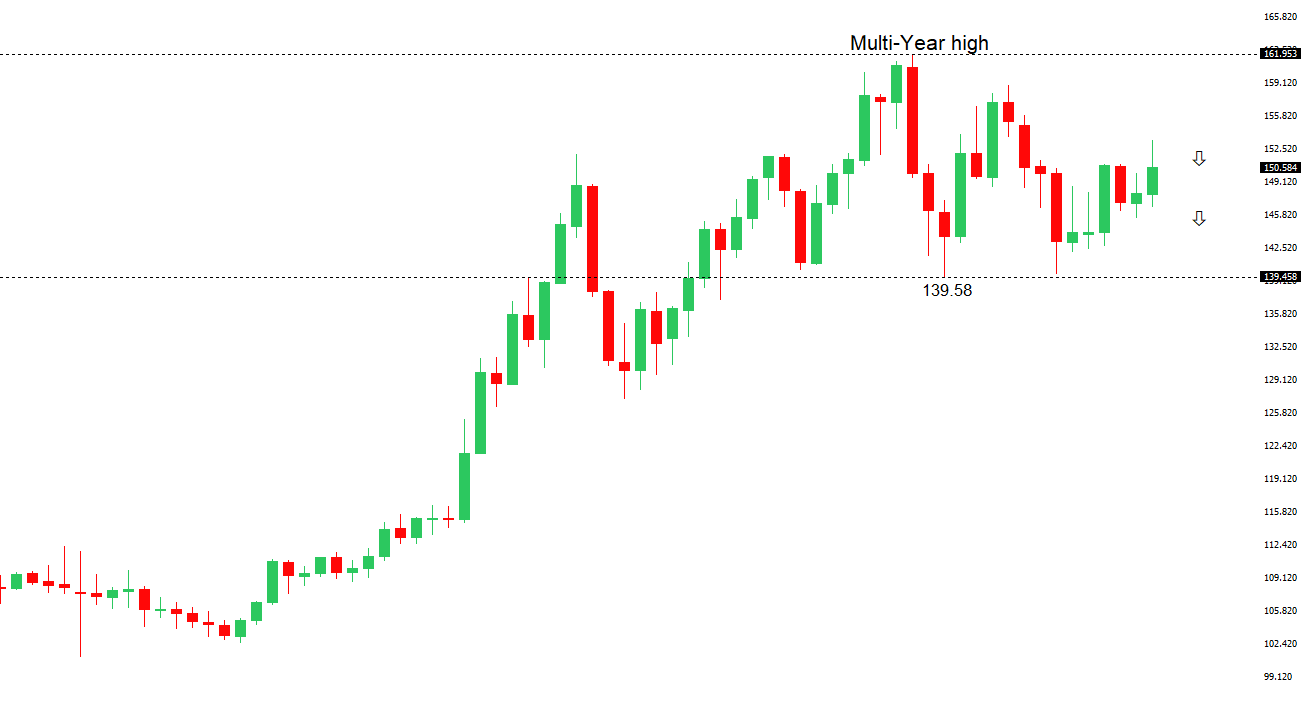
USDJPY: technical overview

There are signs of a meaningful top in place after the market put in a multi-year high in 2024. At this point, the door is now open for a deeper setback below the 2024 low at 139.58, exposing a retest of the 2023 low. Rallies should be well capped below 155.00.

USDJPY Chart
R2 154.80 - 12 February high - Strong
R1 153.28 - 10 October high - Medium
S1 149.38 - 17 October low - Medium
S2 149.03 - 6 October low - Strong
USDJPY: fundamental overview

The recent USDJPY rally is driven more by Japanese developments than broad U.S. dollar strength, with new Prime Minister Sanae Takaichi’s expansionary fiscal policies and continued monetary stimulus fueling yen weakness. However, risks like potential fiscal discipline from Takaichi’s coalition, the Bank of Japan’s upcoming meeting signaling tighter policy, and possible Ministry of Finance intervention could limit further gains. President Trump’s visit to Japan (October 27–29) focusing on trade and defense, alongside improving U.S.-China trade relations, may temporarily bolster USDJPY, but key Japanese economic data this week, including jobless rate and CPI, could influence market dynamics.

 
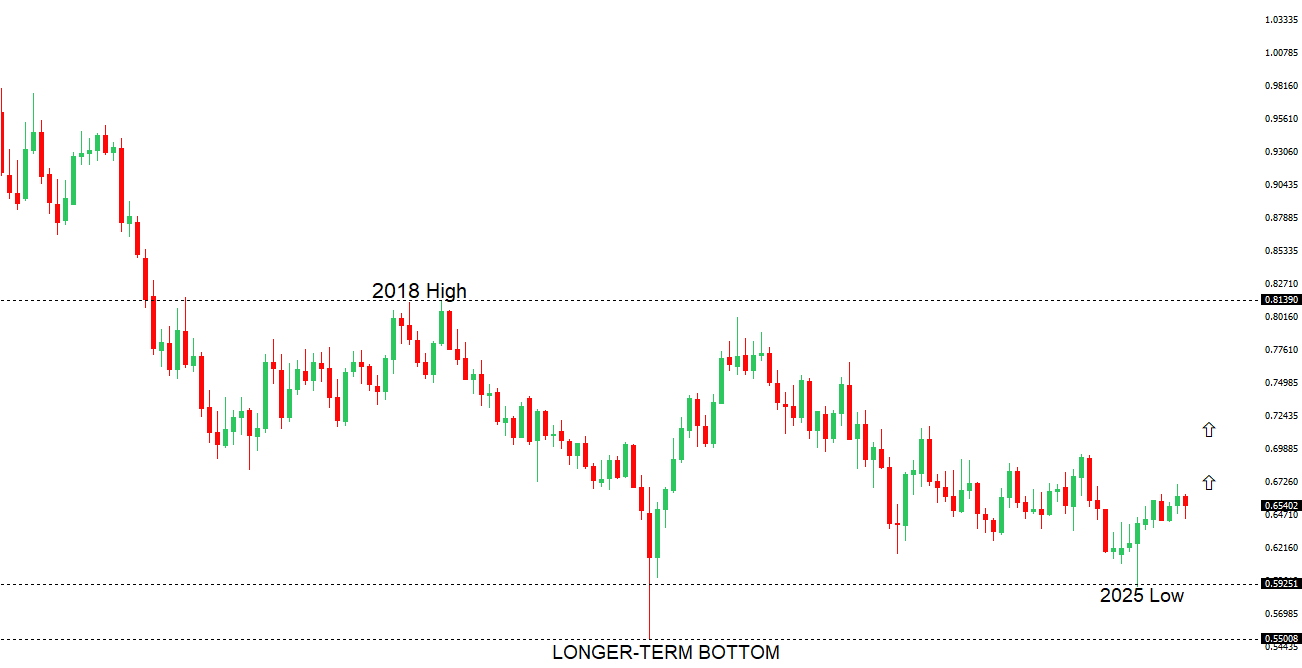
AUDUSD: technical overview

There are signs of the potential formation of a longer-term base with the market trading down into a meaningful longer-term support zone. Only a monthly close below 0.5500 would give reason for rethink. A monthly close back above 0.7000 will take the big picture pressure off the downside and strengthen case for a bottom.

AUDUSD Chart
R2 0.6629 - 1 October high - Strong
R1 0.6573 - 10 October high - Medium
S1 0.6471 - 16 October low - Medium
S1 0.6440 - 14 October low - Strong
AUDUSD: fundamental overview

The Reserve Bank of Australia kept the cash rate at 3.60% in September, prompting debate about whether its rate-cutting cycle has paused. While some economists predict another cut in November due to declining inflation (2.1% CPI) and rising unemployment (4.5%), major banks expect the RBA to hold rates until early 2026, citing cautious optimism and mixed economic signals. Markets assign a 63% chance of a November 4 rate cut, with the upcoming third-quarter CPI data and RBA Governor Michele Bullock’s comments likely to influence expectations, alongside global factors like U.S. Federal Reserve policy and U.S.-China trade talks.

 
Suggested reading

The AI rollout is here – and it’s messy, I. Berwick, Financial Times (October 27, 2025)

Are Investors Ignoring Red Flags in the Stock Market?, S. Hansen, Morningstar (October 24, 2025)


Any opinions, news, research, analyses, prices or other information ("information") contained on this Blog, constitutes marketing communication and it has not been prepared in accordance with legal requirements designed to promote the independence of investment research. Further, the information contained within this Blog does not contain (and should not be construed as containing) investment advice or an investment recommendation, or an offer of, or solicitation for, a transaction in any financial instrument. LMAX Group has not verified the accuracy or basis-in-fact of any claim or statement made by any third parties as comments for every Blog entry.

LMAX Group will not accept liability for any loss or damage, including without limitation to, any loss of profit, which may arise directly or indirectly from use of or reliance on such information. No representation or warranty is given as to the accuracy or completeness of the above information. While the produced information was obtained from sources deemed to be reliable, LMAX Group does not provide any guarantees about the reliability of such sources. Consequently any person acting on it does so entirely at his or her own risk. It is not a place to slander, use unacceptable language or to promote LMAX Group or any other FX and CFD provider and any such postings, excessive or unjust comments and attacks will not be allowed and will be removed from the site immediately.

Day Image
24th October 2025 | view in browser
CPI report looms large before Fed’s October meeting

Amid a U.S. government shutdown limiting economic data, markets are using resilient corporate earnings as a gauge for U.S. economic strength, bolstering the dollar as weaker euro and yen face pressure from short-position squeezes.


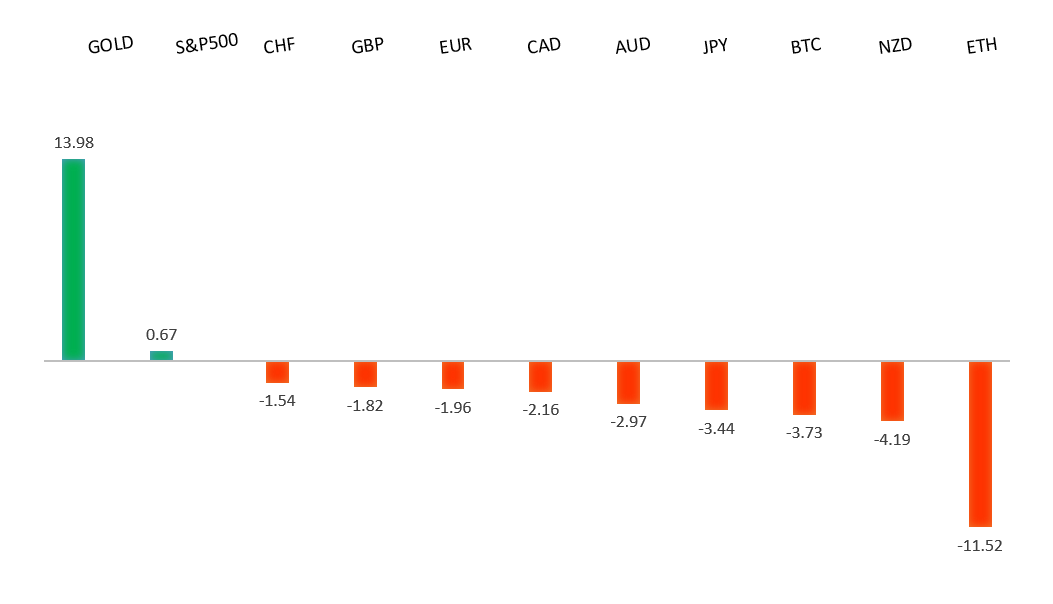
Performance chart 30day v. USD (%)
Performance Chart
 
 
Technical & fundamental highlights
EURUSD: technical overview

The Euro outlook remains constructive with higher lows sought out on dips in favor of the next major upside extension targeting the 2021 high at 1.2350. Setbacks should be exceptionally well supported ahead of 1.1300.

EURUSD Chart
R2 1.1779 - 1 October high -Strong
R1 1.1729 - 17 October high - Medium
S1 1.1542 - 9 October low - Medium
S2 1.1528 - 5 August low - Strong
EURUSD: fundamental overview

The European Central Bank remains optimistic about a “Goldilocks” economic scenario, expecting U.S. tariff effects to be short-lived and offset by Germany’s fiscal stimulus, supporting its decision to maintain interest rates at 2% in October. Despite forecasts of growth returning by early 2026 and inflation nearing 2% by 2027, risks like expanding U.S. tariffs, a stronger euro, and slower German fiscal measures could lead to lower-than-expected inflation, potentially sparking discussions of monetary easing in 2026. Germany’s October PMI data suggests ongoing economic stabilization, with manufacturing steady at 49.5 and services slightly down at 51.0, reflecting a fragile recovery driven by resilient services amid industrial and trade challenges.

 
USDJPY: technical overview

There are signs of a meaningful top in place after the market put in a multi-year high in 2024. At this point, the door is now open for a deeper setback below the 2024 low at 139.58, exposing a retest of the 2023 low. Rallies should be well capped below 155.00.

USDJPY Chart
R2 154.80 - 12 February high - Strong
R1 153.28 - 10 October high - Medium
S1 149.38 - 17 October low - Medium
S2 149.03 - 6 October low - Strong
USDJPY: fundamental overview

Japan’s new government, led by Takaichi, is expected to implement a stimulus package similar to Abenomics, but with a focus on targeted support for strategic industries and inflation relief, rather than broad spending. The yen’s weakness, driven by the U.S.-Japan yield spread, may be limited by potential fiscal discipline from coalition partners and veteran policymakers like Taro Aso, who advocate prudent spending. The Bank of Japan’s upcoming meeting could signal tighter policy, potentially strengthening the yen, while recent data shows inflation meeting expectations and a slowdown in private-sector activity, with manufacturing declining but optimism for future growth.

 
AUDUSD: technical overview

There are signs of the potential formation of a longer-term base with the market trading down into a meaningful longer-term support zone. Only a monthly close below 0.5500 would give reason for rethink. A monthly close back above 0.7000 will take the big picture pressure off the downside and strengthen case for a bottom.

AUDUSD Chart
R2 0.6629 - 1 October high - Strong
R1 0.6573 - 10 October high - Medium
S1 0.6471 - 16 October low - Medium
S1 0.6440 - 14 October low - Strong
AUDUSD: fundamental overview

The Reserve Bank of Australia maintained its cash rate at 3.60% in September, prompting debate about whether its rate-cutting cycle has concluded. While some economists predict another cut in November due to declining inflation (2.1% annually) and rising unemployment (4.5%), major banks expect the RBA to hold rates until early 2026, awaiting clearer economic signals. Recent PMI data shows steady growth (Composite PMI at 52.6), driven by services, though manufacturing contracted (49.7), and cooling price pressures may support the RBA’s cautious stance. Markets anticipate a 63% chance of a November rate cut, with upcoming CPI data and RBA Governor Bullock’s comments likely to influence expectations.

 
Suggested reading

Nobels Say It Is Good That Someday NVIDIA Will Be Bad, M. Hulbert, MarketWatch (October 23, 2025)

Putting Renewed Fear About Banks In Perspective, Fisher Investments (October 17, 2025)


Any opinions, news, research, analyses, prices or other information ("information") contained on this Blog, constitutes marketing communication and it has not been prepared in accordance with legal requirements designed to promote the independence of investment research. Further, the information contained within this Blog does not contain (and should not be construed as containing) investment advice or an investment recommendation, or an offer of, or solicitation for, a transaction in any financial instrument. LMAX Group has not verified the accuracy or basis-in-fact of any claim or statement made by any third parties as comments for every Blog entry.

LMAX Group will not accept liability for any loss or damage, including without limitation to, any loss of profit, which may arise directly or indirectly from use of or reliance on such information. No representation or warranty is given as to the accuracy or completeness of the above information. While the produced information was obtained from sources deemed to be reliable, LMAX Group does not provide any guarantees about the reliability of such sources. Consequently any person acting on it does so entirely at his or her own risk. It is not a place to slander, use unacceptable language or to promote LMAX Group or any other FX and CFD provider and any such postings, excessive or unjust comments and attacks will not be allowed and will be removed from the site immediately.

Day Image
23rd October 2025 | view in browser
Global banks’ moves sway Dollar’s path

Financial markets are shifting as investors move away from yen and gold, favoring the U.S. dollar due to squeezed short positions and renewed confidence in U.S. corporate earnings, signaling broader economic strength.


Performance chart 30day v. USD (%)
Performance Chart
 
 
Technical & fundamental highlights
EURUSD: technical overview

The Euro outlook remains constructive with higher lows sought out on dips in favor of the next major upside extension targeting the 2021 high at 1.2350. Setbacks should be exceptionally well supported ahead of 1.1300.

EURUSD Chart
R2 1.1779 - 1 October high -Strong
R1 1.1729 - 17 October high - Medium
S1 1.1542 - 9 October low - Medium
S2 1.1528 - 5 August low - Strong
EURUSD: fundamental overview

Eurozone inflation rose slightly to 2.2% in September, aligning with the ECB’s target, but disinflation may be slowing, reducing the likelihood of further rate cuts as ECB officials view current policy as supportive. The euro is somewhat bolstered by this stance, though its gains are limited by the region’s weak growth and fiscal challenges, with markets needing stronger German stimulus or improved Eurozone growth for a confident euro rally. A potential Trump-Xi meeting at the APEC Summit could ease trade tensions, supporting risk-on sentiment and EURUSD, while geopolitical risks, like Russia’s attacks on Ukraine and new EU sanctions, weigh on the euro. ECB Chief Economist Philip Lane highlighted risks to eurozone banks from tighter U.S. dollar funding, and consumer confidence remains fragile, with October’s reading expected to hold at -14.9, reflecting cautious sentiment and weak domestic demand.

 
USDJPY: technical overview

There are signs of a meaningful top in place after the market put in a multi-year high in 2024. At this point, the door is now open for a deeper setback below the 2024 low at 139.58, exposing a retest of the 2023 low. Rallies should be well capped below 155.00.

USDJPY Chart
R2 154.80 - 12 February high - Strong
R1 153.28 - 10 October high - Medium
S1 149.38 - 17 October low - Medium
S2 149.03 - 6 October low - Strong
USDJPY: fundamental overview

Prime Minister Takaichi’s new economic package, emphasizing targeted support over large-scale spending, suggests a cautious fiscal approach that could mildly support the yen and keep USDJPY stable or slightly lower, provided aggressive deficit financing is avoided. However, uncertainty about the package’s size and funding could drive USDJPY higher if significant bond issuance is announced. The Bank of Japan sees no urgent need for an interest rate hike at its October 30, 2025, meeting, with a possible hike eyed for December or January 2026, depending on economic data and yen movements. One major US investment house notes that Japan’s stronger economic conditions reduce the need for extensive monetary easing, though Takaichi’s Abenomics support adds some uncertainty to the BOJ’s gradual tightening path.

 
AUDUSD: technical overview

There are signs of the potential formation of a longer-term base with the market trading down into a meaningful longer-term support zone. Only a monthly close below 0.5500 would give reason for rethink. A monthly close back above 0.7000 will take the big picture pressure off the downside and strengthen case for a bottom.

AUDUSD Chart
R2 0.6629 - 1 October high - Strong
R1 0.6573 - 10 October high - Medium
S1 0.6471 - 16 October low - Medium
S1 0.6440 - 14 October low - Strong
AUDUSD: fundamental overview

The Australian dollar may gain support from widening AUD10yr-US10yr yield spreads and China’s efforts to strengthen the yuan. Australia’s unemployment rate rose to 4.5% in September, the highest in nearly four years, increasing pressure on the Reserve Bank of Australia for a potential interest rate cut in November, with market expectations for a cut rising to 66%. However, the RBA remains cautious due to persistent inflation, with the upcoming third-quarter inflation report on October 29 being key to further rate decisions. AUDUSD movement may depend on U.S. data signaling a dovish Federal Reserve, while economists predict the RBA’s rate at 3.35% by Q4 2025, with CPI at 2.6% in 2025 and GDP growth of 1.7%.

 
Suggested reading

Singapore prime minister warns of turbulence ahead, R. Khalag, Financial Times (October 23, 2025)

Fear Of a Market Correction Is Good Barrier To Corrections, R. Forsyth, Barron’s (October 17, 2025)


Any opinions, news, research, analyses, prices or other information ("information") contained on this Blog, constitutes marketing communication and it has not been prepared in accordance with legal requirements designed to promote the independence of investment research. Further, the information contained within this Blog does not contain (and should not be construed as containing) investment advice or an investment recommendation, or an offer of, or solicitation for, a transaction in any financial instrument. LMAX Group has not verified the accuracy or basis-in-fact of any claim or statement made by any third parties as comments for every Blog entry.

LMAX Group will not accept liability for any loss or damage, including without limitation to, any loss of profit, which may arise directly or indirectly from use of or reliance on such information. No representation or warranty is given as to the accuracy or completeness of the above information. While the produced information was obtained from sources deemed to be reliable, LMAX Group does not provide any guarantees about the reliability of such sources. Consequently any person acting on it does so entirely at his or her own risk. It is not a place to slander, use unacceptable language or to promote LMAX Group or any other FX and CFD provider and any such postings, excessive or unjust comments and attacks will not be allowed and will be removed from the site immediately.

Day Image
22nd October 2025 | view in browser
Global markets eye US-China talks, Fed easing

Global markets are navigating a complex landscape shaped by shifting monetary policies, geopolitical developments, and economic data.


Performance chart 30day v. USD (%)
Performance Chart
 
 
Technical & fundamental highlights
EURUSD: technical overview

The Euro outlook remains constructive with higher lows sought out on dips in favor of the next major upside extension targeting the 2021 high at 1.2350. Setbacks should be exceptionally well supported ahead of 1.1300.

EURUSD Chart
R2 1.1779 - 1 October high -Strong
R1 1.1729 - 17 October high - Medium
S1 1.1542 - 9 October low - Medium
S2 1.1528 - 5 August low - Strong
EURUSD: fundamental overview

Eurozone inflation rose slightly to 2.2% in September, aligning with the ECB’s target and suggesting easing disinflationary trends, with ECB officials indicating limited scope for further rate cuts. The euro is supported by a positive market mood ahead of the Trump-Xi meeting at the APEC Summit, where softened U.S. tariff threats signal potential trade negotiations. However, the euro’s gains are capped by concerns over sluggish Eurozone growth and fiscal challenges, with the euro likely to trade sideways for a while, unless stronger German fiscal stimulus or dovish U.S. policy shifts emerge. ECB’s Joachim Nagel emphasized the importance of independent statistics for effective monetary policy, indirectly highlighting issues with political interference in U.S. economic data and central banking.

 
USDJPY: technical overview

There are signs of a meaningful top in place after the market put in a multi-year high in 2024. At this point, the door is now open for a deeper setback below the 2024 low at 139.58, exposing a retest of the 2023 low. Rallies should be well capped below 155.00.

USDJPY Chart
R2 154.80 - 12 February high - Strong
R1 153.28 - 10 October high - Medium
S1 149.38 - 17 October low - Medium
S2 149.03 - 6 October low - Strong
USDJPY: fundamental overview

The election of Sanae Takaichi as Japan’s first female Prime Minister and her appointment of Satsuki Katayama as Finance Minister have driven the USDJPY exchange rate higher, fueled by expectations of expansionary fiscal policies and potential delays in interest rate hikes, weakening the yen. However, Takaichi’s coalition lacks a parliamentary majority, which may limit bold stimulus measures, and her recent comments suggest she will not pressure the Bank of Japan, causing a slight easing in USDJPY strength. The BOJ sees no urgent need for an October rate hike but may consider one by December or January 2026, depending on economic data and yen movements, with recent export growth providing some optimism despite U.S. tariff impacts.

 
AUDUSD: technical overview

There are signs of the potential formation of a longer-term base with the market trading down into a meaningful longer-term support zone. Only a monthly close below 0.5500 would give reason for rethink. A monthly close back above 0.7000 will take the big picture pressure off the downside and strengthen case for a bottom.

AUDUSD Chart
R2 0.6629 - 1 October high - Strong
R1 0.6573 - 10 October high - Medium
S1 0.6471 - 16 October low - Medium
S1 0.6440 - 14 October low - Strong
AUDUSD: fundamental overview

Australia’s unemployment rate rose to 4.5% in September, a near four-year high, increasing pressure on the Reserve Bank of Australia to consider a fourth interest rate cut in November, with market expectations for a cut jumping to 66%. However, the RBA remains cautious due to persistent inflation, with the upcoming third-quarter inflation report on October 29 being pivotal for further rate decisions. The Australian dollar may gain support from a potential US-China trade truce at the APEC summit, alongside strengthening Chinese yuan and a recent Australia-US critical minerals investment deal, though the latter’s impact is limited by long project timelines and China’s dominance in processing.

 
Suggested reading

Investing Is Not Making Big, Dramatic Moves, J. Calhoun, Alhambra Investments (October 19, 2025)

Profit With a Pivot In the Artificial Intelligence Value Chain, C. Reilly, RiskHedge (October 20, 2025)


Any opinions, news, research, analyses, prices or other information ("information") contained on this Blog, constitutes marketing communication and it has not been prepared in accordance with legal requirements designed to promote the independence of investment research. Further, the information contained within this Blog does not contain (and should not be construed as containing) investment advice or an investment recommendation, or an offer of, or solicitation for, a transaction in any financial instrument. LMAX Group has not verified the accuracy or basis-in-fact of any claim or statement made by any third parties as comments for every Blog entry.

LMAX Group will not accept liability for any loss or damage, including without limitation to, any loss of profit, which may arise directly or indirectly from use of or reliance on such information. No representation or warranty is given as to the accuracy or completeness of the above information. While the produced information was obtained from sources deemed to be reliable, LMAX Group does not provide any guarantees about the reliability of such sources. Consequently any person acting on it does so entirely at his or her own risk. It is not a place to slander, use unacceptable language or to promote LMAX Group or any other FX and CFD provider and any such postings, excessive or unjust comments and attacks will not be allowed and will be removed from the site immediately.

Day Image
21st October 2025 | view in browser
Markets eye US inflation and Fed moves

Global market sentiment is cautiously optimistic as investors await key corporate earnings and U.S. inflation data due Friday, with one major investment house predicting stable core inflation around 3.1% through year-end, driven by cooling car prices and airfares but offset by tariff-related price increases in trade-sensitive sectors.


Performance chart 30day v. USD (%)
Performance Chart
 
 
Technical & fundamental highlights
EURUSD: technical overview

The Euro outlook remains constructive with higher lows sought out on dips in favor of the next major upside extension targeting the 2021 high at 1.2350. Setbacks should be exceptionally well supported ahead of 1.1300.

EURUSD Chart
R2 1.1779 - 1 October high -Strong
R1 1.1729 - 17 October high - Medium
S1 1.1542 - 9 October low - Medium
S2 1.1528 - 5 August low - Strong
EURUSD: fundamental overview

Last Friday, S&P Global Ratings downgraded France’s credit rating from AA- to A+ due to fiscal uncertainty and political fragmentation, raising concerns about rising debt levels, though analysts believe France’s solvency and ECB support limit systemic risks. Eurozone inflation rose slightly to 2.2% in September, aligning with ECB targets, while officials signaled no further rate cuts, supporting the euro. Optimism for EURUSD recovery is boosted by a potential US-China trade thaw ahead of the Trump-Xi meeting, but persistent Eurozone growth concerns and fiscal challenges cap gains, unless stronger European or weaker US data emerges. ECB’s Isabel Schnabel emphasized enhancing the euro’s role through a larger, more liquid European bond market.

 
USDJPY: technical overview

There are signs of a meaningful top in place after the market put in a multi-year high in 2024. At this point, the door is now open for a deeper setback below the 2024 low at 139.58, exposing a retest of the 2023 low. Rallies should be well capped below 155.00.

USDJPY Chart
R2 154.80 - 12 February high - Strong
R1 153.28 - 10 October high - Medium
S1 149.38 - 17 October low - Medium
S2 149.03 - 6 October low - Strong
USDJPY: fundamental overview

Fears of a yen-weakening “Abenomics 2” under new Prime Minister Sana Takaichi may be exaggerated. Her coalition with the Japan Innovation Party, which favors deregulation over massive stimulus, suggests a more restrained economic policy, limiting yen depreciation. Bank of Japan board member Hajime Takata supports raising interest rates, citing sustained inflation above 2% and a weaker yen, though market expectations for an October rate hike have dropped to 25%, with December seen as more likely. Finance Minister Katsunobu Kato emphasized fiscal-monetary coordination, prioritizing inflation, wage growth, and stable fiscal policy to boost confidence in Japanese bonds.

 
AUDUSD: technical overview

There are signs of the potential formation of a longer-term base with the market trading down into a meaningful longer-term support zone. Only a monthly close below 0.5500 would give reason for rethink. A monthly close back above 0.7000 will take the big picture pressure off the downside and strengthen case for a bottom.

AUDUSD Chart
R2 0.6629 - 1 October high - Strong
R1 0.6573 - 10 October high - Medium
S1 0.6462 - 17 October low - Medium
S1 0.6440 - 14 October low - Strong
AUDUSD: fundamental overview

Australia’s unemployment rate rose to 4.5% in September, the highest in nearly four years, increasing pressure on the Reserve Bank of Australia to consider a fourth interest rate cut in November, with market expectations for a cut jumping to over 70%. However, the RBA remains cautious due to persistent inflation, with the upcoming third-quarter inflation report on October 29 being key to future decisions. The Australian dollar could gain support from a potential US-China trade truce, stronger Chinese yuan, and a recent multibillion-dollar investment in Australia’s critical minerals sector, though its movement may depend on US economic data and trade developments.

 
Suggested reading

The graduate ‘jobpocalypse’, I. Berwick, Financial Times (September 29, 2025)

Worries About AI Investment Risk May Be a Bit Overblown, R. Forsyth, Barron’s (October 17, 2025)


Any opinions, news, research, analyses, prices or other information ("information") contained on this Blog, constitutes marketing communication and it has not been prepared in accordance with legal requirements designed to promote the independence of investment research. Further, the information contained within this Blog does not contain (and should not be construed as containing) investment advice or an investment recommendation, or an offer of, or solicitation for, a transaction in any financial instrument. LMAX Group has not verified the accuracy or basis-in-fact of any claim or statement made by any third parties as comments for every Blog entry.

LMAX Group will not accept liability for any loss or damage, including without limitation to, any loss of profit, which may arise directly or indirectly from use of or reliance on such information. No representation or warranty is given as to the accuracy or completeness of the above information. While the produced information was obtained from sources deemed to be reliable, LMAX Group does not provide any guarantees about the reliability of such sources. Consequently any person acting on it does so entirely at his or her own risk. It is not a place to slander, use unacceptable language or to promote LMAX Group or any other FX and CFD provider and any such postings, excessive or unjust comments and attacks will not be allowed and will be removed from the site immediately.

Day Image
20th October 2025 | view in browser
Dollar Dips: Fed Cuts, Trump-Xi truce in sight

Markets open Monday with a neutral-to-bearish dollar bias amid easing US bank fears, an impending Fed 25bps cut, delayed data, and a potential Trump-Xi truce to soften trade tensions.


Performance chart 30day v. USD (%)
Performance Chart
 
 
Technical & fundamental highlights
EURUSD: technical overview

The Euro outlook remains constructive with higher lows sought out on dips in favor of the next major upside extension targeting the 2021 high at 1.2350. Setbacks should be exceptionally well supported ahead of 1.1300.

EURUSD Chart
R2 1.1779 - 1 October high -Strong
R1 1.1729 - 17 October high - Medium
S1 1.1542 - 9 October low - Medium
S2 1.1528 - 5 August low - Strong
EURUSD: fundamental overview

The euro is expected to trend neutral to slightly bullish this week, but it remains sensitive to European geopolitical and fiscal risks. France’s credit rating was downgraded by S&P from AA- to A+ due to fiscal uncertainty and political gridlock, potentially pushing debt to 121% of GDP by 2028—yet the euro held steady, buoyed by ECB support and no risk of bank contagion. Eurozone inflation ticked up to 2.2% in September, easing ECB rate-cut pressure, while softer U.S. Fed expectations add mild euro support; markets also eye a positive Trump-Xi meeting on October 31–November 1. Germany’s September PPI is forecast at -1.5% YoY (from -2.2%), signaling easing producer deflation amid weak industrial demand, with a rebound eyed for early 2026.

 
USDJPY: technical overview

There are signs of a meaningful top in place after the market put in a multi-year high in 2024. At this point, the door is now open for a deeper setback below the 2024 low at 139.58, exposing a retest of the 2023 low. Rallies should be well capped below 155.00.

USDJPY Chart
R2 154.80 - 12 February high - Strong
R1 153.28 - 10 October high - Medium
S1 149.38 - 17 October low - Medium
S2 149.03 - 6 October low - Strong
USDJPY: fundamental overview

The narrowing US-Japan 10-year yield spread weighed on USDJPY last week, but Sanae Takaichi’s likely victory as Japan’s next PM—sealed by today’s coalition deal with the Japan Innovation Party (Ishin)—is stoking fears of “Abenomics 2.0” and yen weakness; however, we believe these concerns are overstated, as Takaichi’s agenda will be tempered by Ishin’s focus on deregulation and targeted reforms over massive spending, while higher bond yields and the BOJ’s policy normalization limit fiscal risks. BOJ Governor Ueda recently signaled possible near-term rate hikes if economic confidence grows, though he’ll await more data amid US-China trade tensions; board pressure is mounting, with December now favored over October—especially with the new PM starting Tuesday—while key data this week includes September trade (Oct 21), PMI (Oct 22), and inflation (Oct 23), plus a speech by BOJ member Takata today.

 
AUDUSD: technical overview

There are signs of the potential formation of a longer-term base with the market trading down into a meaningful longer-term support zone. Only a monthly close below 0.5500 would give reason for rethink. A monthly close back above 0.7000 will take the big picture pressure off the downside and strengthen case for a bottom.

AUDUSD Chart
R2 0.6629 - 1 October high - Strong
R1 0.6573 - 10 October high - Medium
S1 0.6462 - 17 October low - Medium
S1 0.6440 - 14 October low - Strong
AUDUSD: fundamental overview

Last week’s Australian unemployment rate rose to 4.5% in September—the highest in nearly four years—fueling calls for the Reserve Bank of Australia to cut interest rates more aggressively, possibly for a fourth time in November. Market odds for a November cut surged from 40% to nearly 80%, though RBA officials remain cautious amid lingering inflation, awaiting a key third-quarter report on October 29. Aussie bulls may need dovish U.S. Fed signals to rally further, with prices likely consolidating between key moving averages for now; antipodean currencies remain vulnerable to trade tensions, but optimism grows for a U.S.-China truce at the APEC meeting, potentially extending the tariff deadline and boosting the pair. This week features light data, spotlighting RBA Governor Bullock’s Friday speech for hints of a policy shift.

 
Suggested reading

Powell just gave investors another reason to worry, M. Hulbert, MarketWatch (October 18, 2025)

Why The AI Economy Might Not Be A 1990s Redux, N. Irwin, Axios (October 16, 2025)


Any opinions, news, research, analyses, prices or other information ("information") contained on this Blog, constitutes marketing communication and it has not been prepared in accordance with legal requirements designed to promote the independence of investment research. Further, the information contained within this Blog does not contain (and should not be construed as containing) investment advice or an investment recommendation, or an offer of, or solicitation for, a transaction in any financial instrument. LMAX Group has not verified the accuracy or basis-in-fact of any claim or statement made by any third parties as comments for every Blog entry.

LMAX Group will not accept liability for any loss or damage, including without limitation to, any loss of profit, which may arise directly or indirectly from use of or reliance on such information. No representation or warranty is given as to the accuracy or completeness of the above information. While the produced information was obtained from sources deemed to be reliable, LMAX Group does not provide any guarantees about the reliability of such sources. Consequently any person acting on it does so entirely at his or her own risk. It is not a place to slander, use unacceptable language or to promote LMAX Group or any other FX and CFD provider and any such postings, excessive or unjust comments and attacks will not be allowed and will be removed from the site immediately.

Day Image
17th October 2025 | view in browser
Dollar dips on bank woes, Fed eyes cuts

A selloff in US regional bank shares, triggered by loan fraud allegations, drove Treasury yields lower and contributed to the dollar’s soft tone. Fed Governor Christopher Waller endorsed a measured 25-basis-point rate cut at the October FOMC meeting, citing tame core inflation and temporary tariff pressures, while signaling further reductions.


Performance chart 30day v. USD (%)
Performance Chart
 
 
Technical & fundamental highlights
EURUSD: technical overview

The Euro outlook remains constructive with higher lows sought out on dips in favor of the next major upside extension targeting the 2021 high at 1.2350. Setbacks should be exceptionally well supported ahead of 1.1300.

EURUSD Chart
R2 1.1779 - 1 October high -Strong
R1 1.1731 - 6 October high - Medium
S1 1.1542 - 9 October low - Medium
S2 1.1528 - 5 August low - Strong
EURUSD: fundamental overview

French PM Lecornu survived two no-confidence votes, boosting chances of passing France’s budget—though its deficit may still exceed 3% of GDP by 2029—while weak German data, like the disappointing ZEW survey, keeps euro gains tied to a softer dollar. Markets need stronger German stimulus or Eurozone growth to confidently buy the euro, or a dovish Fed pivot and weak US data could drive it higher despite mild European improvements. MUFG’s Derek Halpenny expects an ECB rate cut by mid-2026, but the Fed’s more aggressive easing should still strengthen the euro, with further ECB cuts possible if energy prices fall due to OPEC+ hikes and redirected Chinese exports. Trump plans to meet Putin in Budapest in two weeks for Ukraine peace talks, touting progress—any real advances would lift the euro.

 
USDJPY: technical overview

There are signs of a meaningful top in place after the market put in a multi-year high in 2024. At this point, the door is now open for a deeper setback below the 2024 low at 139.58, exposing a retest of the 2023 low. Rallies should be well capped below 155.00.

USDJPY Chart
R2 154.80 - 12 February high - Strong
R1 153.28 - 10 October high - Medium
S1 149.50 - Mid-Figure - Medium
S2 149.03 - 6 October low - Strong
USDJPY: fundamental overview

US credit worries are drawing trader attention, sparking safe-haven flows into the yen, echoing a sharp 800-pip drop in 2023 after the Silicon Valley Bank collapse. BOJ Governor Kazuo Ueda signaled possible near-term rate hikes if economic confidence grows, but he’ll wait for more data amid global risks like US-China trade tensions; meanwhile, US Treasury Secretary Bessent hinted Washington dislikes the yen’s weakness, saying proper BOJ policy will let it find its level naturally. Sanae Takaichi’s odds of becoming Japan’s first female PM have risen with advancing LDP-JIP coalition talks, due for a decision Monday—success could mean policy continuity with fiscal expansion, weakening the yen mildly, boosting stocks, and raising long-term bond yields. However, skeptics doubt her ability to push bold spending amid Japan’s 250% GDP debt load, fractured alliances, and LDP resistance, likely leaving her as a weak leader with little room for major initiatives.

 
AUDUSD: technical overview

There are signs of the potential formation of a longer-term base with the market trading down into a meaningful longer-term support zone. Only a monthly close below 0.5500 would give reason for rethink. A monthly close back above 0.7000 will take the big picture pressure off the downside and strengthen case for a bottom.

AUDUSD Chart
R2 0.6629 - 1 October high - Strong
R1 0.6573 - 10 October high - Medium
S1 0.6462 - 17 October low - Medium
S1 0.6440 - 14 October low - Strong
AUDUSD: fundamental overview

Australia’s unemployment rate rose to 4.5% in September—the highest in nearly four years—despite adding nearly 15,000 jobs, which fell short of expectations and signaled softening in the labor market as more people sought work. This has intensified calls for the Reserve Bank of Australia to deliver a fourth interest rate cut in November, with market odds jumping from 40% to over 70%. Policymakers remain cautious amid lingering inflation, awaiting a key subdued reading on October 29 to justify further easing. For Aussie bulls, a next rally likely hinges on dovish U.S. data confirming Fed cuts, while our base case of a Trump-Xi truce extending the November tariff deadline at APEC could boost the pair beyond its current consolidation between the 50 and 200-day moving averages.

 
Suggested reading

The Fed Has Been Flying Blind. It Doesn’t Have To, B. Khurana, Barron’s (October 16, 2025)

Central Bank Gold Buying Surges to Record Levels in 2025, M. Hidayat, Discovery Alert (October 14, 2025)


Any opinions, news, research, analyses, prices or other information ("information") contained on this Blog, constitutes marketing communication and it has not been prepared in accordance with legal requirements designed to promote the independence of investment research. Further, the information contained within this Blog does not contain (and should not be construed as containing) investment advice or an investment recommendation, or an offer of, or solicitation for, a transaction in any financial instrument. LMAX Group has not verified the accuracy or basis-in-fact of any claim or statement made by any third parties as comments for every Blog entry.

LMAX Group will not accept liability for any loss or damage, including without limitation to, any loss of profit, which may arise directly or indirectly from use of or reliance on such information. No representation or warranty is given as to the accuracy or completeness of the above information. While the produced information was obtained from sources deemed to be reliable, LMAX Group does not provide any guarantees about the reliability of such sources. Consequently any person acting on it does so entirely at his or her own risk. It is not a place to slander, use unacceptable language or to promote LMAX Group or any other FX and CFD provider and any such postings, excessive or unjust comments and attacks will not be allowed and will be removed from the site immediately.

Day Image
16th October 2025 | view in browser
Trade truce hopes weaken dollar

The US dollar remains under pressure following Fed Chair Powell’s dovish speech signaling no opposition to October rate cuts and a potential end to quantitative tightening, while optimism from France’s stabilizing politics has bolstered the euro, adding to dollar downside.


Performance chart 30day v. USD (%)
Performance Chart
 
 
Technical & fundamental highlights
EURUSD: technical overview

The Euro outlook remains constructive with higher lows sought out on dips in favor of the next major upside extension targeting the 2021 high at 1.2350. Setbacks should be exceptionally well supported ahead of 1.1300.

EURUSD Chart
R2 1.1779 - 1 October high -Strong
R1 1.1676 - 16 October high - Medium
S1 1.1542 - 9 October low - Medium
S2 1.1528 - 5 August low - Strong
EURUSD: fundamental overview

Eurozone industrial production fell 1.2% in August month-on-month (beating forecasts of -1.6%), while year-on-year growth slowed to 1.1% from 2.0%, dashing recent optimism and signaling renewed contraction after a U.S. demand peak. Analysts note that big investment plans will take time to boost output, and shifting U.S. trade patterns offer little near-term help, so Q3 manufacturing won’t lift GDP—keeping economic prospects subdued. The euro’s recovery stays muted despite France’s budget progress, weighed down by weak German data like the disappointing ZEW survey. Markets need stronger German stimulus or broad Eurozone growth to confidently buy EURUSD; a dovish Fed pivot or U.S. data flop could also spark a euro rally. ECB’s Muller urged patience with current rates, warning China’s rare earth export curbs could reignite Eurozone inflation if they hit global supply chains.

 
USDJPY: technical overview

There are signs of a meaningful top in place after the market put in a multi-year high in 2024. At this point, the door is now open for a deeper setback below the 2024 low at 139.58, exposing a retest of the 2023 low. Rallies should be well capped below 155.00.

USDJPY Chart
R2 154.80 - 12 February high - Strong
R1 153.28 - 10 October high - Medium
S1 150.20 - 7 October low - Medium
S2 149.03 - 6 October low - Strong
USDJPY: fundamental overview

Sanae Takaichi, Japan’s LDP leader, is seeking support from the Japan Innovation Party (Ishin) to win the October 21 prime minister vote after her coalition’s collapse; their backing could make her the country’s first female PM, with shared policies boosting optimism despite Ishin’s conditional stance. Opposition parties like the CDP, DPP, and Ishin hold enough seats to challenge her but remain divided on security and energy issues, hindering a unified candidate led by DPP’s Yuichiro Tamaki. A Takaichi-Ishin alliance would signal fiscal continuity, spurring government spending, slower BOJ tightening, moderate yen weakness, rising equities, and higher bond yields—though skeptics doubt her ability to push bold plans amid LDP infighting and Japan’s 250% GDP debt load, likely leaving her with a weak minority government. BOJ’s Naoki Tamura urged gradual rate hikes to 1% neutral amid rising inflation, predicting early 2% target achievement despite politics, while US Treasury Secretary Bessent hinted Washington dislikes the yen’s weakness and expects it to stabilize with sound BOJ policy.

 
AUDUSD: technical overview

There are signs of the potential formation of a longer-term base with the market trading down into a meaningful longer-term support zone. Only a monthly close below 0.5500 would give reason for rethink. A monthly close back above 0.7000 will take the big picture pressure off the downside and strengthen case for a bottom.

AUDUSD Chart
R2 0.6629 - 1 October high - Strong
R1 0.6573 - 10 October high - Medium
S1 0.6473 - 10 October low - Medium
S1 0.6440 - 14 October low - Strong
AUDUSD: fundamental overview

The Australian Dollar has stabilized after Fed Chair Powell’s dovish speech endorsing an October rate cut and hinting at ending quantitative tightening, amid a lull in US-China trade tensions. Among G-10 currencies, the Australian Dollar is most vulnerable to escalations, but we expect a conciliatory Trump-Xi meeting at APEC to extend the November 10 tariff truce—making AUDUSD an attractive, especially if the RBA turns cautious on further cuts. Australia’s September jobs data disappointed, with employment rising only 14.9k (vs. 20k forecast), pushing unemployment to a 4-year high of 4.5% and participation to 67.0%; this softens the labor market, spiking odds of an RBA November rate cut to over 70% (fourth this year), though inflation concerns linger, while the government eyes productivity reforms to boost job absorption.

 
Suggested reading

Prediction Markets Can Solve The Fed’s Data Problem, D. Horstmeyer, Barron’s (October 14, 2025)

The Economics of Running an AI Company, V. Tangermann, Futurism (October 15, 2025)


Any opinions, news, research, analyses, prices or other information ("information") contained on this Blog, constitutes marketing communication and it has not been prepared in accordance with legal requirements designed to promote the independence of investment research. Further, the information contained within this Blog does not contain (and should not be construed as containing) investment advice or an investment recommendation, or an offer of, or solicitation for, a transaction in any financial instrument. LMAX Group has not verified the accuracy or basis-in-fact of any claim or statement made by any third parties as comments for every Blog entry.

LMAX Group will not accept liability for any loss or damage, including without limitation to, any loss of profit, which may arise directly or indirectly from use of or reliance on such information. No representation or warranty is given as to the accuracy or completeness of the above information. While the produced information was obtained from sources deemed to be reliable, LMAX Group does not provide any guarantees about the reliability of such sources. Consequently any person acting on it does so entirely at his or her own risk. It is not a place to slander, use unacceptable language or to promote LMAX Group or any other FX and CFD provider and any such postings, excessive or unjust comments and attacks will not be allowed and will be removed from the site immediately.

Day Image
15th October 2025 | view in browser
Global volatility brews

Global markets are bracing for volatility ahead of the late-October APEC summit, as US-China tensions escalate. Key upcoming US data includes the Empire State Manufacturing Index.


Performance chart 30day v. USD (%)
Performance Chart
 
 
Technical & fundamental highlights
EURUSD: technical overview

The Euro outlook remains constructive with higher lows sought out on dips in favor of the next major upside extension targeting the 2021 high at 1.2350. Setbacks should be exceptionally well supported ahead of 1.1300.

EURUSD Chart
R2 1.1779 - 1 October high -Strong
R1 1.1662 - 8 October high - Medium
S1 1.1542 - 9 October low - Medium
S2 1.1528 - 5 August low - Strong
EURUSD: fundamental overview

Germany’s economic sentiment improved modestly in October, with the ZEW Expectations Index rising to 39.3 (beating prior readings but missing forecasts), driven by cautious optimism in export sectors like engineering and pharmaceuticals despite U.S. tariffs and weak Chinese demand. However, current conditions hit a five-month low at -80.0, signaling a likely Q3 recession after Q2’s 0.3% GDP drop, with the automotive industry still struggling. The euro remains pressured by Germany’s soft data and France’s political turmoil, but PM Lecornu’s new government just secured key Socialist support, boosting chances of surviving Thursday’s no-confidence votes and easing a major risk. Markets need stronger German stimulus or Eurozone growth—or a dovish Fed pivot—to rally the euro confidently. Upcoming August Eurozone industrial production is forecast to fall 1.6% month-on-month (from July’s gain), reflecting weakening factory activity in a fragile recovery.

 
USDJPY: technical overview

There are signs of a meaningful top in place after the market put in a multi-year high in 2024. At this point, the door is now open for a deeper setback below the 2024 low at 139.58, exposing a retest of the 2023 low. Rallies should be well capped below 155.00.

USDJPY Chart
R2 154.80 - 12 February high - Strong
R1 153.28 - 10 October high - Medium
S1 150.20 - 7 October low - Medium
S2 149.03 - 6 October low - Strong
USDJPY: fundamental overview

Japan faces political turmoil after its ruling coalition collapsed, with a divided parliament set to vote on a new prime minister on October 21—opposition parties may unite behind DPP’s Yuichiro Tamaki to oust LDP’s Sanae Takaichi. This uncertainty has led the Bank of Japan to likely pause rate hikes, unnerving investors over fiscal policies; October is off the table, but December or January remains possible if the yen weakens past 155 per dollar. Amid US-China tensions boosting the yen’s safe-haven status, traders favor USDJPY downside bets (risk reversals at -0.83%), with one notable bank forecasting 147 in three months and 145 in six as the pair trades in a 149-153 range—upcoming BOJ speeches Thursday and Friday will signal the next move.

 
AUDUSD: technical overview

There are signs of the potential formation of a longer-term base with the market trading down into a meaningful longer-term support zone. Only a monthly close below 0.5500 would give reason for rethink. A monthly close back above 0.7000 will take the big picture pressure off the downside and strengthen case for a bottom.

AUDUSD Chart
R2 0.6629 - 1 October high - Strong
R1 0.6573 - 10 October high - Medium
S1 0.6473 - 10 October low - Medium
S1 0.6440 - 14 October low - Strong
AUDUSD: fundamental overview

The Australian Dollar faces renewed volatility into late October amid escalating US-China trade tensions ahead of the APEC summit, with China’s fresh sanctions on a US-linked shipping firm sparking a sharp drop in risk-sensitive currencies like AUD and NZD. Antipodean currencies stabilized slightly in early Asian trading after Fed Chair Powell’s dollar-weakening speech signaling an October rate cut and QT end. The RBA held rates at 3.6% last month, with September minutes showing no rush for further cuts unless October 29 CPI data strongly justifies it; Assistant Governor Sarah Hunter highlighted hotter underlying inflation from housing and services, a tight labor market, and revised-down productivity growth to 0.7%, keeping the bank cautious ahead of November’s meeting.

 
Suggested reading

Something Had To Interrupt The Calm: Tariff Man, J. Calhoun, Alhambra (October 12, 2025)

Gold’s Moves Don’t Align w/Conventional ‘Wisdom’, Fisher Investments (October 10, 2025)


Any opinions, news, research, analyses, prices or other information ("information") contained on this Blog, constitutes marketing communication and it has not been prepared in accordance with legal requirements designed to promote the independence of investment research. Further, the information contained within this Blog does not contain (and should not be construed as containing) investment advice or an investment recommendation, or an offer of, or solicitation for, a transaction in any financial instrument. LMAX Group has not verified the accuracy or basis-in-fact of any claim or statement made by any third parties as comments for every Blog entry.

LMAX Group will not accept liability for any loss or damage, including without limitation to, any loss of profit, which may arise directly or indirectly from use of or reliance on such information. No representation or warranty is given as to the accuracy or completeness of the above information. While the produced information was obtained from sources deemed to be reliable, LMAX Group does not provide any guarantees about the reliability of such sources. Consequently any person acting on it does so entirely at his or her own risk. It is not a place to slander, use unacceptable language or to promote LMAX Group or any other FX and CFD provider and any such postings, excessive or unjust comments and attacks will not be allowed and will be removed from the site immediately.

Day Image
13th October 2025 | view in browser
US-China trade war flares up

US-China tensions flare: China’s rare earth export curbs threaten global chip/EV/defense chains, prompting President Trump’s 100% tariff/software ban threats, with APEC talks possible. Markets jittery post-Friday’s S&P plunge, bonds closed for Columbus Day, safe-haven gold/Treasuries up, USD weak, data delayed by shutdown.


Performance chart 30day v. USD (%)
Performance Chart
 
 
Technical & fundamental highlights
EURUSD: technical overview

The Euro outlook remains constructive with higher lows sought out on dips in favor of the next major upside extension targeting the 2021 high at 1.2350. Setbacks should be exceptionally well supported ahead of 1.1300.

EURUSD Chart
R2 1.1779 - 1 October high -Strong
R1 1.1662 - 8 October high - Medium
S1 1.1542 - 9 October low - Medium
S2 1.1528 - 5 August low - Strong
EURUSD: fundamental overview

Last Friday, the euro surged amid escalating US-China trade tensions, which positioned the euro as a safe-haven alternative to the dollar—reverting to its April role during US policy-driven uncertainty. The rally gained momentum from a relief bounce after France’s political turmoil eased, with Macron reappointing LeCornu as PM to stabilize governance and deliver the 2026 budget, boosting euro sentiment. However, weak German data—like declining industrial production and exports—has tempered bullishness, raising recession fears and capping the single currency without stronger fiscal stimulus or Eurozone growth signals. A dovish Fed pivot or US data weakness could still drive it higher. This week, key watches include Germany’s ZEW Sentiment Index, Eurozone August industrial production, September finalized inflation, and August trade balance for clues on manufacturing and optimism.

 
USDJPY: technical overview

There are signs of a meaningful top in place after the market put in a multi-year high in 2024. At this point, the door is now open for a deeper setback below the 2024 low at 139.58, exposing a retest of the 2023 low. Rallies should be well capped below 155.00.

USDJPY Chart
R2 154.80 - 12 February high - Strong
R1 153.28 - 10 October high - Medium
S1 150.20 - 7 October low - Medium
S2 149.03 - 6 October low - Strong
USDJPY: fundamental overview

Japan’s political crisis deepened with the sudden end of the 26-year LDP-Komeito alliance, sparked by disputes over donation laws amid a funding scandal and clashing ideologies between LDP leader Sanae Takaichi’s nationalism and Komeito’s pacifism, undermining her path to becoming the country’s first female prime minister in a divided parliament facing potential opposition coalitions led by DPP’s Yuichiro Tamaki. The fallout has roiled markets, with the yen fluctuating due to uncertainty, U.S.-Japan trade tensions boosting safe-haven demand, and the Bank of Japan likely pausing rate hikes amid gridlock that tempers bold fiscal moves. One notable bank predicts eventual compromise for moderate policies, forecasting USDJPY lower over 3 and 6 month time horizons, while the pair may swing in a 149-153 range shorter-term, influenced by inflation, U.S. momentum, and China tensions. Markets now eye BOJ speeches by Naoki Tamura and Deputy Governor Uchida, plus Thursday’s August core machine orders data.

 
AUDUSD: technical overview

There are signs of the potential formation of a longer-term base with the market trading down into a meaningful longer-term support zone. Only a monthly close below 0.5500 would give reason for rethink. A monthly close back above 0.7000 will take the big picture pressure off the downside and strengthen case for a bottom.

AUDUSD Chart
R2 0.6629 - 1 October high - Strong
R1 0.6573 - 10 October high - Medium
S1 0.6491 - 13 October low - Medium
S1 0.6473 - 10 October low - Strong
AUDUSD: fundamental overview

The Australian dollar has risen alongside other risk currencies as markets welcome President Trump’s conciliatory rhetoric toward China and U.S. officials’ openness to talks, but Aussie faces renewed headwinds into mid-to-late October amid risks of escalating U.S.-China trade tensions before a potential leaders’ meeting at the APEC summit; China’s dominance in global processing heightens vulnerabilities for Australia’s resource-dependent economy and overall risk appetite. Domestically, the Reserve Bank of Australia remains cautious, with Governor Michele Bullock highlighting sticky service-sector inflation alongside a moderating labor market and watchful policy, while rate cut expectations stay muted after August’s upside CPI surprise; this week brings the RBA’s September meeting minutes on Tuesday, NAB Business Confidence data, and Thursday’s key September employment figures—unemployment rate, job changes, and full-time hires—which investors will scrutinize closely.

 
Suggested reading

Can vertical farming overcome its growing pains?, F. Pratty, Financial Times (October 13, 2025)

Why More Fed Rate Cuts May Be A Big Mistake, B. Arends, MarketWatch (October 10, 2025)


Any opinions, news, research, analyses, prices or other information ("information") contained on this Blog, constitutes marketing communication and it has not been prepared in accordance with legal requirements designed to promote the independence of investment research. Further, the information contained within this Blog does not contain (and should not be construed as containing) investment advice or an investment recommendation, or an offer of, or solicitation for, a transaction in any financial instrument. LMAX Group has not verified the accuracy or basis-in-fact of any claim or statement made by any third parties as comments for every Blog entry.

LMAX Group will not accept liability for any loss or damage, including without limitation to, any loss of profit, which may arise directly or indirectly from use of or reliance on such information. No representation or warranty is given as to the accuracy or completeness of the above information. While the produced information was obtained from sources deemed to be reliable, LMAX Group does not provide any guarantees about the reliability of such sources. Consequently any person acting on it does so entirely at his or her own risk. It is not a place to slander, use unacceptable language or to promote LMAX Group or any other FX and CFD provider and any such postings, excessive or unjust comments and attacks will not be allowed and will be removed from the site immediately.