


 | ||
| 10th August 2026 | view in browser | ||
| Balancing weaker jobs against a wider war | ||
| Global markets begin the week caught between fading Fed rate-hike expectations after weak US jobs data and renewed inflation and geopolitical risks as the lack of a Hormuz agreement sends oil prices higher. | ||
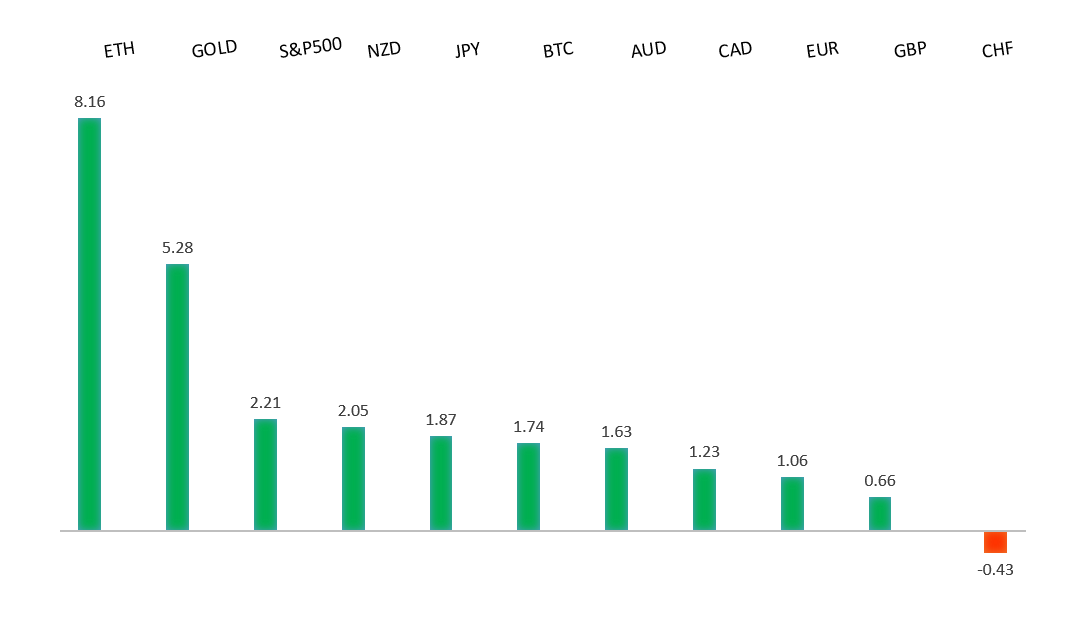
| Performance chart 30day v. USD (%) | ||
 | ||
| Technical & fundamental highlights | ||
| EURUSD: technical overview | ||
| The Euro outlook remains constructive with higher lows sought out on dips in favor of the next major upside extension targeting the 2021 high at 1.2350. Setbacks should be exceptionally well supported ahead of 1.1300. | ||
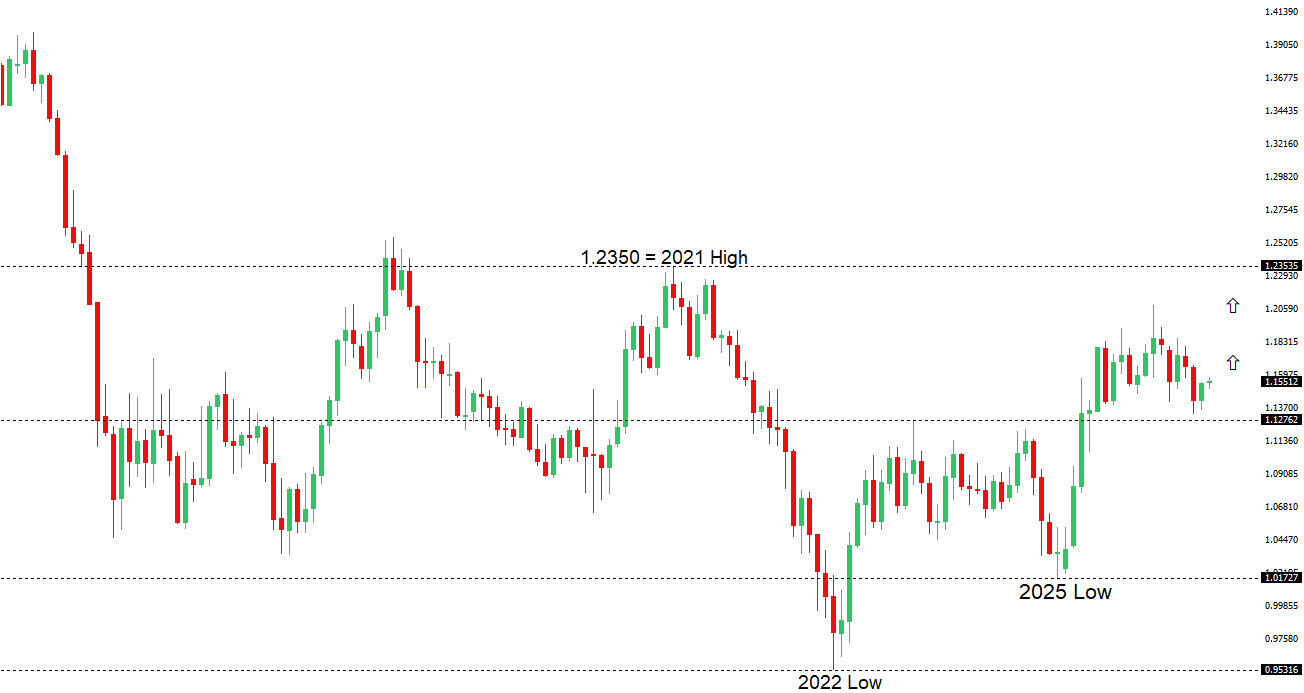 | ||
| R2 1.1623 - 15 June high - Medium R1 1.1581 - 7 August high - Medium S1 1.1500 - Figure - Medium S2 1.1434 - 30 July low - Medium | ||
| EURUSD: fundamental overview | ||
| The euro begins the week consolidating near two-month highs against the US dollar, with EURUSD holding around 1.1550 after Friday’s unexpectedly weak US jobs report sharply reduced expectations for another Federal Reserve rate hike. The US economy lost 23,000 jobs in July, while downward revisions and softer wage growth reinforced signs that the labor market is cooling, although the decline in unemployment to 4.1% kept the report from being uniformly weak. The pair has since struggled to extend its advance as the dollar attracts modest safe-haven demand amid continuing uncertainty over the Strait of Hormuz, while higher oil prices raise renewed inflation concerns and represent a particular economic risk for energy-importing Europe. Attention now turns to Wednesday’s US CPI report, which will be critical in determining whether markets further unwind Fed tightening expectations or revive the prospect of a September hike. Overall, the euro remains supported near recent highs, but its latest strength is primarily a reflection of softer US rate expectations rather than a decisive improvement in the Eurozone’s domestic fundamentals. | ||
| GBPUSD: technical overview | ||
| The Pound remains exceptionally well supported on dips into the 1.3000 area, with the price largely consolidating above the psychological barrier and previous resistance turned support in the form of the 2023 high. Look for the market to continue be well supported on dips ahead of the next major upside extension through the yearly high at 1.3870 and towards a retest of the 2018 high at 1.4377 further up. Only a monthly close below 1.3000 negates. | ||
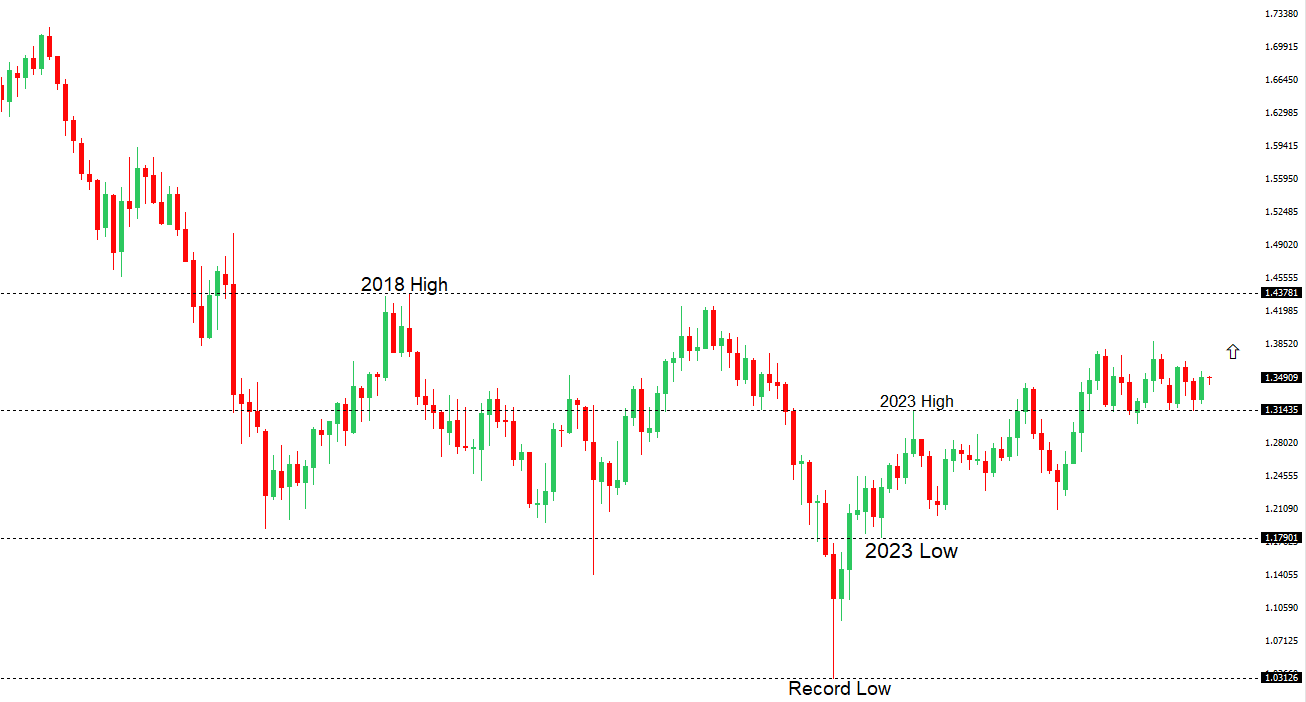 | ||
| R2 1.3558 - 15 July high - Strong R1 1.3509 - 7 August high - Medium S1 1.3333 - 30 July low - Medium S2 1.3273 - 28 July low - Strong | ||
| GBPUSD: fundamental overview | ||
| The pound has started the week consolidating the latest run of gains after GBPUSD briefly moved above 1.3500 on Friday, with renewed uncertainty surrounding the Strait of Hormuz supporting the safe-haven US Dollar and keeping oil-driven inflation risks in focus. Sterling’s downside remains limited, however, after a sharply weaker US employment report materially reduced expectations for a September Federal Reserve rate hike. Domestically, the backdrop is mixed but broadly supportive: UK services activity improved in July and the Bank of England recently voted 6–3 to hold Bank Rate at 3.75%, maintaining a cautious stance as it assesses the inflationary impact of higher energy prices. Attention now turns to US inflation data and Thursday’s preliminary UK second-quarter GDP report, with the latter set to indicate whether the economy maintained momentum after expanding 0.6% in the first quarter. Overall, near-term direction remains heavily dependent on Middle East developments and relative UK-US rate expectations, leaving sterling supported on dips but struggling to extend its advance while geopolitical demand underpins the Dollar. | ||
| USDJPY: technical overview | ||
| The major pair has entered a period of correction and consolidation after extending its run to fresh multi-decade highs at 163.99. Setbacks are now expected to be well supported above 155.00, with only a break below to compromise the bullish structure. | ||
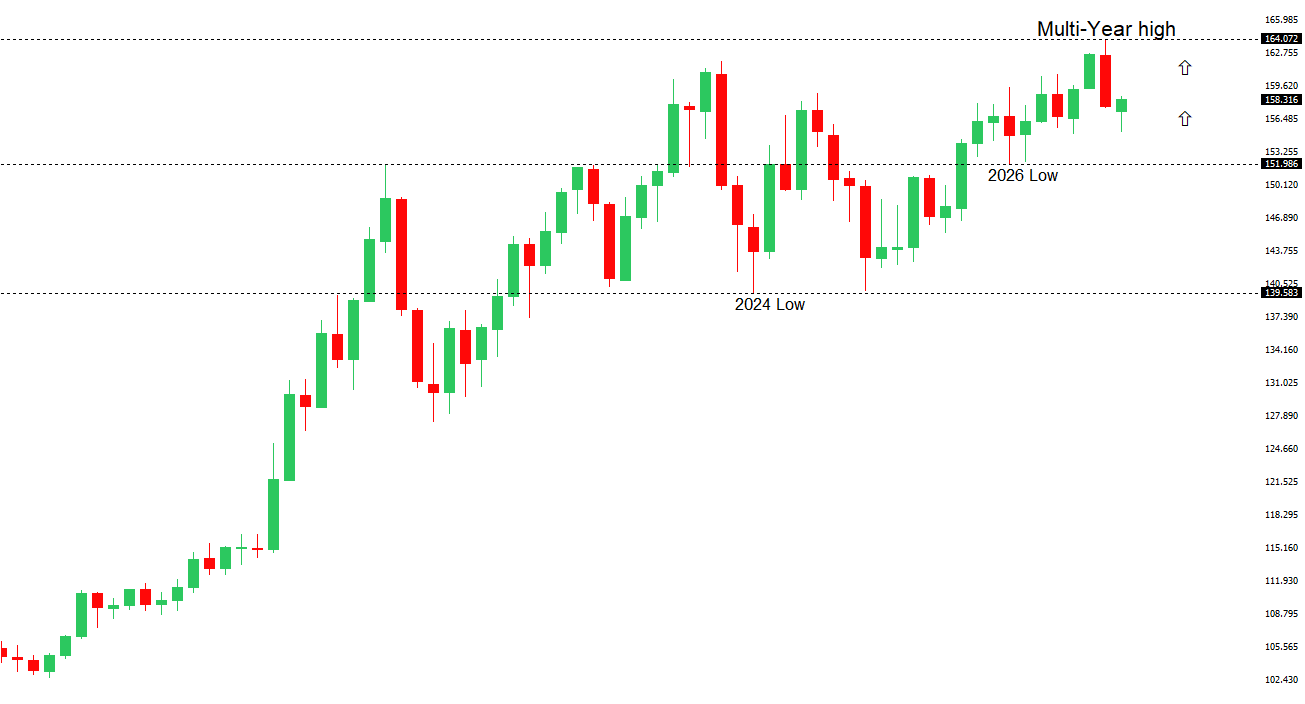 | ||
| R2 160.00 - Psychological - Strong R1 158.58 - 7 August high - Medium S1 156.67 - 7 August low - Medium S2 155.02 - 6 May low - Strong | ||
| USDJPY: fundamental overview | ||
| The Yen remains under pressure, with USDJPY climbing back above 158.00 as the initial boost from coordinated US-Japan intervention continues to fade and investors refocus on Japan’s underlying fiscal challenges and wide interest-rate disadvantage against the United States. Sentiment was further weighed down by an unexpected JPY 92.3 billion current account deficit in June, Japan’s first in 17 months, although the deterioration was largely driven by unusually large dividend payments to overseas investors and the first-half balance remained at a record surplus. Meanwhile, the Bank of Japan’s July Summary of Opinions revealed growing concern over inflation and support among several policymakers for faster rate hikes, increasing the possibility of another move as early as September, but this hawkish signal has so far provided only limited support to the currency. Renewed US-Iran tensions and associated demand for the Dollar have added to the pressure, while the next major direction for USDJPY will depend on the US jobs report and whether it reinforces expectations for further Fed tightening or helps narrow US-Japan yield differentials. | ||
| AUDUSD: technical overview | ||
| There are signs of the formation of a longer-term base with the market recovering out from a meaningful longer-term support zone. The latest monthly close back above 0.7000 takes the big picture pressure off the downside and strengthens the case for a bottom, with the focus now on a push towards 0.8000. Setbacks should now be well supported ahead of 0.6700. | ||
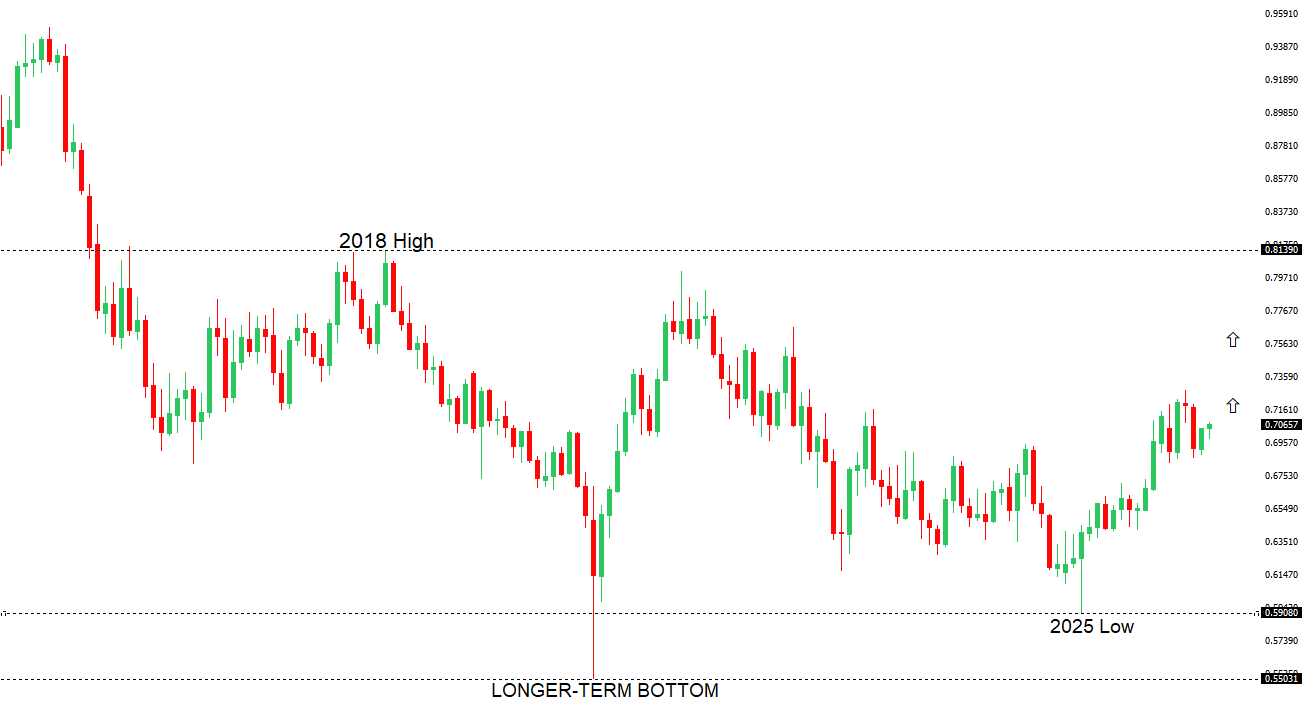 | ||
| R2 0.7089 - 15 June high - Strong R1 0.7078 - 7 August high - Medium S1 0.6922 - 29 July low - Medium S2 0.6865 - 30 June low - Strong | ||
| AUDUSD: fundamental overview | ||
| The Australian dollar begins the week consolidating gains, with additional topside limited for now as renewed US-Iran tensions surrounding the Strait of Hormuz support safe-haven demand for the US dollar and offset some of the pressure generated by Friday’s weak US employment report. Domestically, attention is firmly on Tuesday’s RBA decision, with the central bank widely expected to leave the cash rate unchanged at 4.35%, although persistent underlying inflation and a resilient labor market should keep its guidance cautious and the possibility of another increase alive. Australian headline inflation eased to 3.8% in June, but trimmed-mean inflation remained elevated at 3.6%, while unemployment stood at a still-low 4.4%, leaving policymakers with little urgency to signal an easing bias. Australian Bureau of Statistics The domestic economy therefore remains relatively supportive for the Aussie, but the near-term direction will depend heavily on the RBA’s updated forecasts and Governor Bullock’s assessment of further tightening risks. Beyond Australia, mixed Chinese activity data are providing stability rather than a meaningful tailwind, leaving broader risk sentiment, Middle East developments and the direction of the US dollar as the other major drivers. | ||
| Suggested reading | ||
| Investing is a Game of Survival, B. Carlson, A Wealth of Common Sense (August 5, 2026) I Stopped Being A Libertarian Because…., B. Caplan, Bet On It (August 6, 2026) | ||