


 | ||
| 21st July 2026 | view in browser | ||
| Energy risks keep markets on the defensive | ||
| Markets enter the new day in a cautious mood as escalating Middle East tensions lift oil and Treasury yields, keeping investors focused on geopolitical developments while attention also turns toward this week’s ECB meeting and the evolving global rate outlook. | ||
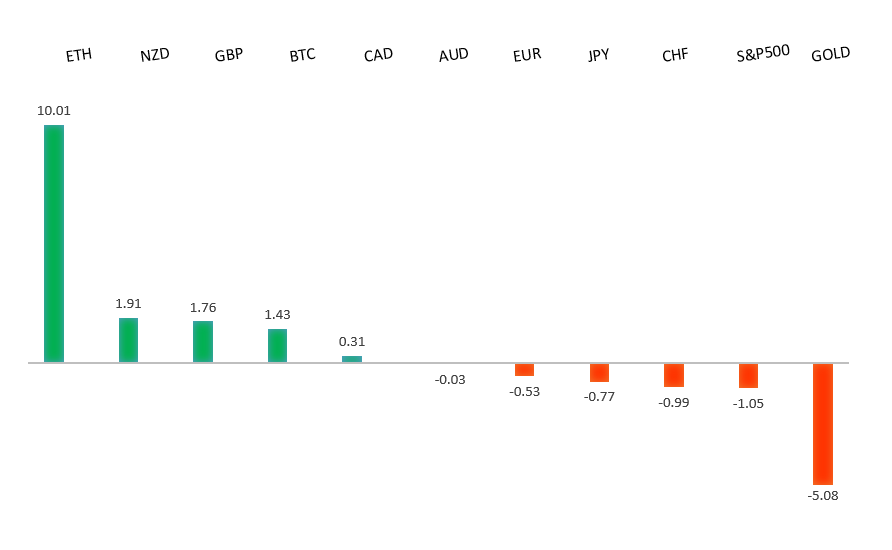
| Performance chart 30day v. USD (%) | ||
 | ||
| Technical & fundamental highlights | ||
| EURUSD: technical overview | ||
| The Euro outlook remains constructive with higher lows sought out on dips in favor of the next major upside extension targeting the 2021 high at 1.2350. Setbacks should be exceptionally well supported ahead of 1.1300. | ||
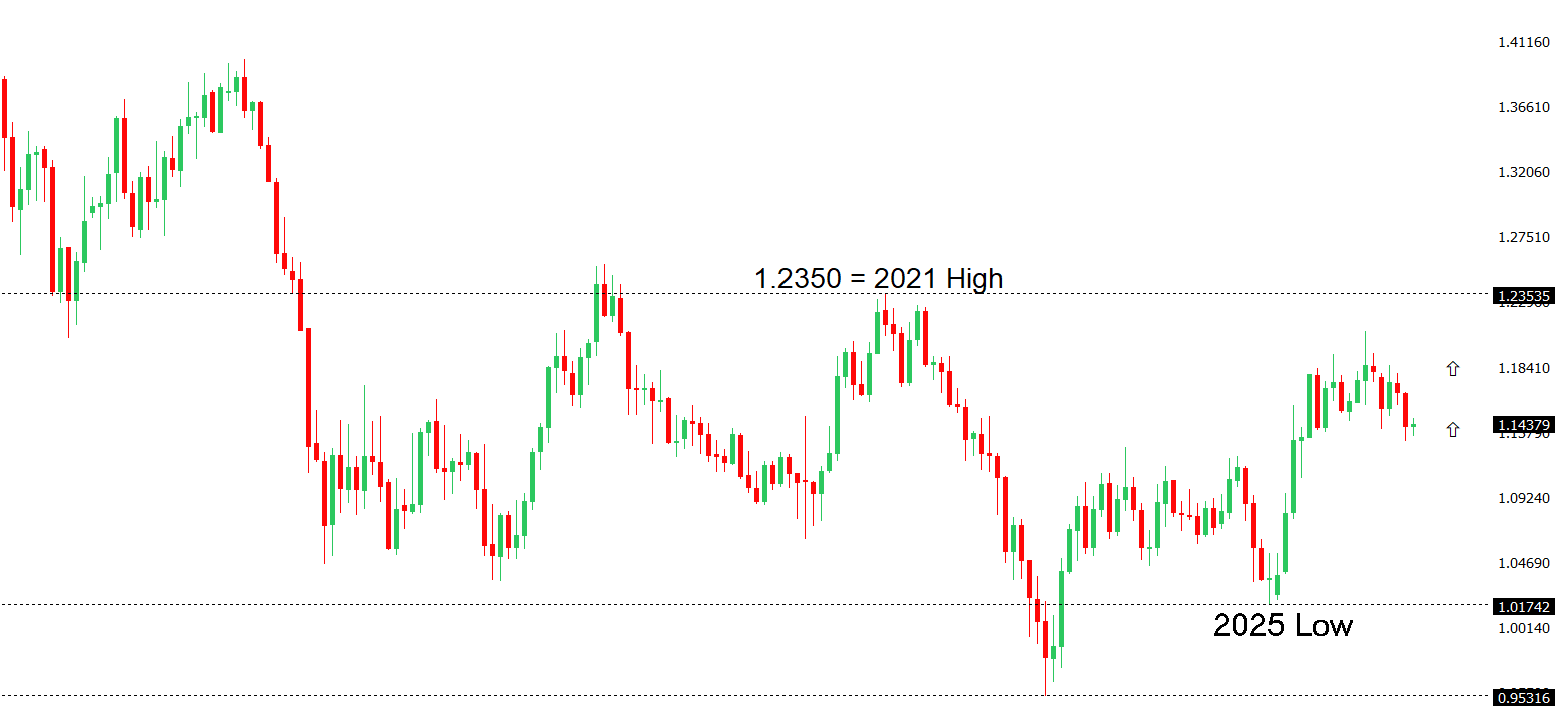 | ||
| R2 1.1529 - 18 June high - Medium R1 1.1483 - 15 July high - Medium S1 1.1325 - 24 June/2026 low - Medium S2 1.1300 - Figure - Medium | ||
| EURUSD: fundamental overview | ||
| The euro has come under modest pressure against the US dollar, with EURUSD slipping back toward the 1.1400 area as escalating geopolitical tensions in the Middle East drive a broader flight to safety and boost demand for the safe-haven greenback. Fresh US strikes on Iranian military infrastructure, Iranian attacks on regional targets, and renewed threats to shipping through the Strait of Hormuz have lifted energy prices and reinforced risk-off sentiment, overshadowing domestic Eurozone developments. At the same time, the downside for the euro has been limited by expectations that the Federal Reserve will leave interest rates unchanged at its July meeting following softer US inflation data, reducing the prospect of near-term Fed tightening. Investors are now turning their attention to Germany’s ZEW economic sentiment surveys for fresh insight into the Eurozone growth outlook, while upcoming US labor market data will be closely watched for clues on the path of Fed policy. Overall, the euro remains caught between geopolitical headwinds supporting the dollar and a softer US rate outlook that continues to limit broader USD strength. | ||
| GBPUSD: technical overview | ||
| The Pound remains exceptionally well supported on dips into the 1.3000 area, with the price largely consolidating above the psychological barrier and previous resistance turned support in the form of the 2023 high. Look for the market to continue be well supported on dips ahead of the next major upside extension through the yearly high at 1.3870 and towards a retest of the 2018 high at 1.4377 further up. Only a monthly close below 1.3000 negates. | ||
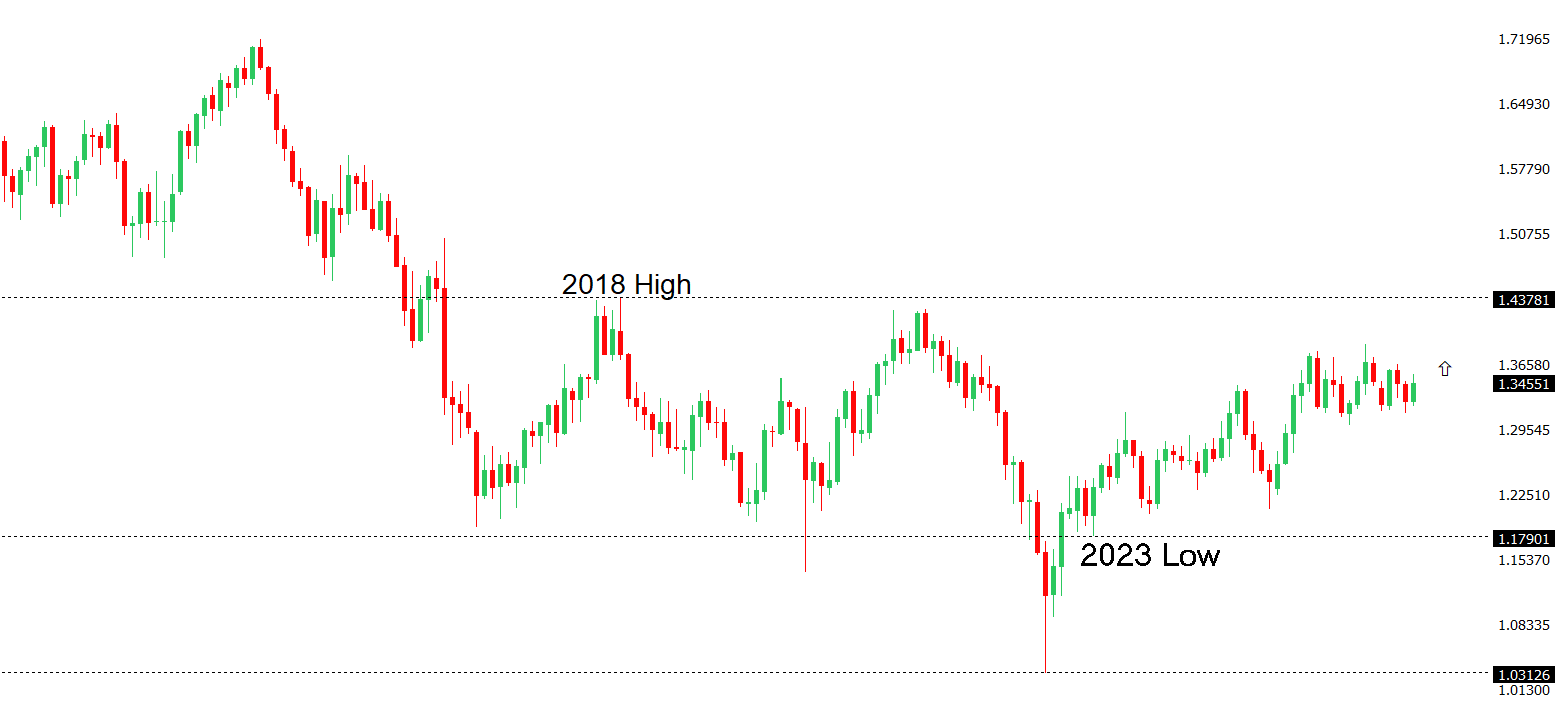 | ||
| R2 1.3658 - 1 May high - Strong R1 1.3558 - 15 July high - Medium S1 1.3412 - 20 July high - Medium S2 1.3322 - 8 July low - Strong | ||
| GBPUSD: fundamental overview | ||
| The Pound has come under pressure against the US Dollar as renewed escalation in the US-Iran conflict has boosted demand for safe-haven assets, strengthening the Greenback and weighing on risk-sensitive currencies. At the same time, Sterling faces a pivotal domestic week with UK employment, inflation, retail sales and flash PMI data all due, which will shape expectations for the Bank of England’s policy path. Markets currently expect unemployment to edge higher, inflation to cool modestly and consumer spending to soften, with a broadly weaker run of data likely to reduce expectations for further BoE tightening despite elevated energy prices keeping inflation risks alive. Politically, the formal appointment of Prime Minister Andy Burnham has so far had a limited market impact, with investors encouraged by commitments to fiscal discipline but remaining focused on the UK’s underlying growth outlook. While softer US CPI and PPI data have reduced expectations for near-term Federal Reserve rate hikes, limiting some upside for the Dollar, geopolitical tensions remain the dominant driver of price action for now, leaving Sterling vulnerable until this week’s UK data provide greater clarity on the economic outlook and the BoE’s next move. | ||
| USDJPY: technical overview | ||
| The major pair has extended its run to fresh multi-decade highs, with the latest push through 160.00 opening the door for further upside towards 165.00-170.00. At the same time, daily studies are looking quite stretched, suggesting we could see a healthy correction on the horizon. A break back below 160.48 would now strengthen the case for a larger pullback. Until then, the market will continue to be focused on additional gains. | ||
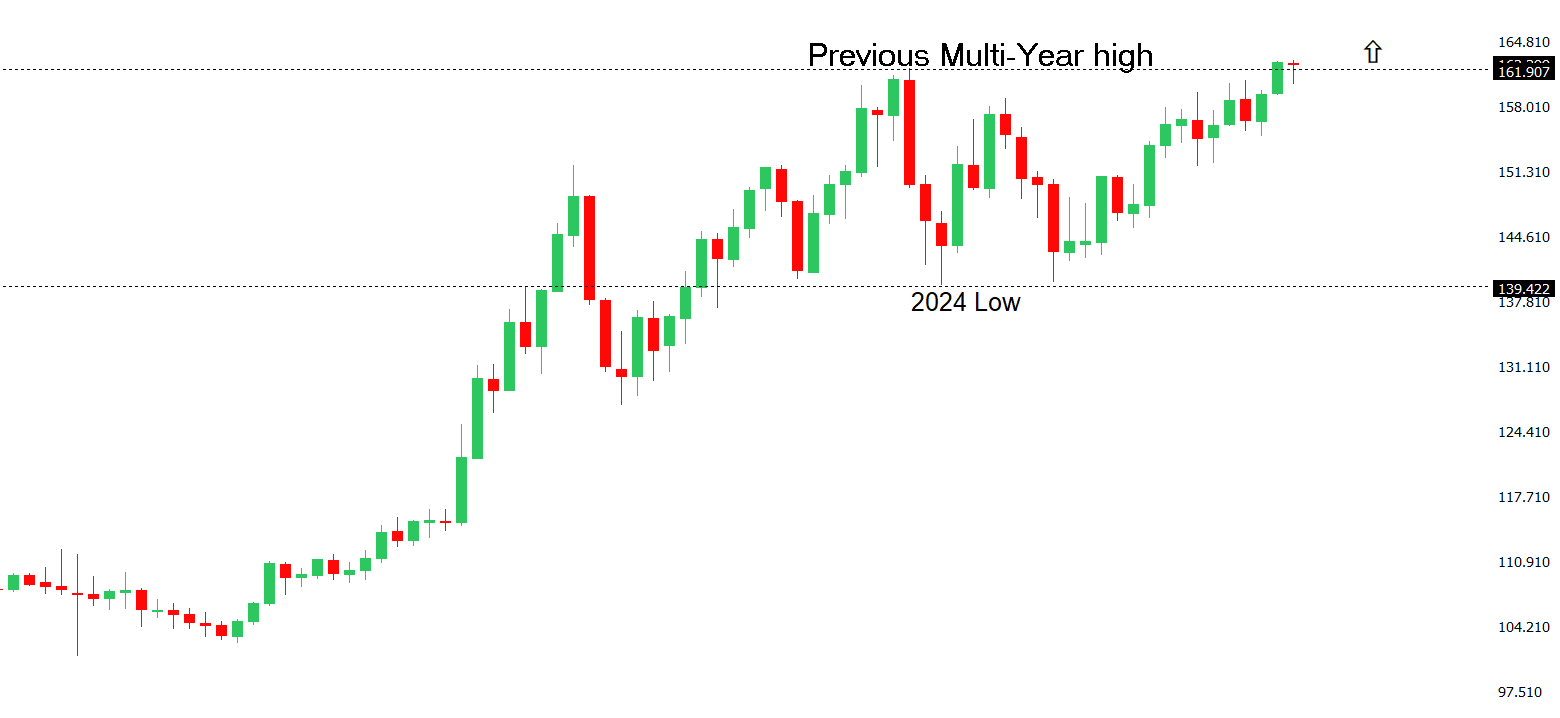 | ||
| R2 163.00 - Figure - Medium R1 162.84 - Multi-Year high/1 July 2026 - Strong S1 161.28 - 10 July low - Medium S2 160.48 - 3 July low - Medium | ||
| USDJPY: fundamental overview | ||
| The Yen remains under pressure as USDJPY consolidates just below multi-decade highs near 162.50, with the wide interest rate differential between the Bank of Japan and the Federal Reserve continuing to underpin carry trade demand for the US Dollar. While speculation over another round of Japanese currency intervention has kept traders cautious around the 163.00 area, verbal warnings from officials have done little to reverse the broader trend. Geopolitical tensions in the Middle East have also proven to be a headwind for the Yen rather than a source of safe-haven support, as higher oil prices threaten to inflate Japan’s energy import bill and worsen its trade balance. Investors are now focused on Japan’s trade data and national inflation figures this week, which will provide fresh insight into whether the Bank of Japan has scope to tighten policy further. However, with official inflation still expected to remain relatively subdued and the Fed maintaining a much higher policy rate despite easing US inflation, the underlying fundamental backdrop continues to favor Dollar strength over the Yen. | ||
| AUDUSD: technical overview | ||
| There are signs of the formation of a longer-term base with the market recovering out from a meaningful longer-term support zone. The latest monthly close back above 0.7000 takes the big picture pressure off the downside and strengthens the case for a bottom, with the focus now on a push towards 0.8000. Setbacks should now be well supported ahead of 0.6700. | ||
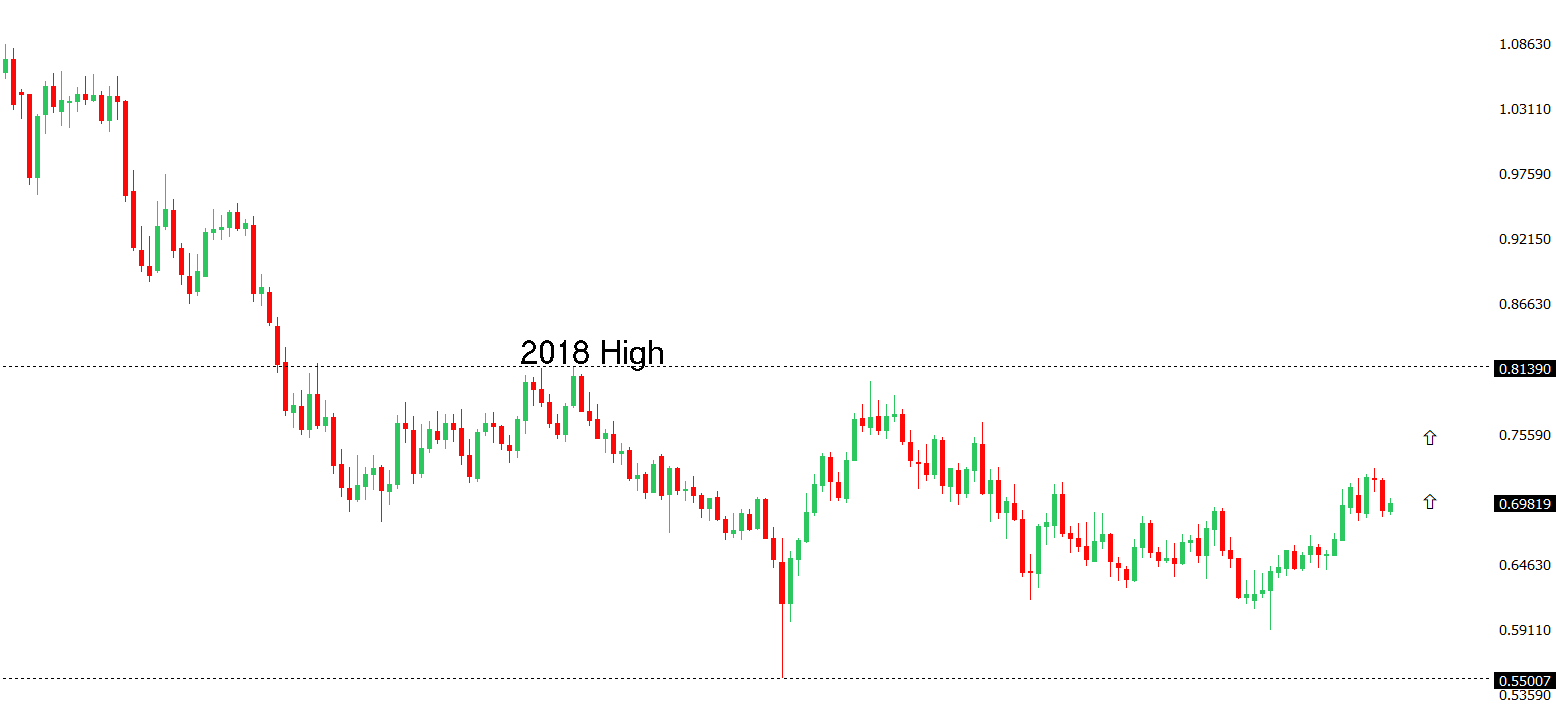 | ||
| R2 0.7089 - 15 June high - Strong R1 0.7022 - 15 July high - Medium S1 0.6912 - 14 July low - Medium S2 0.6865 - 30 June low - Strong | ||
| AUDUSD: fundamental overview | ||
| The Australian Dollar remains caught between supportive domestic fundamentals and a stronger US Dollar backdrop, leaving AUDUSD hovering around the 0.7000 level. Escalating US-Iran tensions have boosted safe-haven demand for the greenback while rising energy prices have reinforced expectations that the Federal Reserve could still deliver at least one additional rate hike in 2026, weighing on the Aussie despite resilient risk appetite. Domestically, the RBA continues to maintain a cautious, data-dependent stance as sticky underlying inflation and a still-tight labor market keep the door open to further policy tightening if needed. Recent Australian data has painted a mixed picture, with softer GDP growth and a weaker trade balance offset by resilient employment, improving business activity and inflation that is easing only gradually. Meanwhile, China has remained a stabilizing rather than accelerating force for Australia, with steady growth, unchanged PBoC policy and improving trade data providing a broadly supportive external backdrop. Looking ahead, markets remain focused on geopolitical developments, Fed rate expectations and next week’s Australian labor market report, while the Aussie should continue to find medium-term support above its 200-day moving average provided global risk sentiment does not deteriorate significantly. | ||
| Suggested reading | ||
| Econ. Conditions In Europe Not As Poor As Feared, Fisher Investments (July 16, 2026) Can Magnificent 7 Save Stock Market That Needs Them?, I. Wang, Marketwatch (July 20, 2026) | ||